Mountains, Myths & Monuments
Last night we were given strict instructions to have our packed bags outside our doors at 6:45am, ready for the burly porters to collect, and to be bright-eyed and bushy tailed, on the bus by 7:45am. Our daily wake-up call (which my girls have requested be disabled) would sound at 6am, instead of the usual 7.
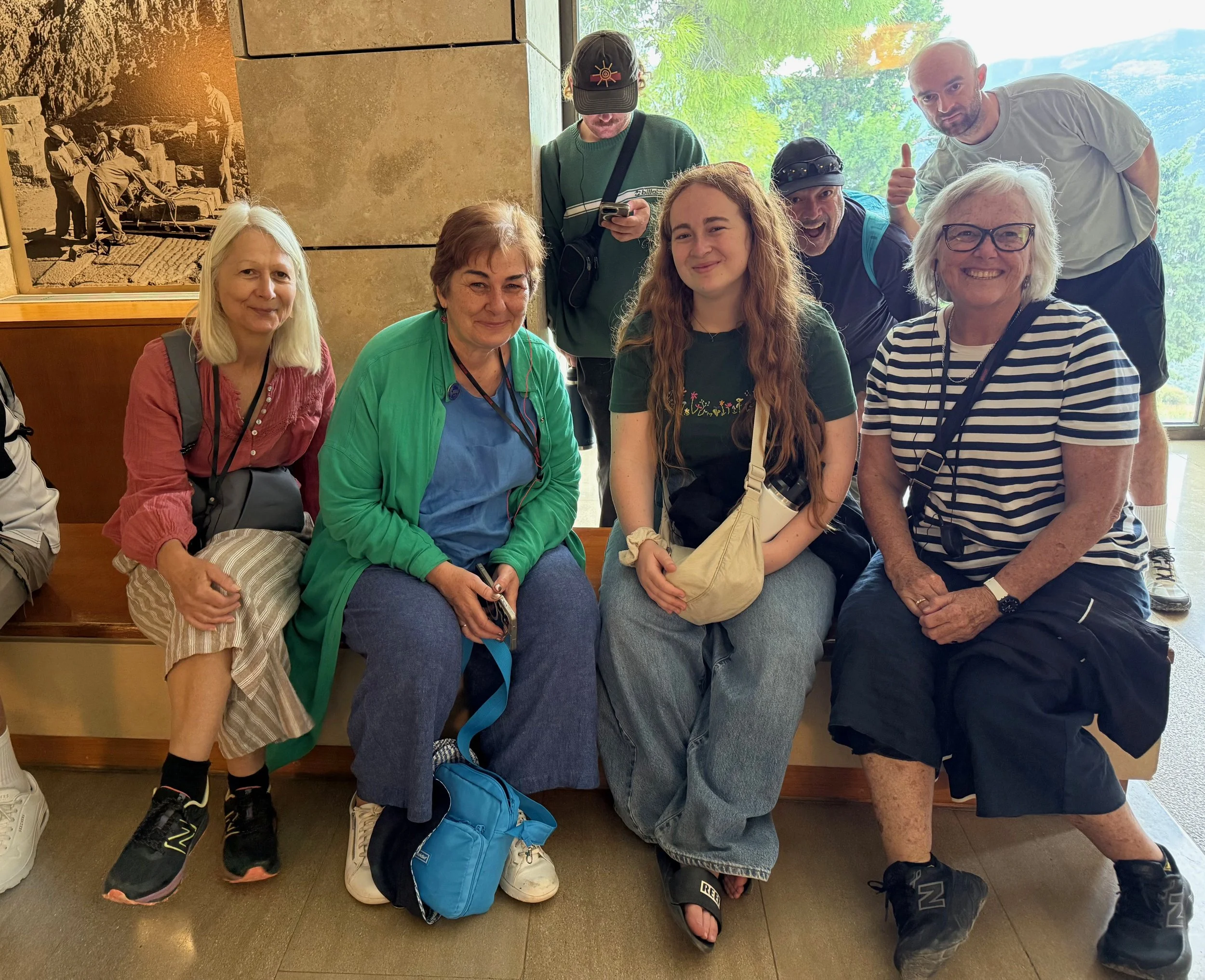
So far this trip, we Joneses have managed to earn ourselves a reputation for being a little less than punctual. Fancy that. This morning we consolidated our position, as the full complement of our tour group waited patiently onboard the bus for one tardy traveller: Mr Toby Jones. Last seen filling his water bottle in the gym, no one could work out his exact whereabouts. He bounded up the front steps of the bus at precisely 8am to a rousing cheer and applause, loudly protesting that Sam told him we had to be on the bus by 8. Helen suggested Toby should have considered the backdoor rather than the front, which only lengthened his walk of shame, but she praised his efforts at speedily throwing it back on Sam.
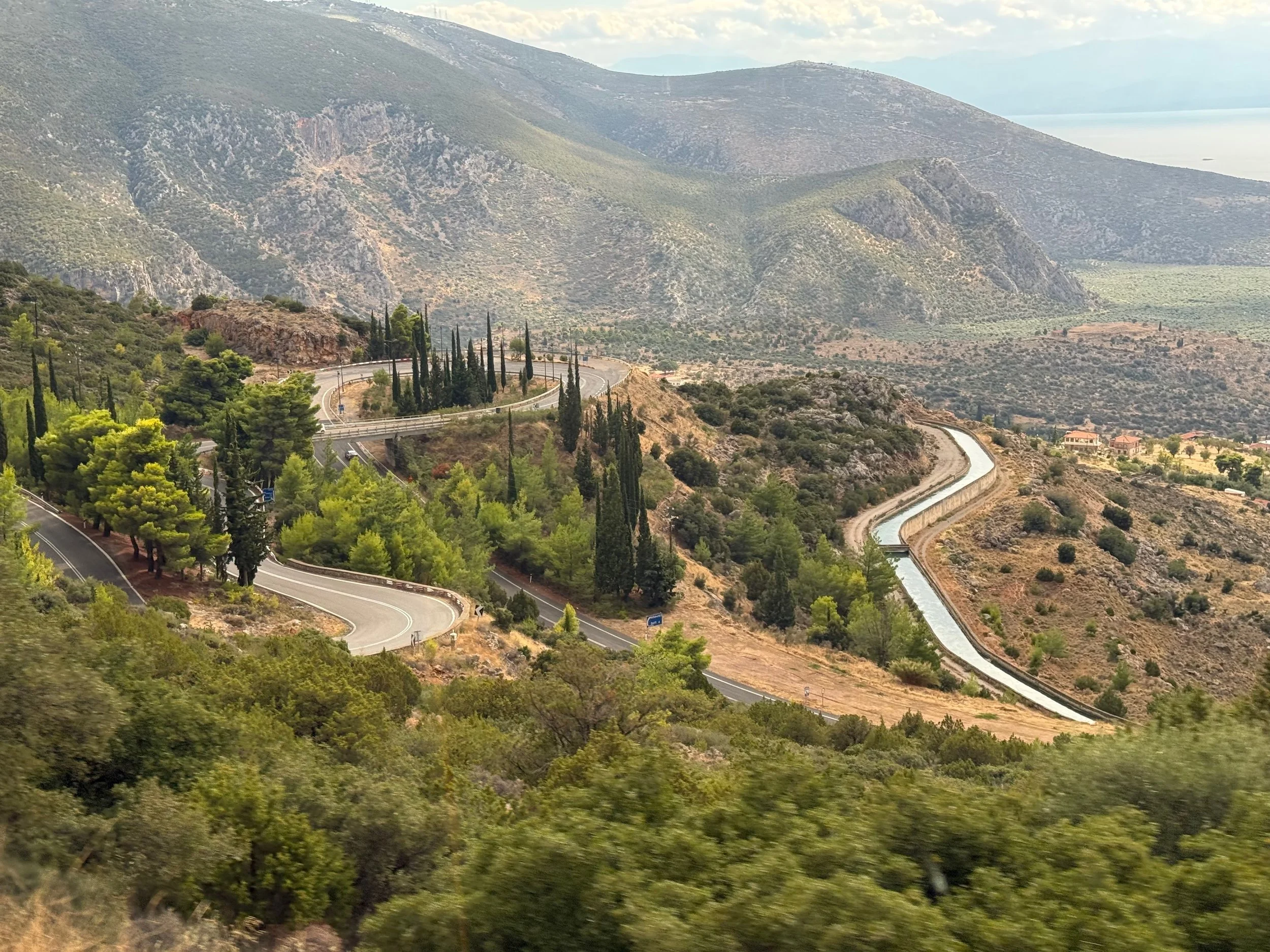
Farewelling Athens, with one last look at the Acropolis on the hill, it was time to hit the highway, motoring through fields of potatoes and cotton, bound for Delphi. The layered, mountainous landscape surrounded us on both sides, with huge, single wind turbines dotted through the hills and deep, bridged ravines over winding lakes.
Soon the road began winding upwards in a steep ascent up Mount Parnassus. We passed through a charming little ski village (who knew you could ski in Greece?) called Arachova, a traditional mountain town of grey stone houses with red roofs, built on the side of the steep slopes. Cute, extremely narrow, cobbled streets, a clock tower, a requisite taverna, craft shops, ski hire and spectacular views. What more could you ask for?
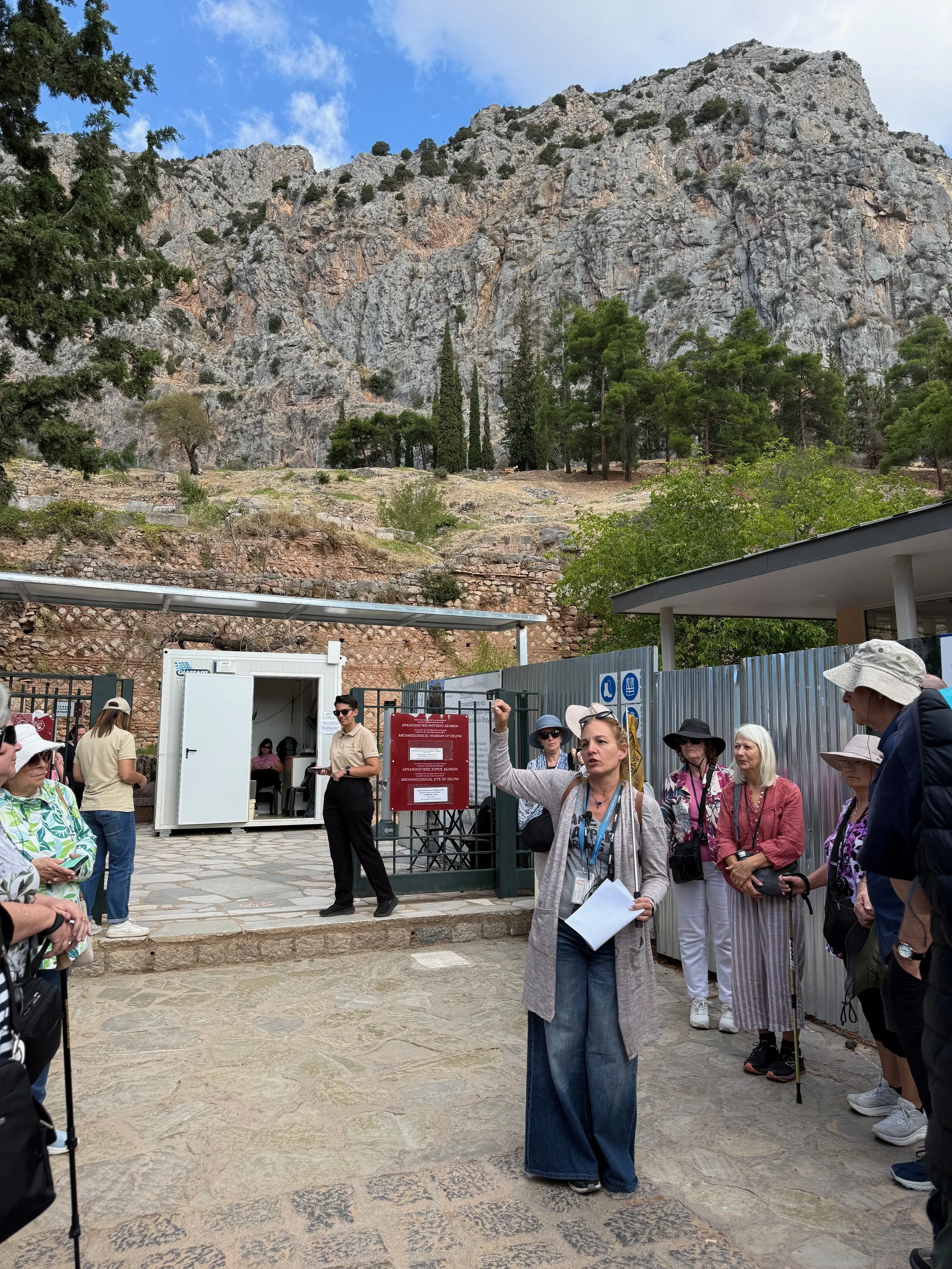
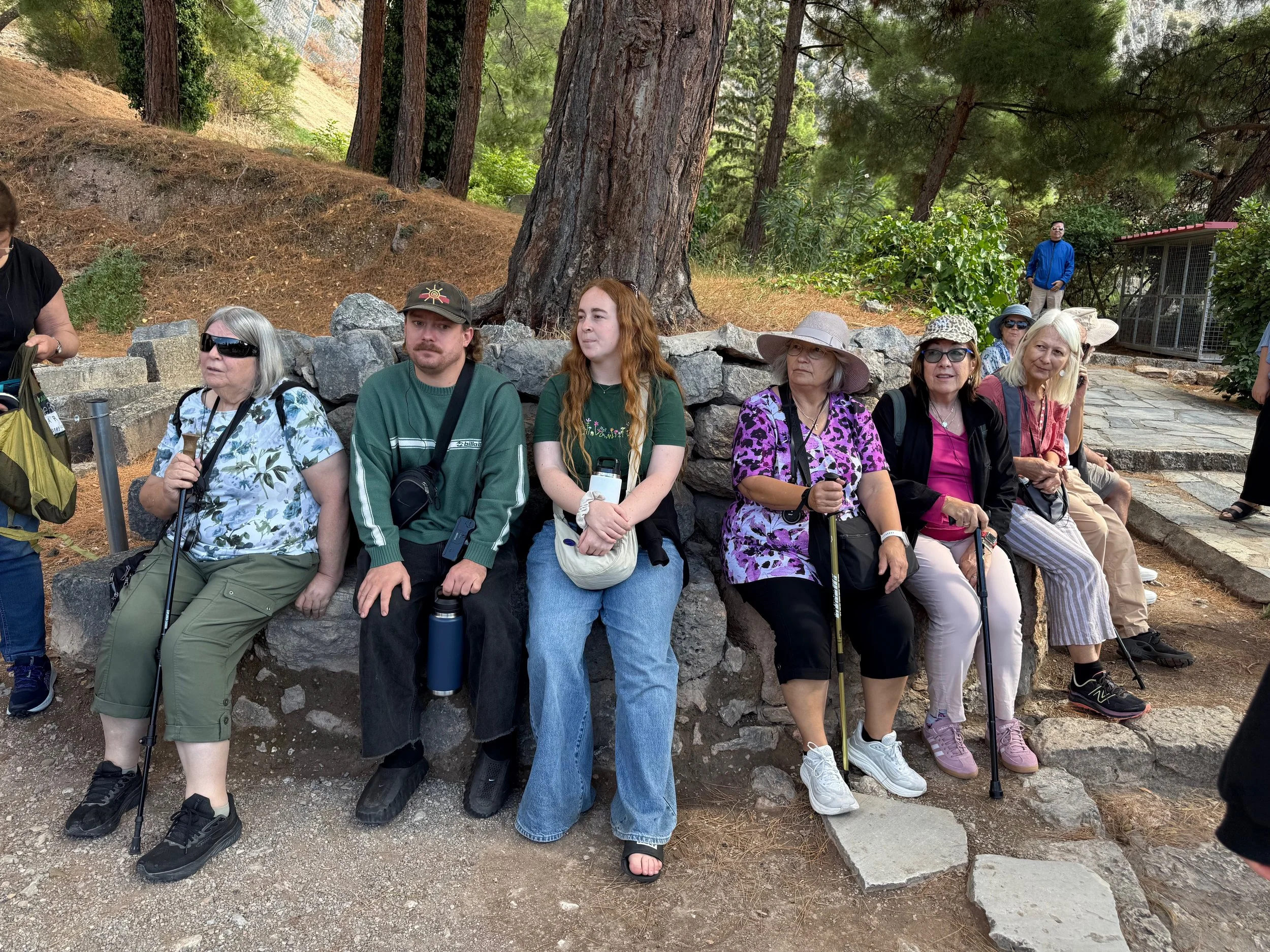
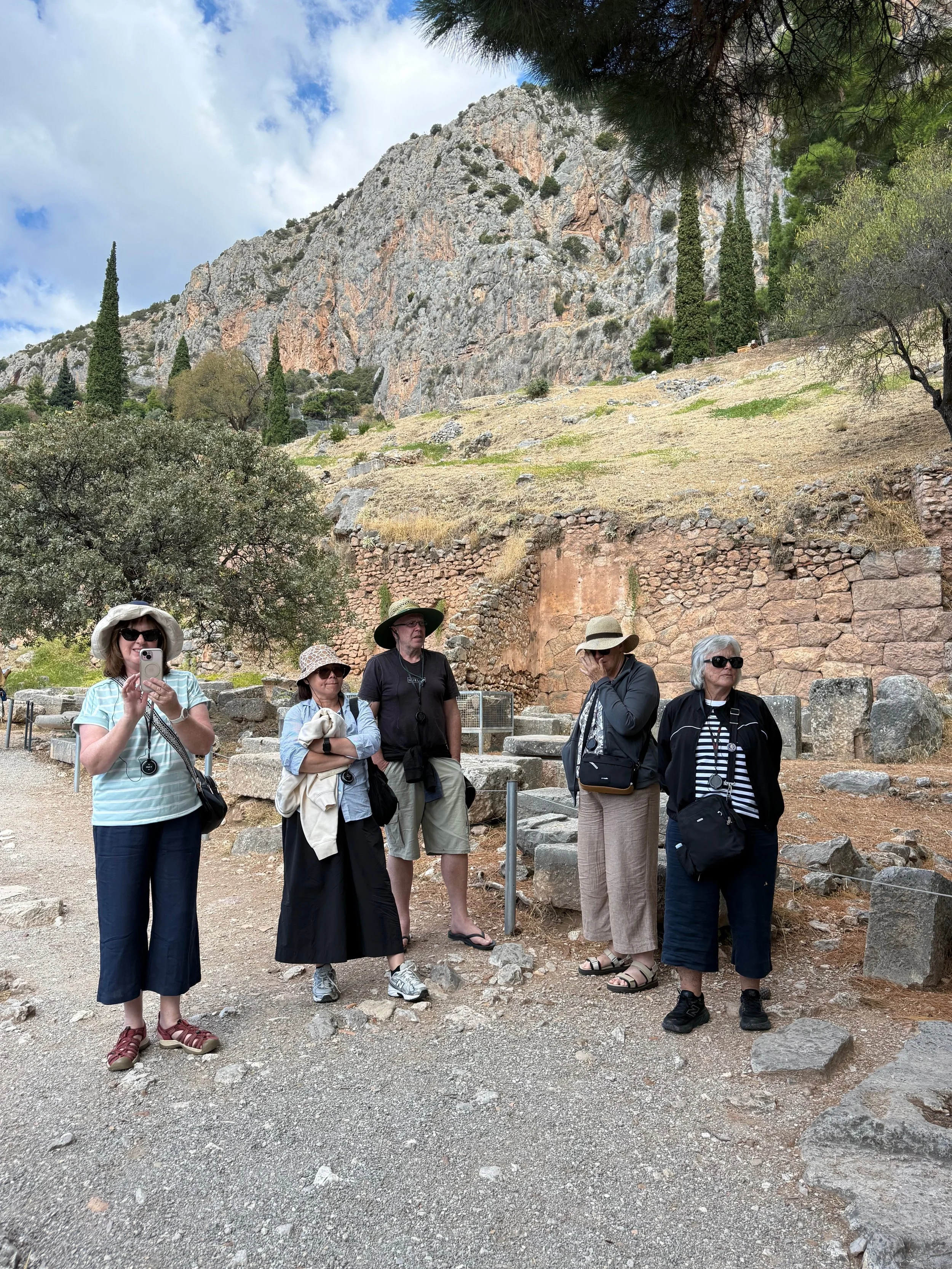
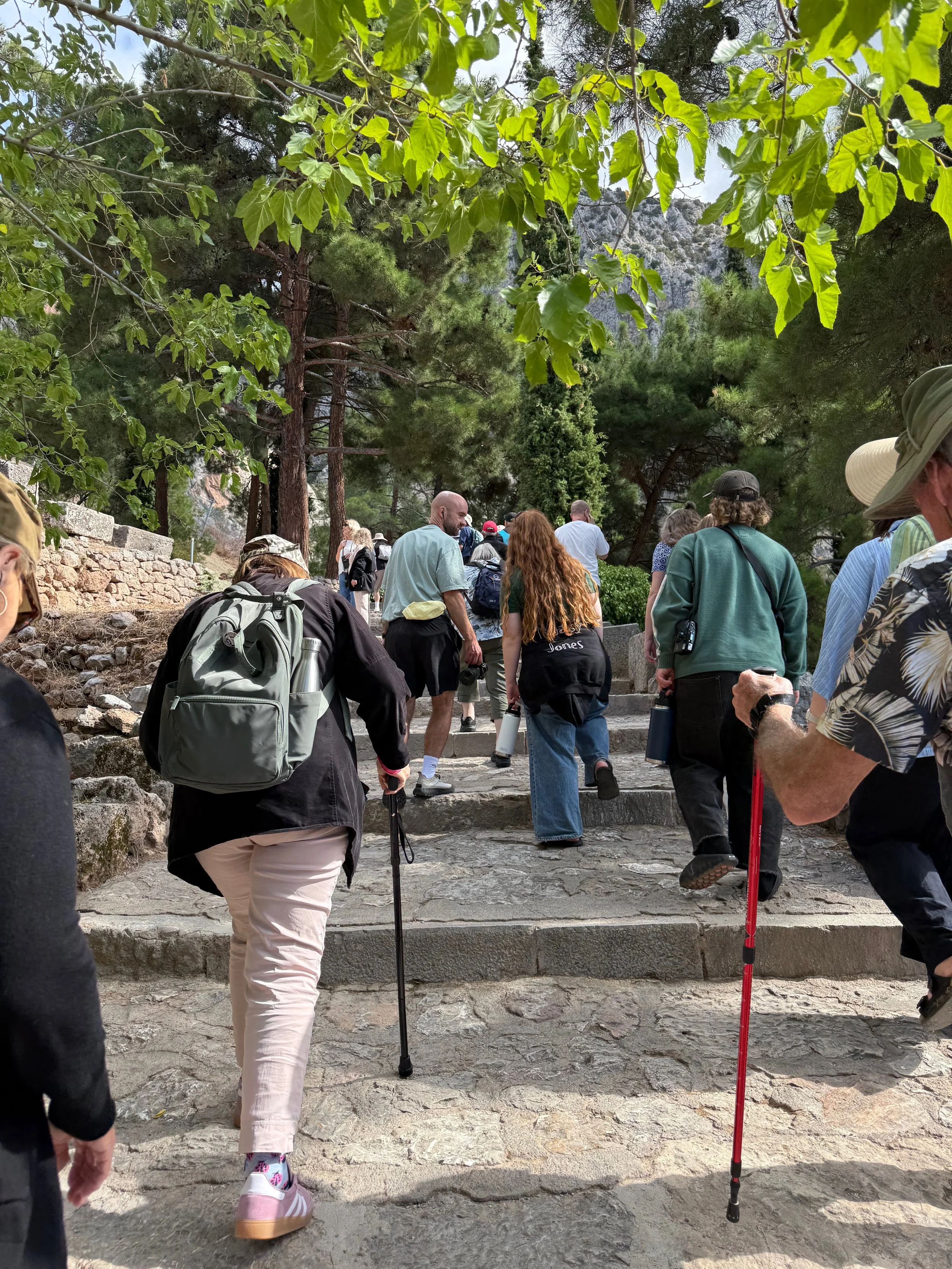
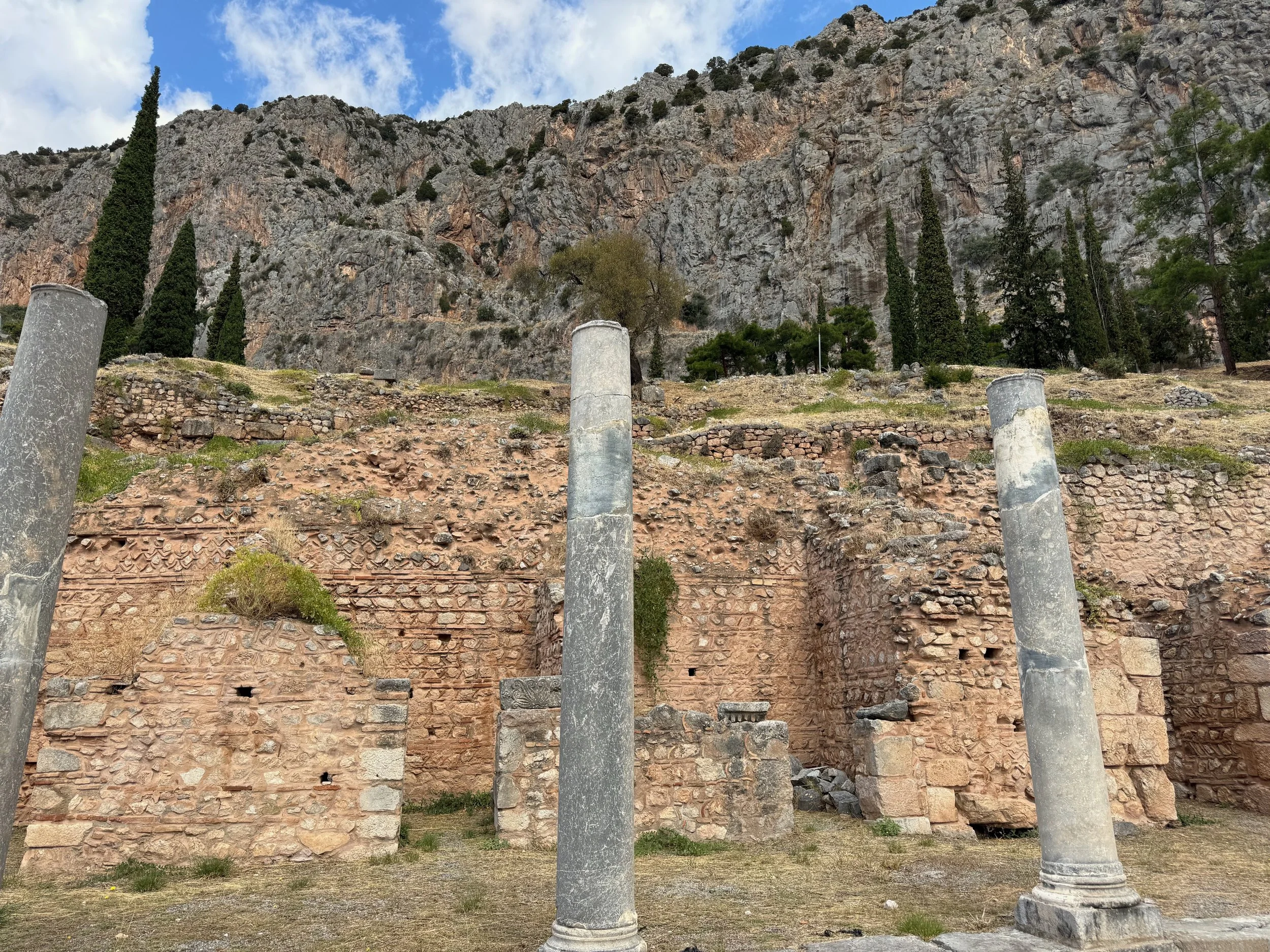
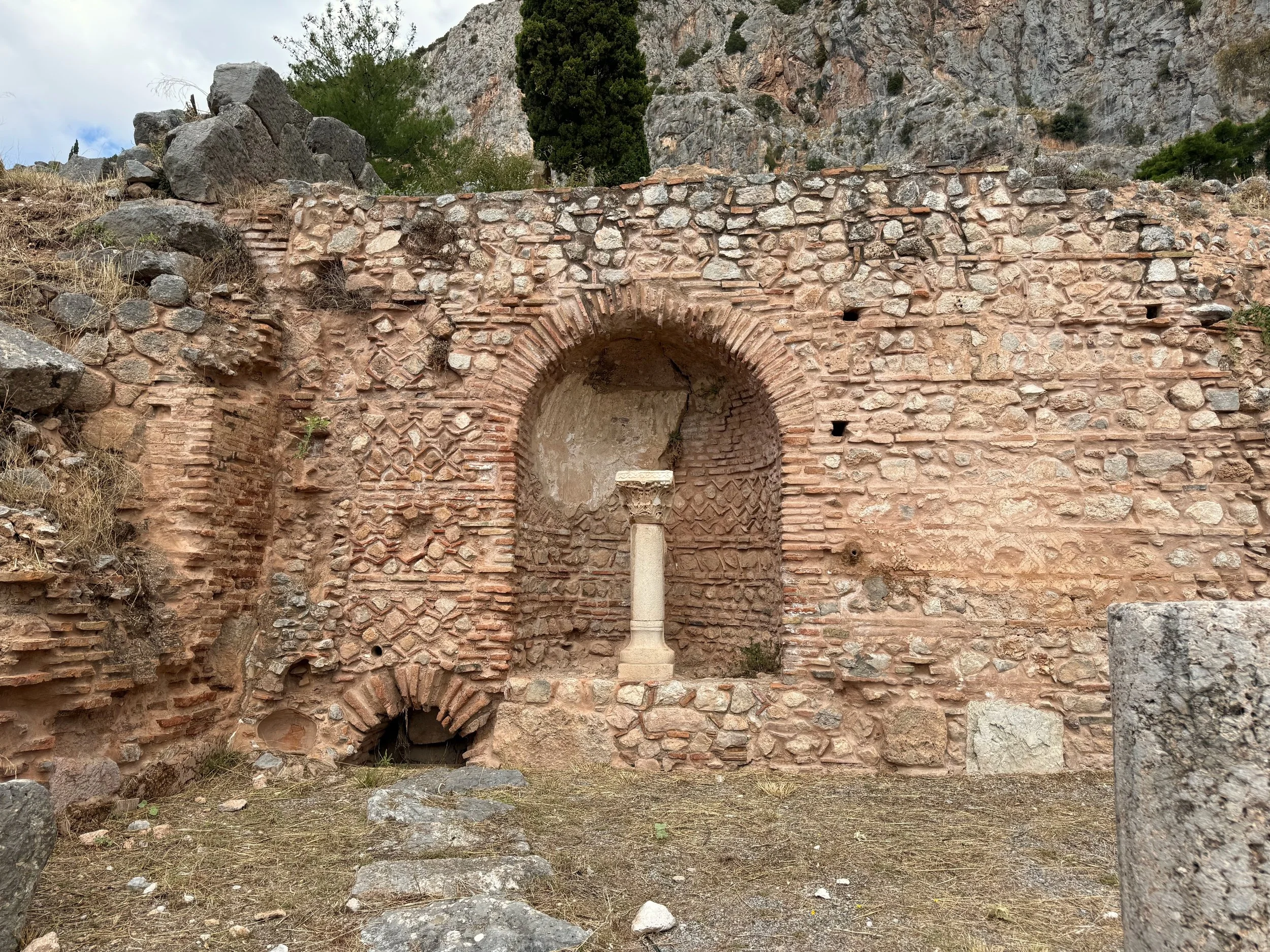
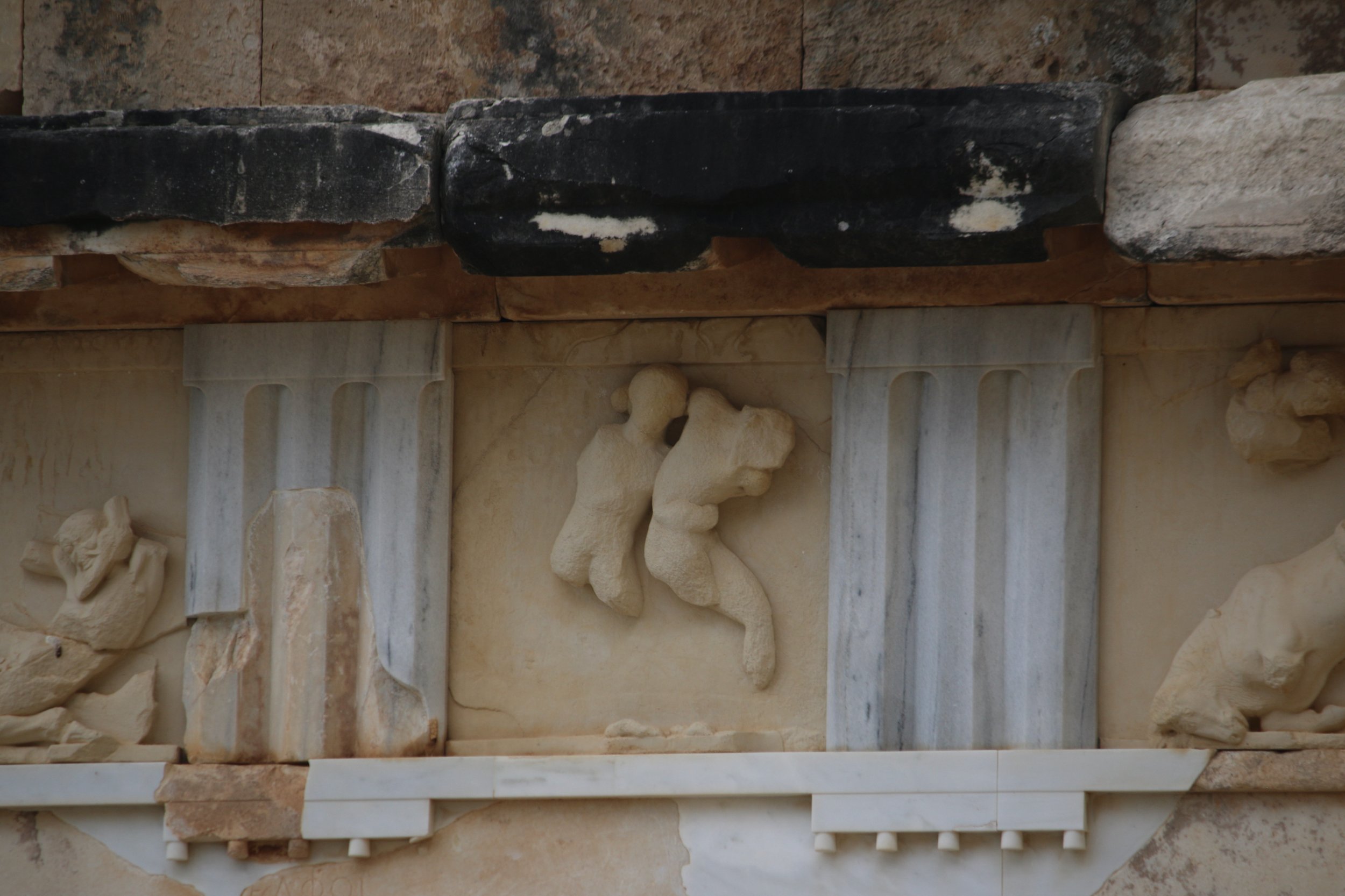
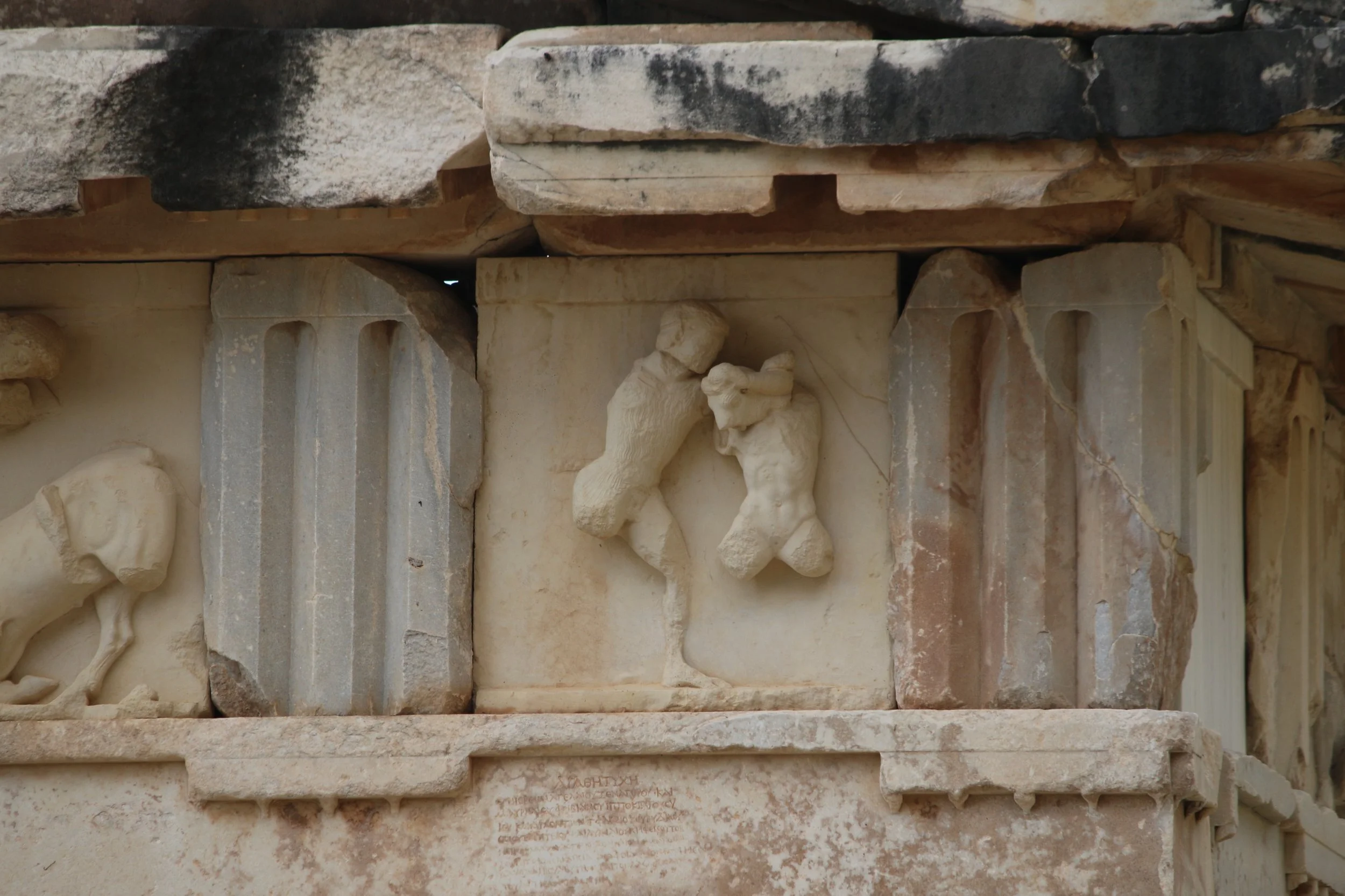
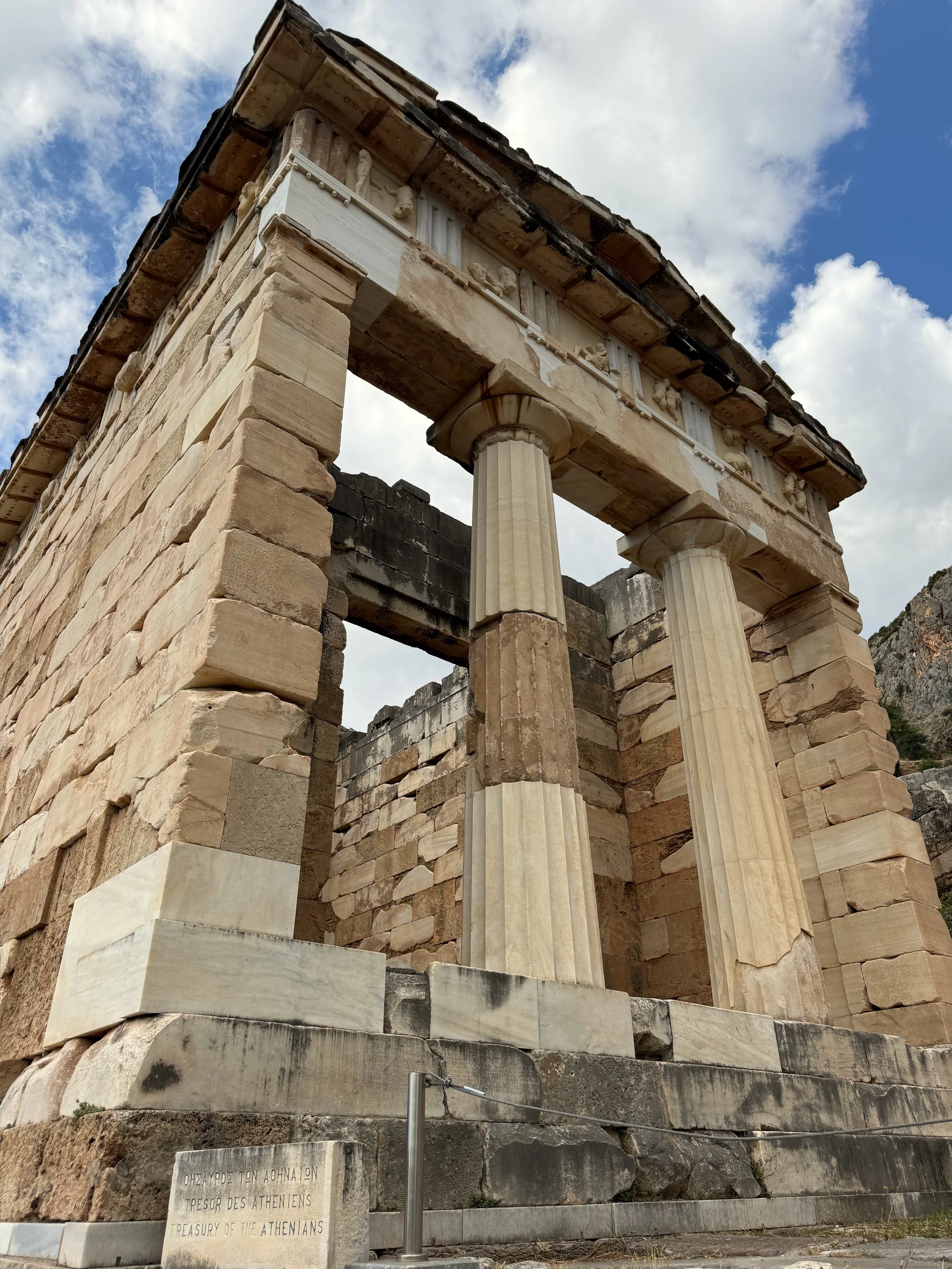
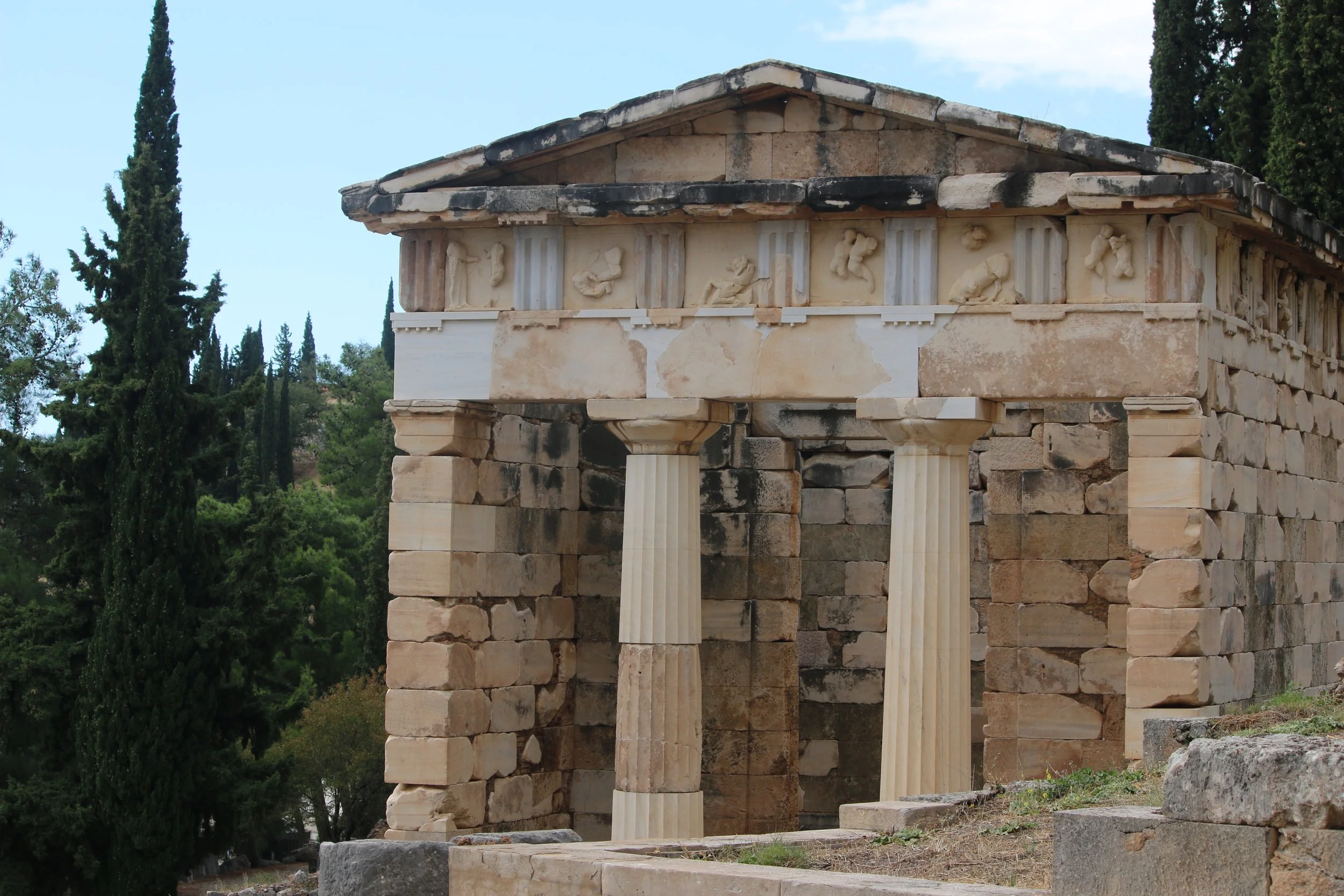
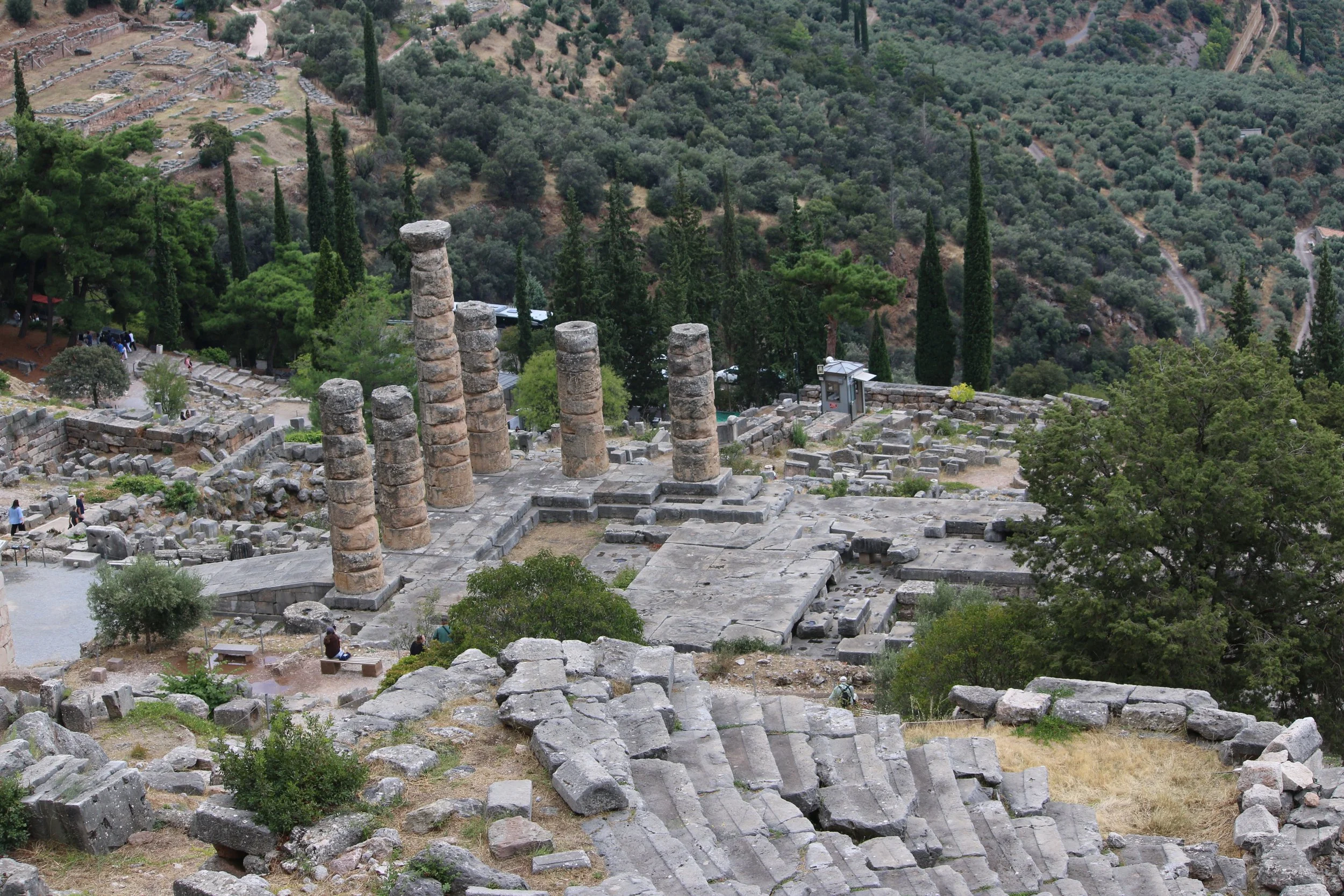
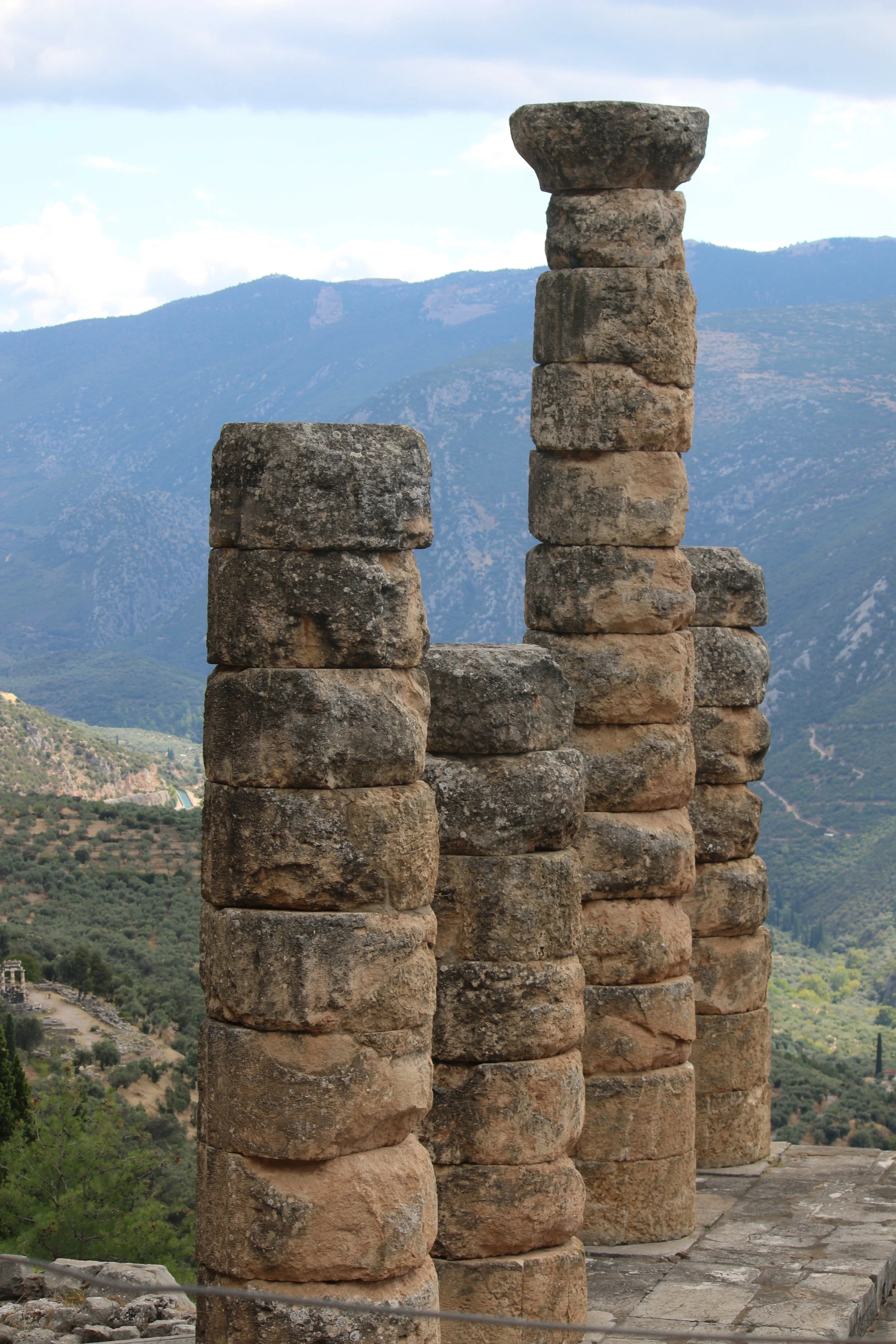
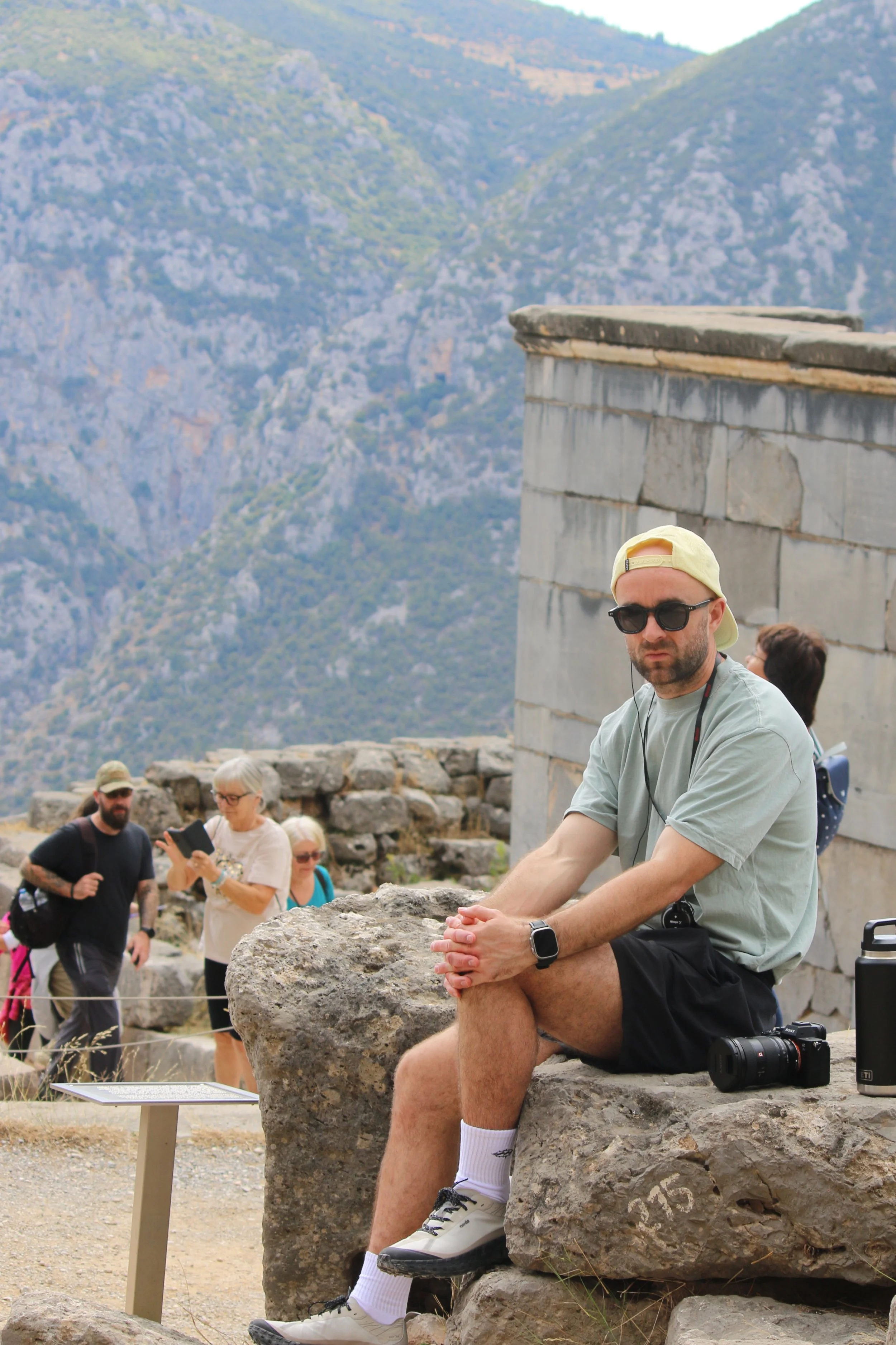
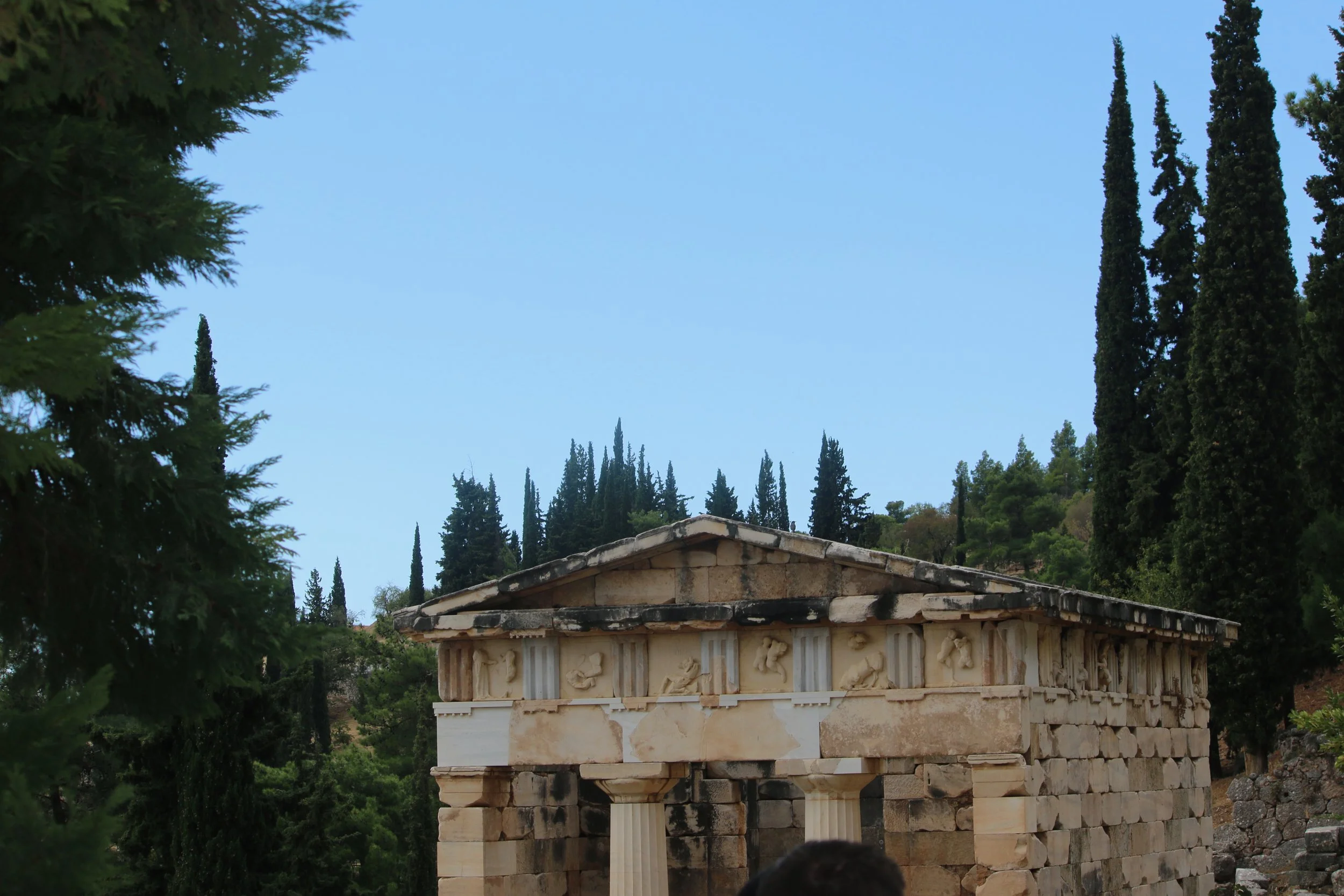
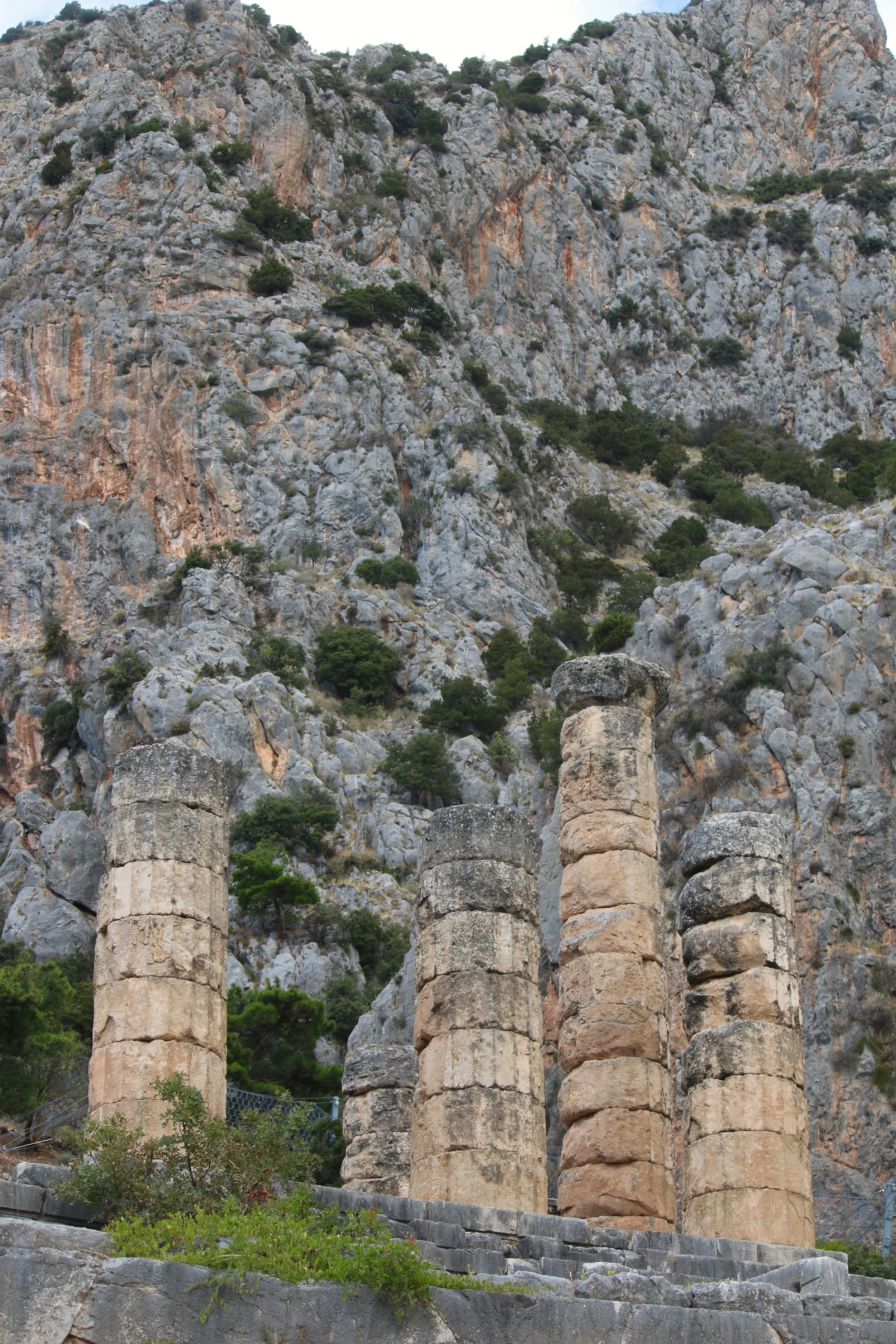
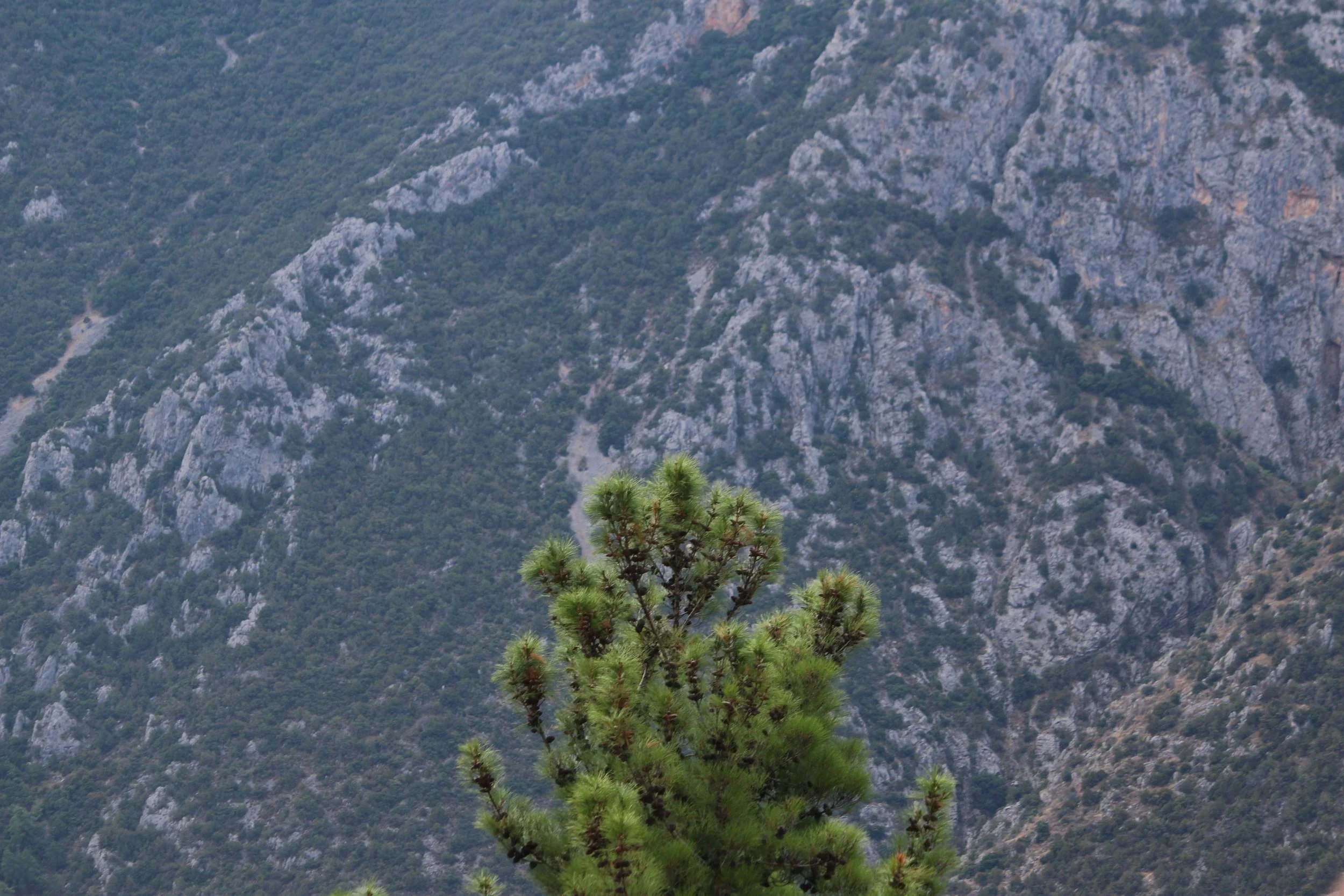
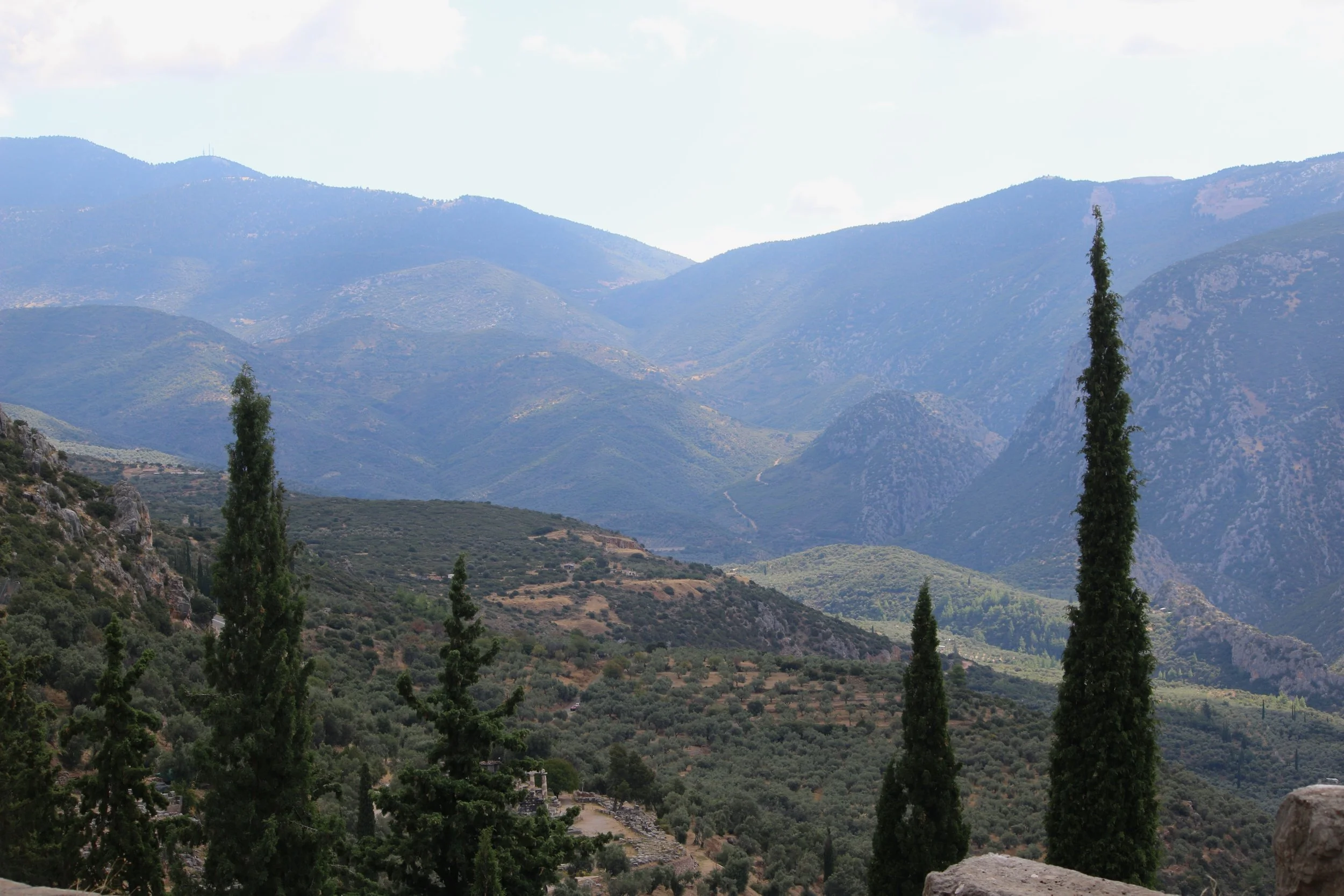
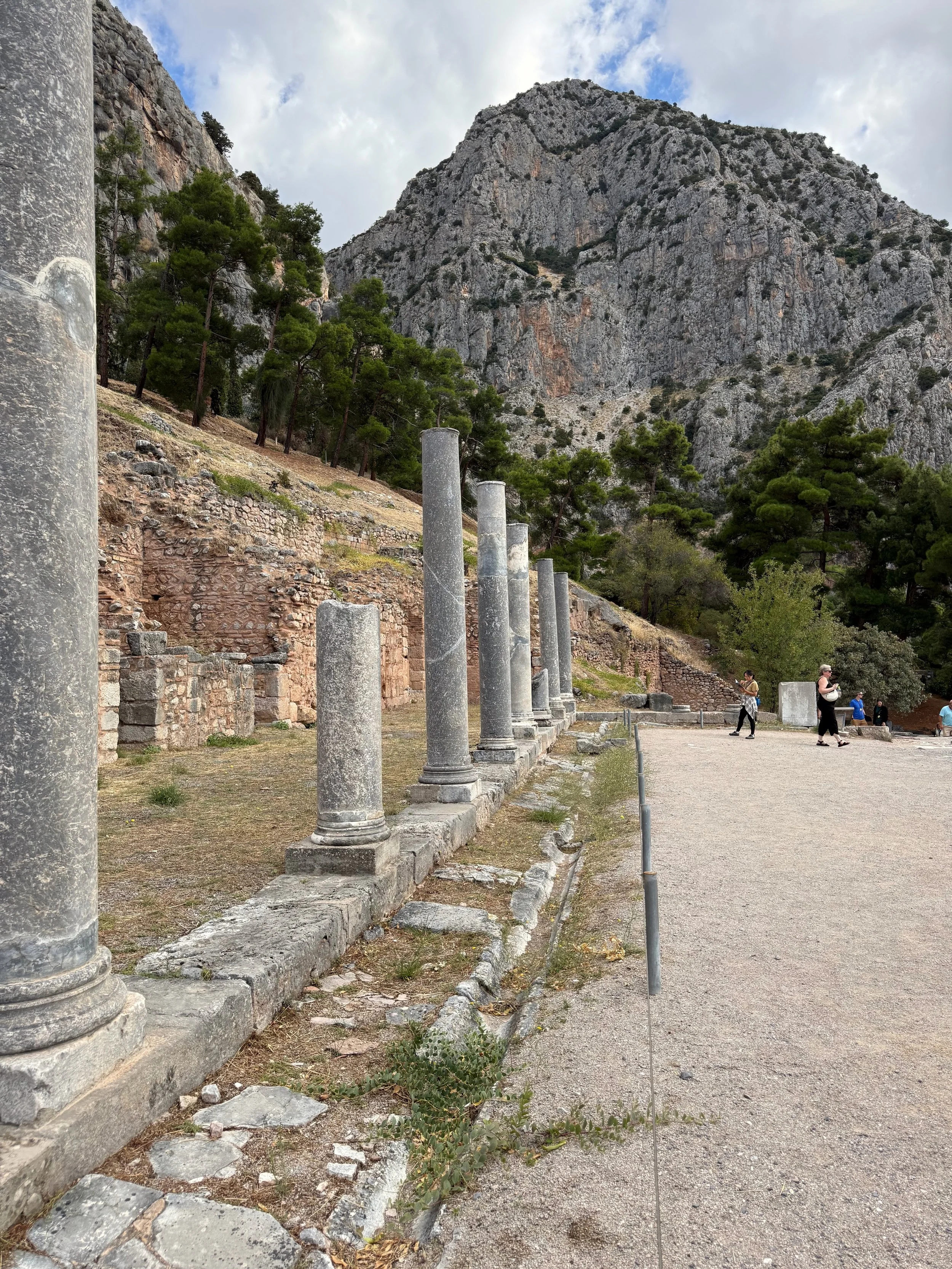
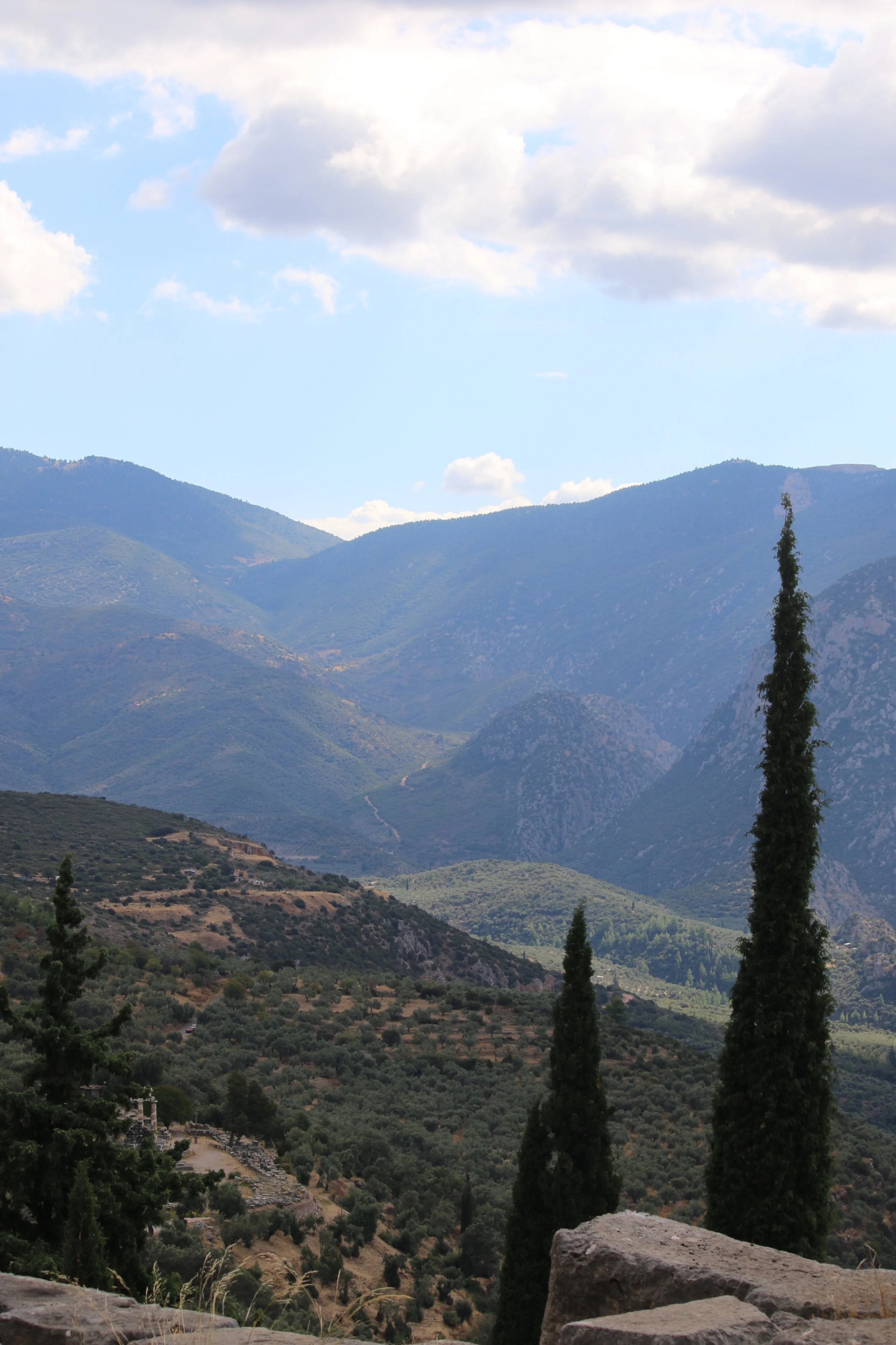
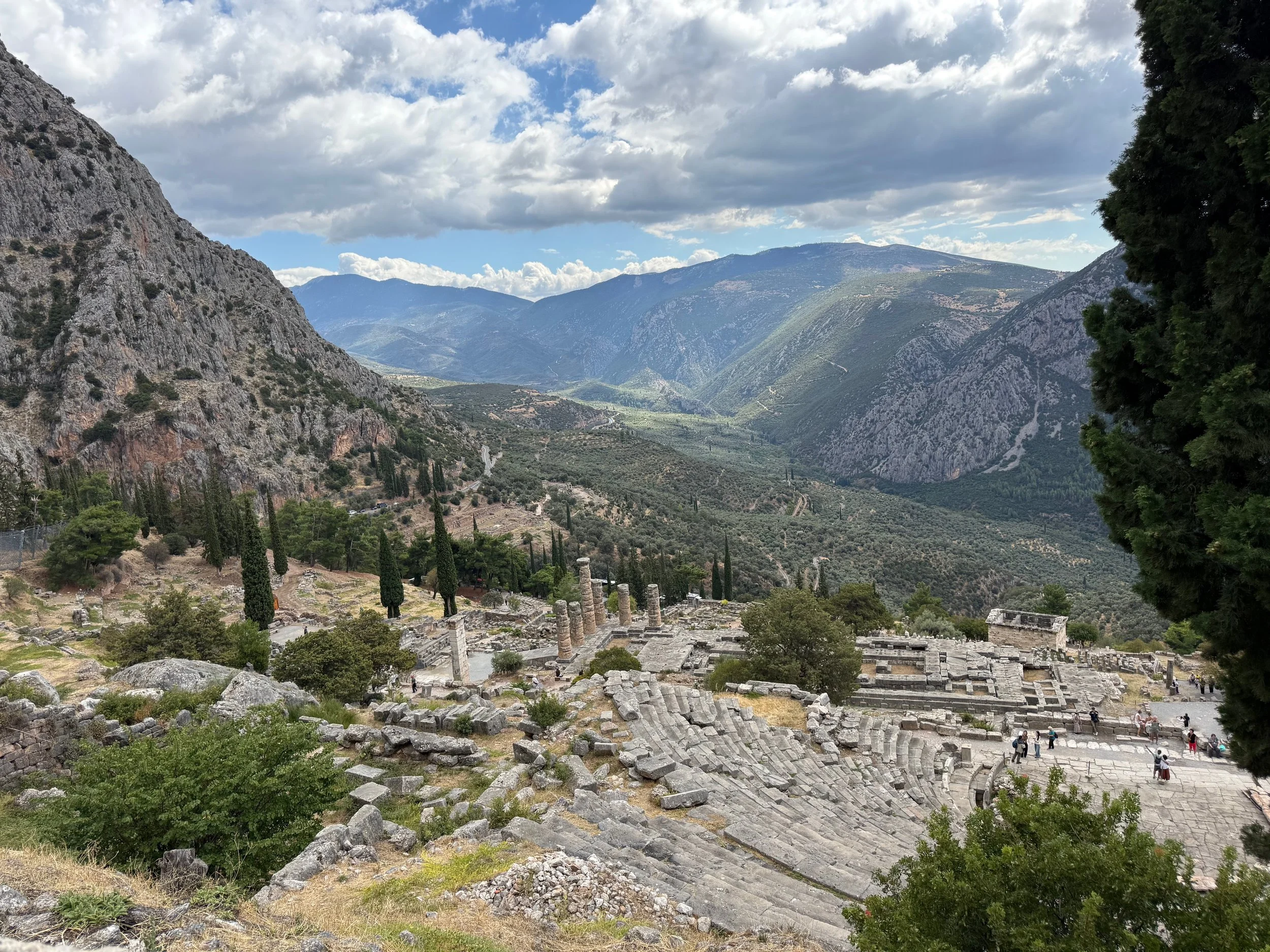
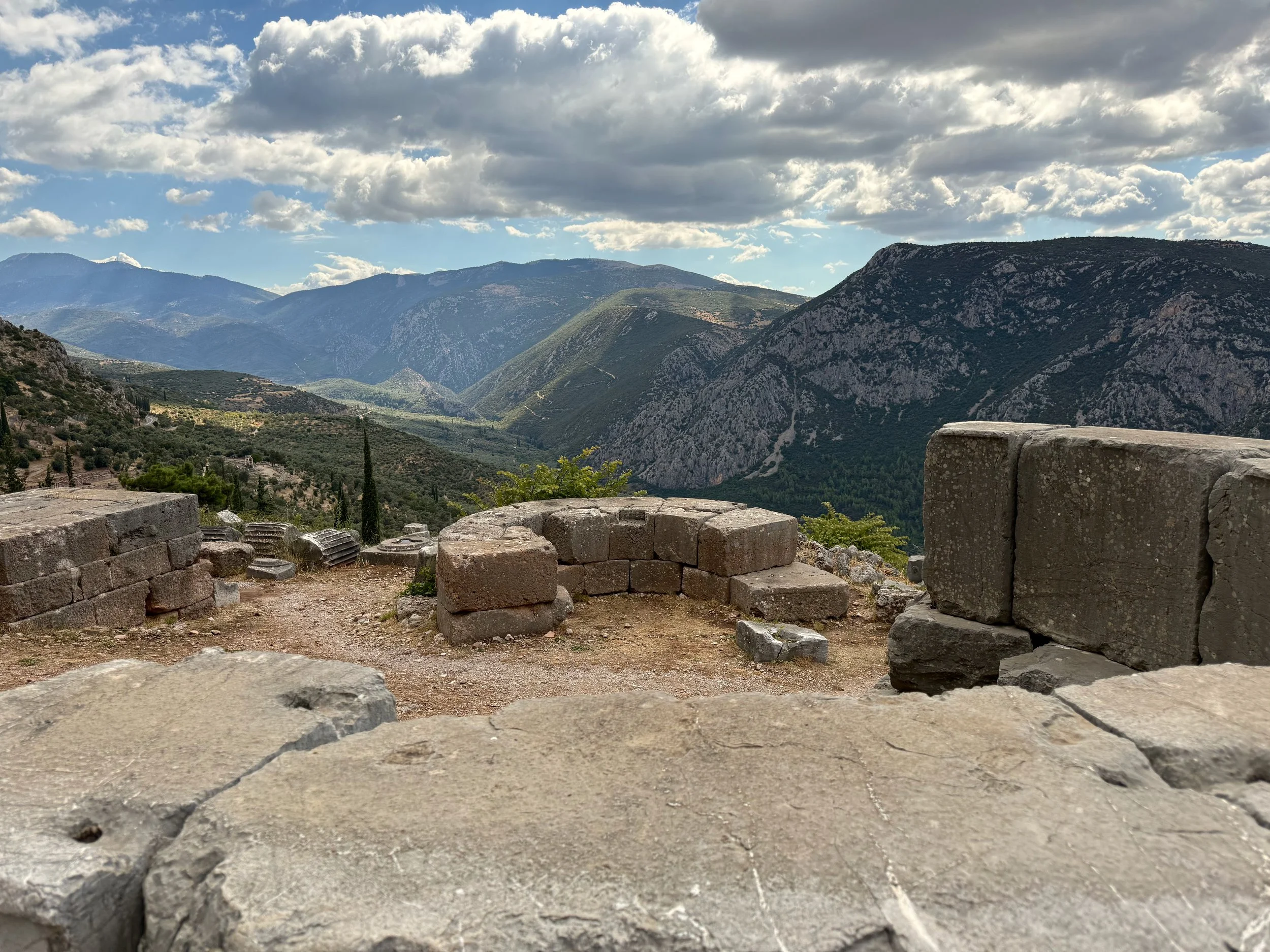
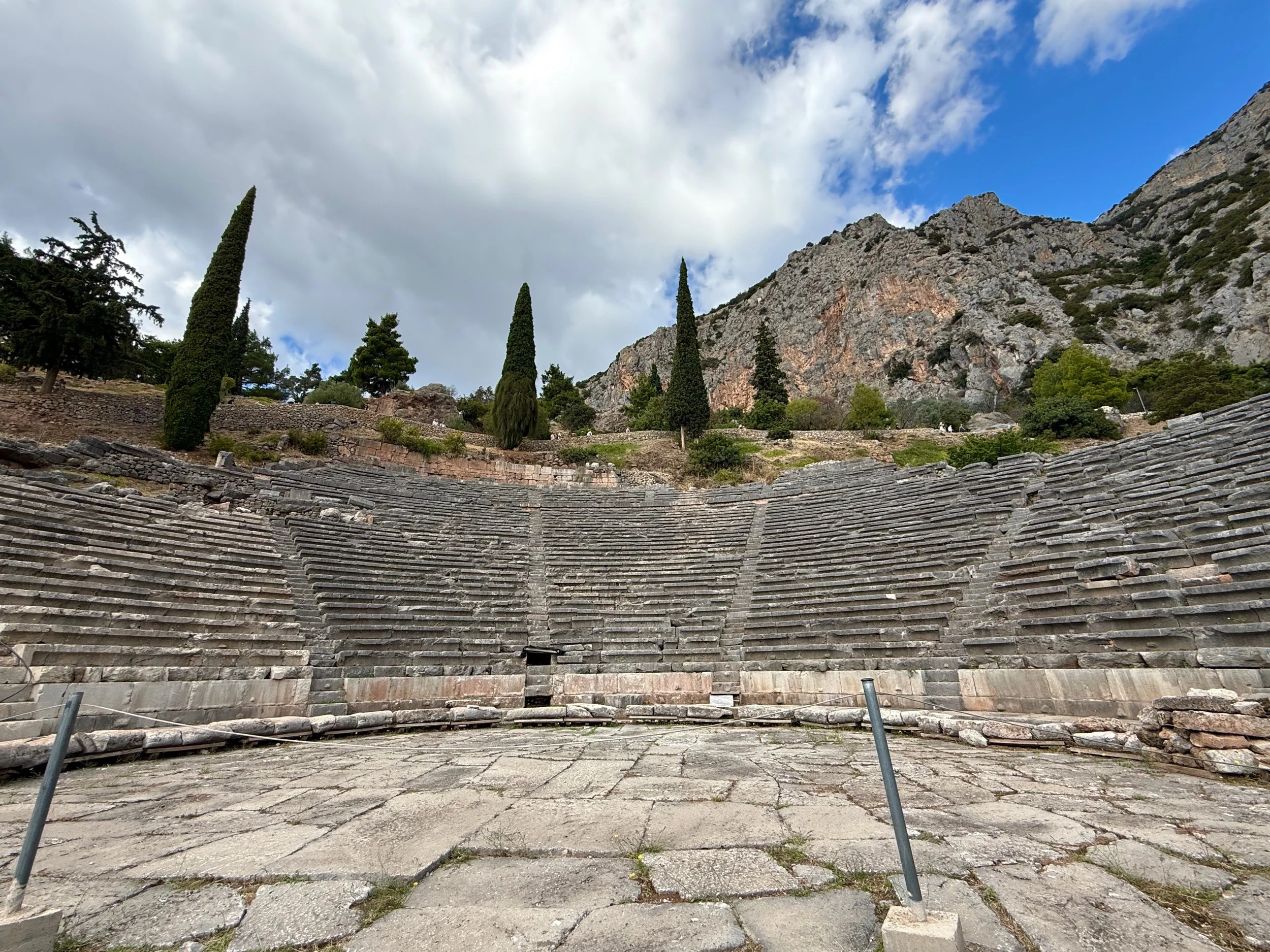
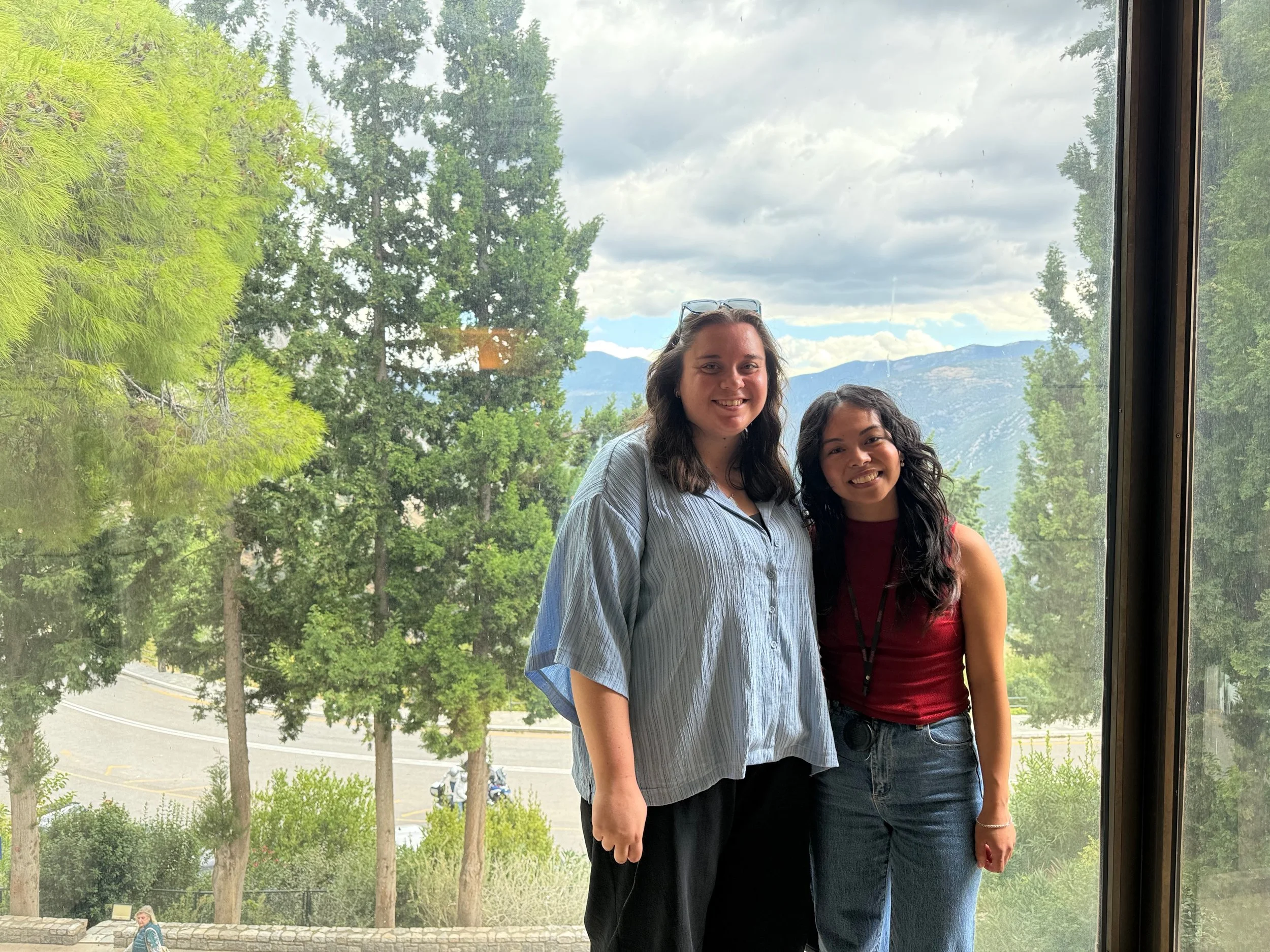
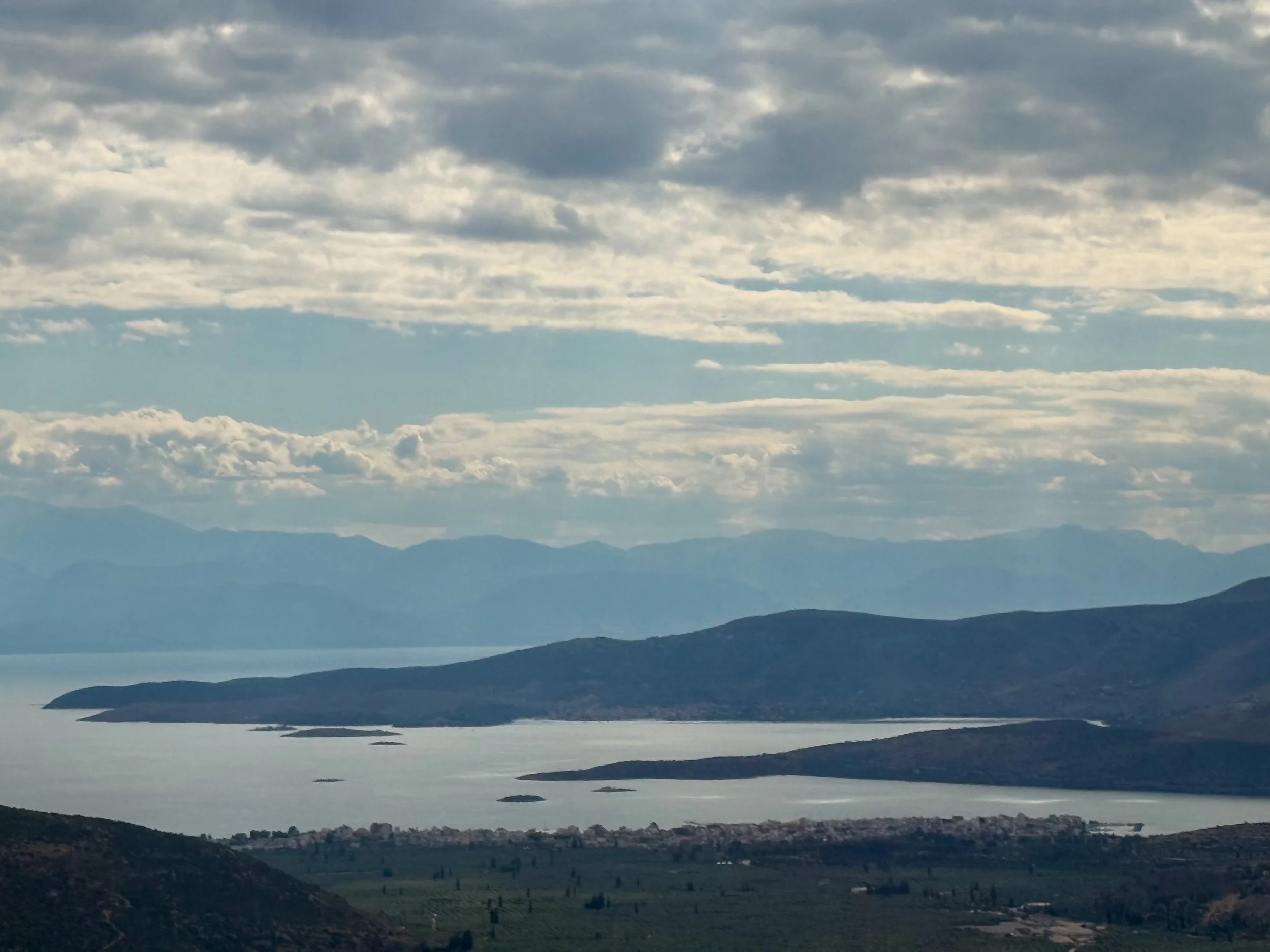
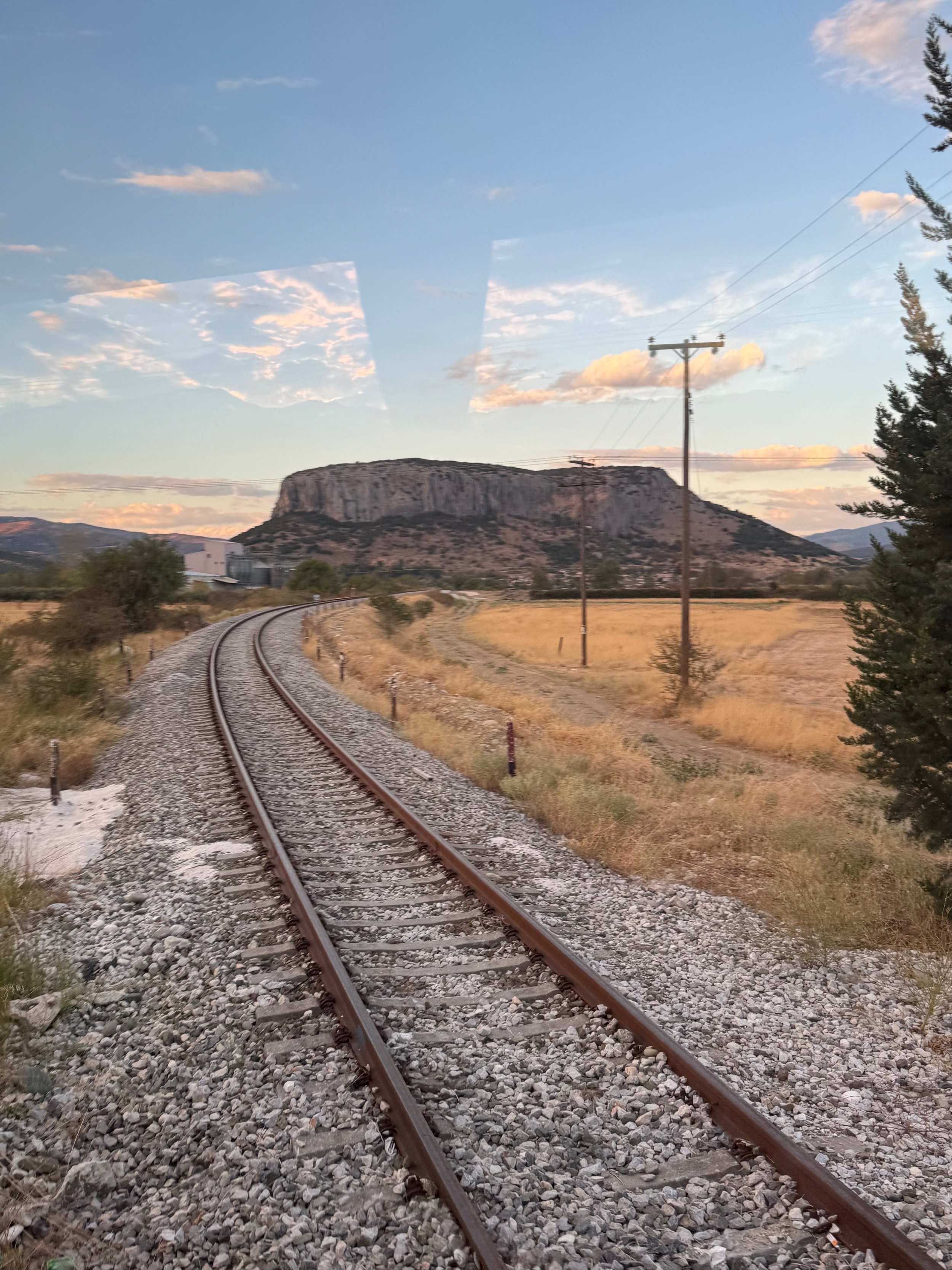
The Delphi archaeological site was in a stunning location. Beyond the ruins, the landscape tumbled away into the distance with layer upon layer of rugged mountains, deep green valleys and exposed limestone cliffs. Tall, slender Cypress pines sprung out of the ground looking so Greek and adding colour to the vista. Clouds above us threw shadows across the hills with sudden bursts of sunlight lighting up parts of the valley. It was truly breathtaking.
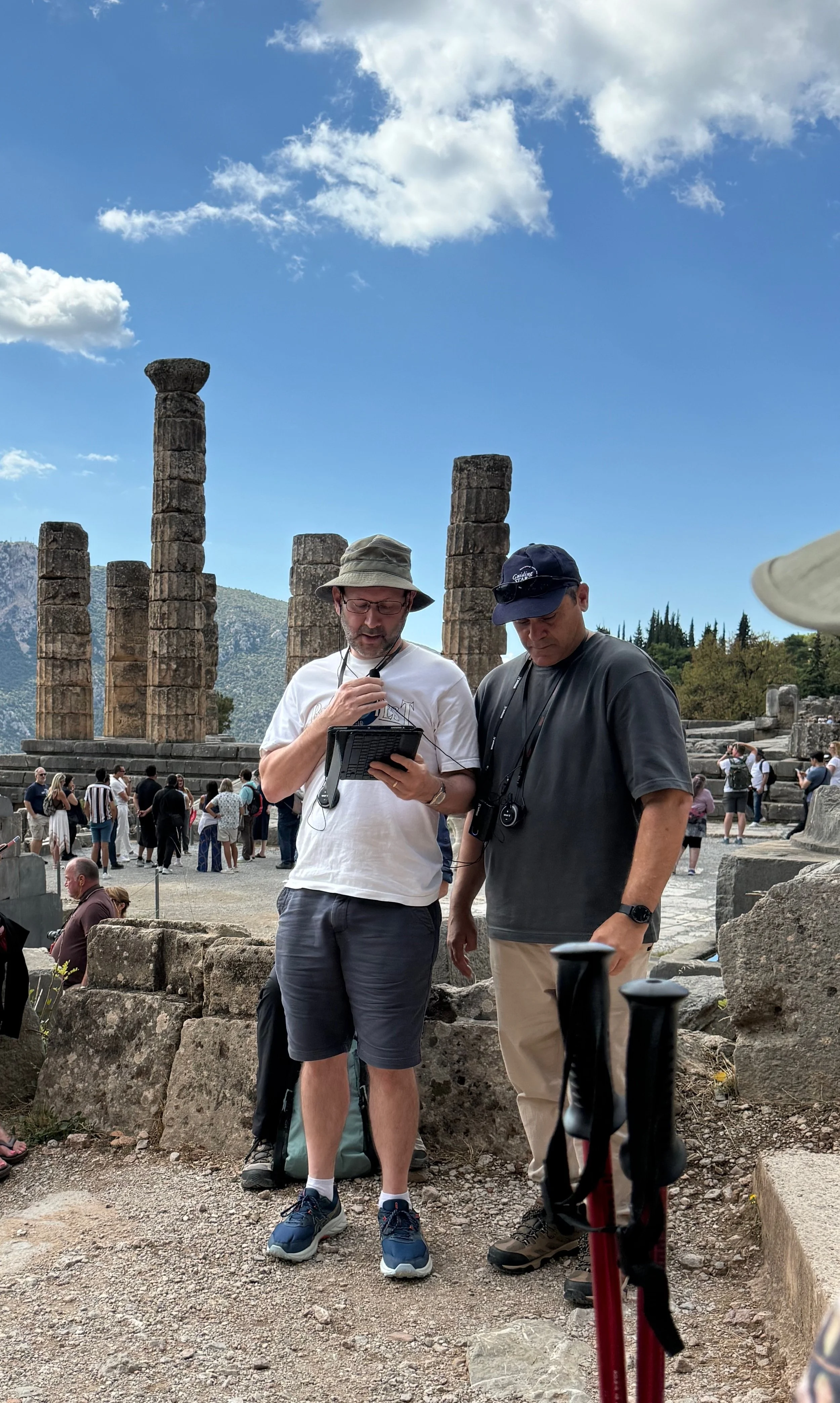
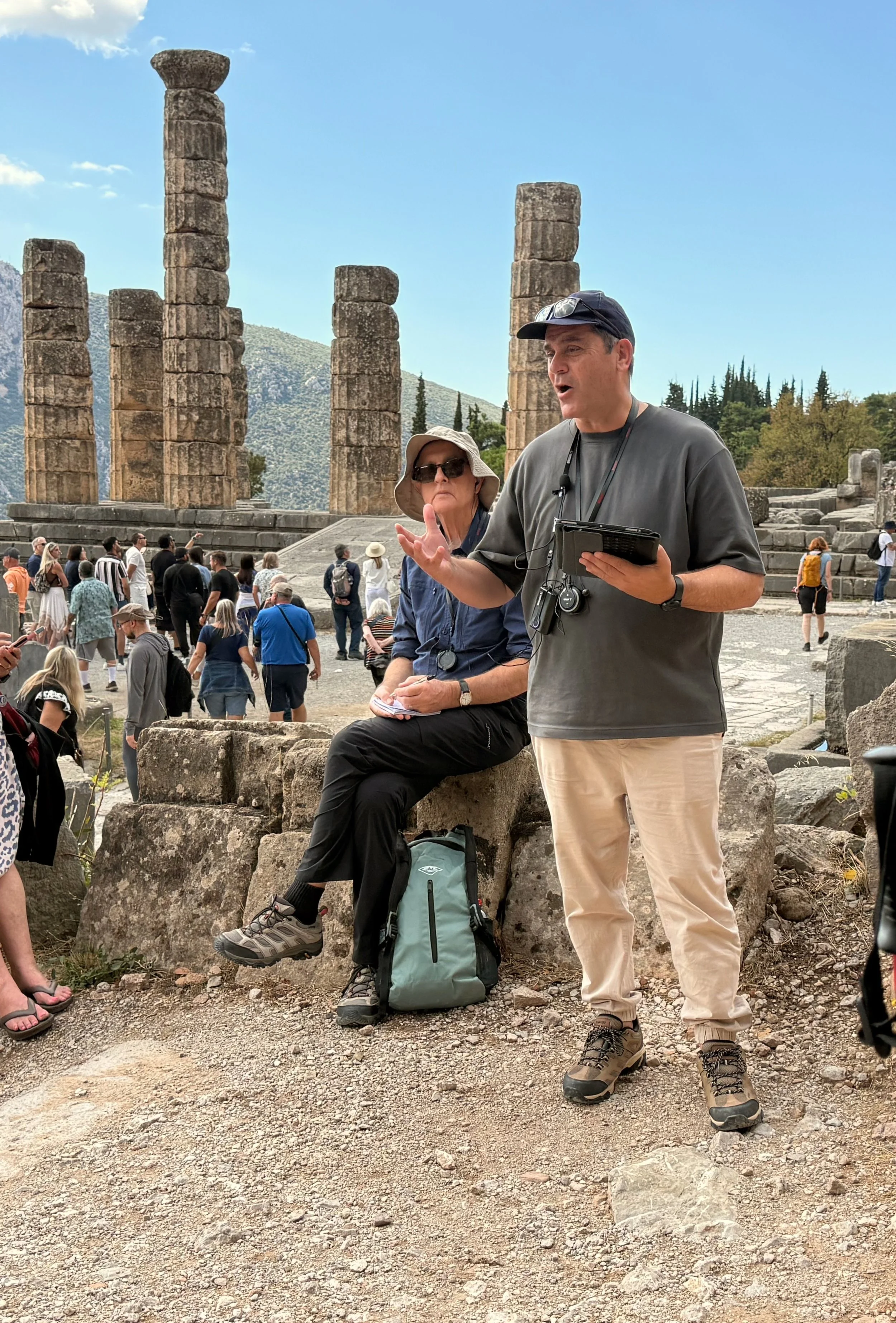
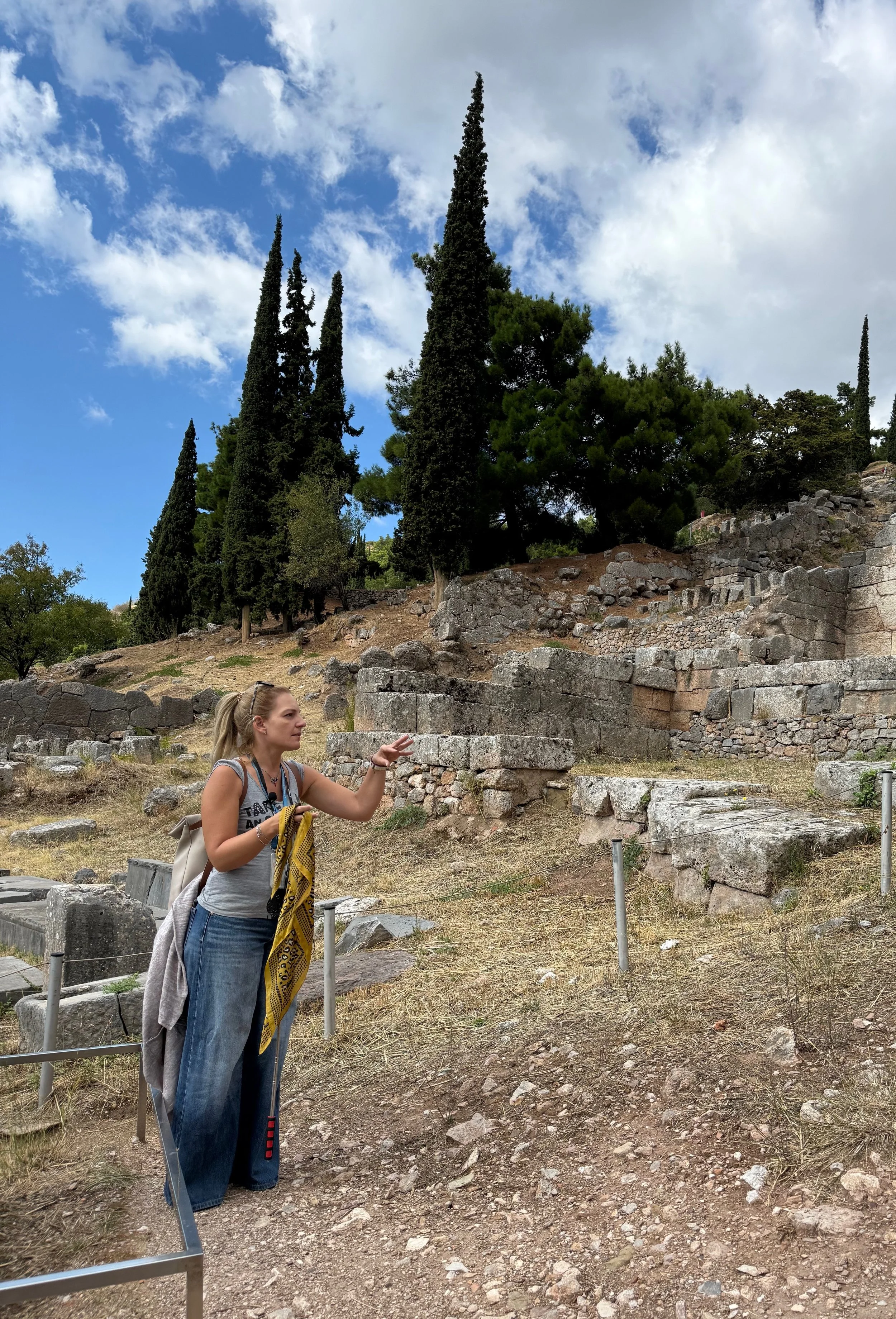
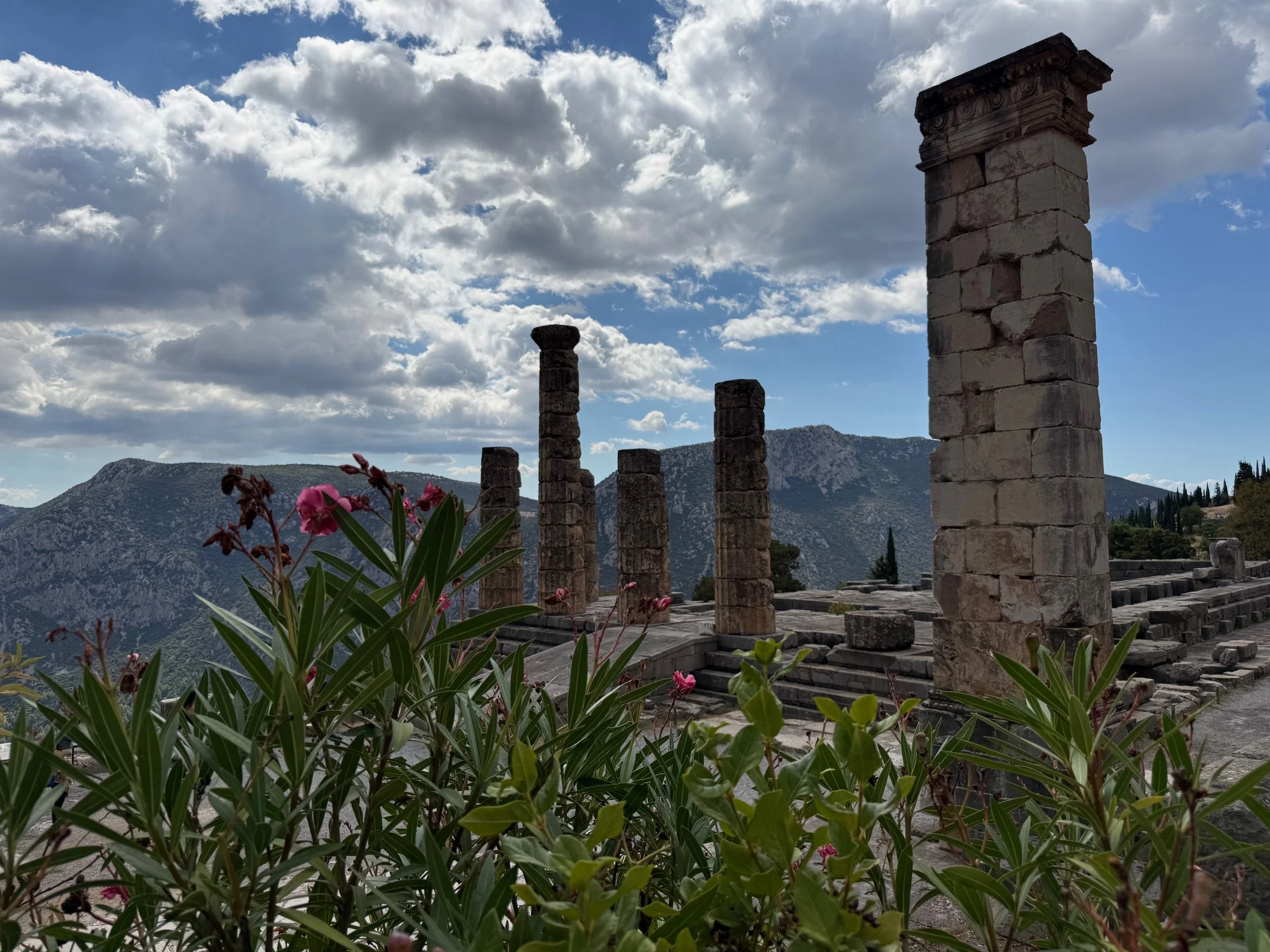
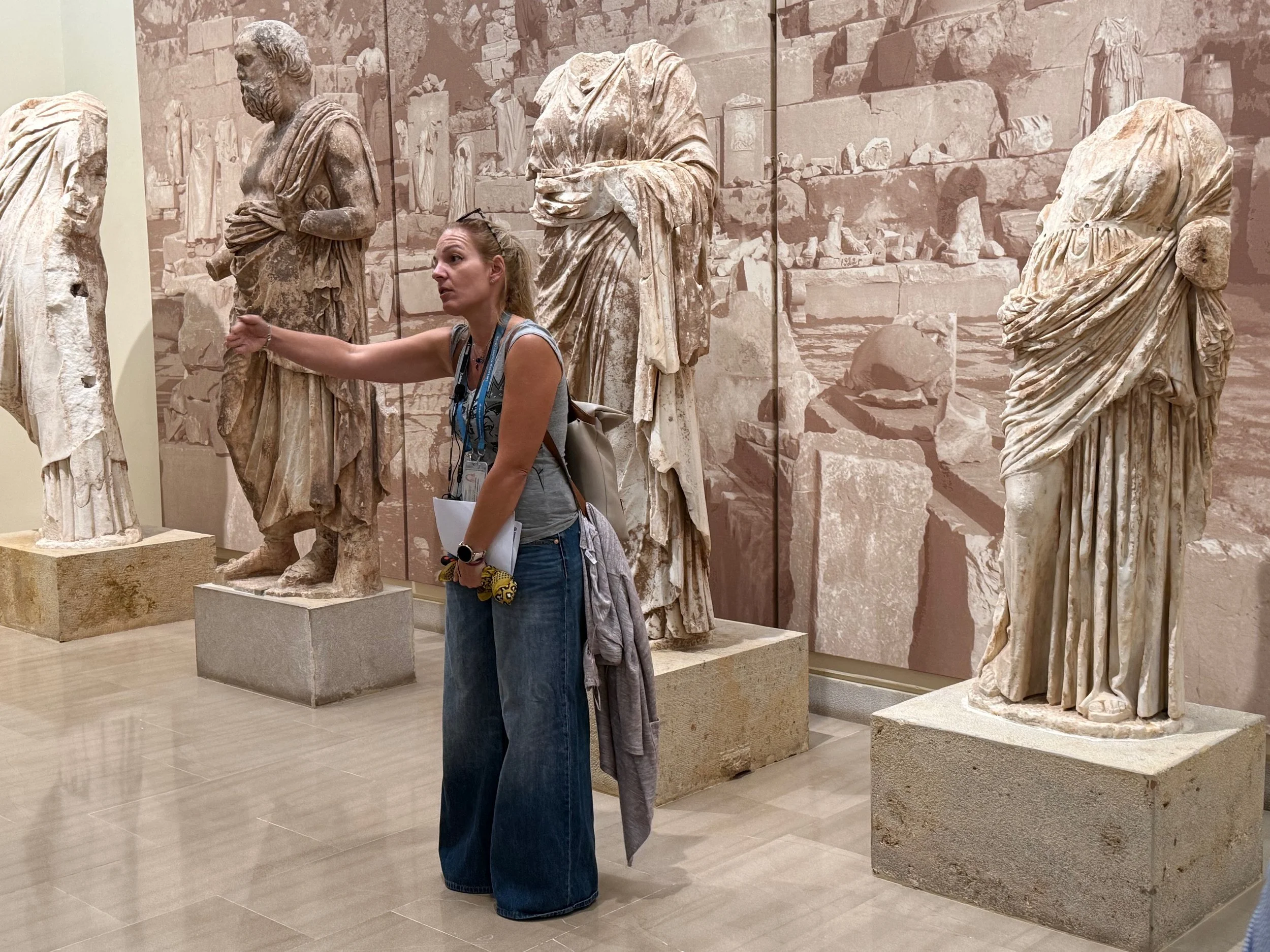
The site housed a much smaller version of Apollo’s Temple - though still pretty impressive - and a big amphitheatre carved out of the hillside. Marianna continued to enlighten us with her commentary and we learnt about the coveted position for any aspiring young Greek female living in the ancient world: the ‘Pythia’. Any woman chosen for this powerful and prestigious role became the teller of fortunes - the ‘Oracle’. She was required to inhale various happy gases and chew some ancient equivalent of magic mushrooms, putting her in a trancelike state (aka high as a kite). She would plant herself inside the temple and dish out advice to those needing guidance, by dipping into a bowl of black and white beans - black were bad news, white were good. Her prophecies were delivered in gibberish (not surprising) and interpreted by the priest. It sounds to me like the ancient world’s answer to the magic 8-ball.
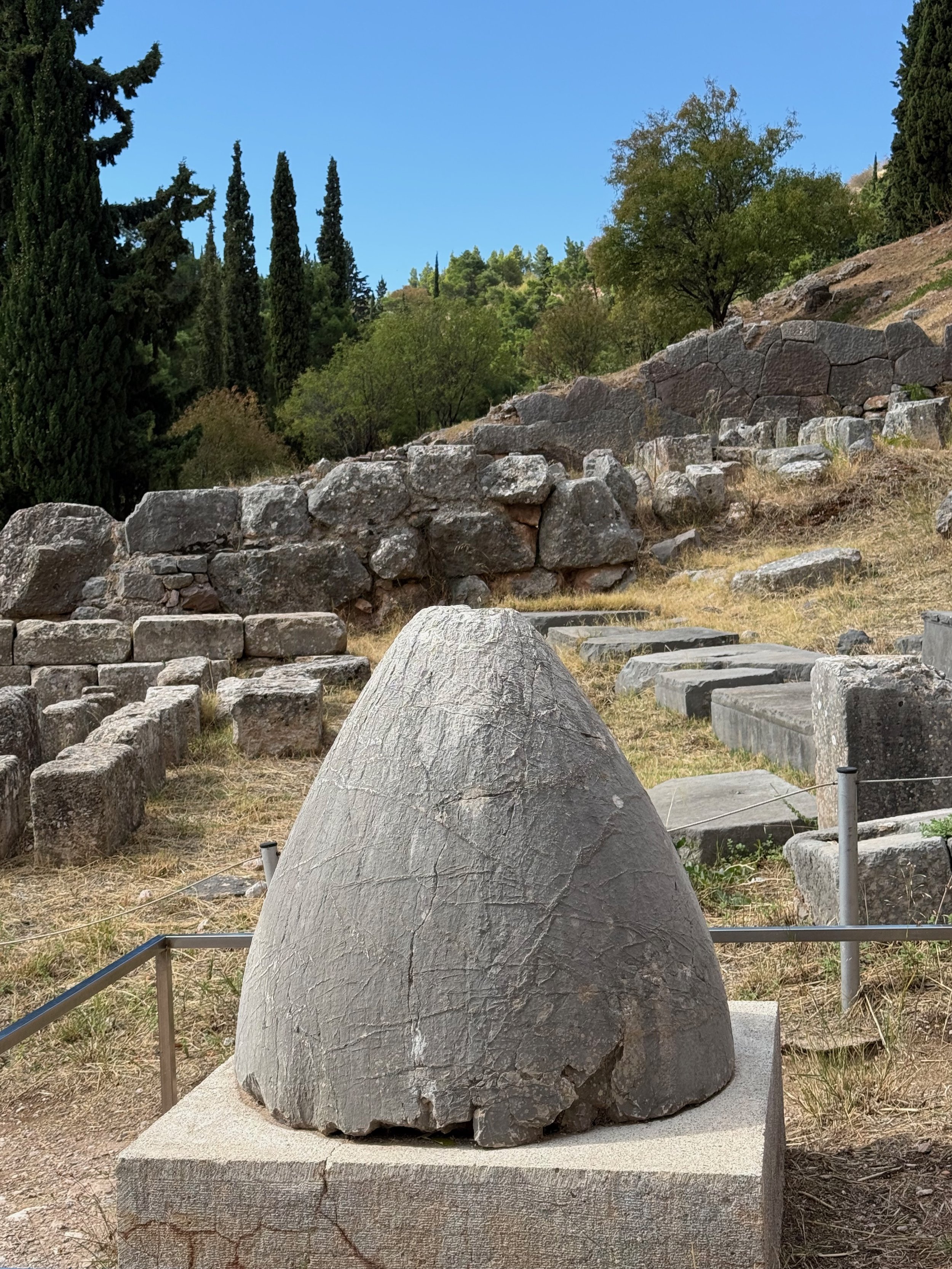
Legend has it that Zeus, wanting to settle an argument about where exactly the centre of the world was located, sent out 2 eagles to fly from either end of the globe at the same pace. Wherever they met was to be declared the centre of the world; the argument put to rest. Delphi was where the 2 feathered friends reunited and the place became known as: ‘The Bellybutton’, marked with a ‘navel’ statue (obviously an outy).
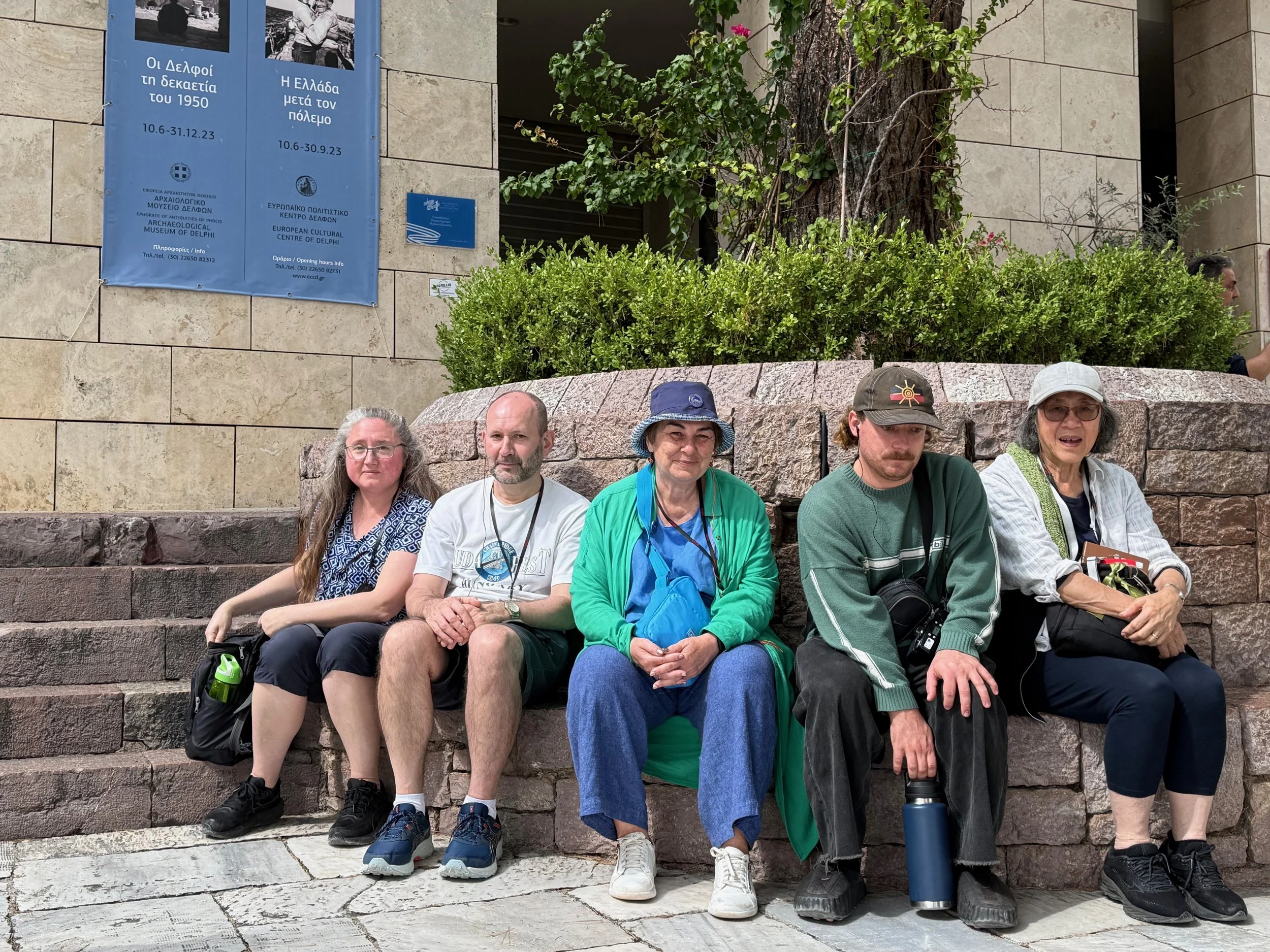
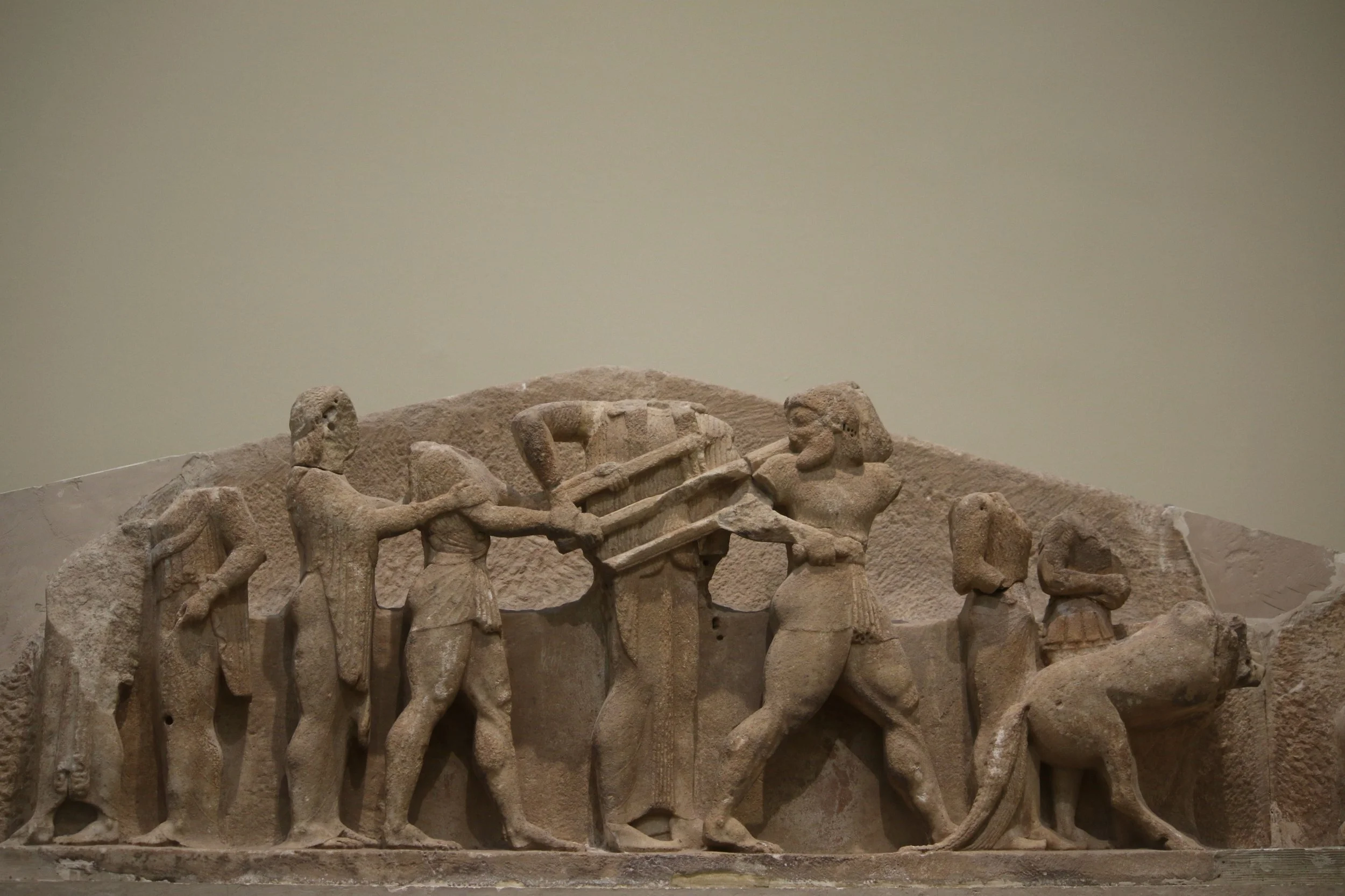
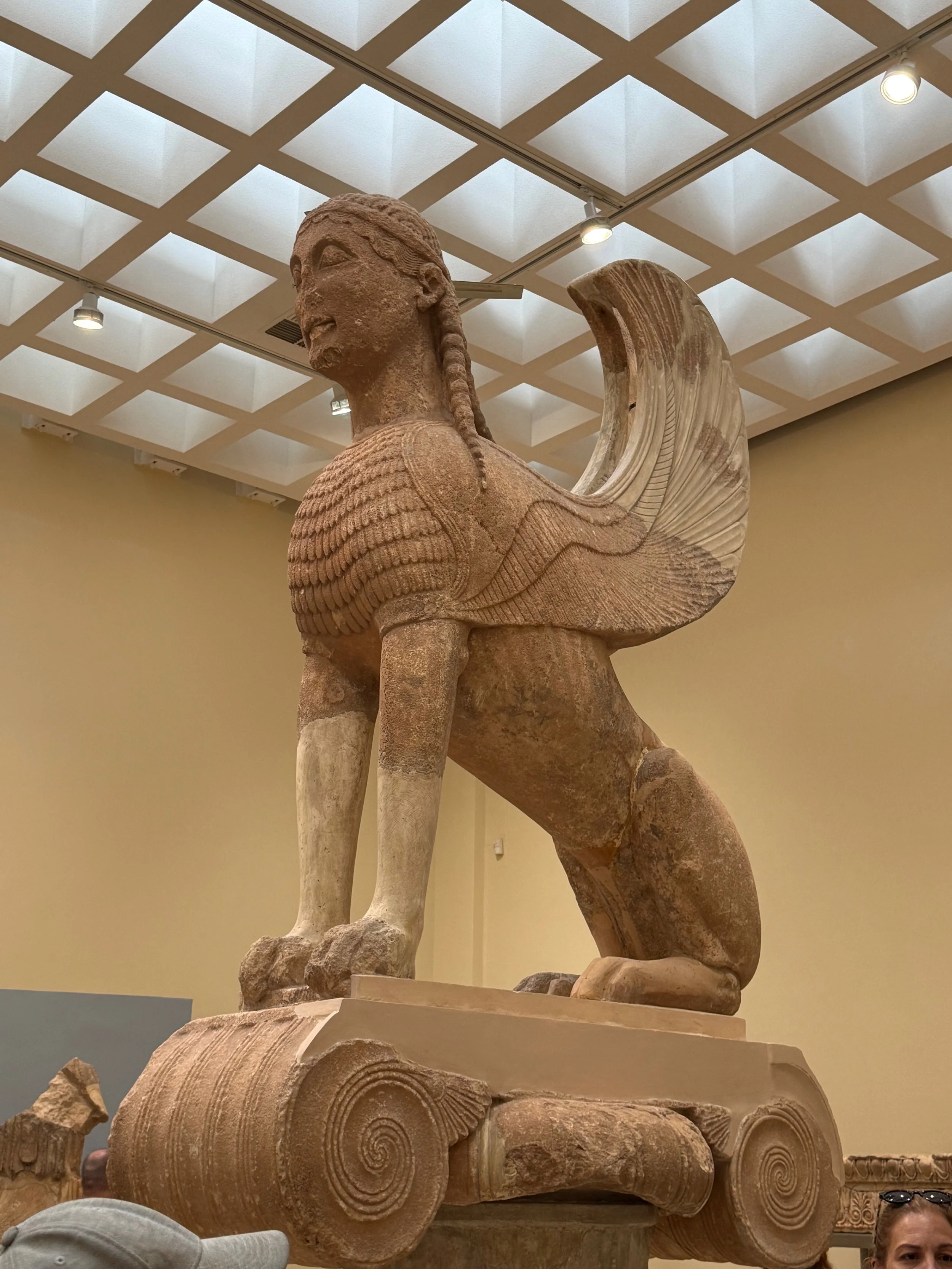
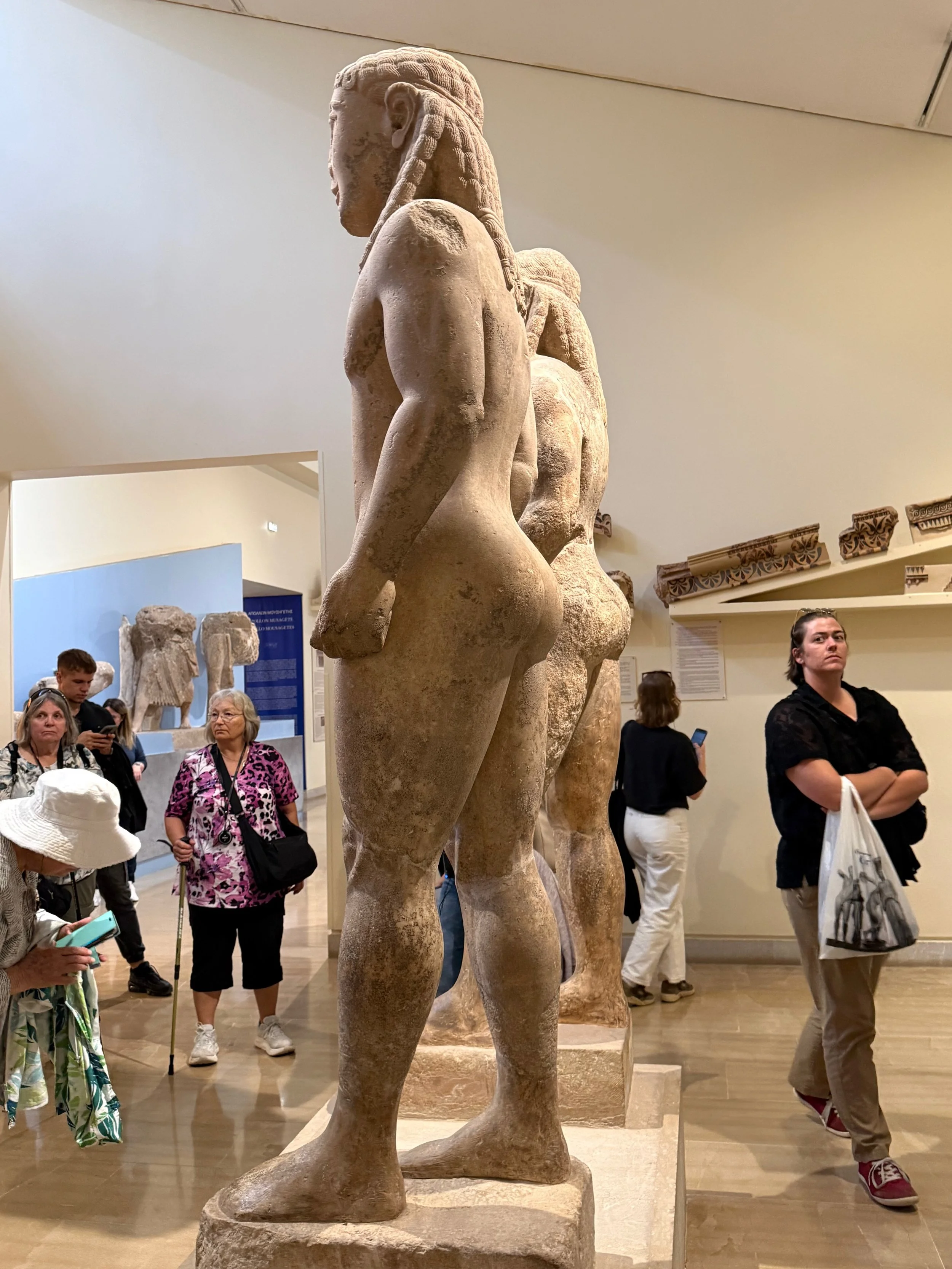
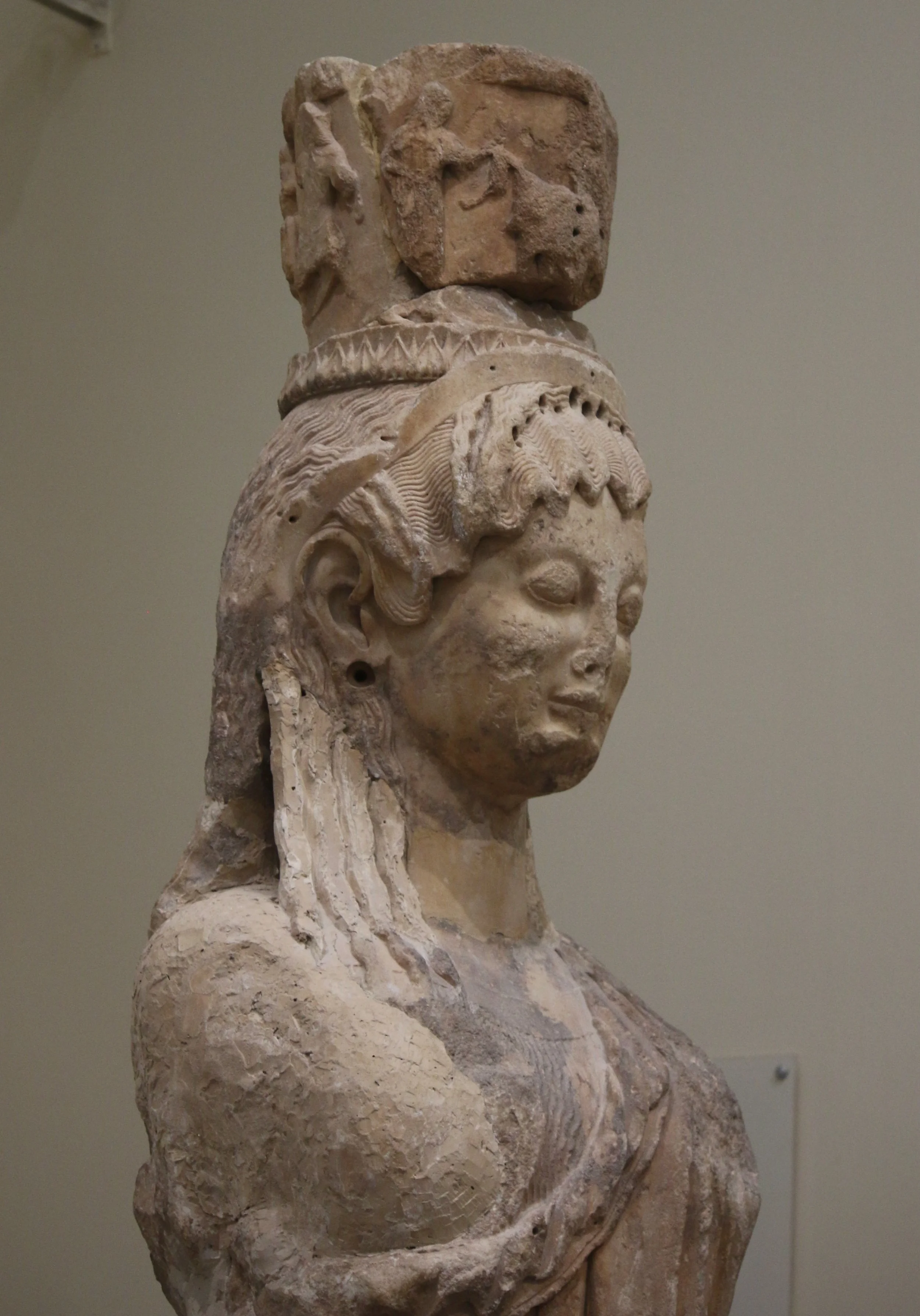
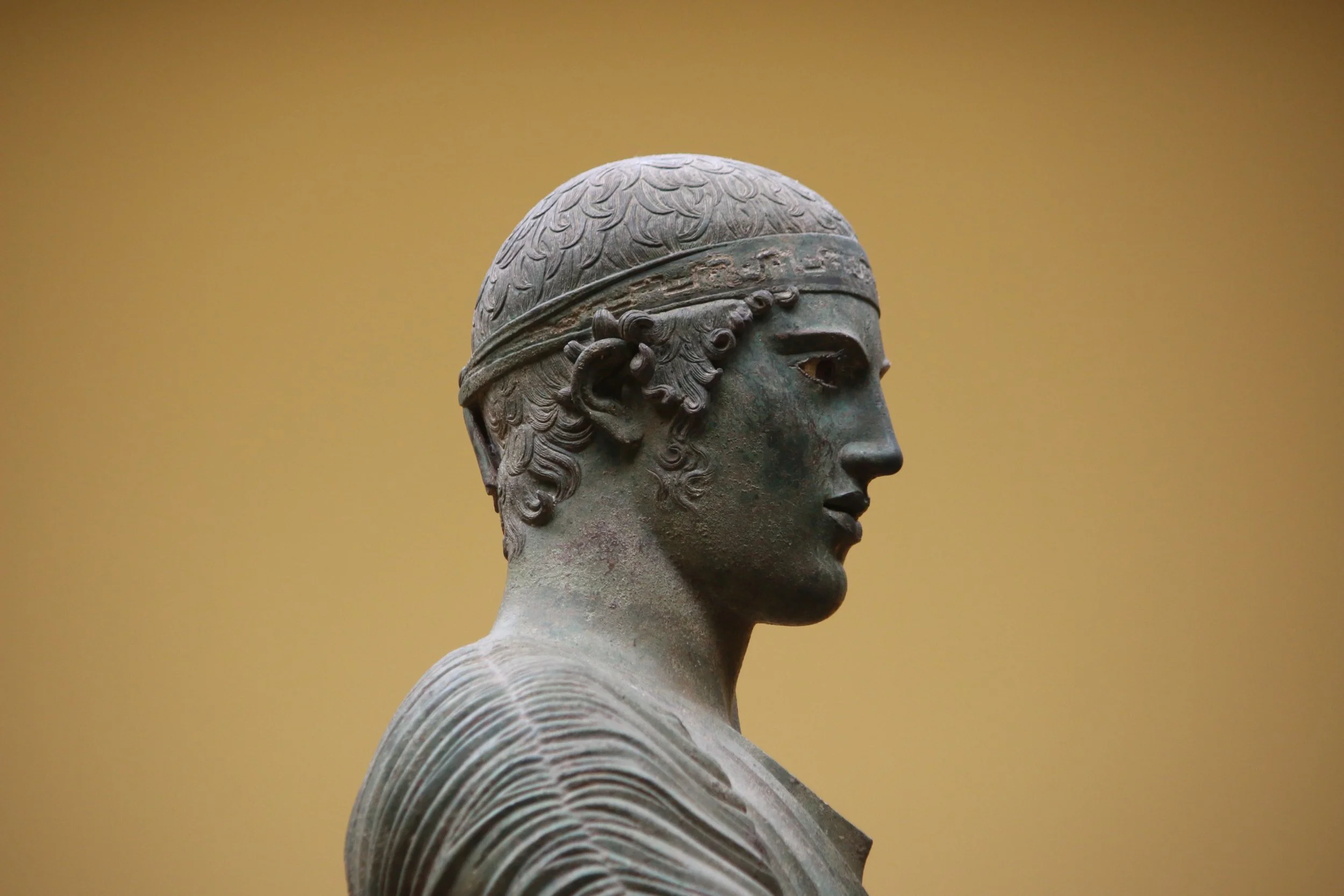
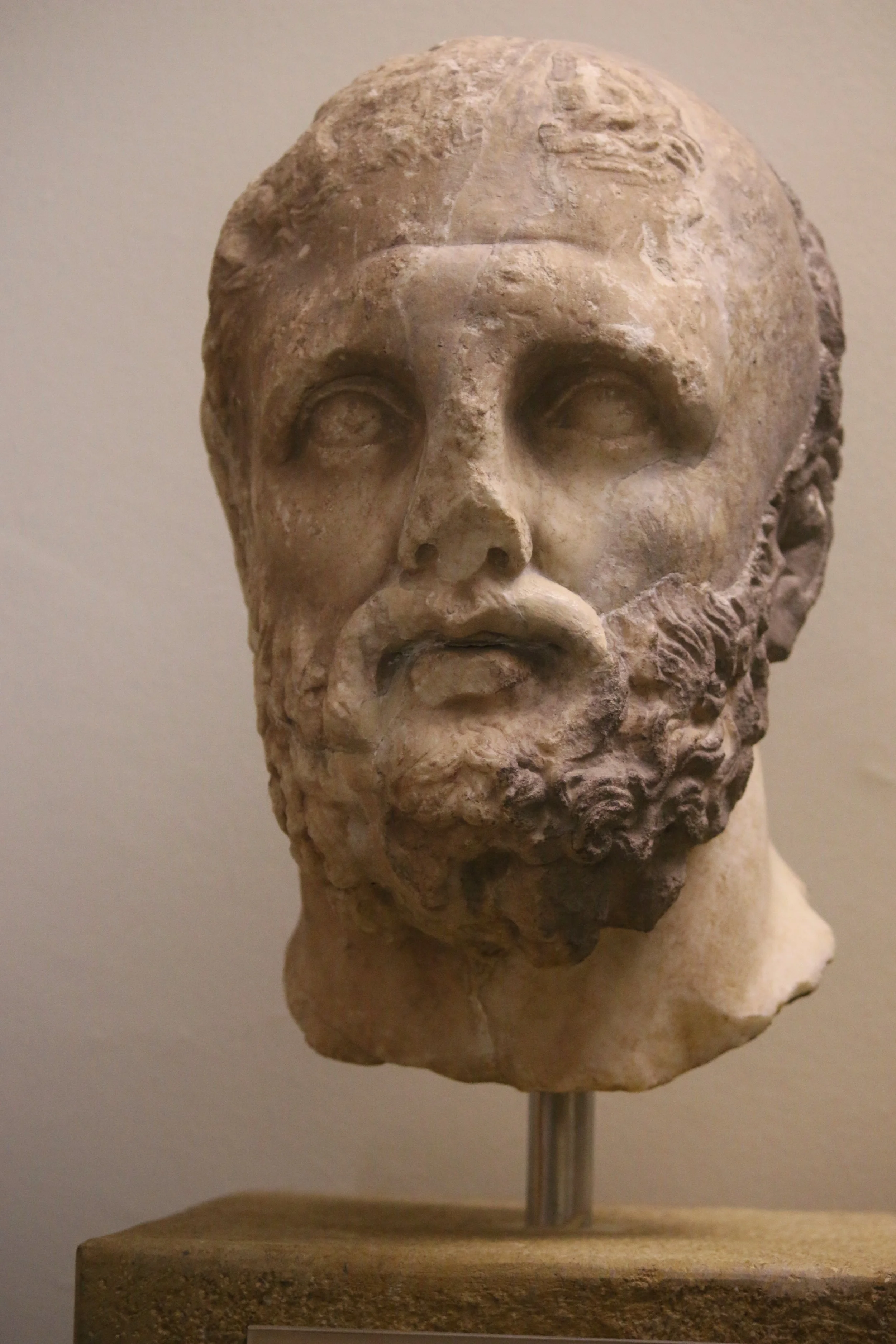
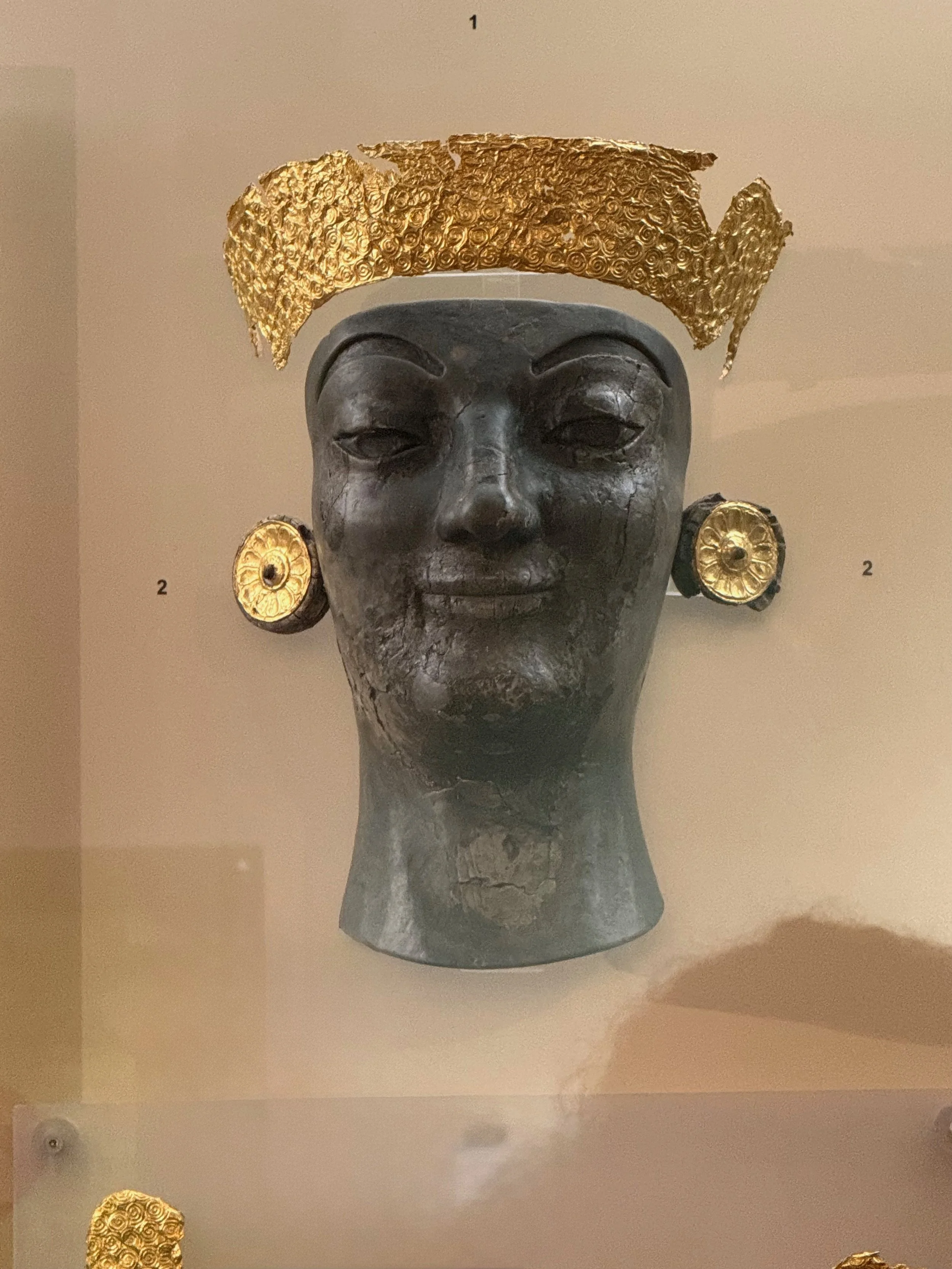
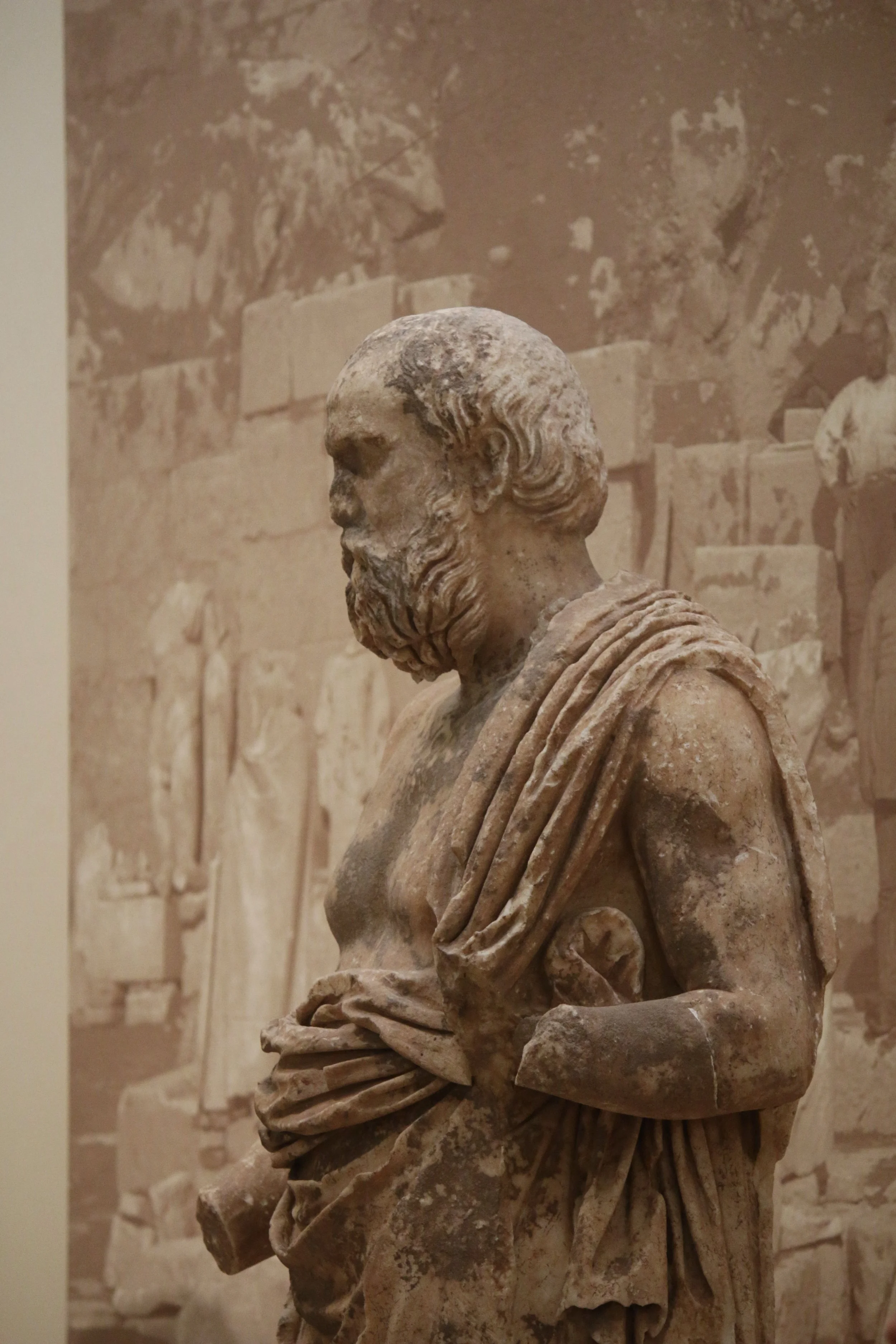
There were some amazing things to see in the Delphi Museum, like my favourite, the Greek sphinx with a woman’s head to signify wisdom and intelligence. There was also a beautiful bronze statue of a chariot driver, so detailed and 1 of only 11 ever found in the world. Marianna was excited to show us fragments of a letter written by Emperor Claudius that mentioned the proconsul Gallio who also gets a mention in the book of Acts. This firmly dates the letter to 51-52BC (wow!) and lines up perfectly with the records we still have in the Bible, in an amazing archaeology-meets-the-bible moment.
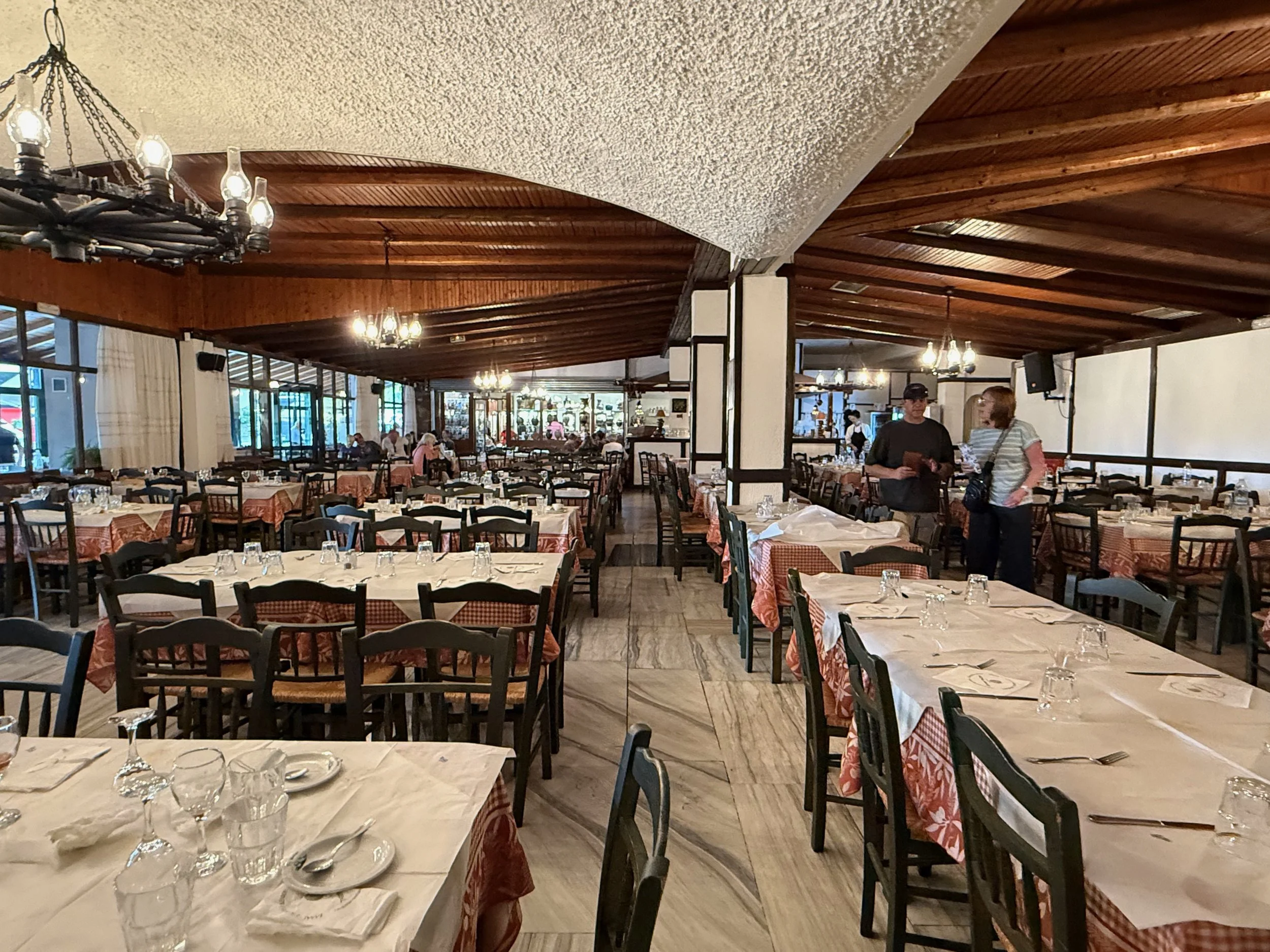
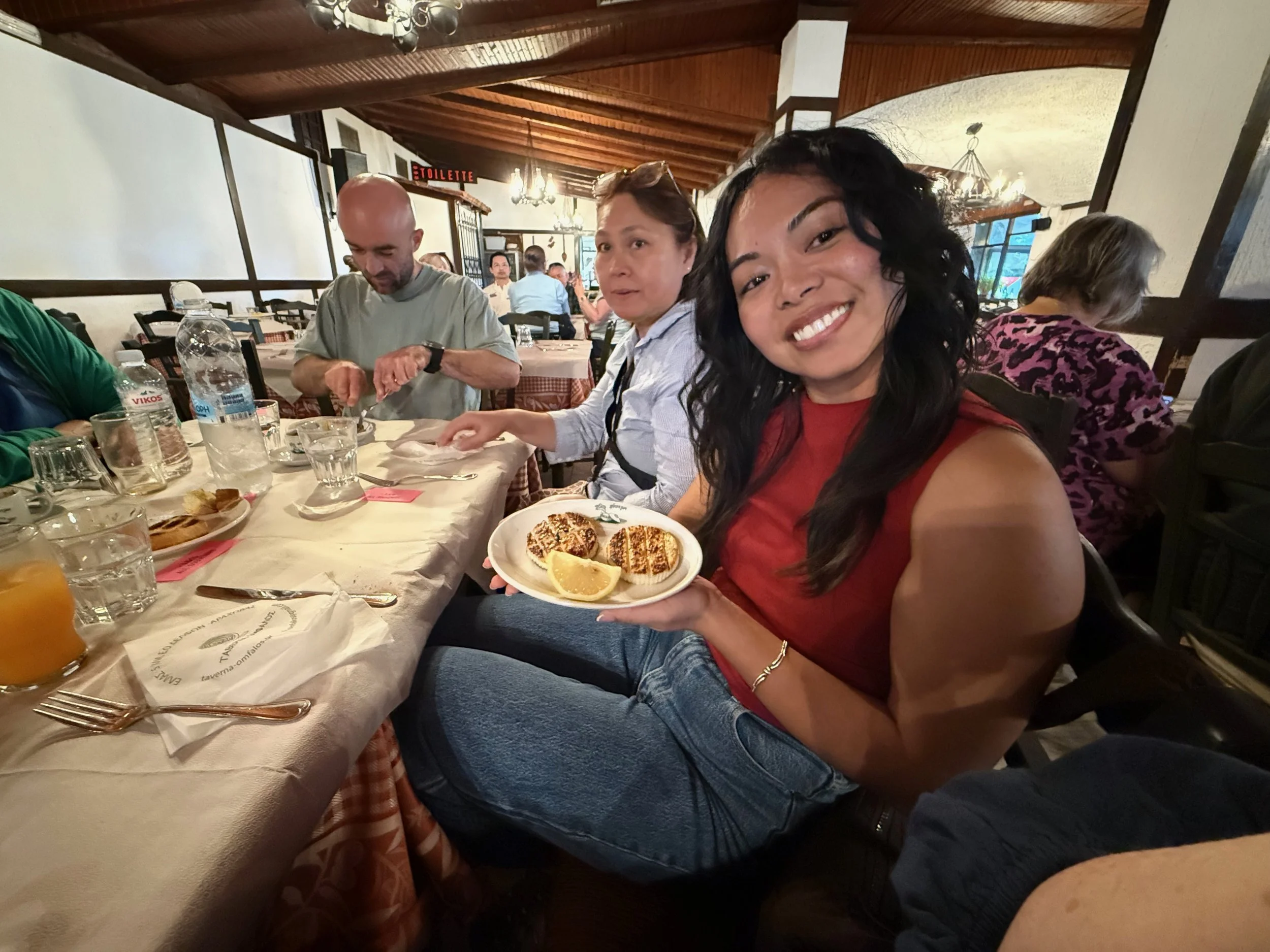
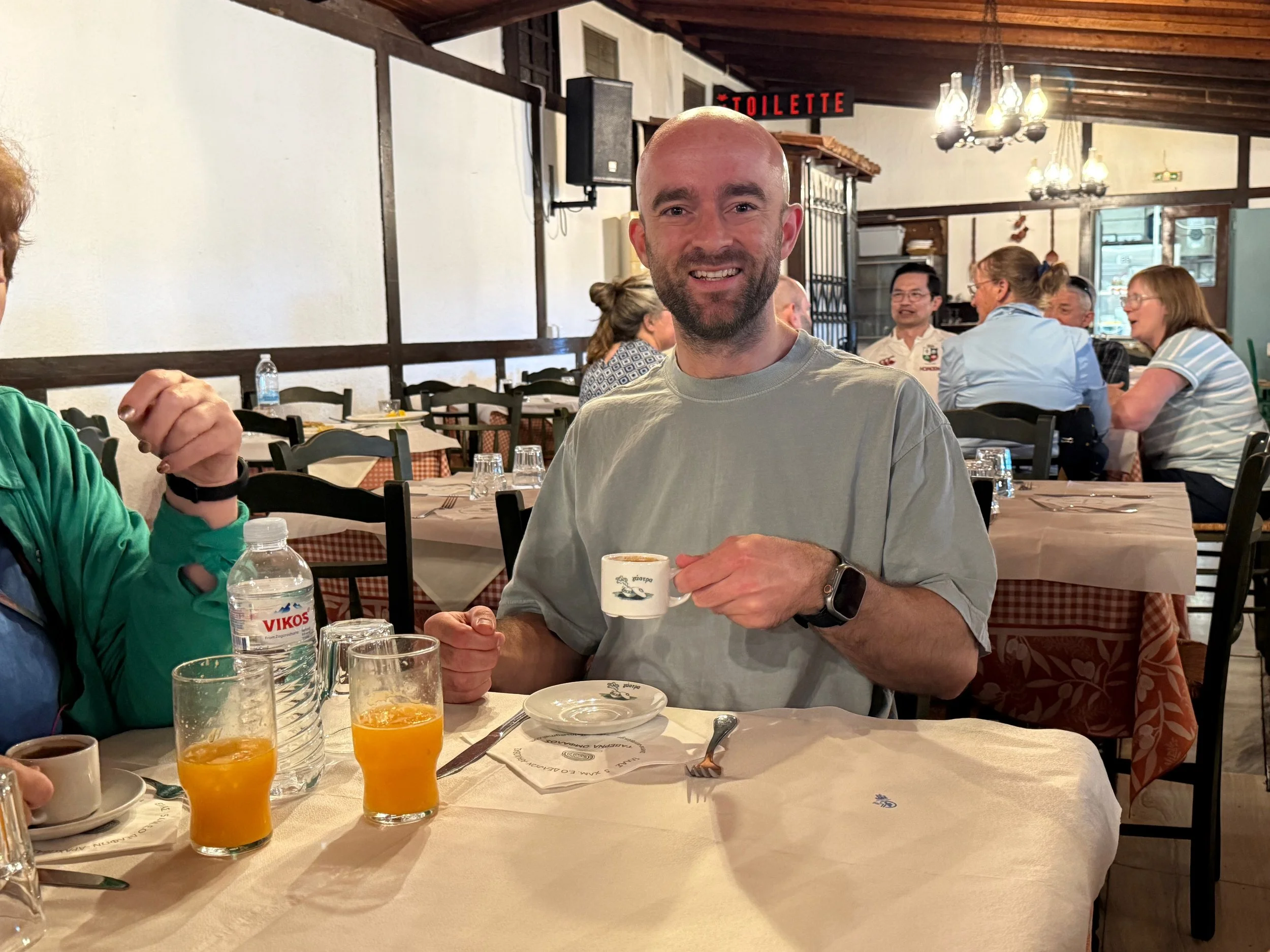
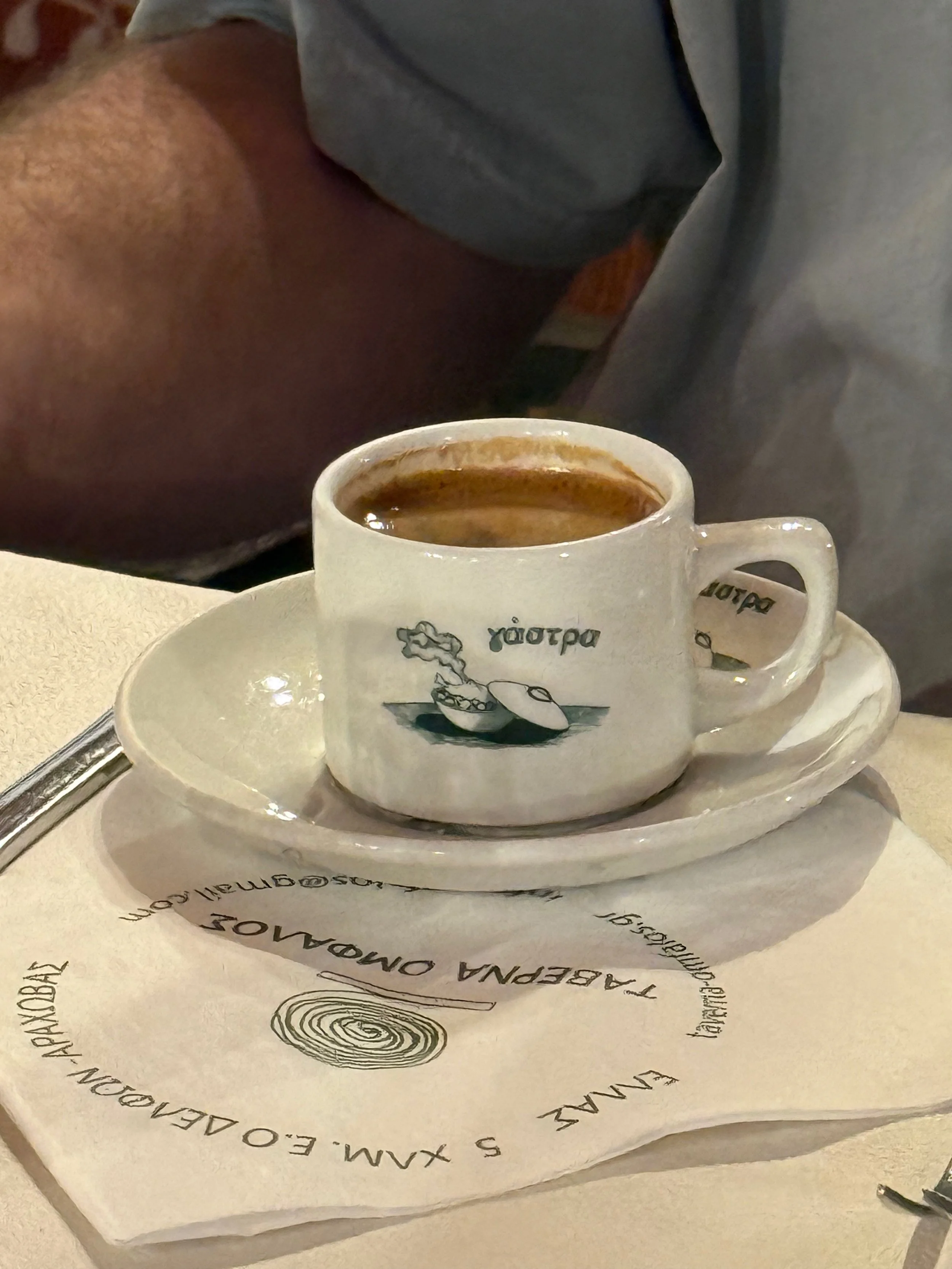
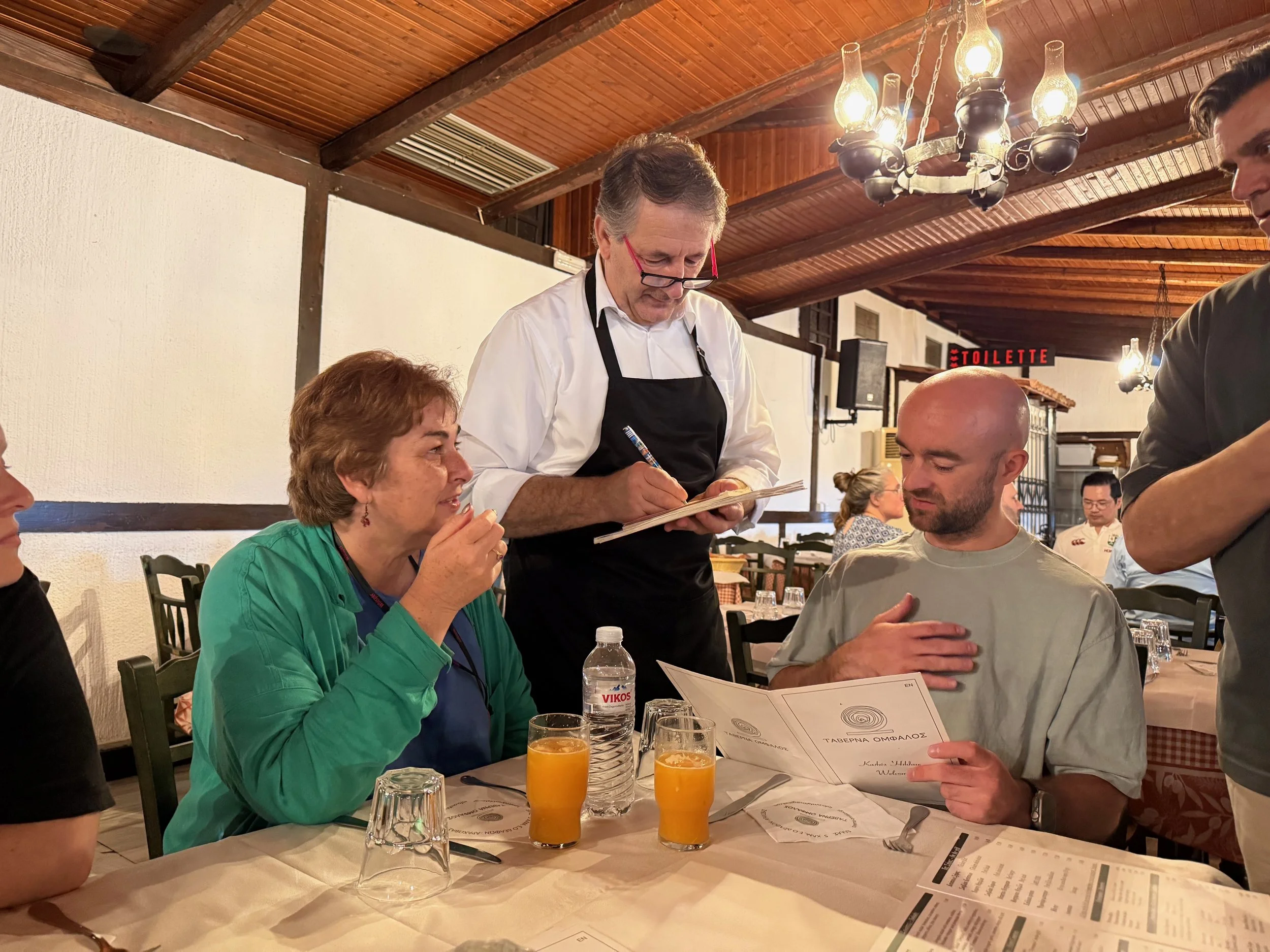
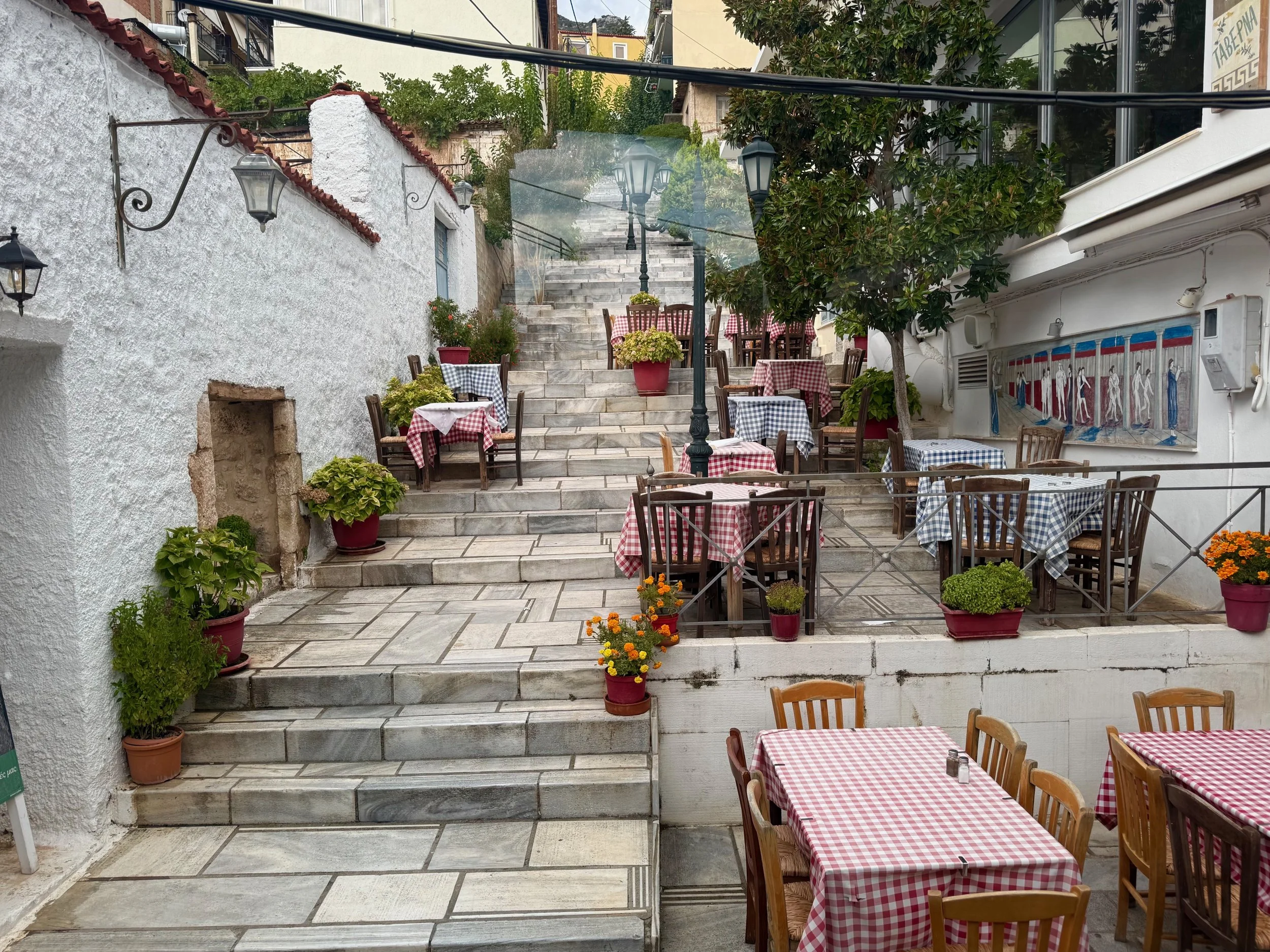
We lunched at a fantastic authentic Greek ’Tabepna’ (Taverna) where they really valued simplicity in a menu - the list of items, with no other explanation, read: Chops, Sausage, Rooster, Wild Boar, Burger etc. Our waiter was a real character and when Janine tried to order a coffee, he shook his head and said flatly, ’no’. When she enquired why this might be the case, he said she wasn’t relaxed enough and coffee needed to be enjoyed slowly with some snacks. Eventually, Janine and Sam convinced the waiter they should be permitted to sample the coffee and he reluctantly relented. Reports are in that it tasted a little earthy…like dirt.
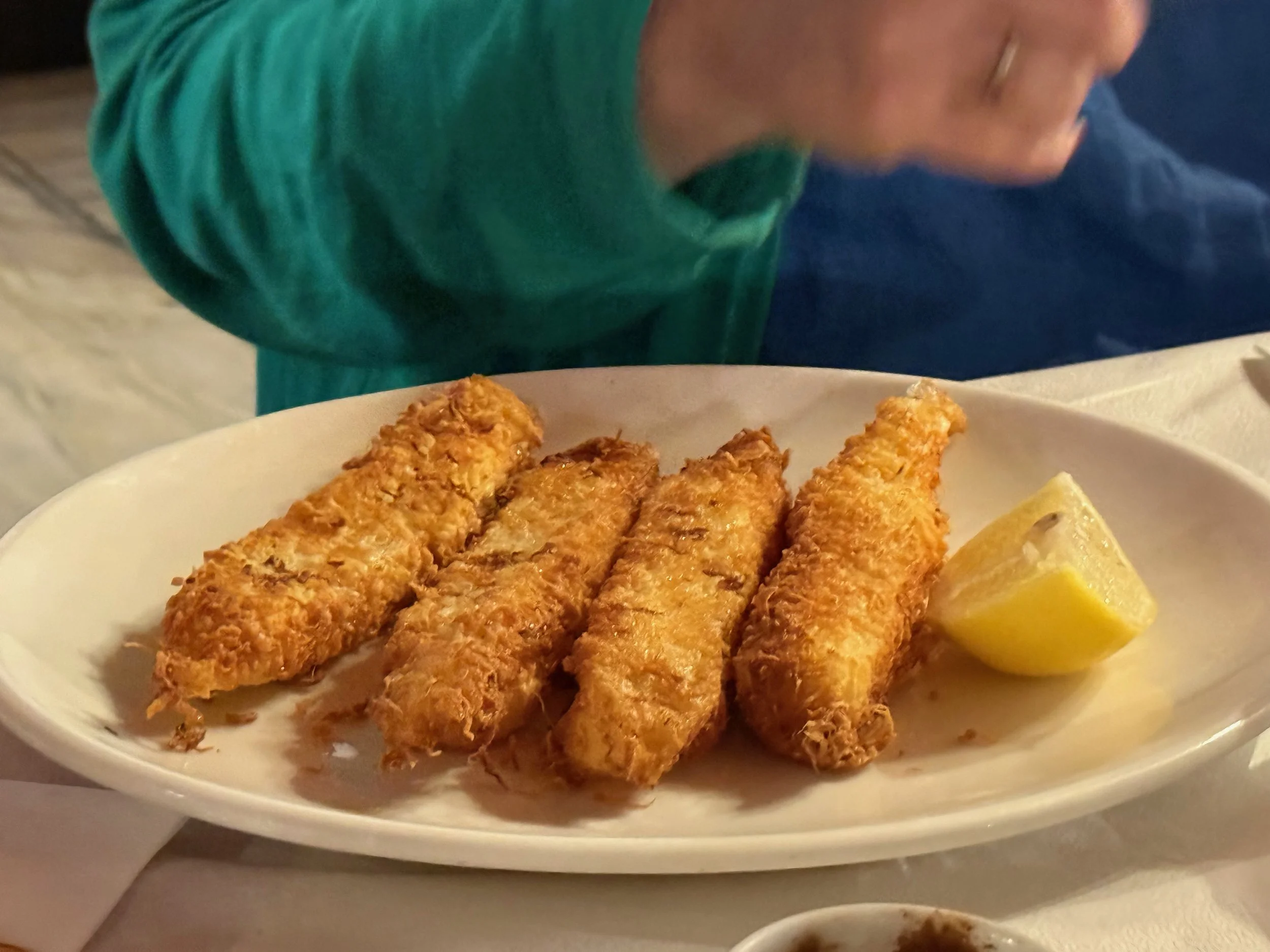
I had felt a bit queasy from something I had eaten at breakfast so stuck with a not-very-Greek bowl of hot chips but everyone else at our table embraced the Greek fare, tasting dolmades, fried cheese, grilled cheese and of course, baclava, which our fun waiter announced in sang every time he planted a plate of the sticky treat on the table. ‘BAC-LA-VAHHH!’ Molly told her sister she would eat a little bit and share the rest with her but after she’d devoured way more than her fair share, she told Maisy she had better order her own because she didn’t want to stop eating it! Not naming any names, but someone else at our table ordered 2 desserts because she couldn’t decide between them. When in Greece…
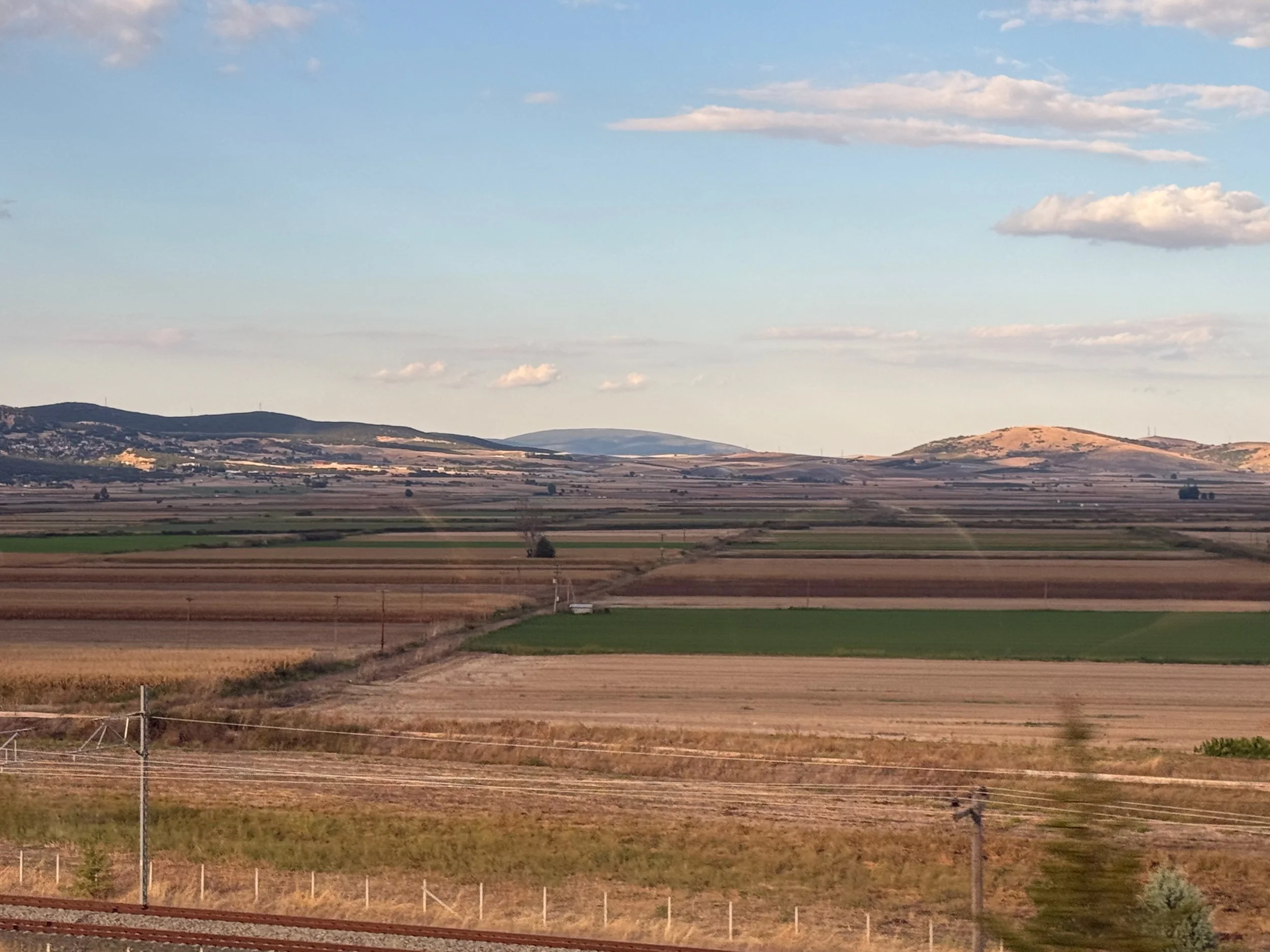
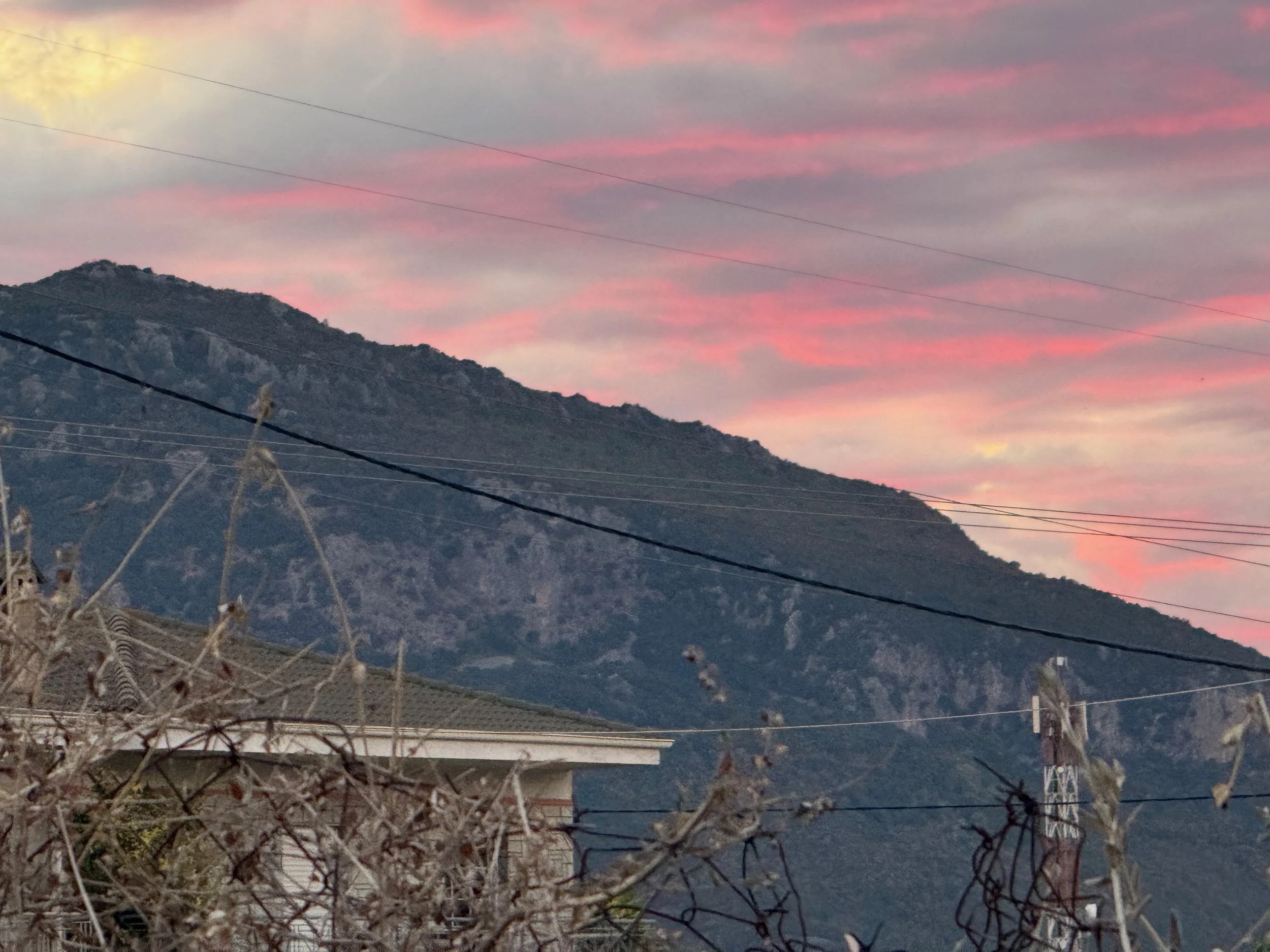
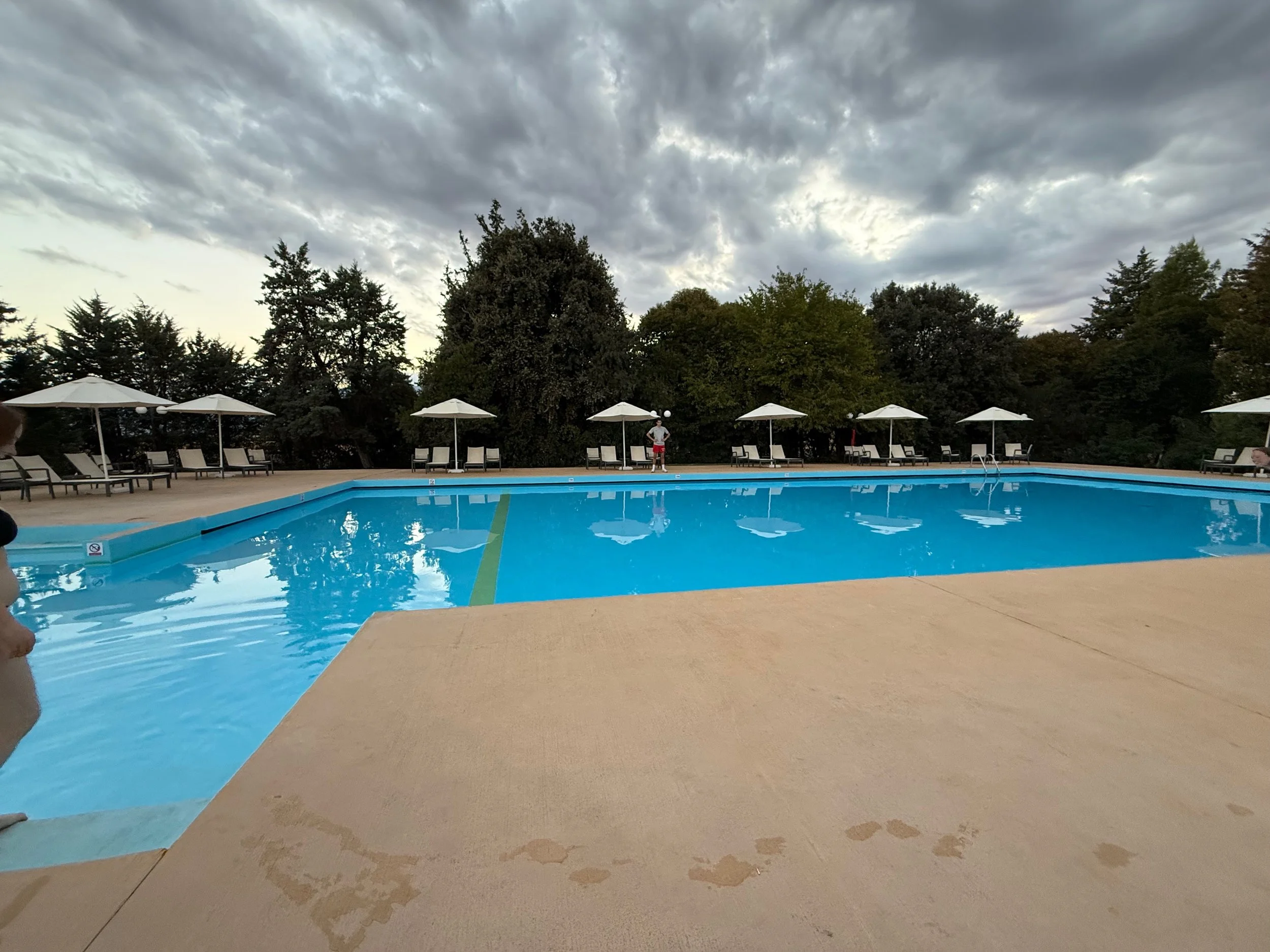
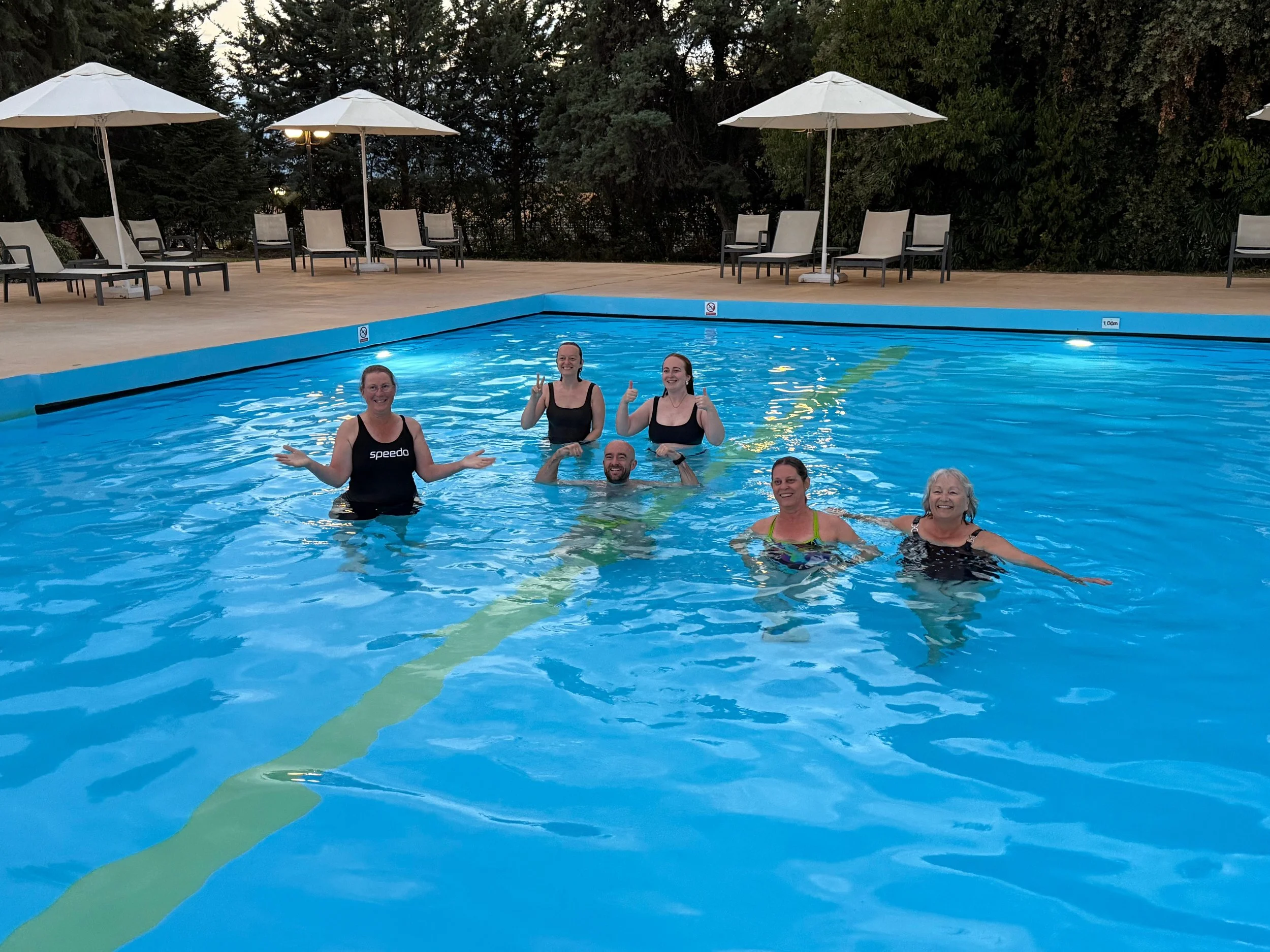
Winding down from the mountains towards our next destination, afforded spectacular views of the sea and plains below. We drove through a silvery olive grove of 5 million trees* (*actually) and crops of wheat stretched out to the horizon. There was time for a quick dip in the hotel pool before the sun turned in for the night. Molly thinks our quirky, sprawling hotel, with a labyrinth of hallways and courtyards filled with fruit trees would be the perfect setting for a murder mystery (hopefully not tonight!)