καιρός για πάπιες (Good Weather For Ducks)
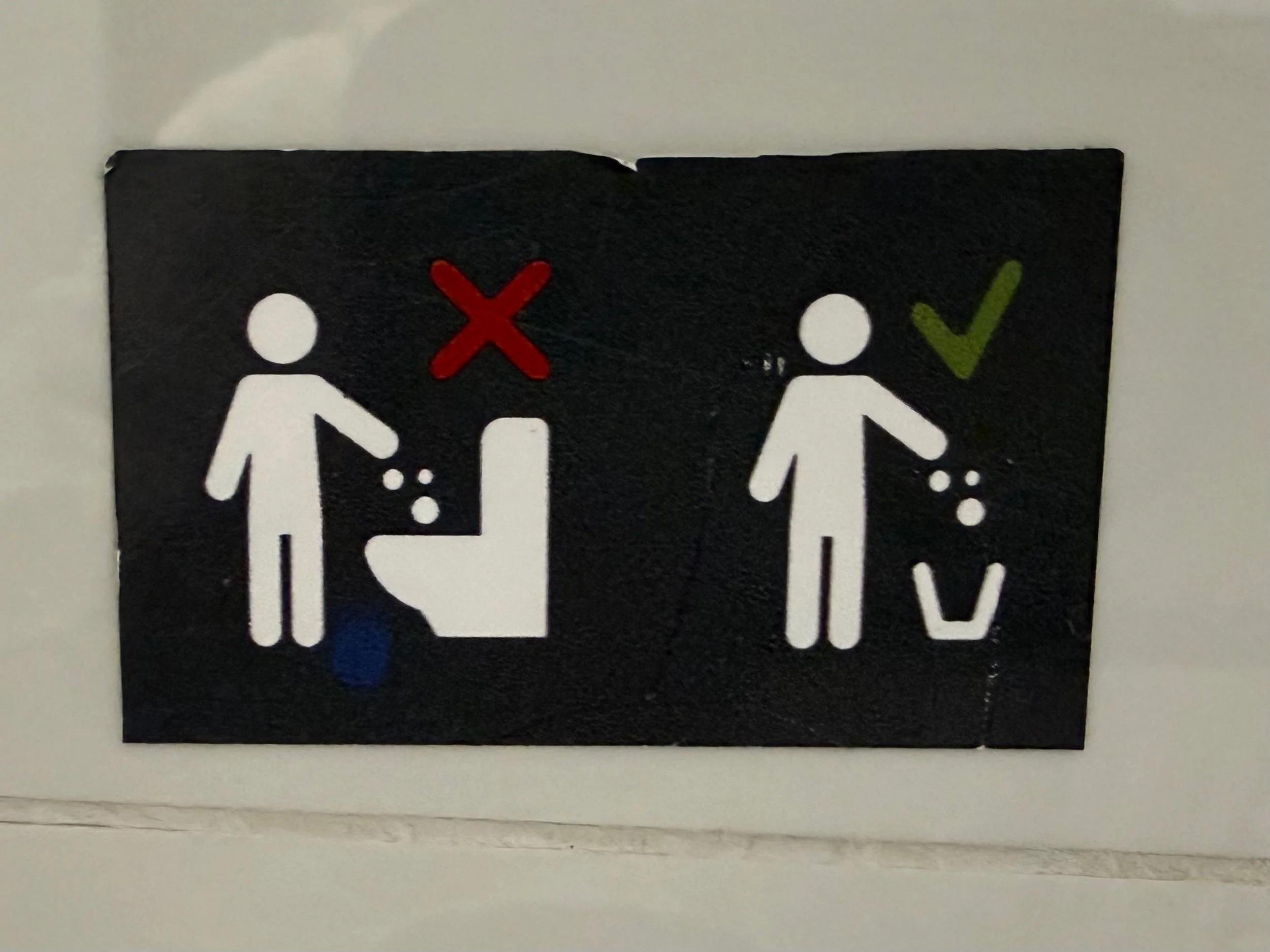
When we travelled to the Greek Islands years ago, we had been shocked to learn that toilet paper had to be binned rather than whooshed down the s-bend like usual. This morning I noticed a little sign above the loo in our hotel room, showing a green tick beside someone binning their paper. Aren’t the Greeks famous for their thinking? Obviously they dipped out in the great plumbing brains of the world department. I had completely missed this yesterday. Oops!
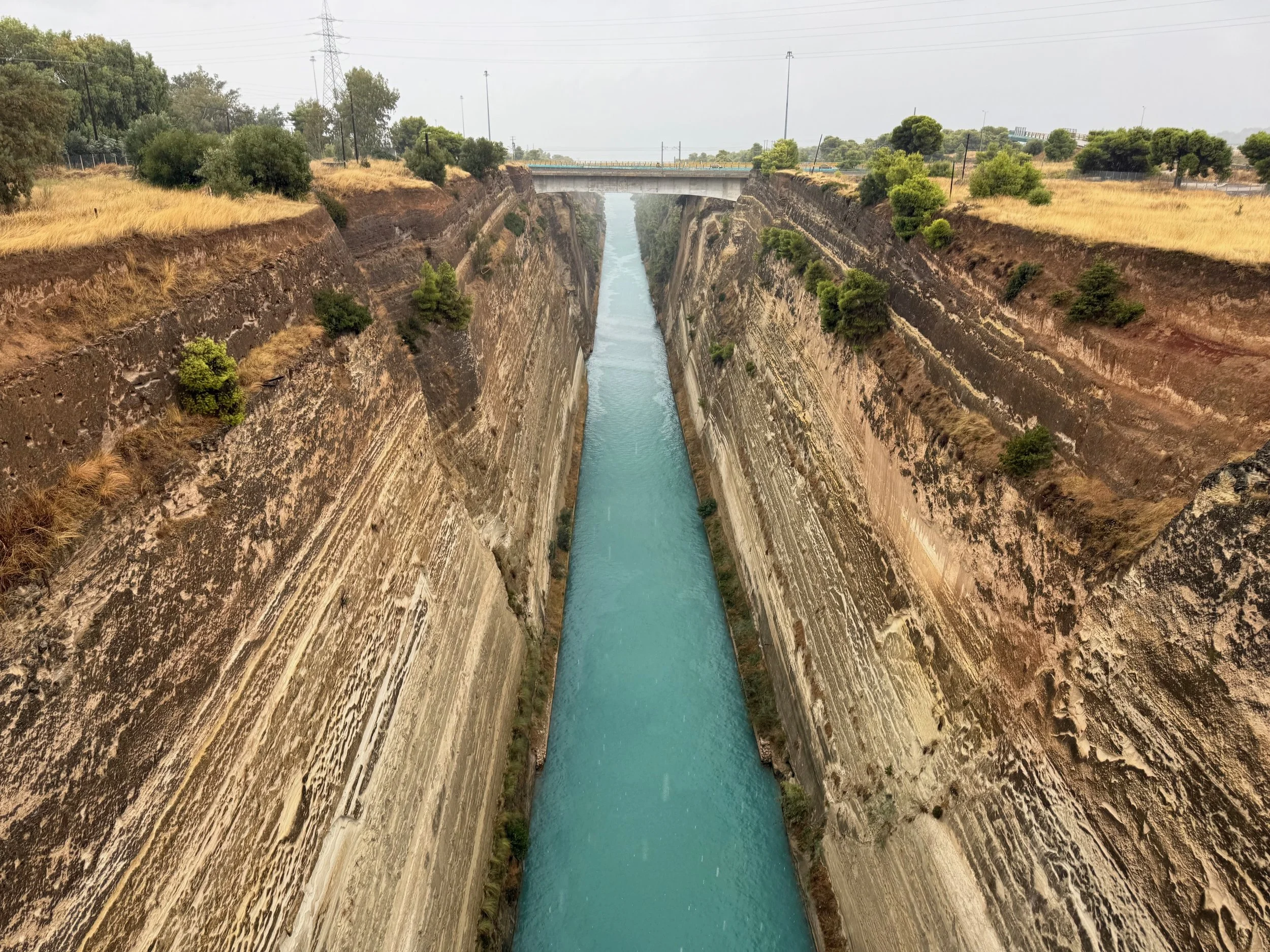
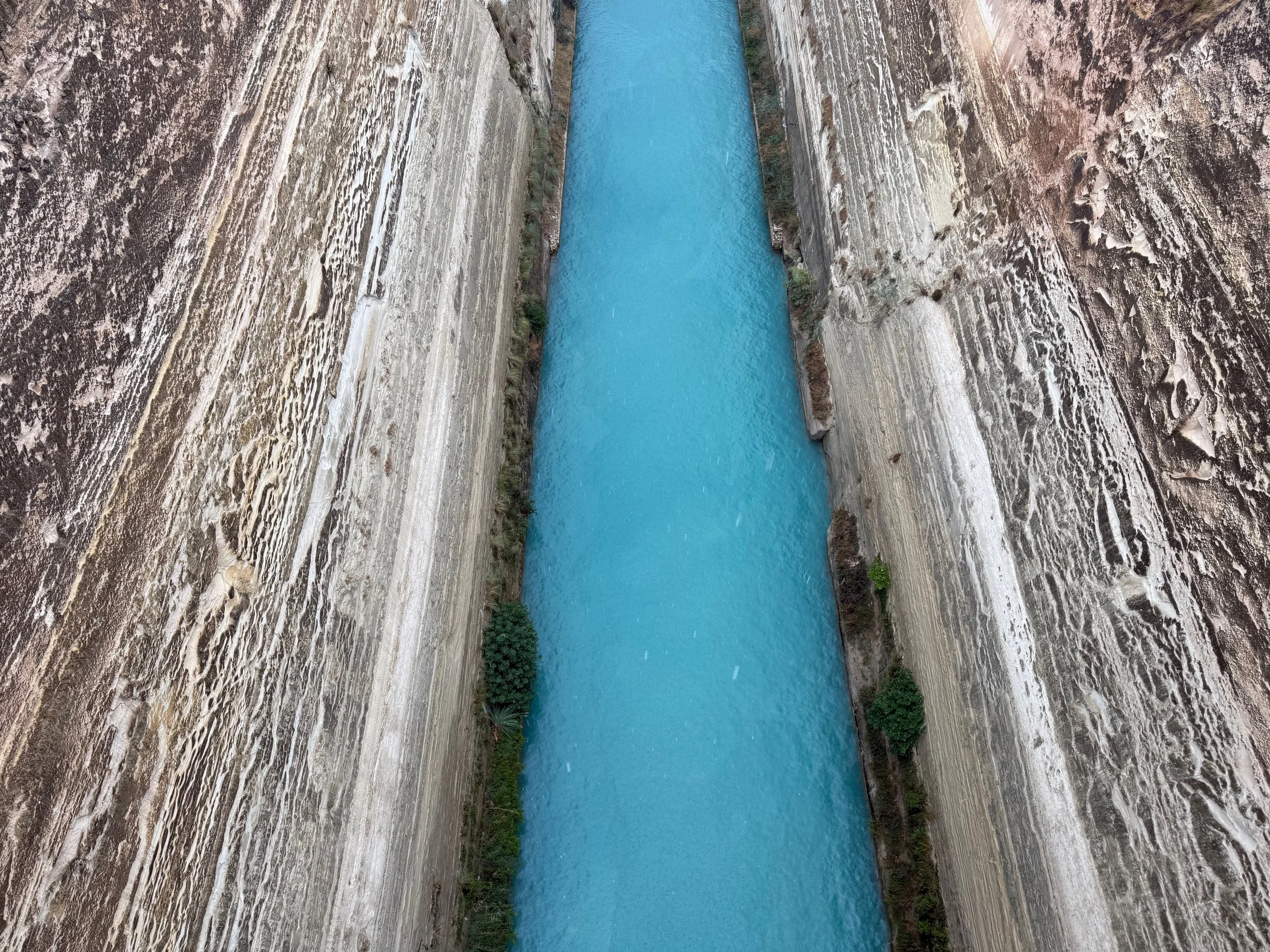
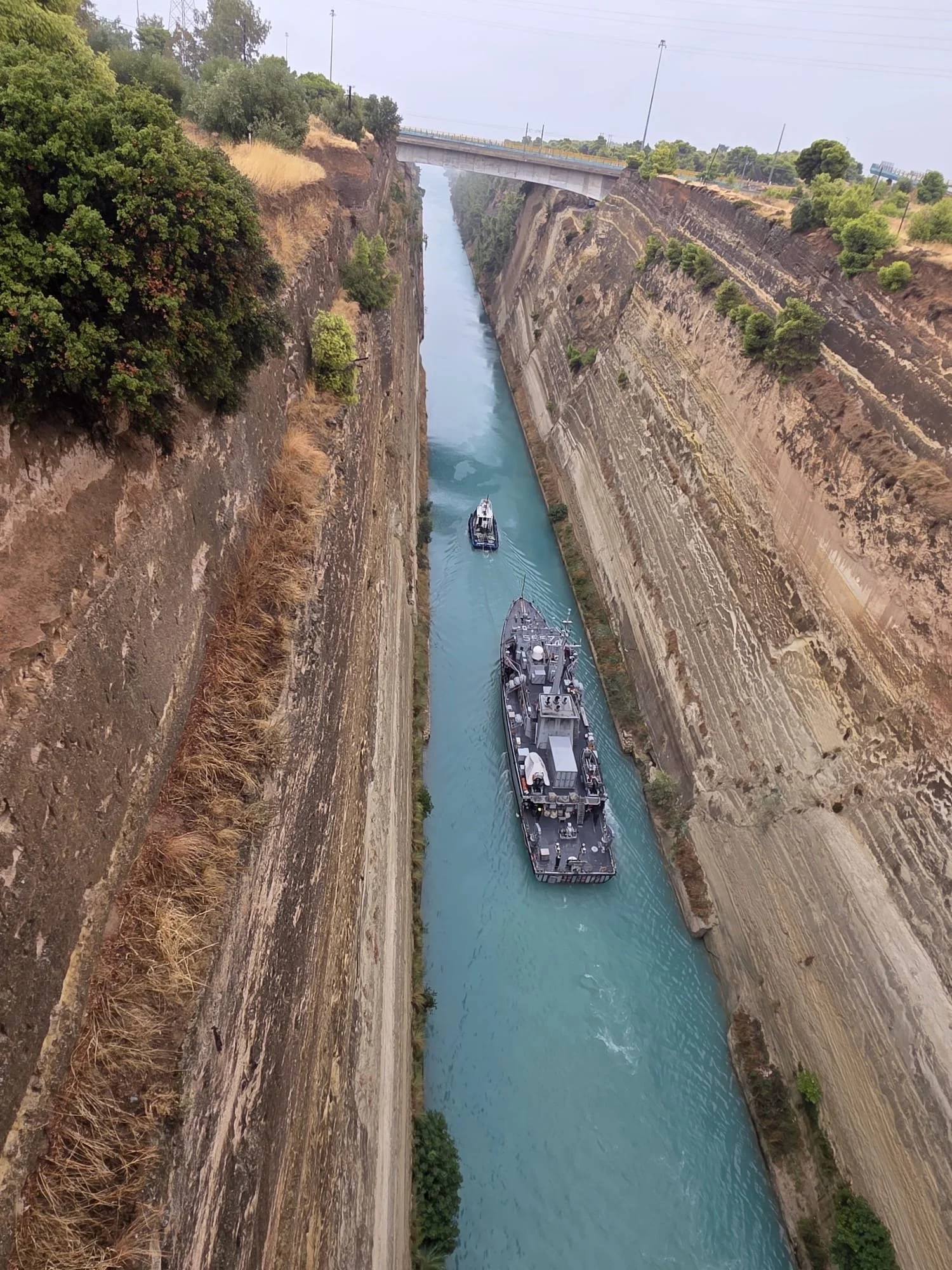
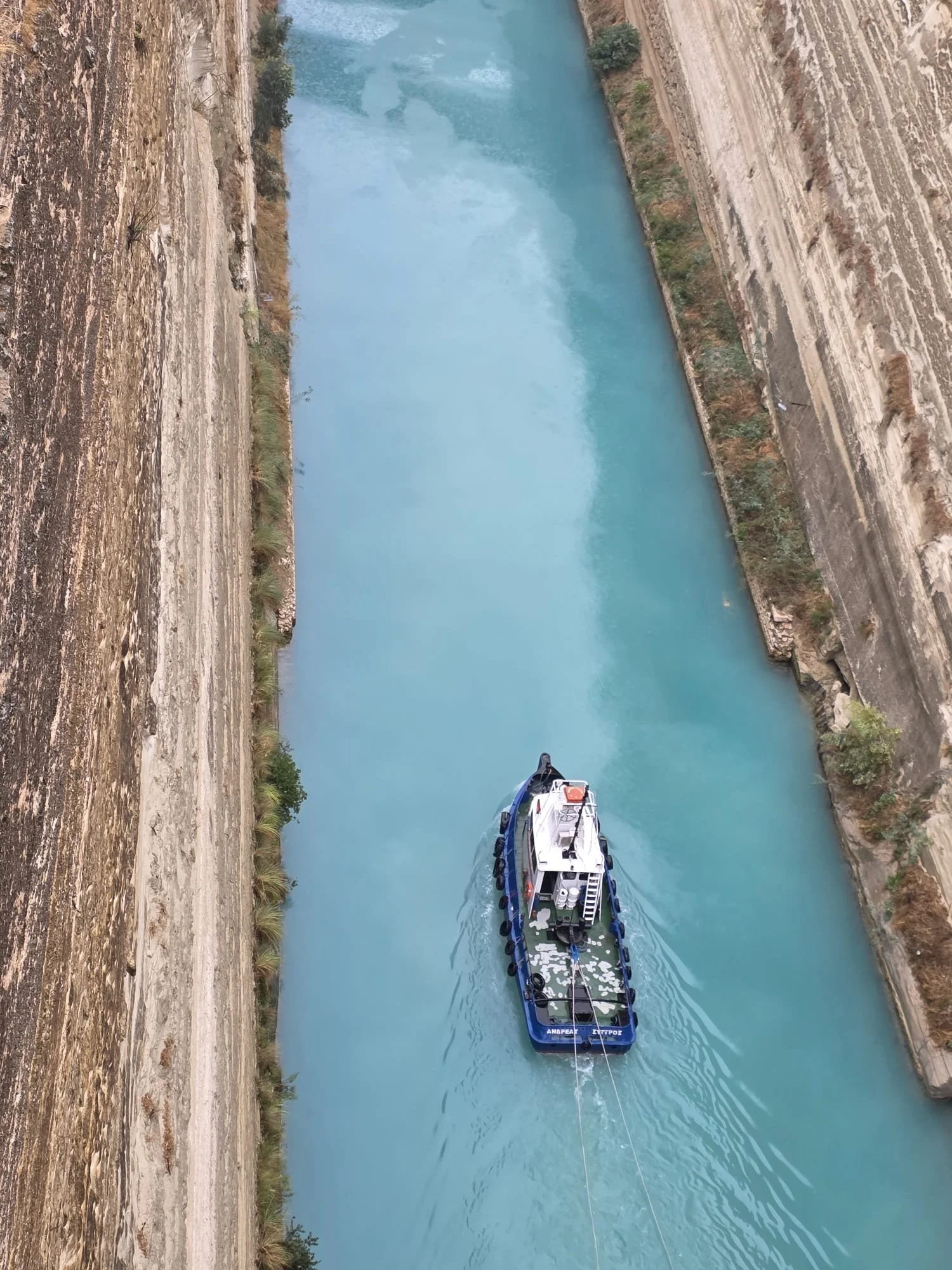
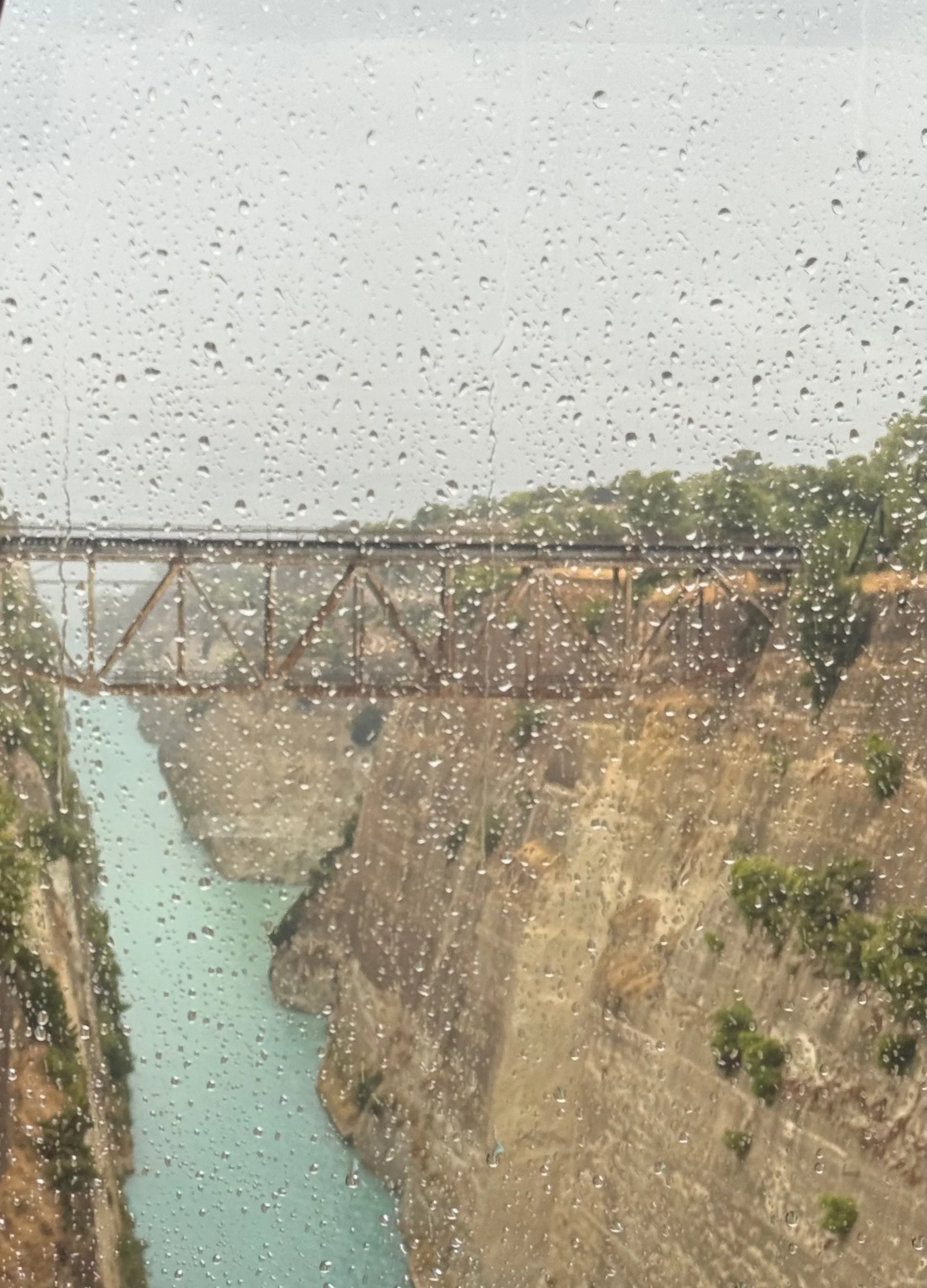
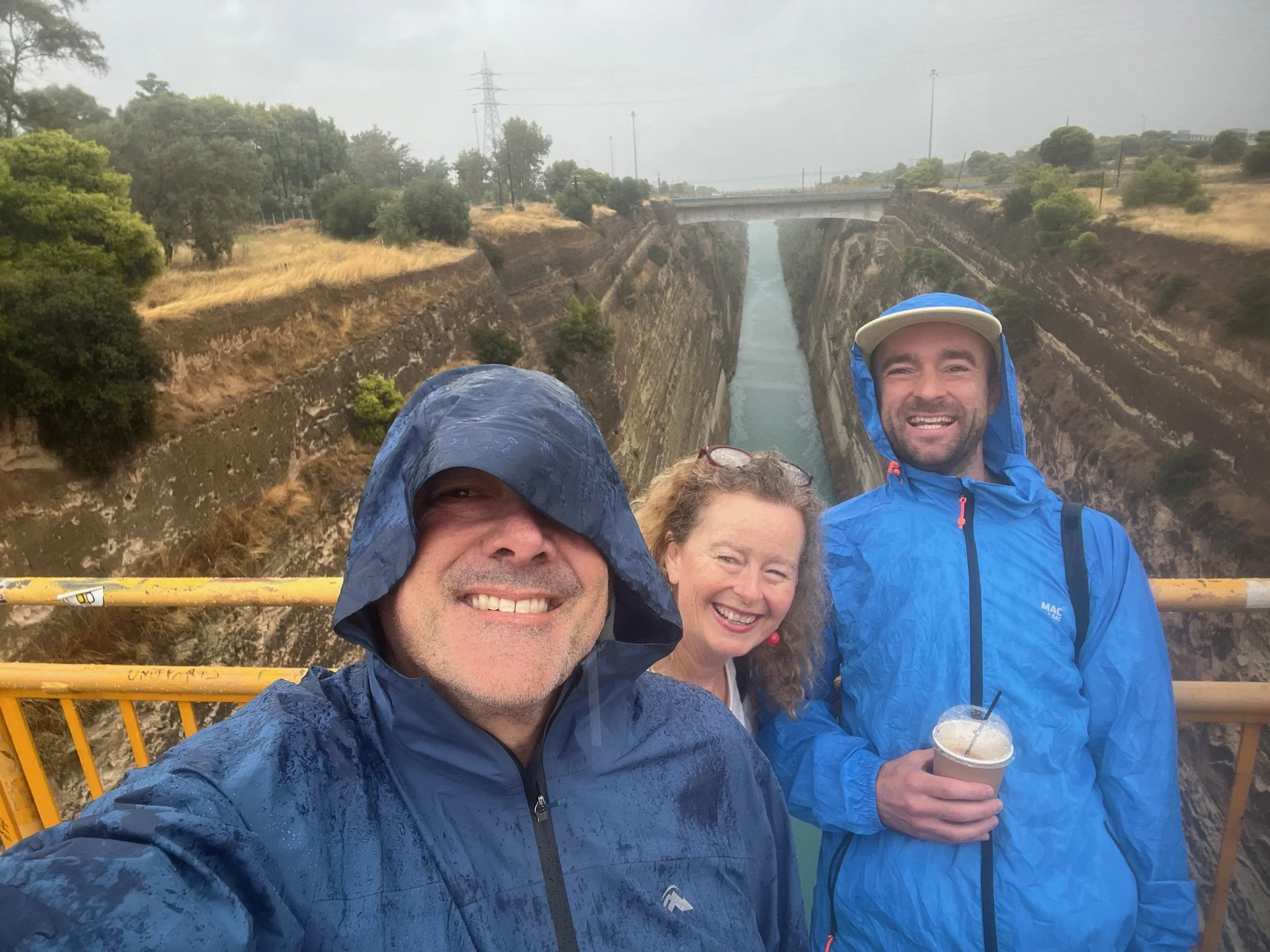
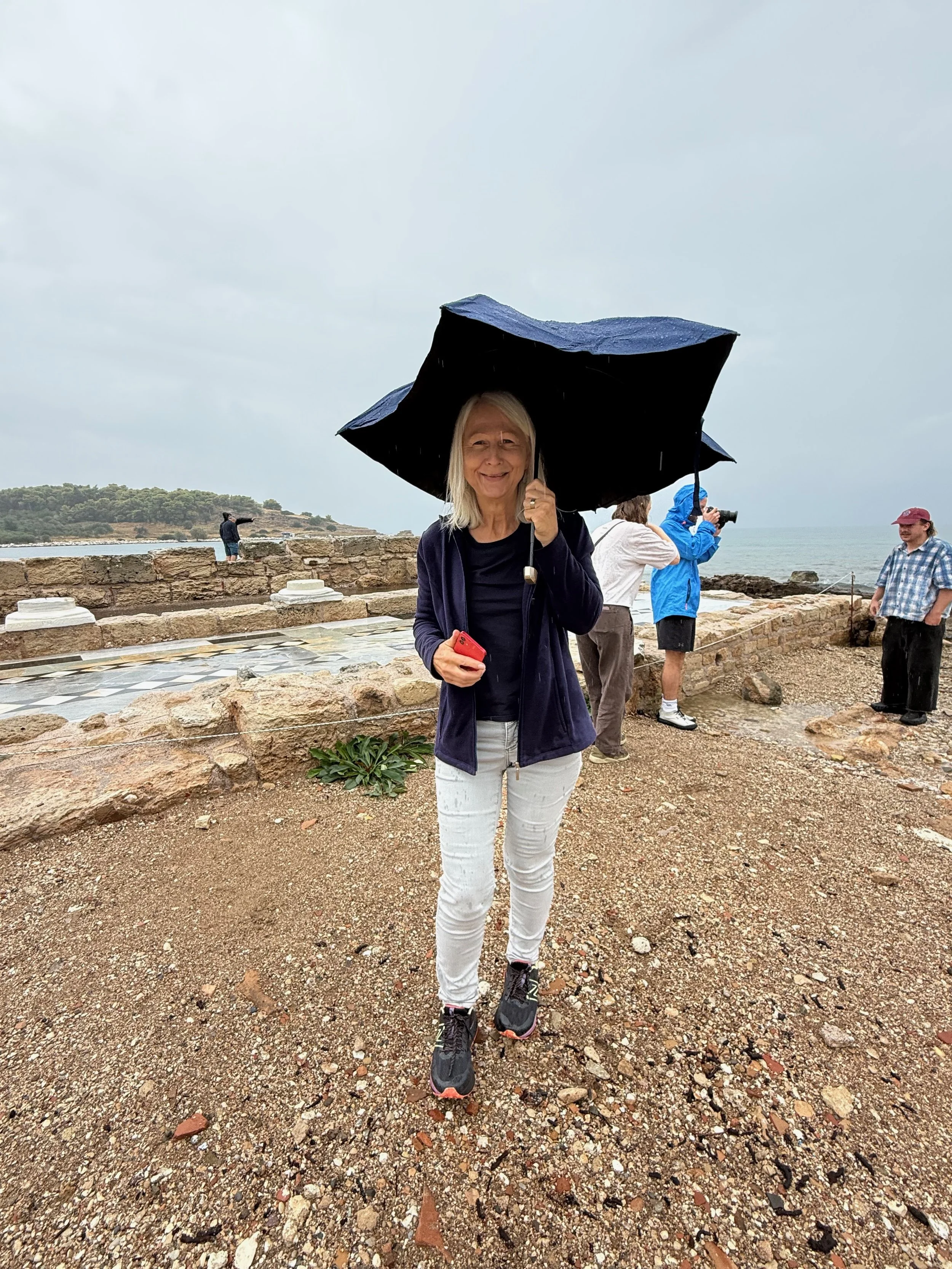
Emerging from our hotel this morning, everything was a big soggy underfoot. Regrettably, I assumed it was just a passing shower and opted to leave my umbrella tightly zipped in my luggage. Other members of our group were far better prepared with raincoats and all things waterproof so that when we reached our first stop, the Corinth Canal, they remained dry, despite the substantial precipitation. After Sam shouted us some surprisingly nice takeaway coffees, we sploshed through puddles to the bridge that spanned the canal, which, incidentally, goes for 6km and joins the Saronic Gulf in the Aegean Sea, with the Ionian Sea, its powder blue water (only 8m deep) cutting a swathe through the tall rock walls. 11,000 ships make their way down this narrow waterway each year.
Ross visited the little boys’ room at the canal and felt guilty when he had no coins to pay the Toilet Woman (sounds like a superhero) for the privilege. The kind lady allowed him to go for free, with Ross vowing he’d do his best to break the €50 note he’d plucked from the ATM and make good on his debt. Unfortunately, the souvenir shop assistant shook his head vigorously at the idea he could possibly split the note and when Ross asked him for suggestions where he might get some change, he simply shrugged and said; ‘dunno’.
Oh well, at least he tried.
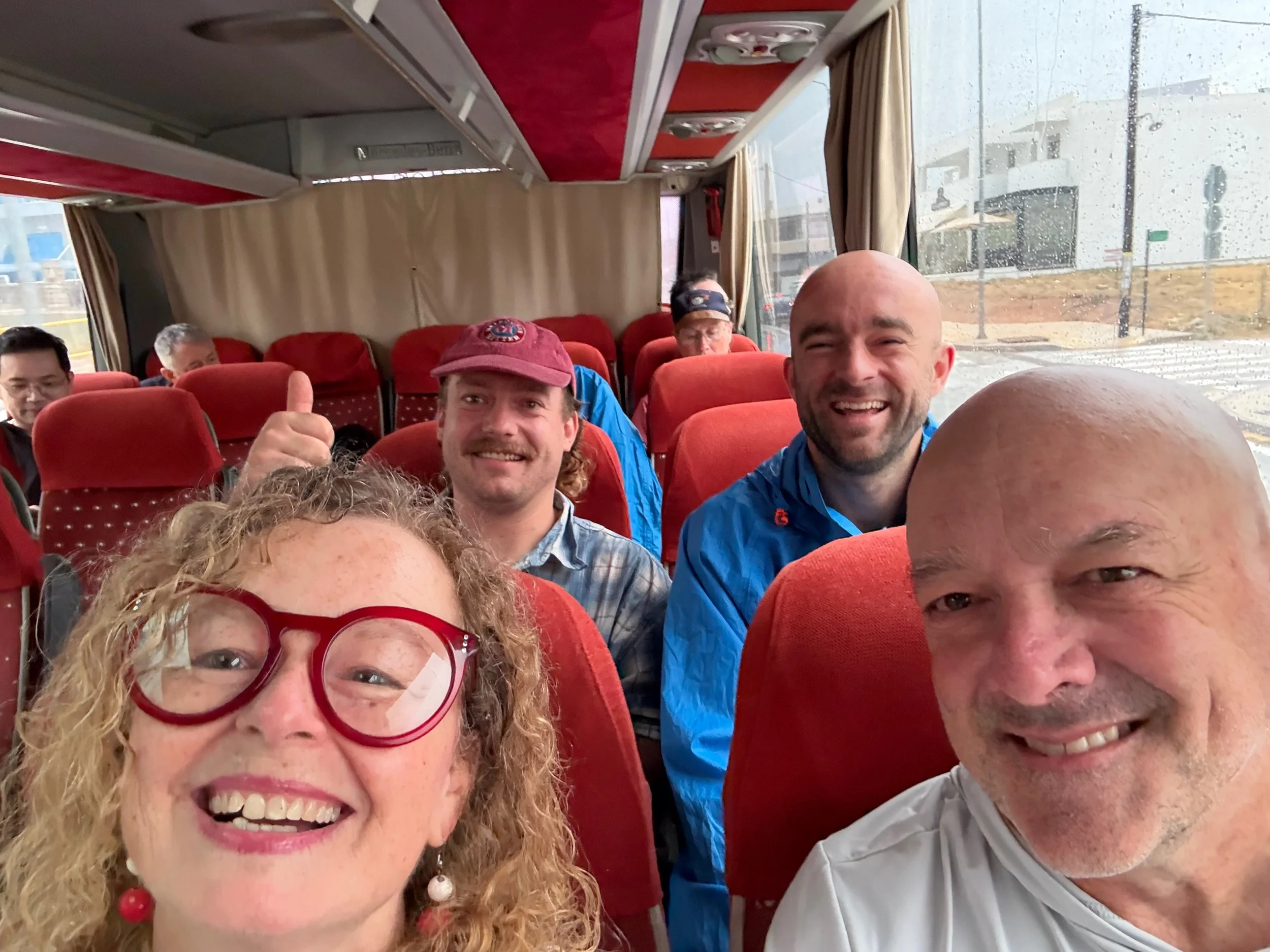
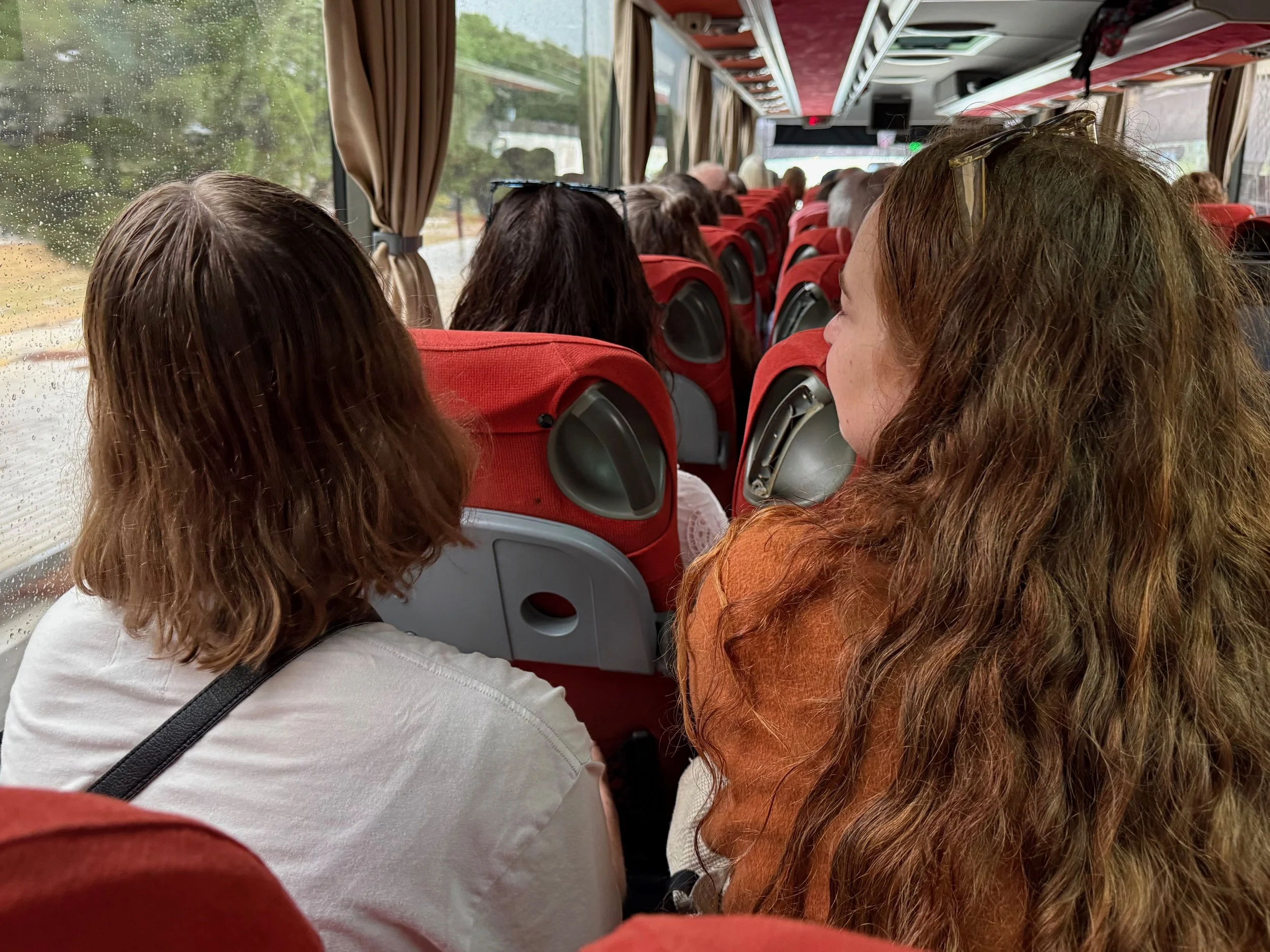
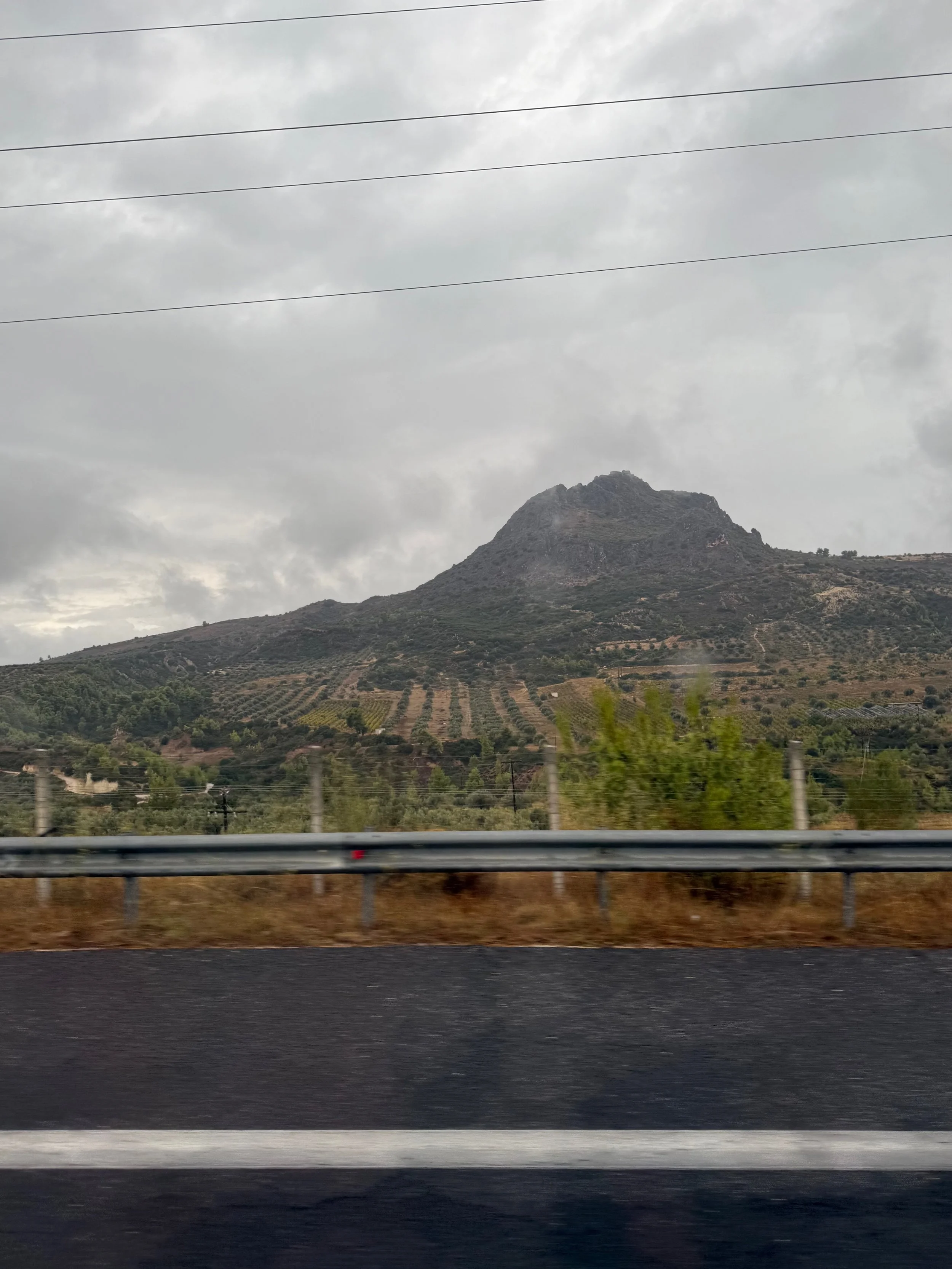
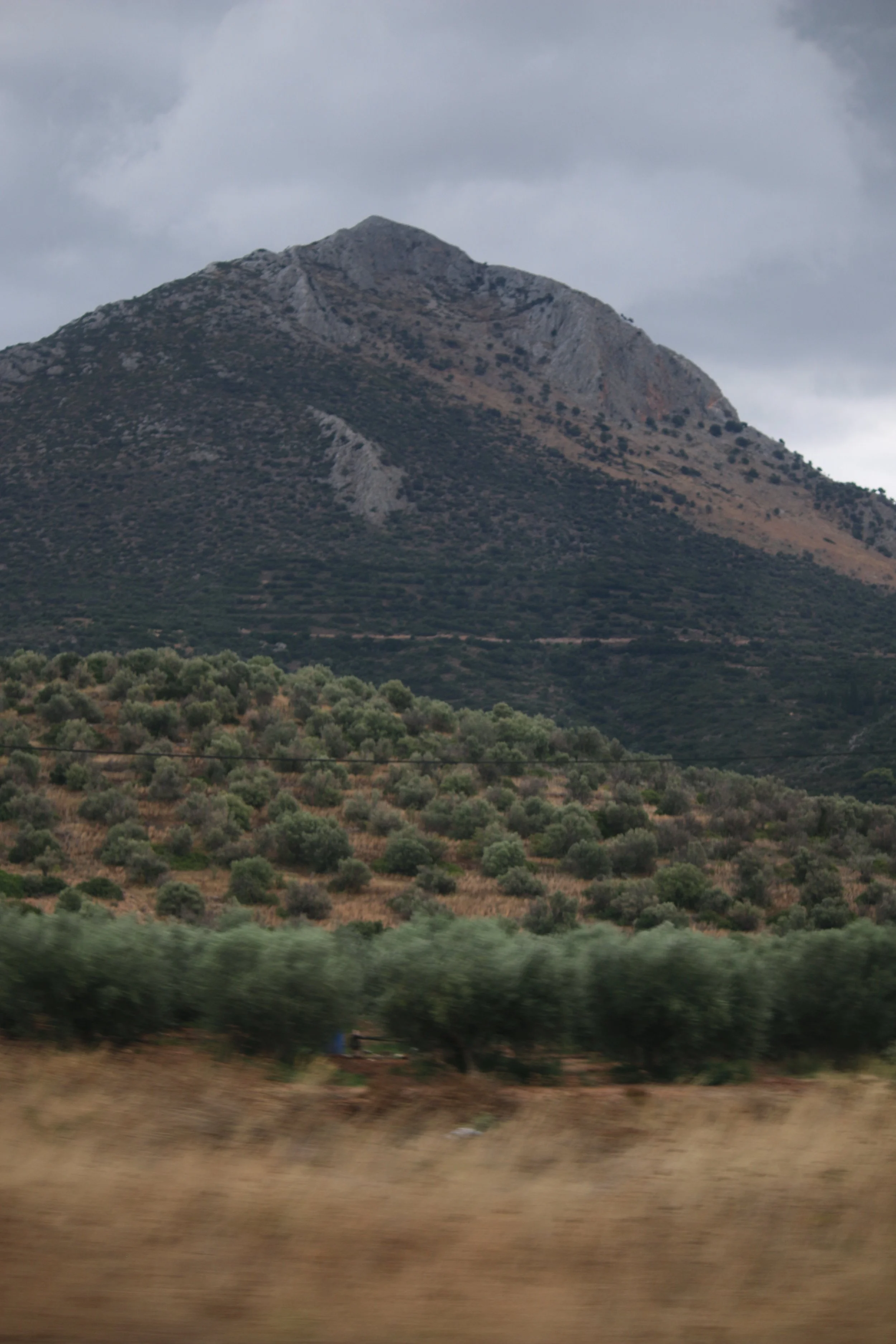
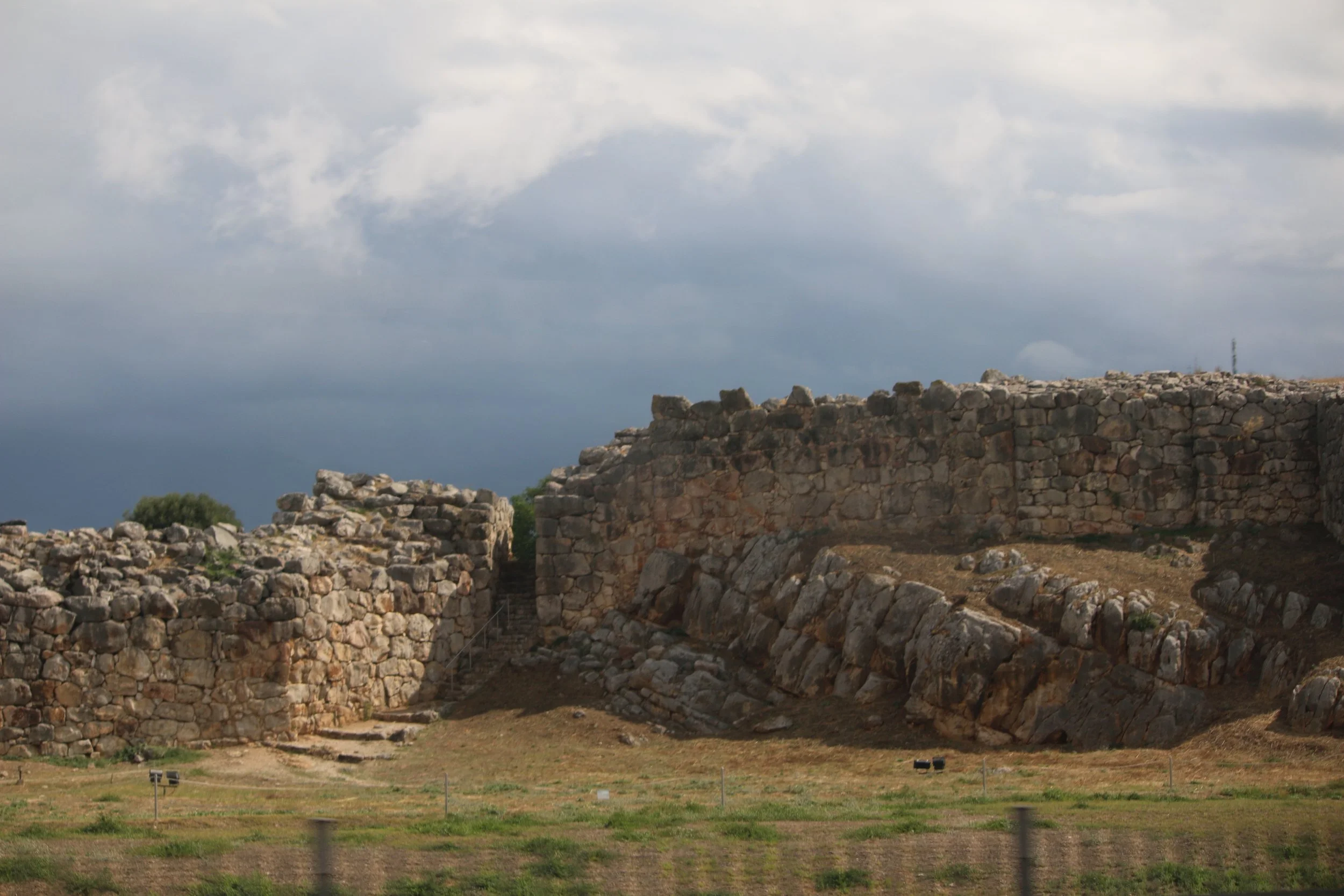
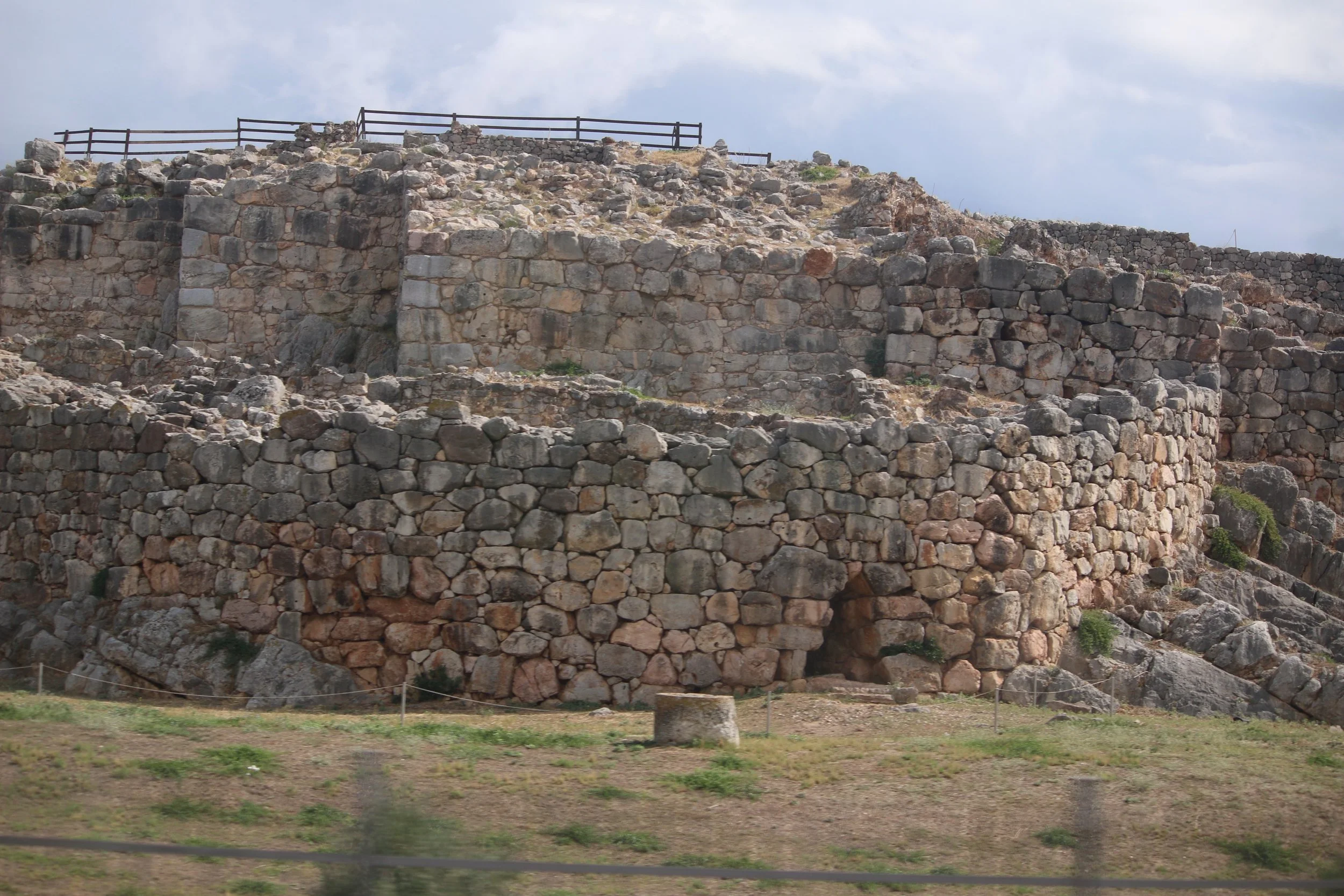
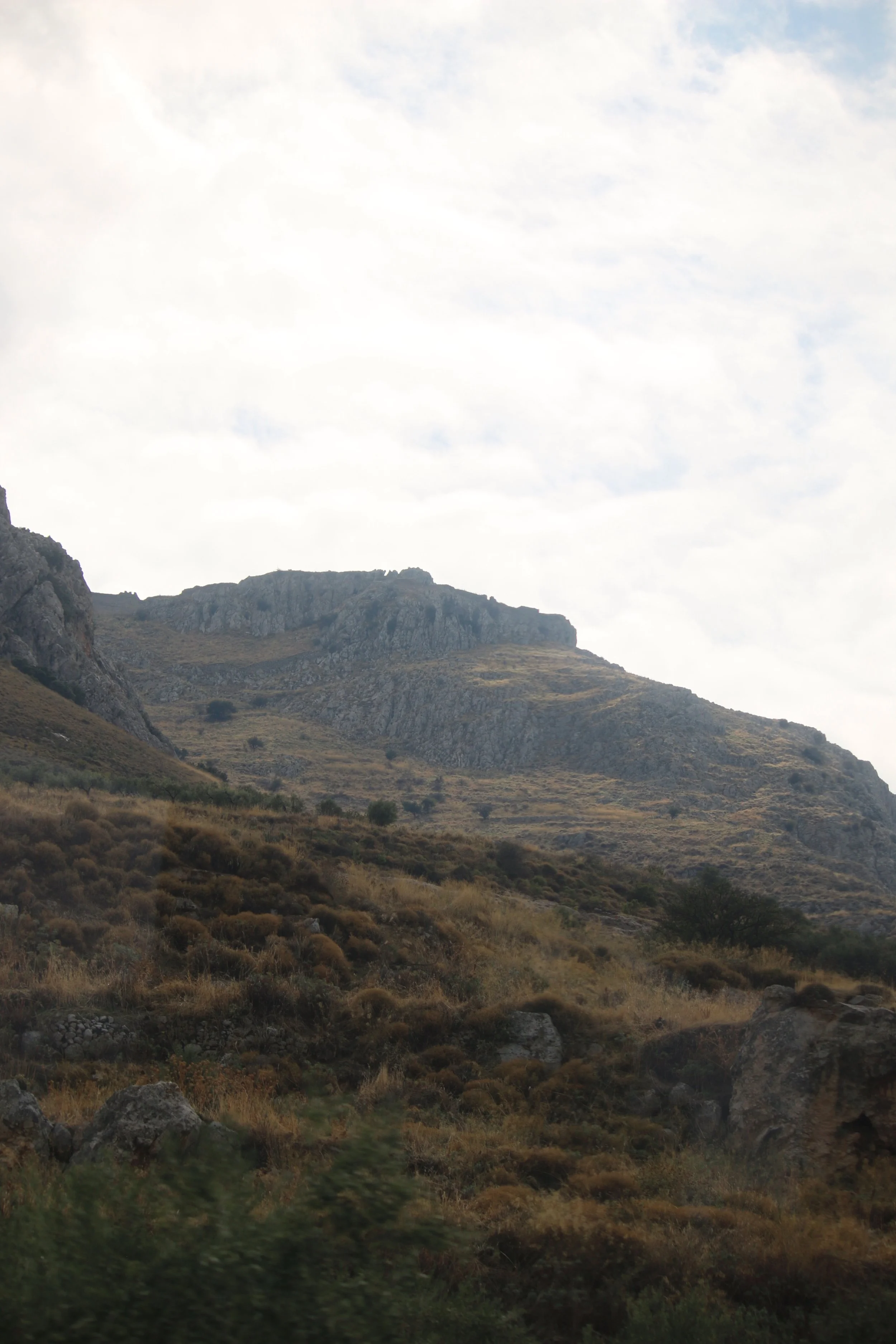
Our tour bus, with Dimitris at the helm today, made its way along the highway flanked on either side by raisin vineyards, Kalamata olive groves and orchards of oranges, tangerines, lemons and grapefruit. Mountains also rose up on both sides of the road, their tops shrouded in clouds, allowing us just a glimpse every now and then of the ancient walled citadels - some built in the 6th century - that adorned their peaks.
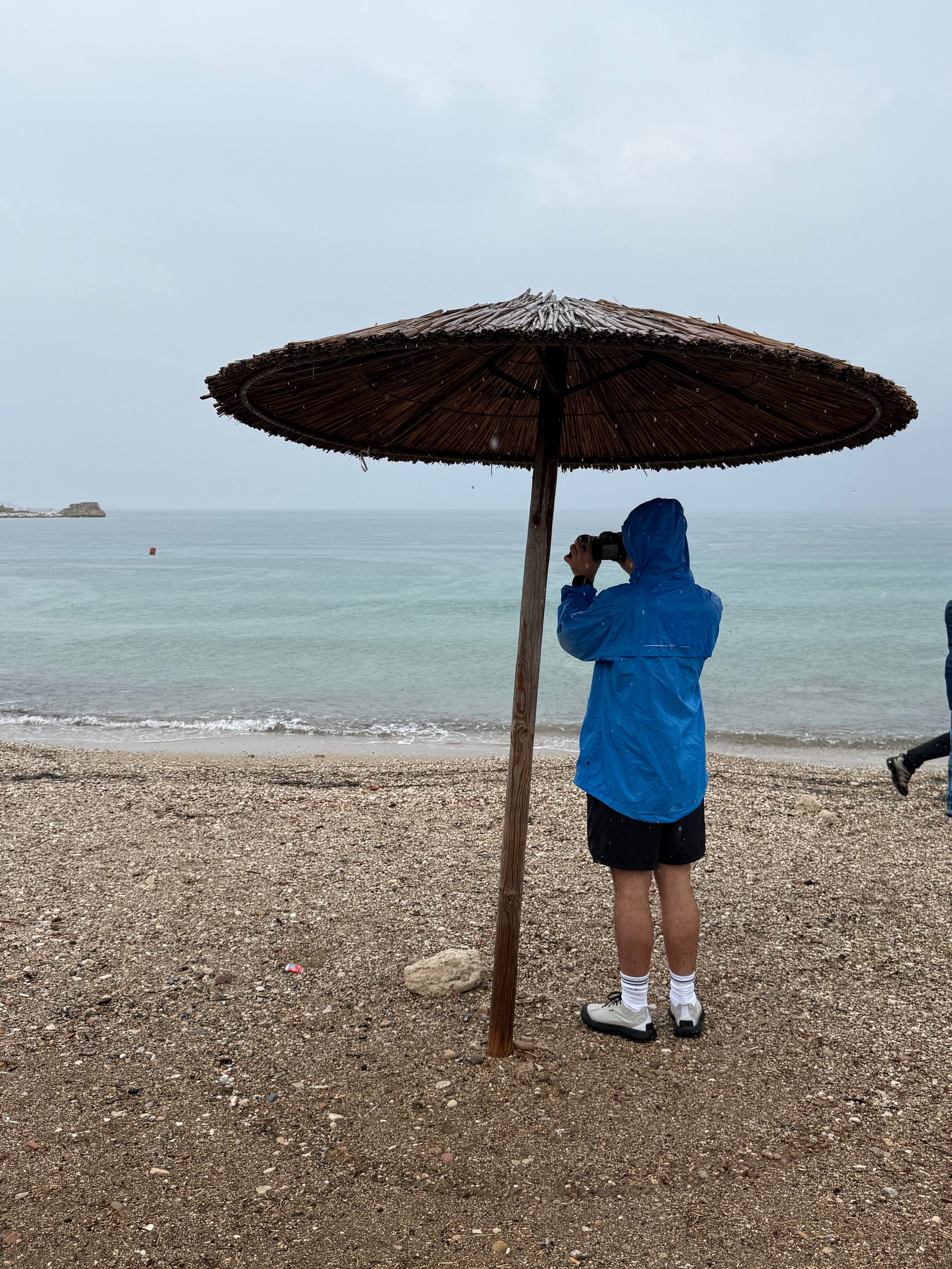
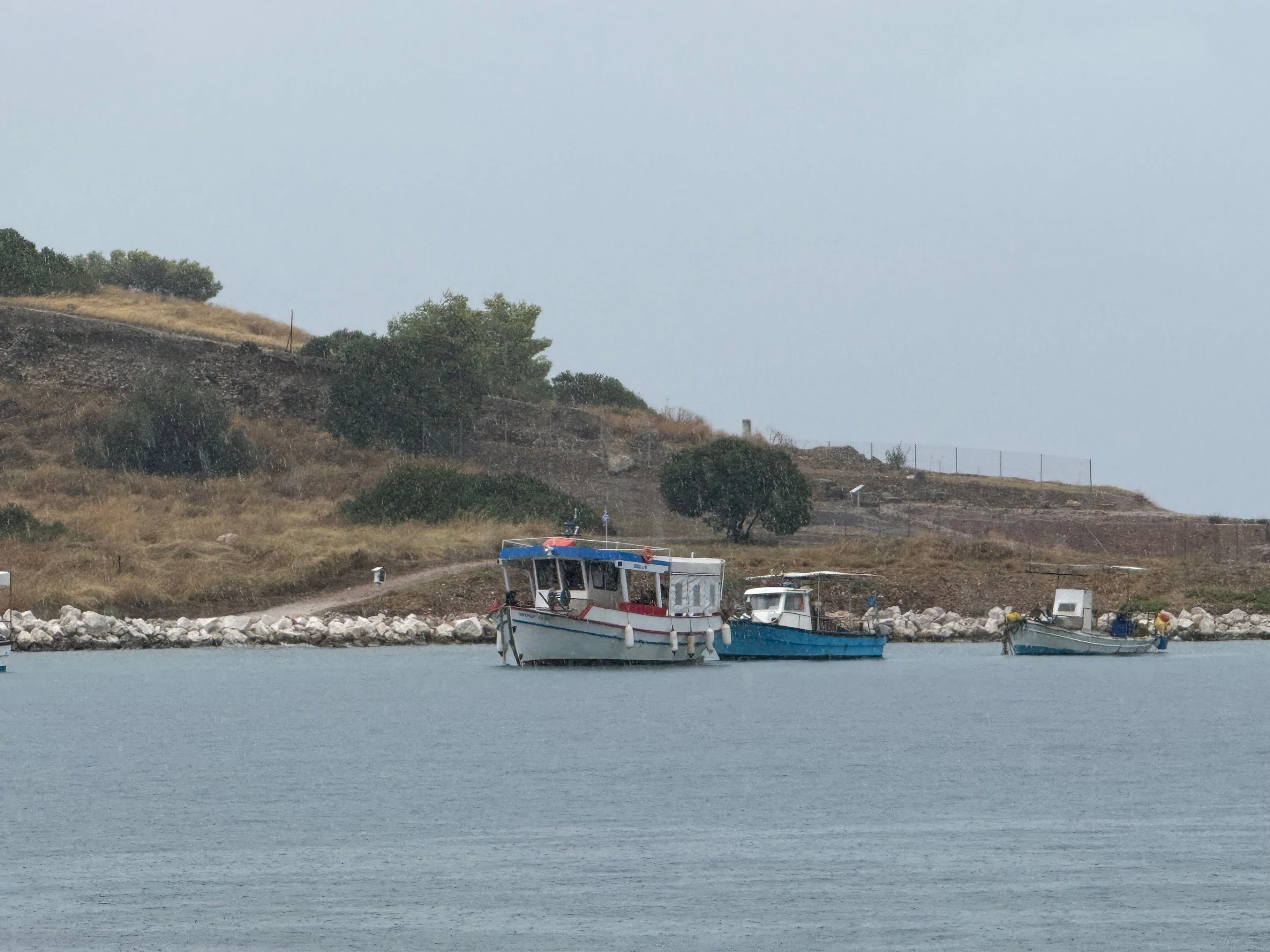
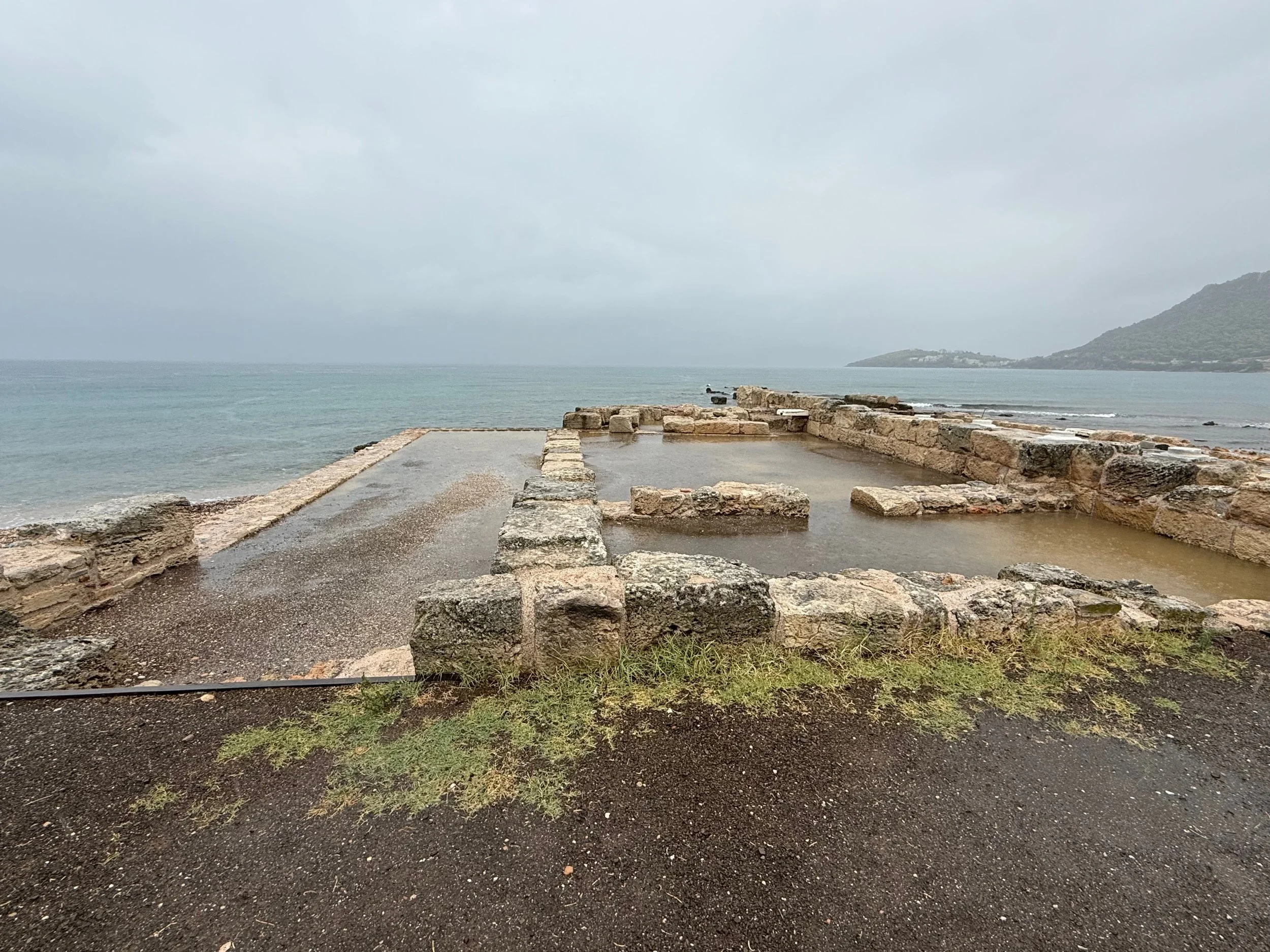
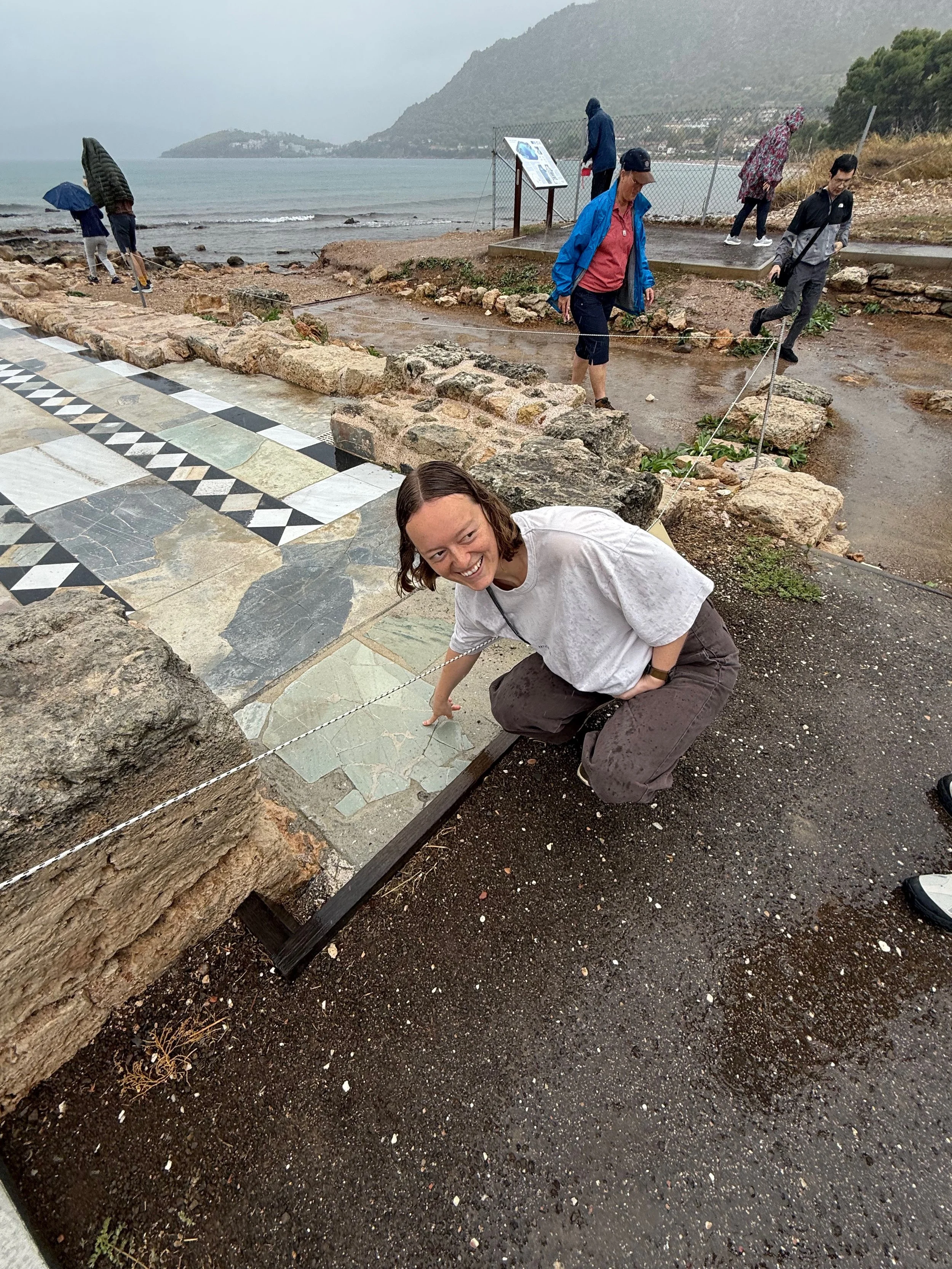
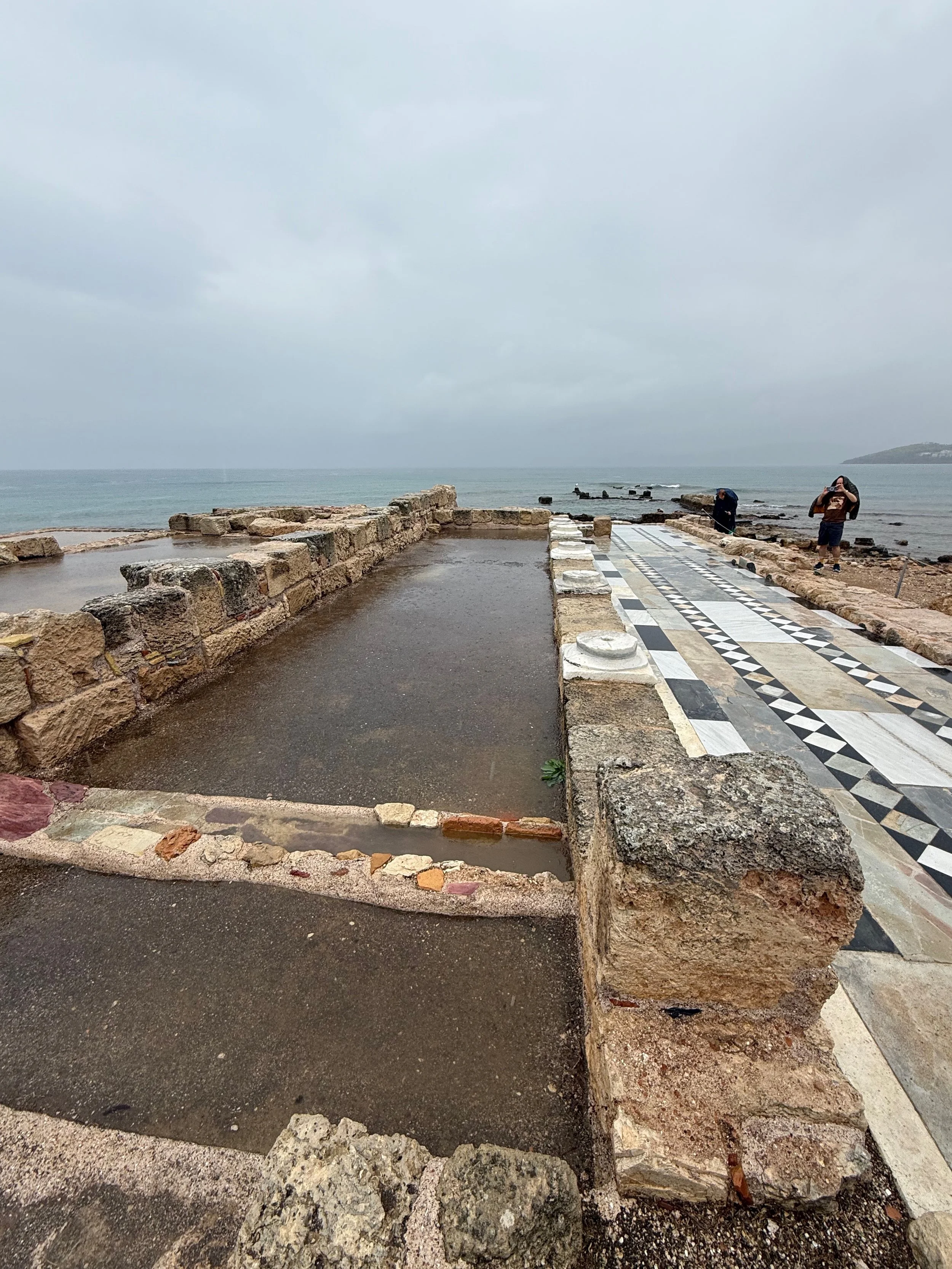
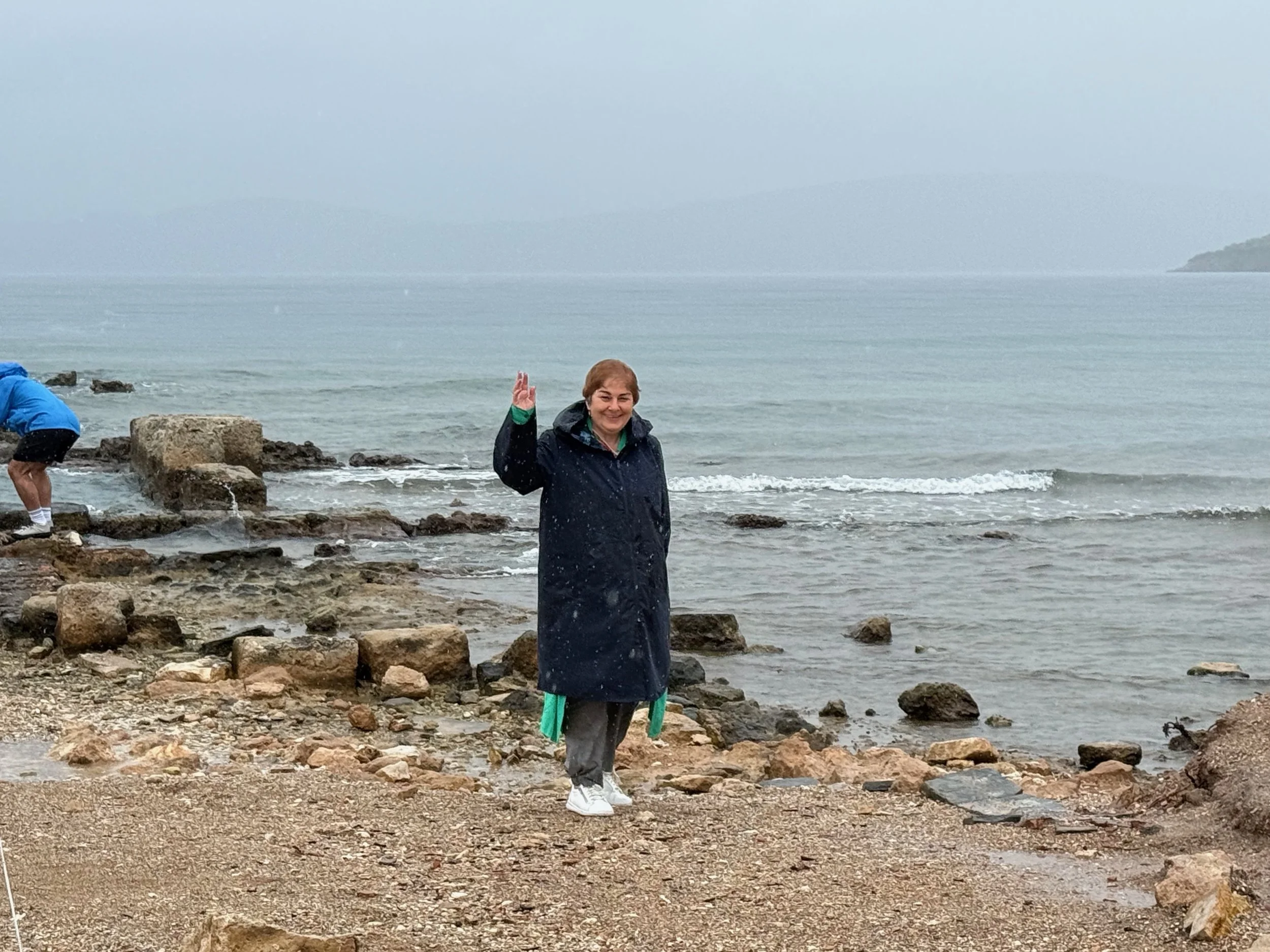
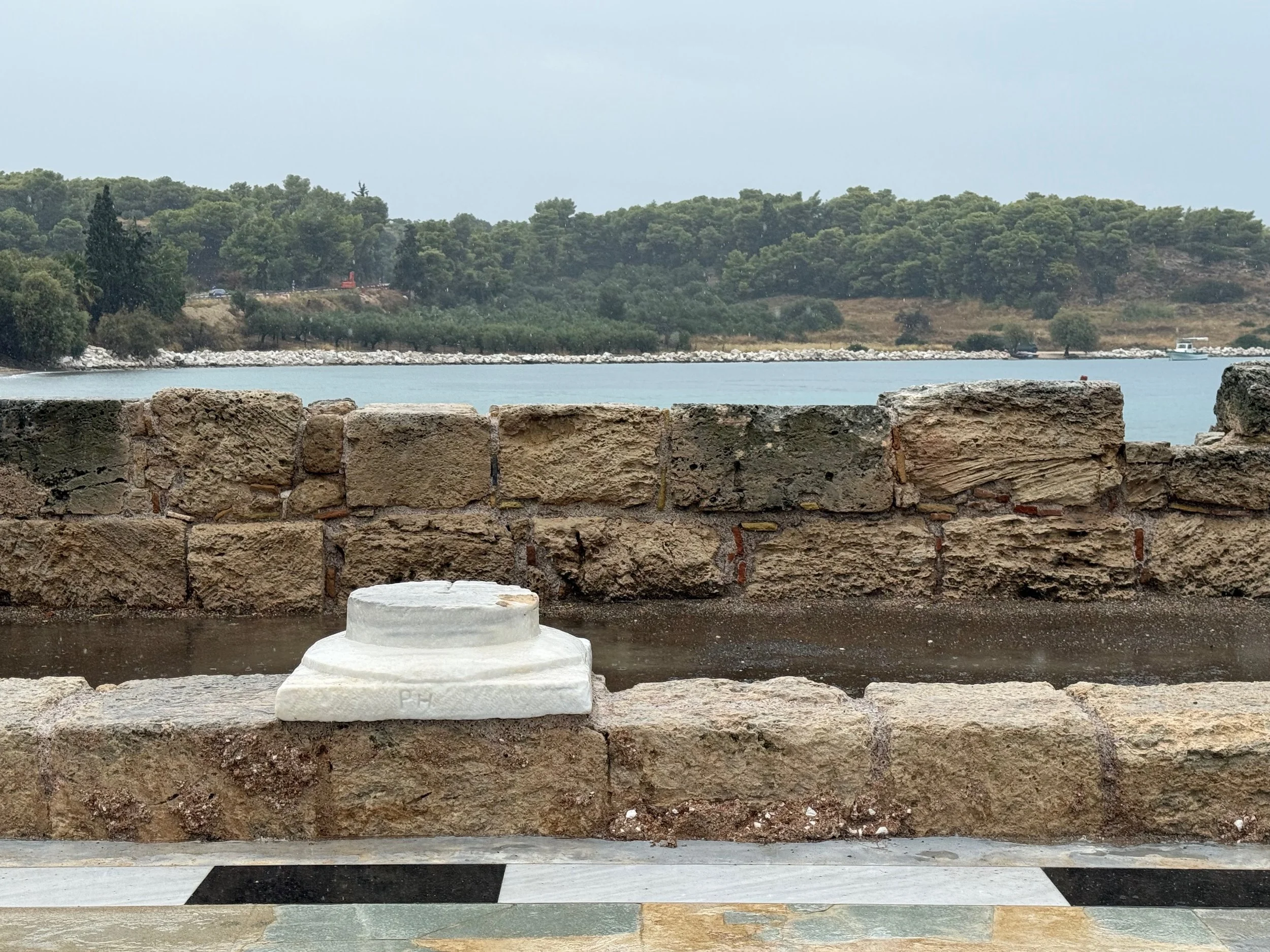
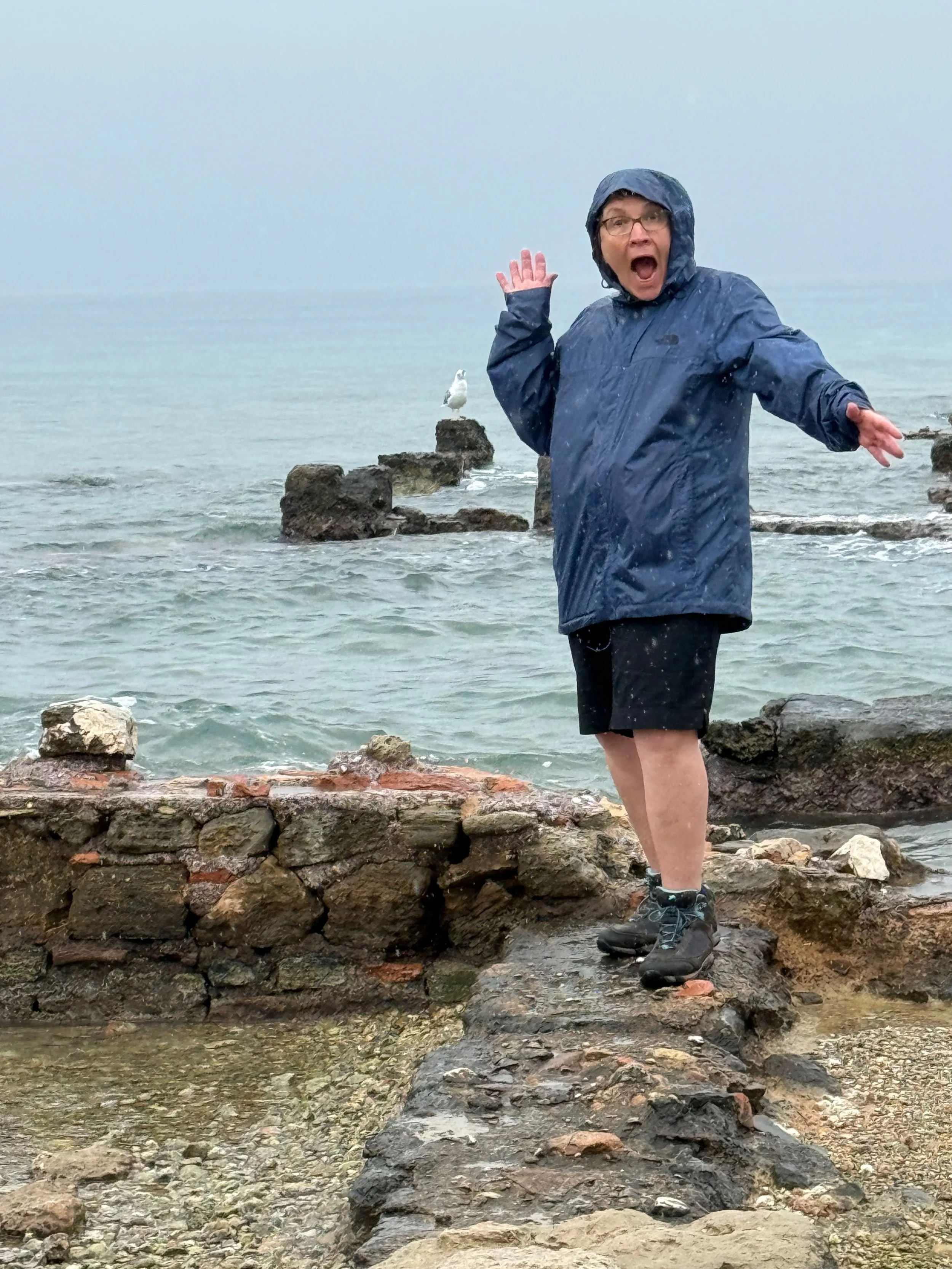
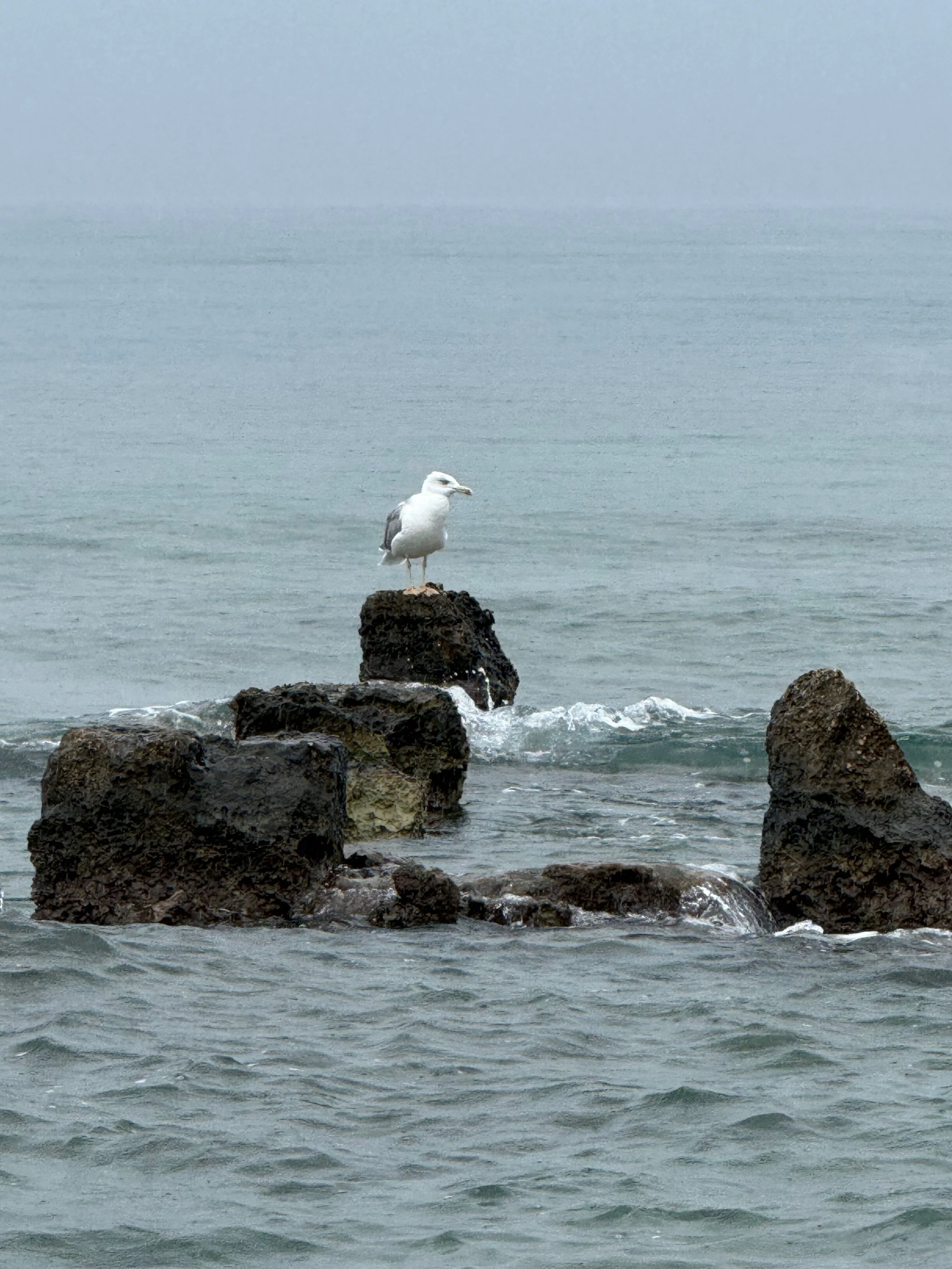
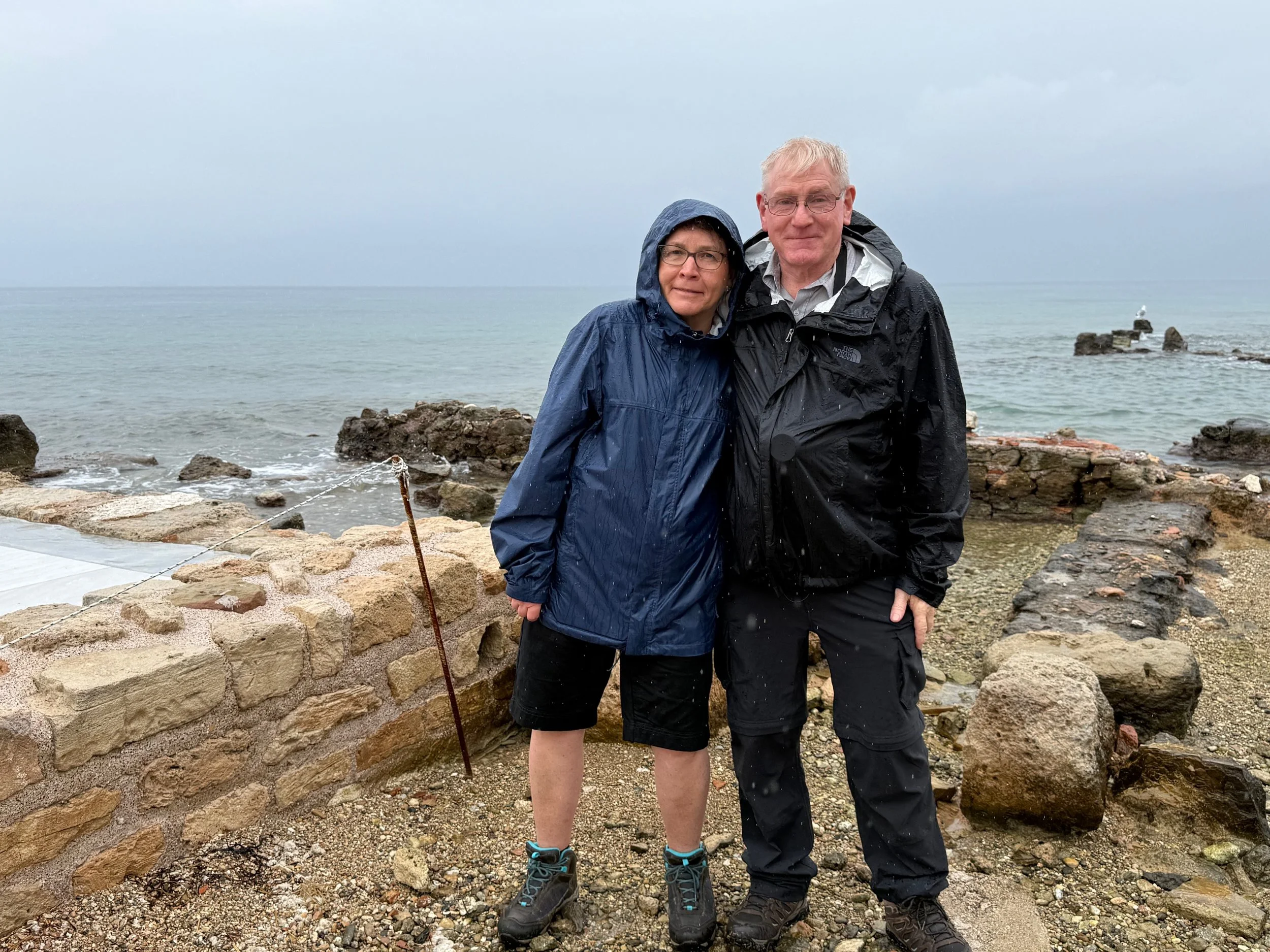
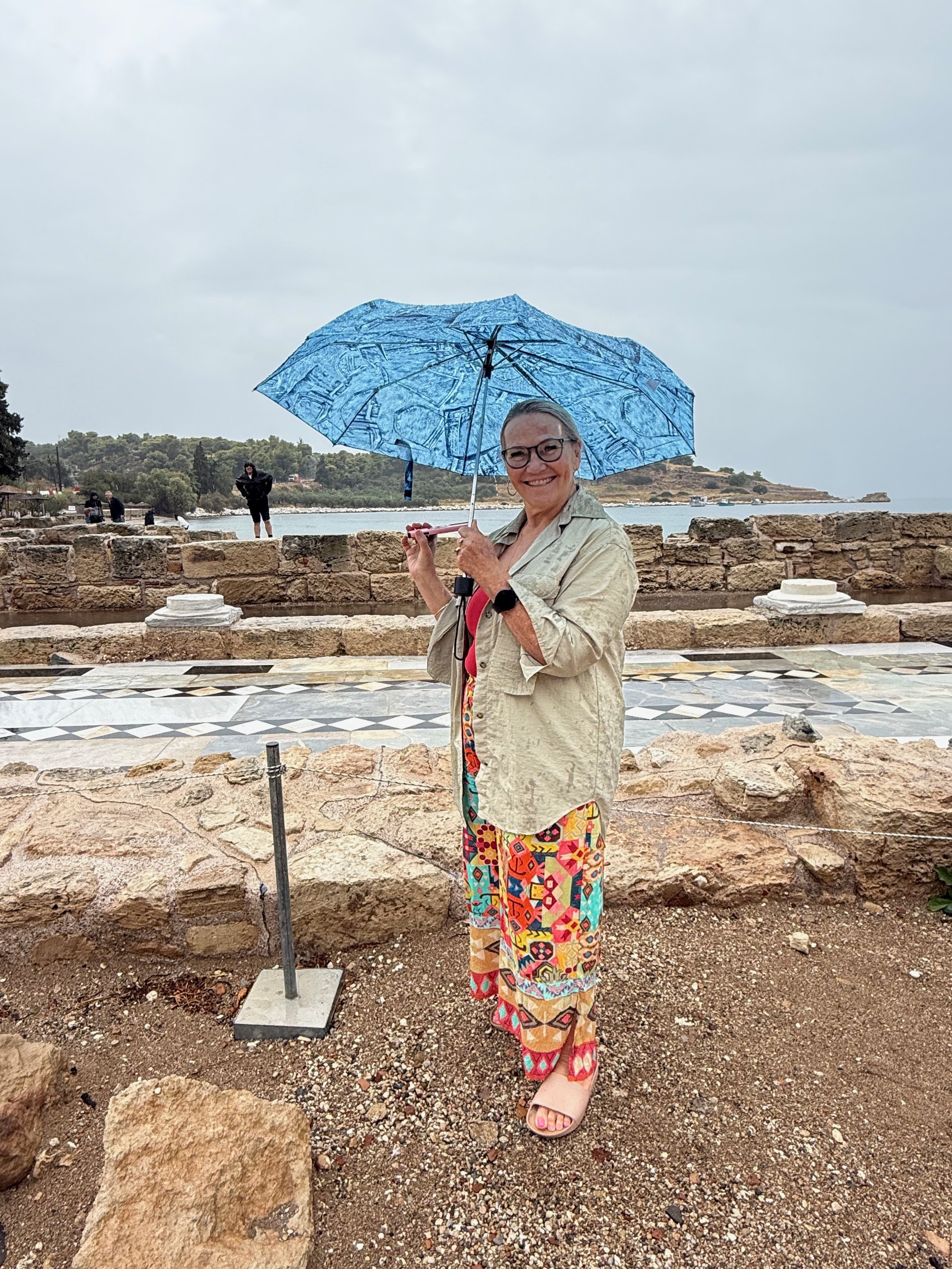
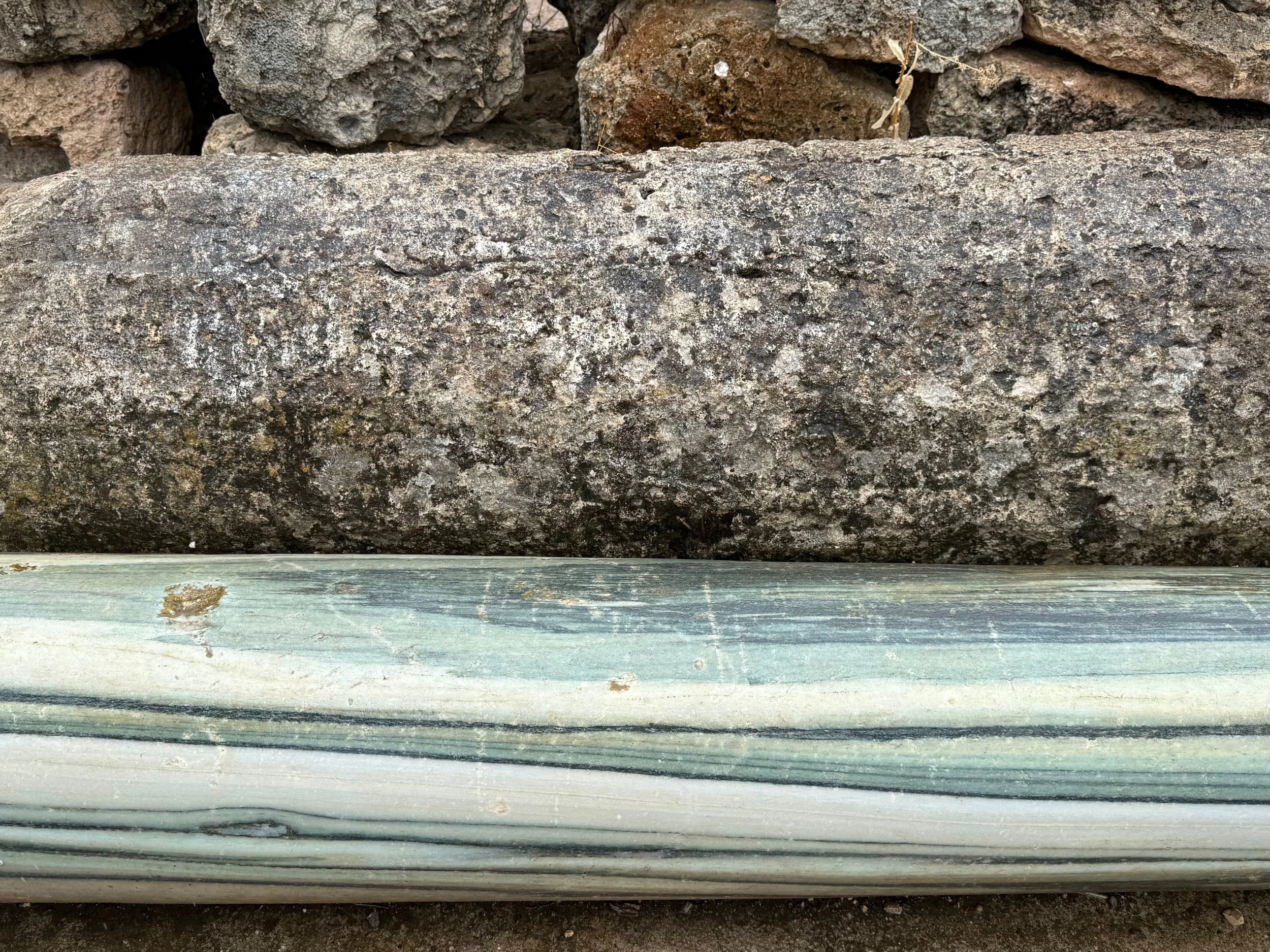
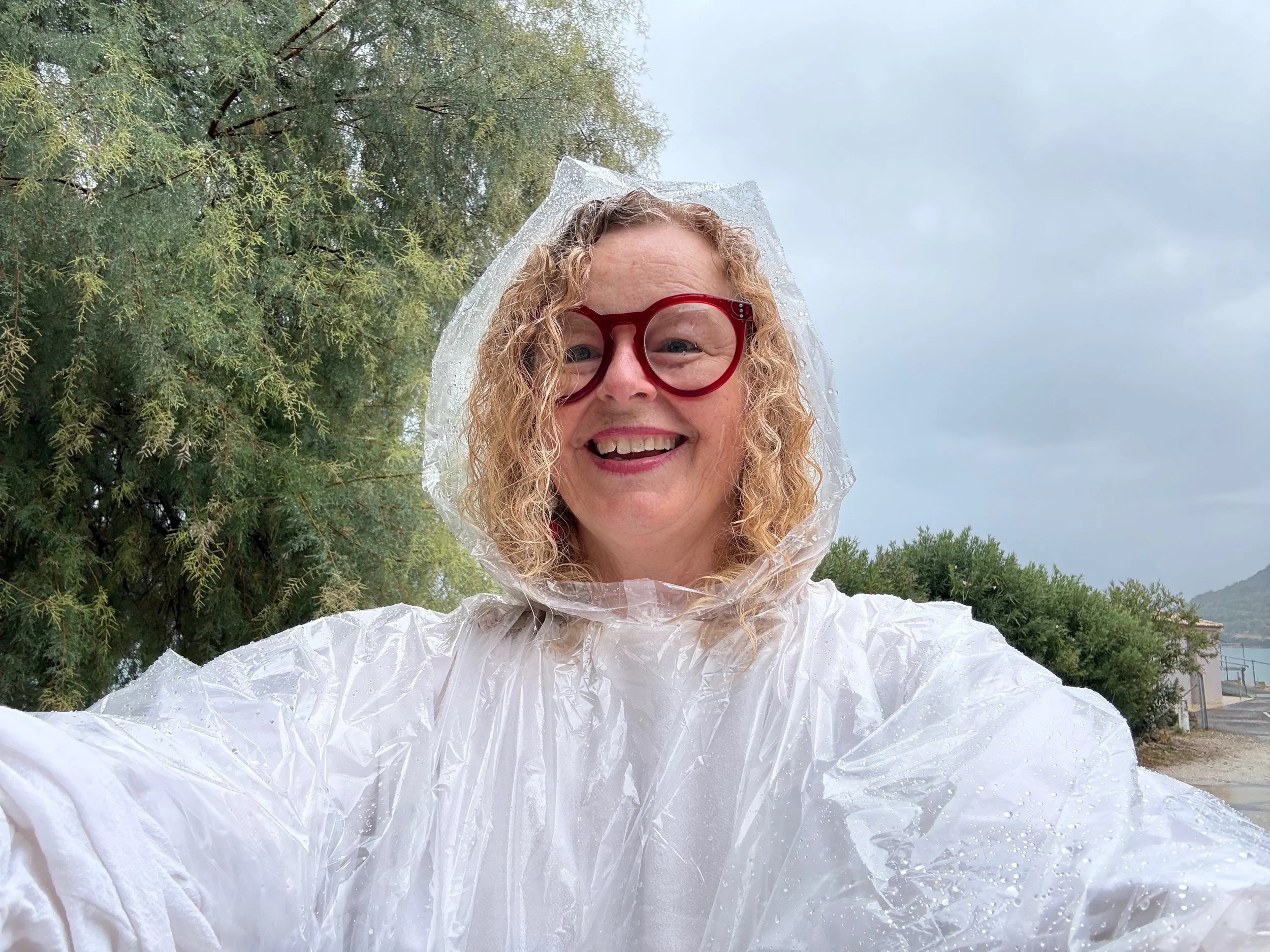
Next on our agenda today, was a visit to the site of the ancient port where the apostle Paul got a short-back-and-sides, made a vow to continue to do God’s work, farewelled the Corinthian Christians he’d been hanging out with for 18 months and sailed for Syria (recorded in the Bible in Acts 18). 400 years after that, the Byzantines built a basilica on the site, (aptly named St Paul’s) the ruins of which are all that remain today from the once bustling Cenchreae port. Lapped by gentle waves, this incredible site still has an intact section of exquisite marble tiling and the bases of the huge marble columns that once held it up. Beach umbrellas line the shore of what is now modern Kechries, hinting that when it’s not raining, this might look a little different. I was grateful to Janine, who kept me dry with a rain poncho she’d pulled out of her Mary Poppins bag of supplies!
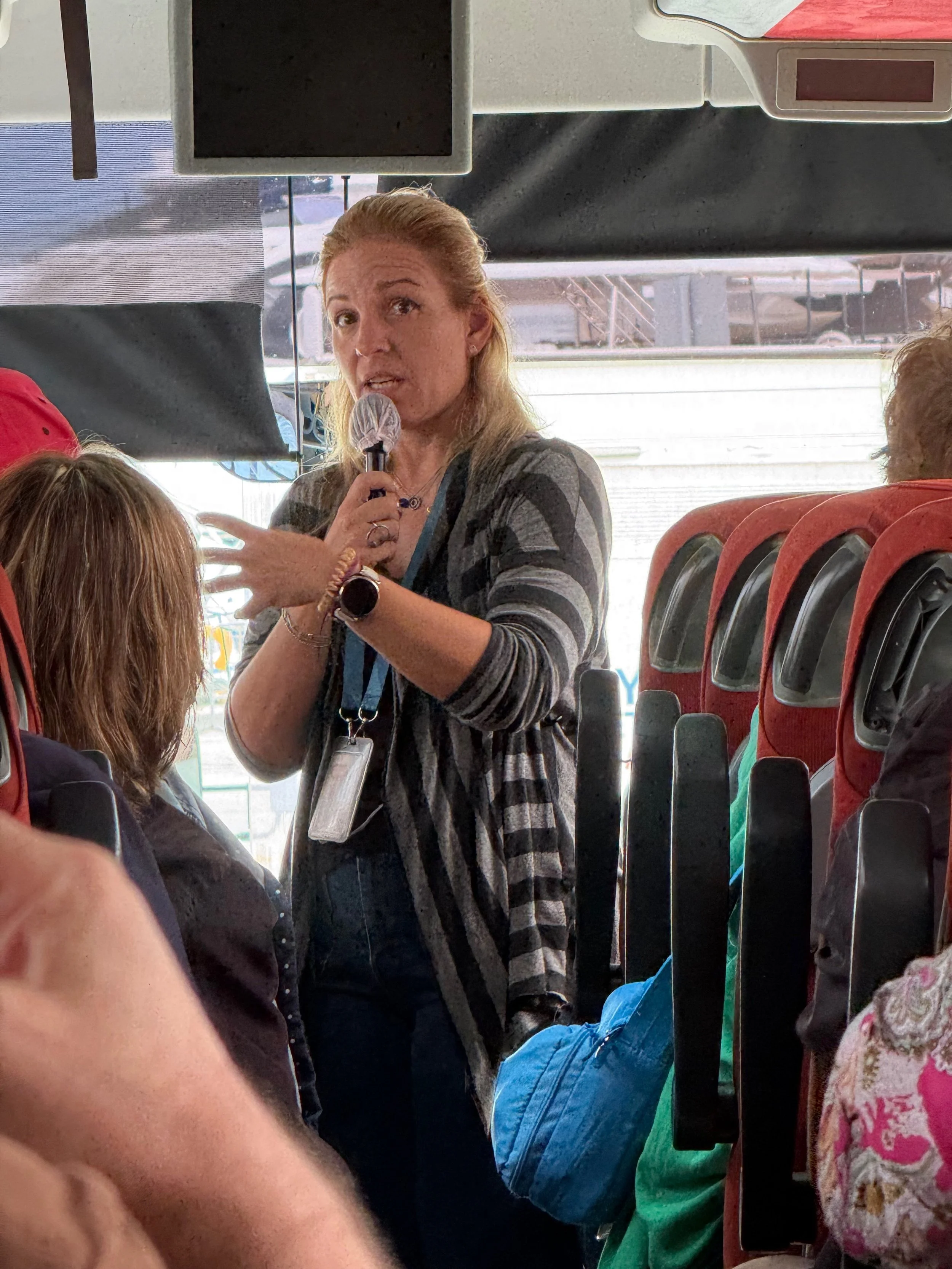
As we left the foggy, soggy shore, our bus wound its way towards the pretty little town of Nafplio. Marianna, who has actually trained in archaeology, continued to wow us with tale after tale of battles, conquests, empires and more fun facts about Ancient Greece than you could poke a stick at. Her knowledge of Greek history is astonishing and she is a veritable fountain of information.
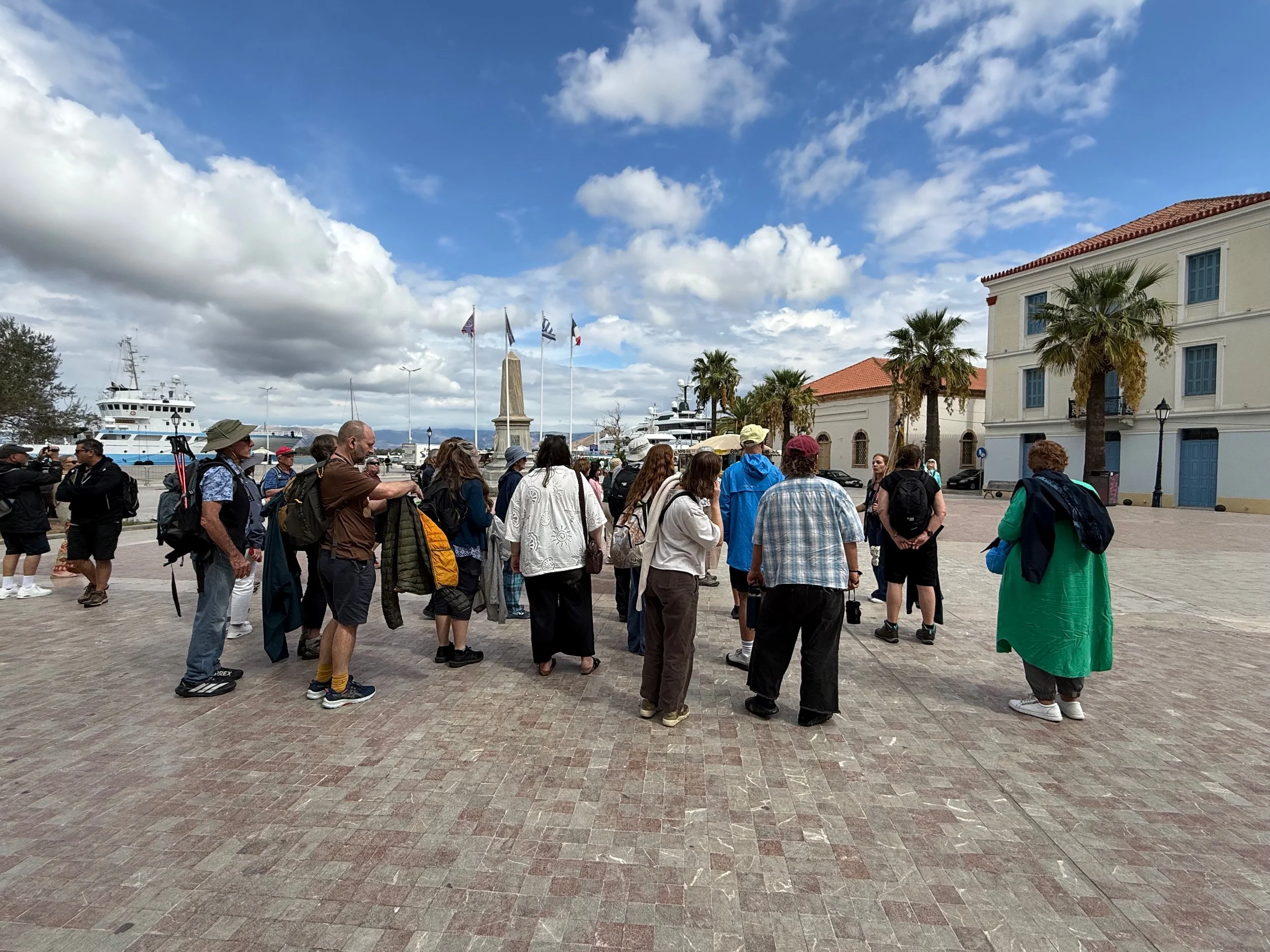
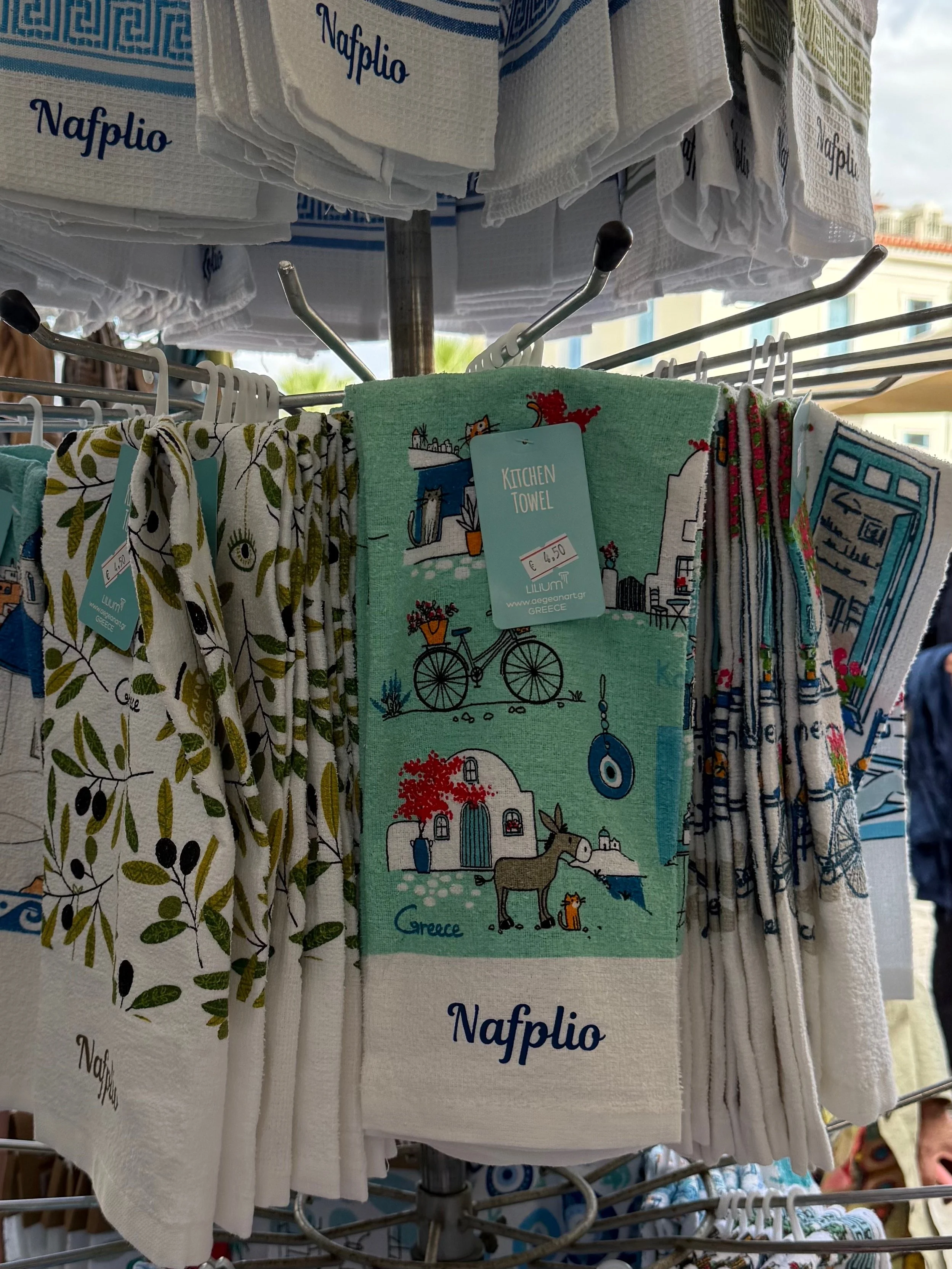
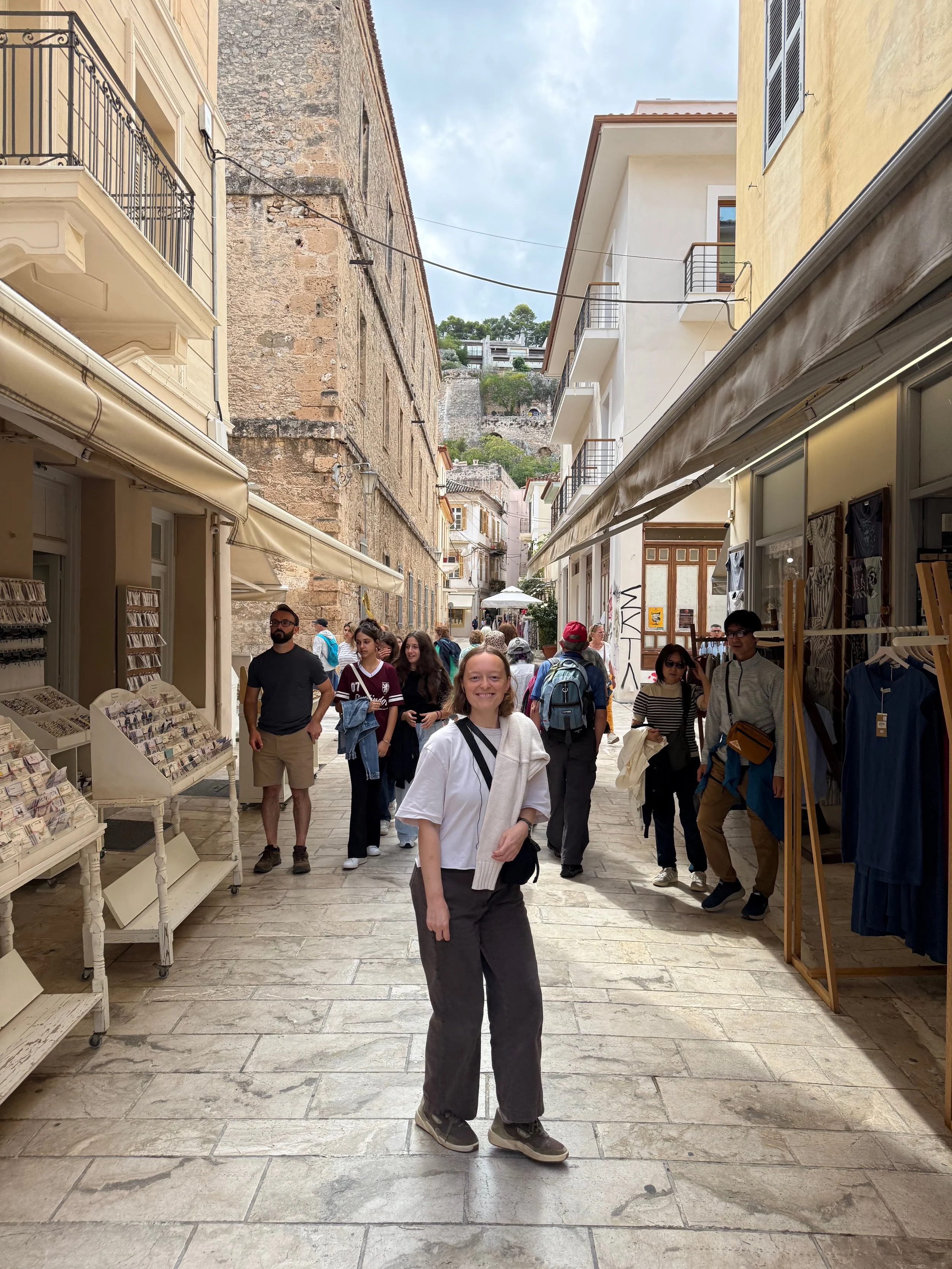
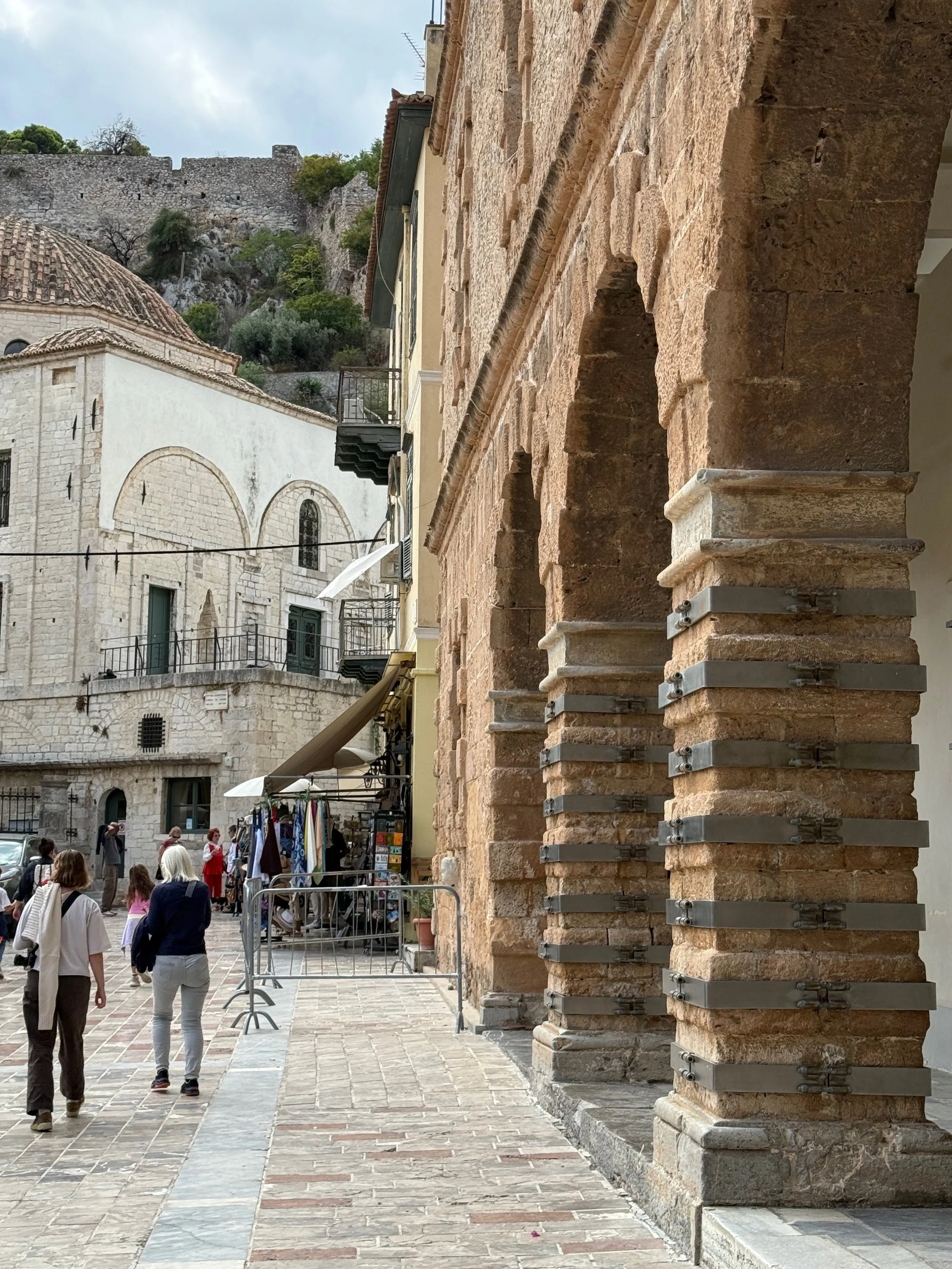
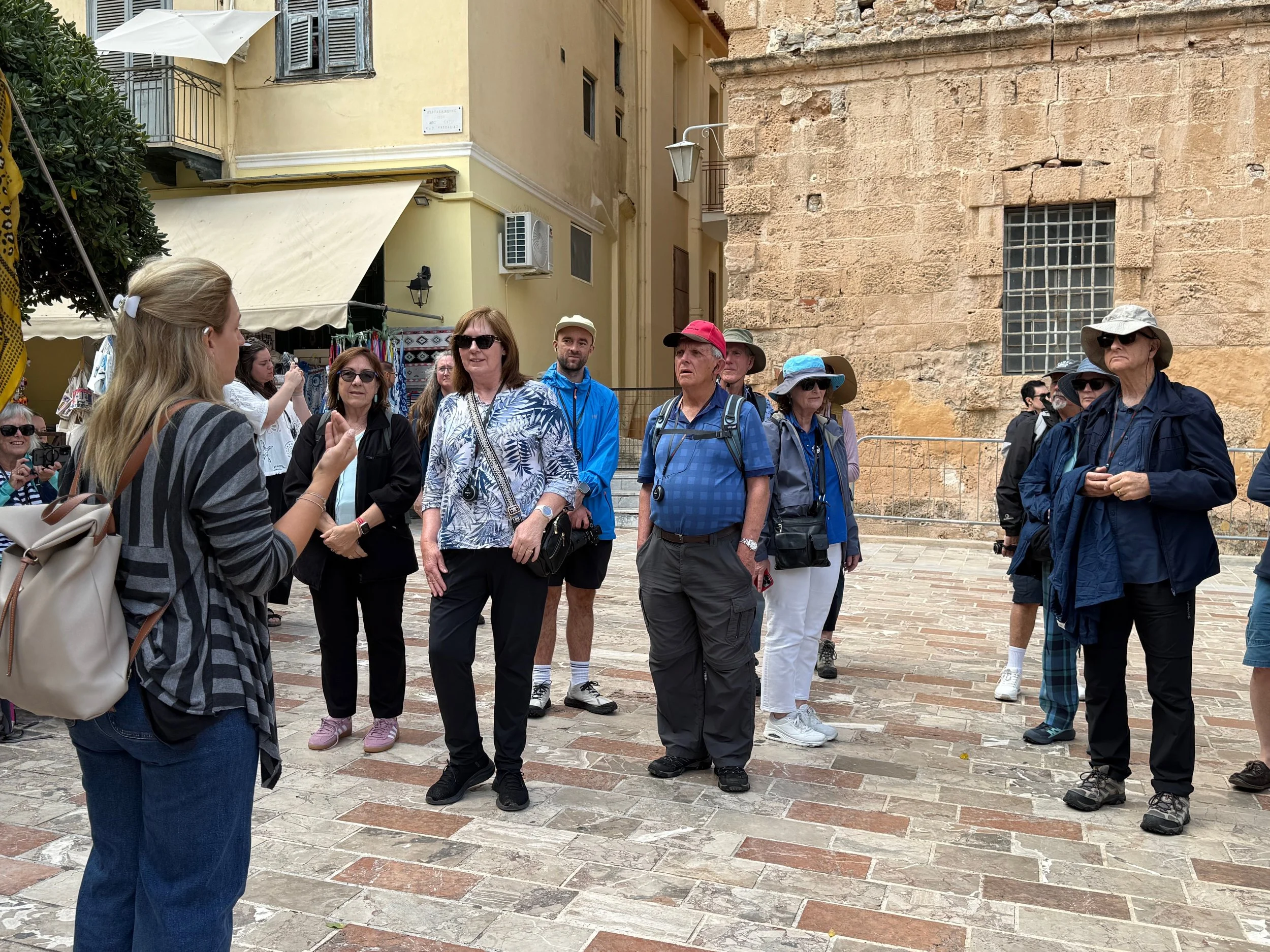
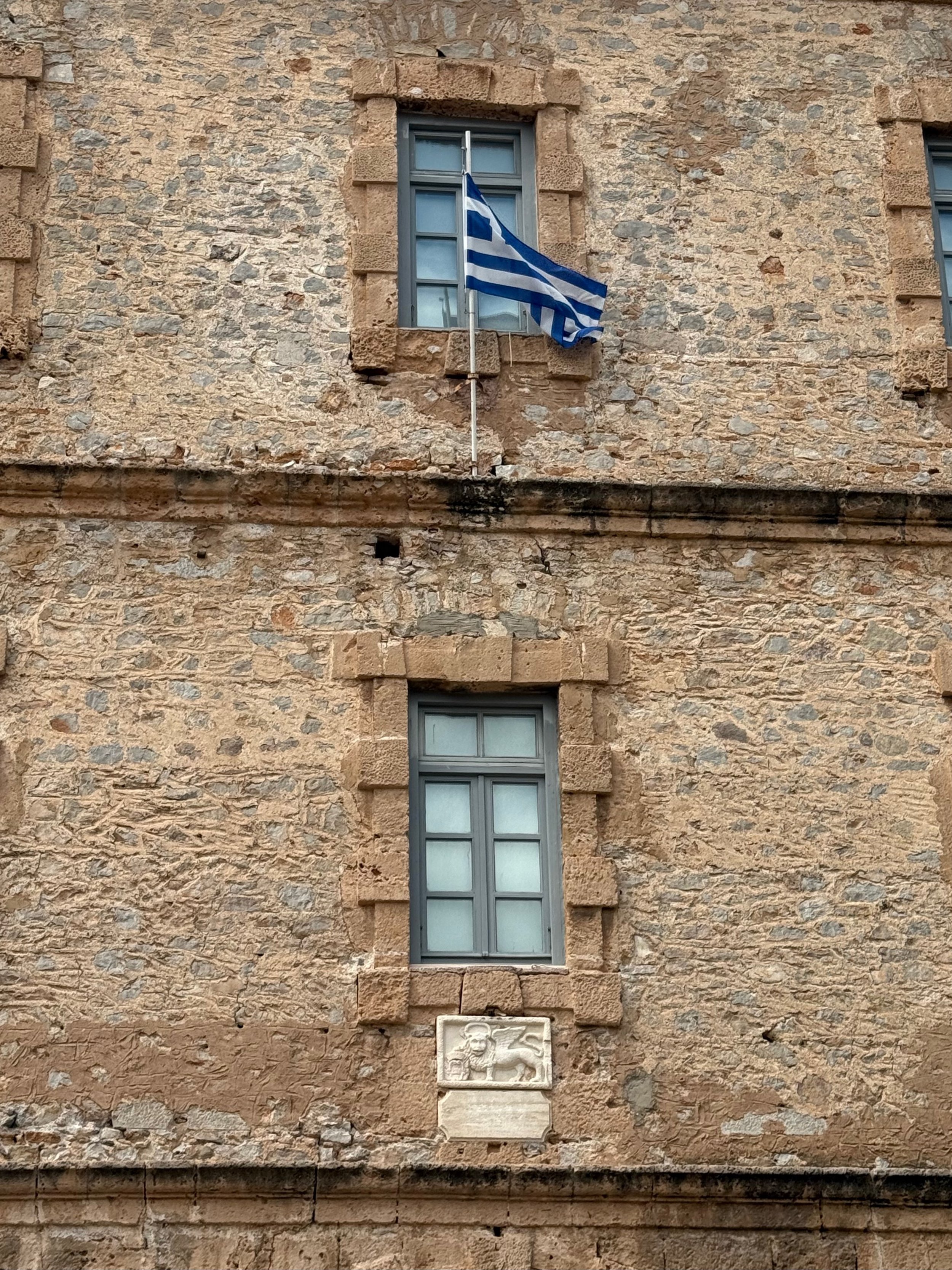
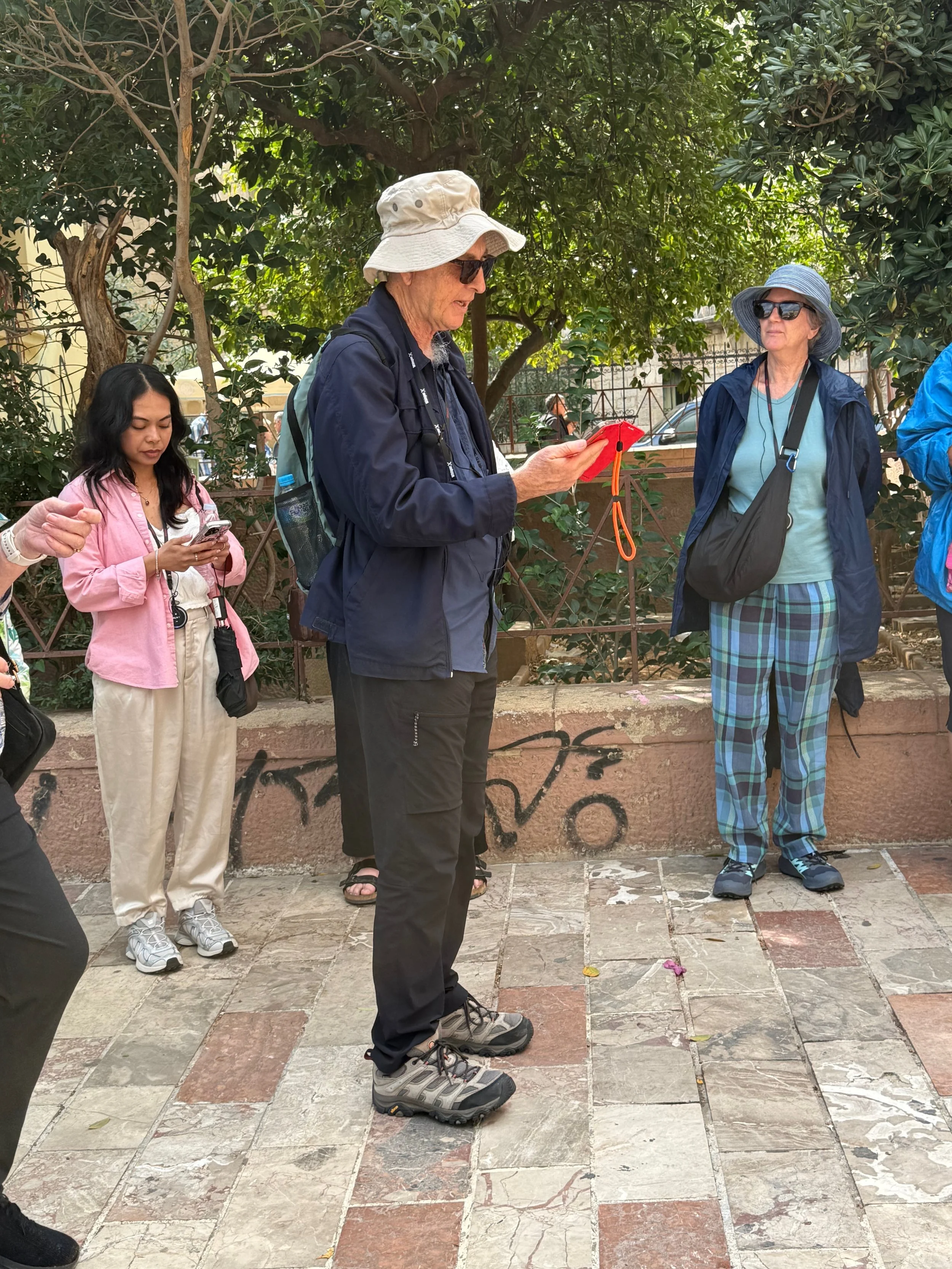
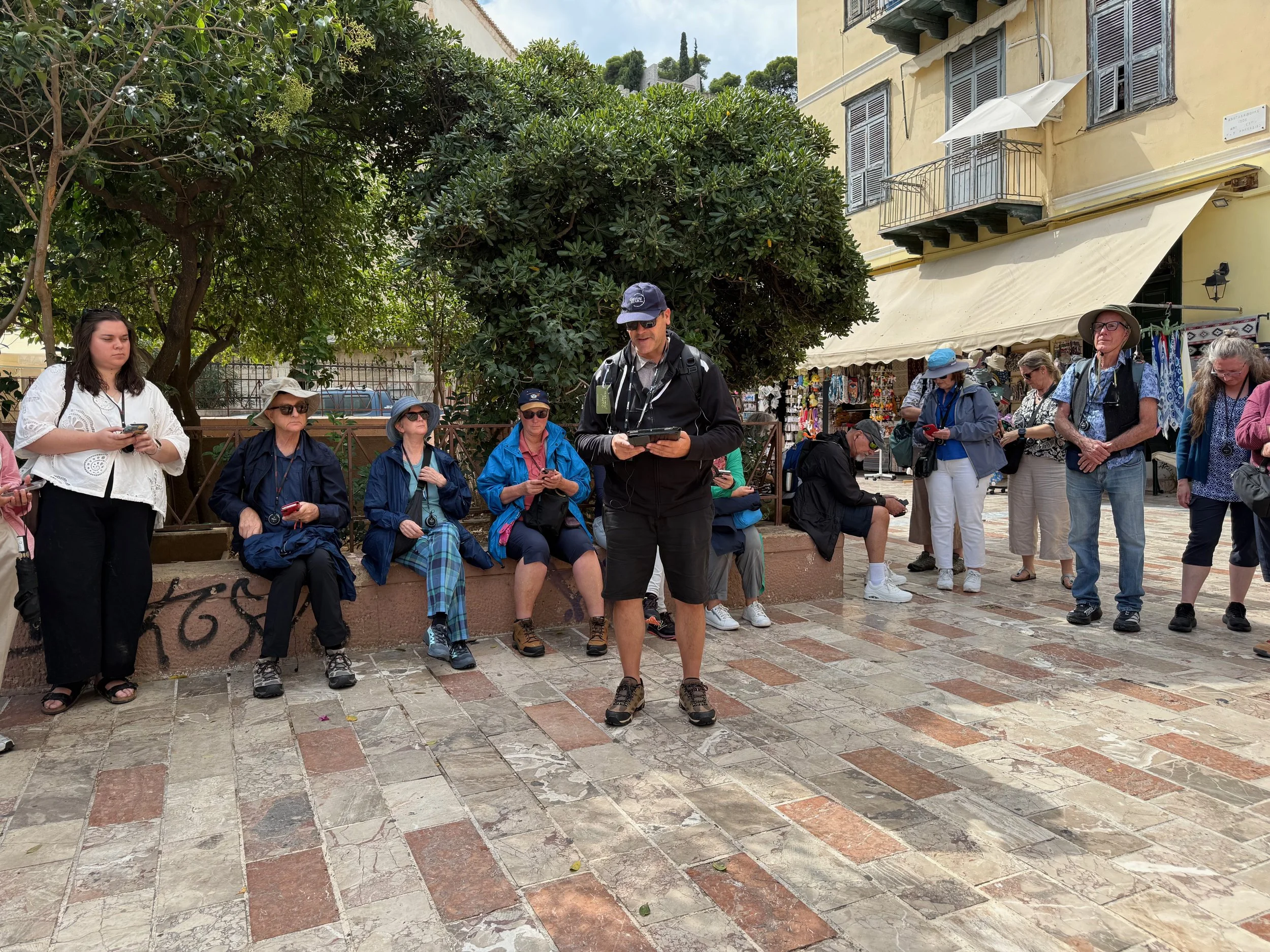
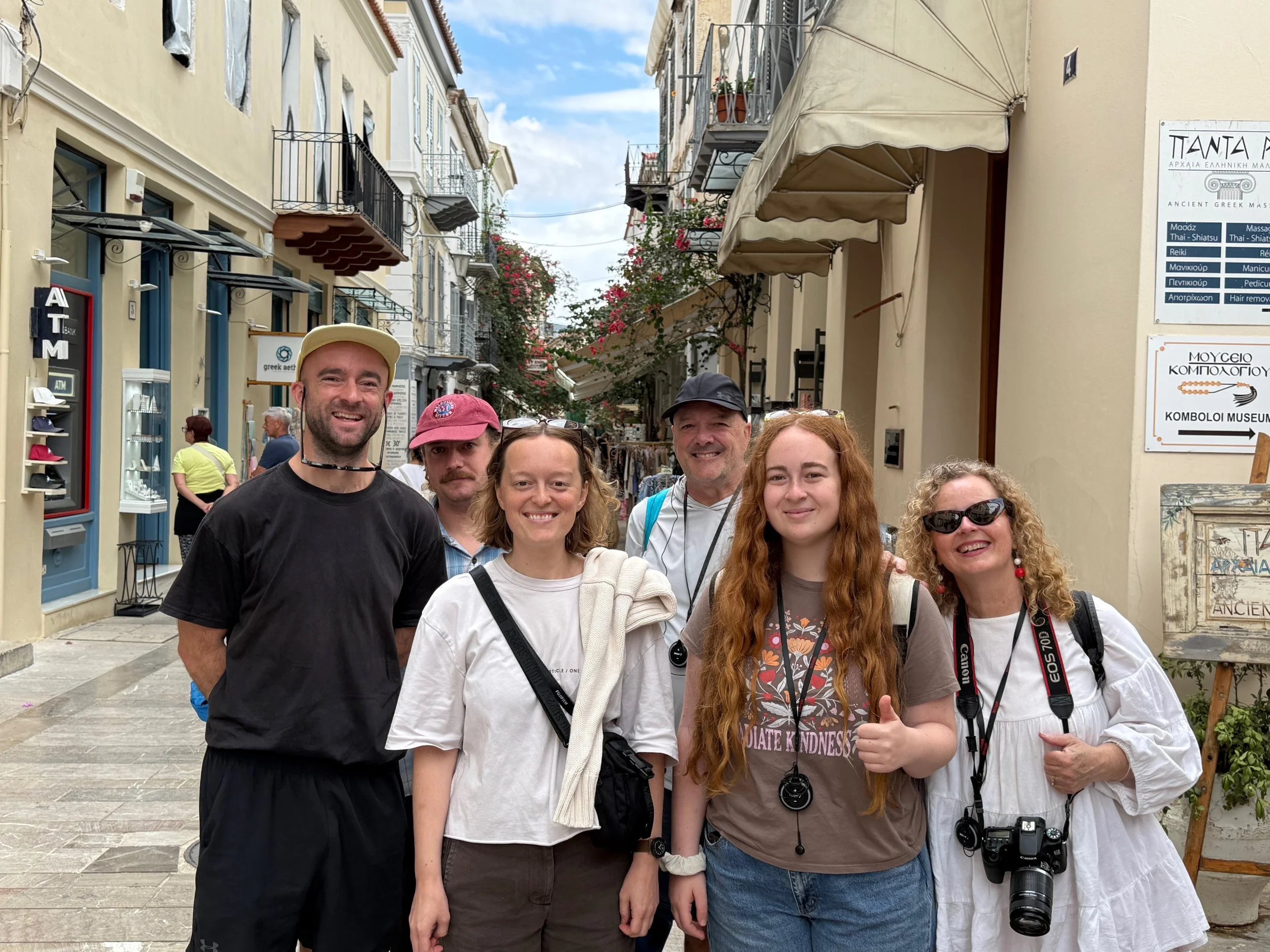
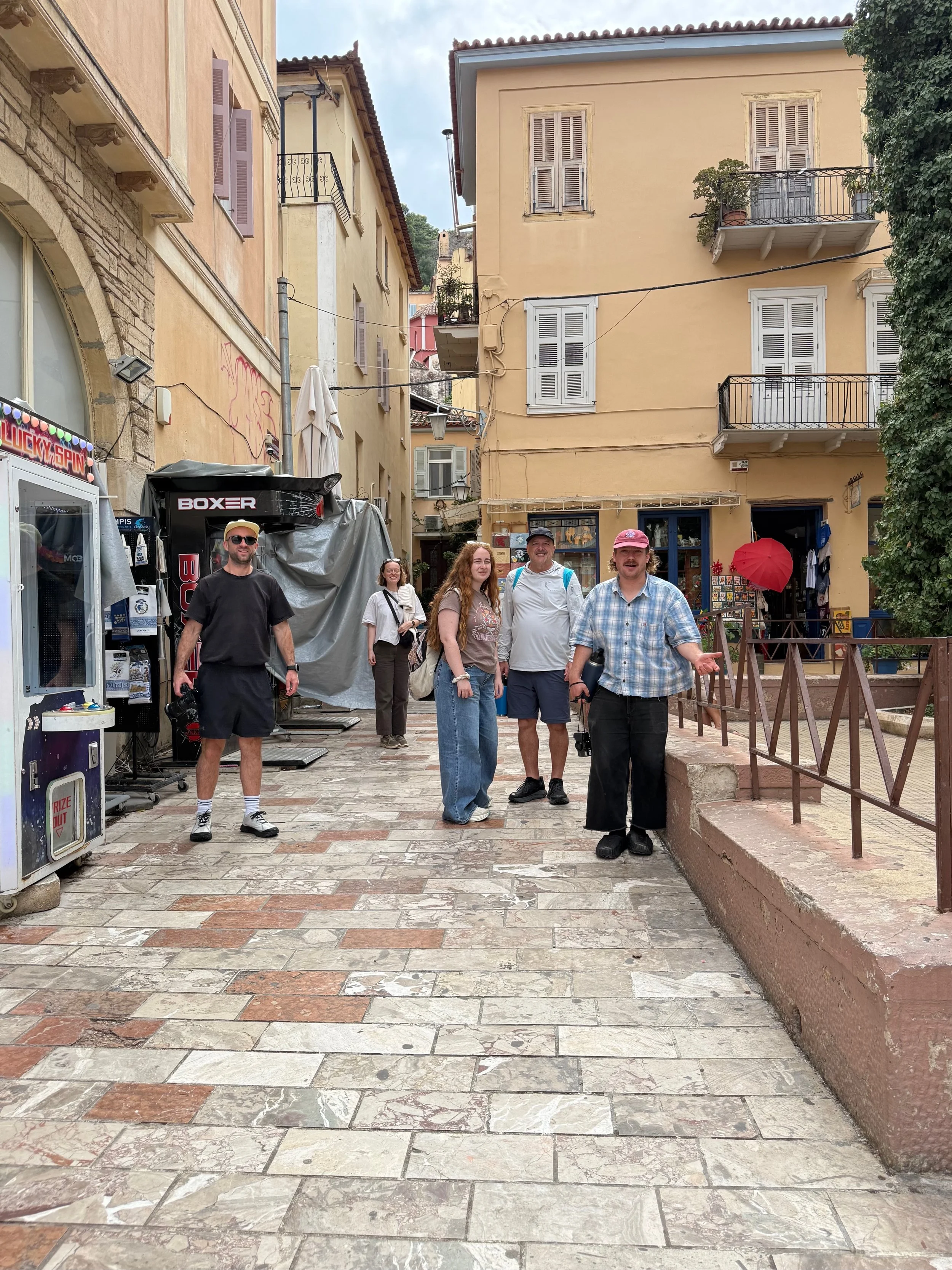
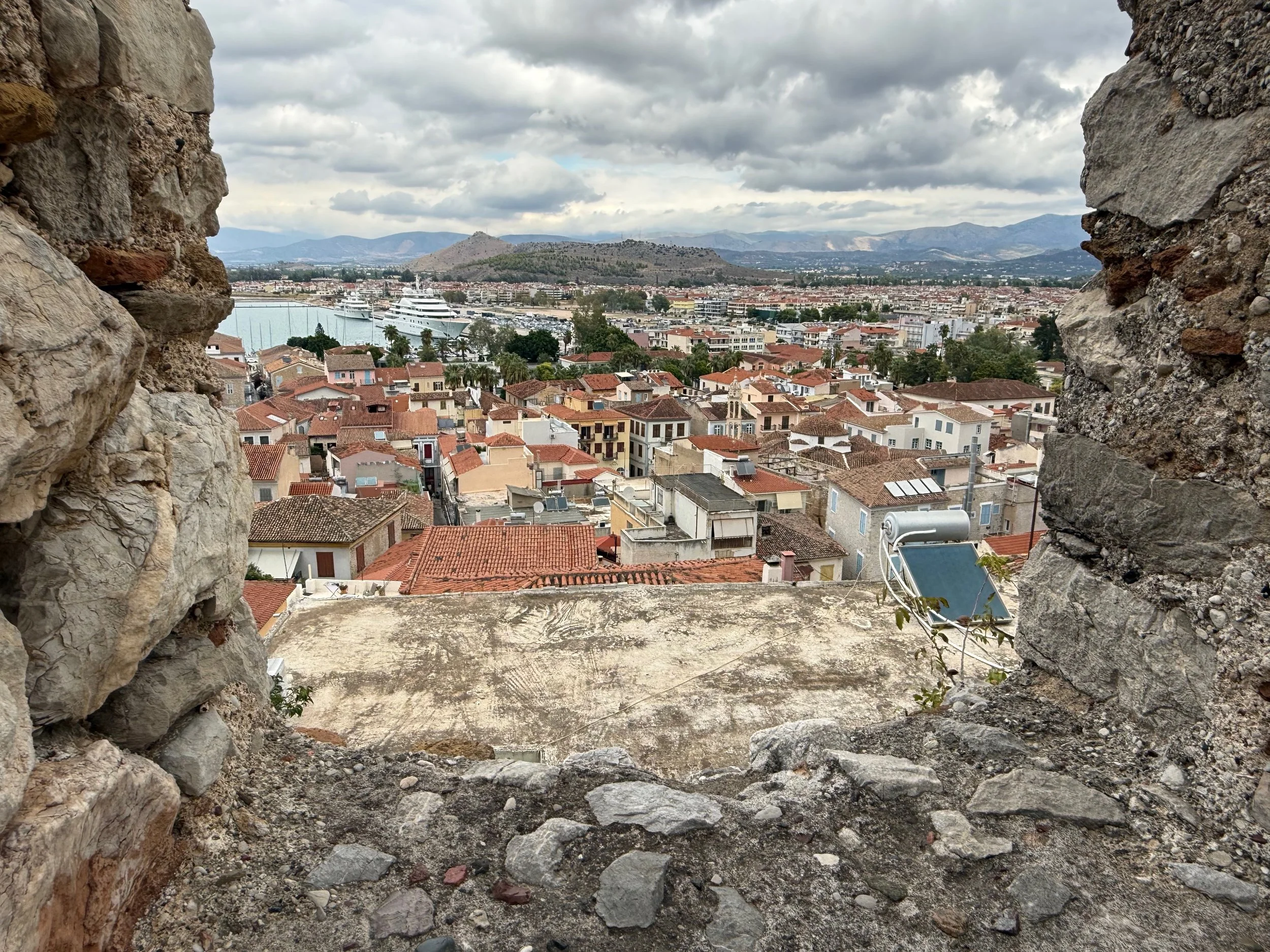
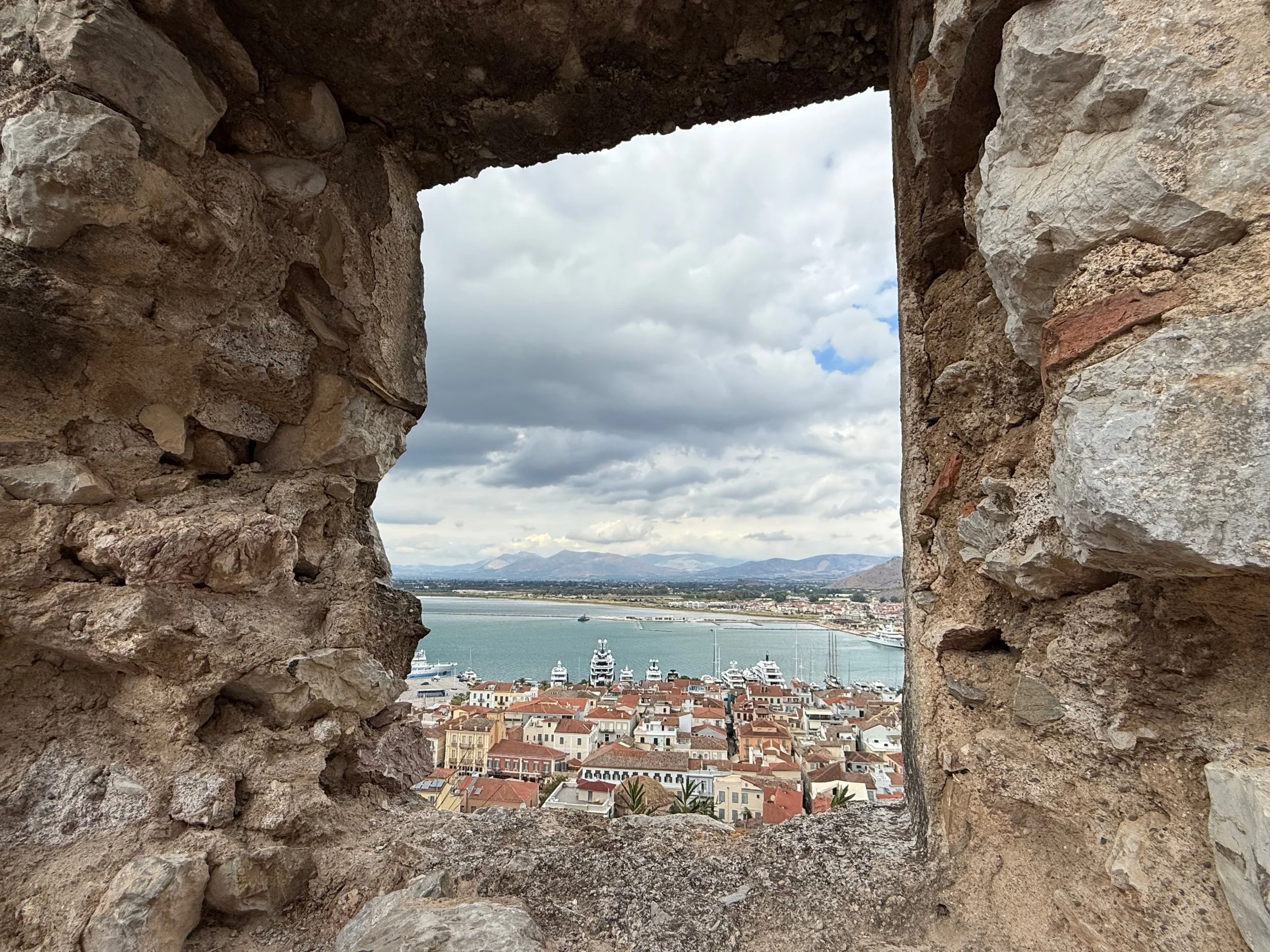
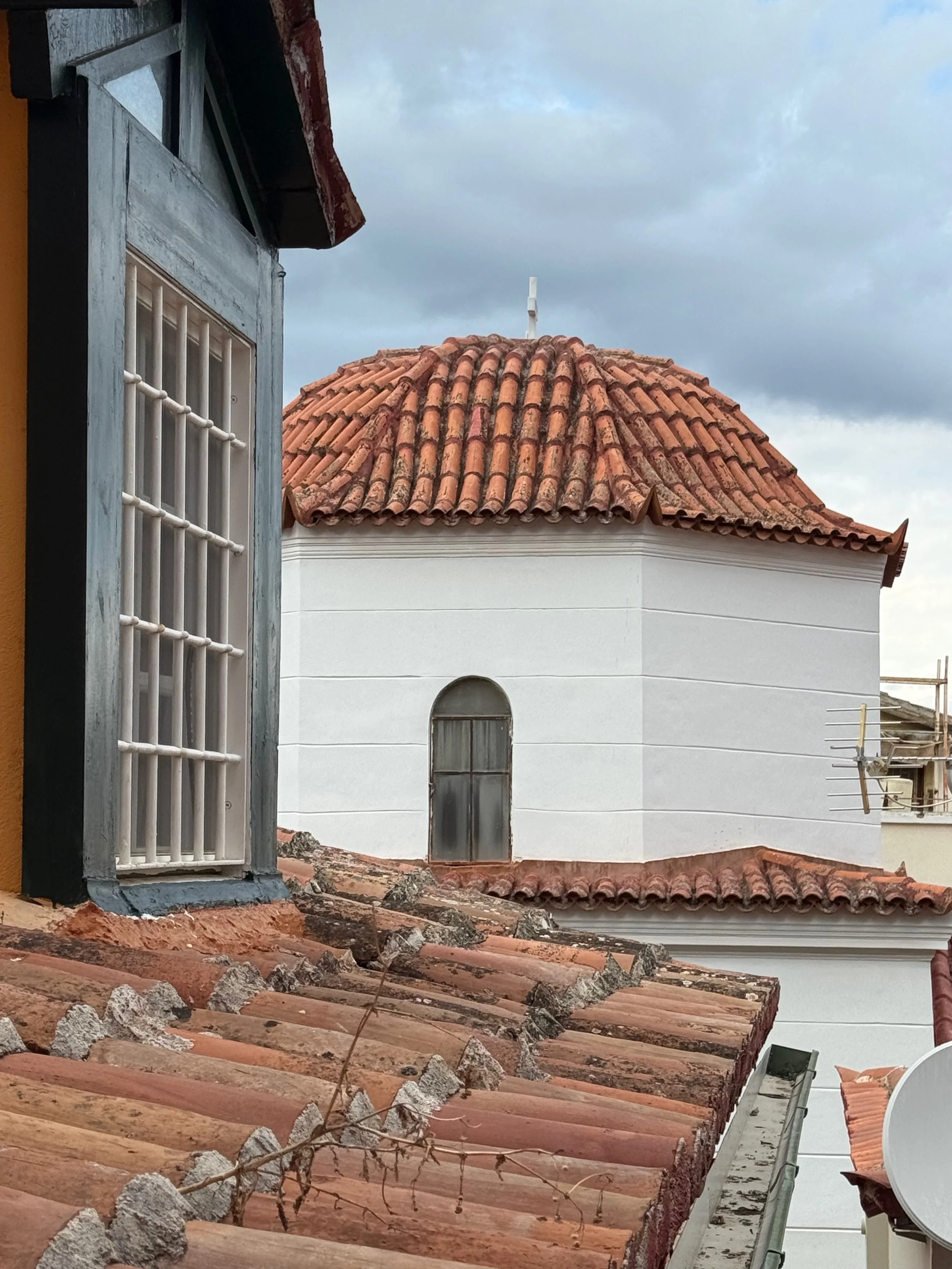
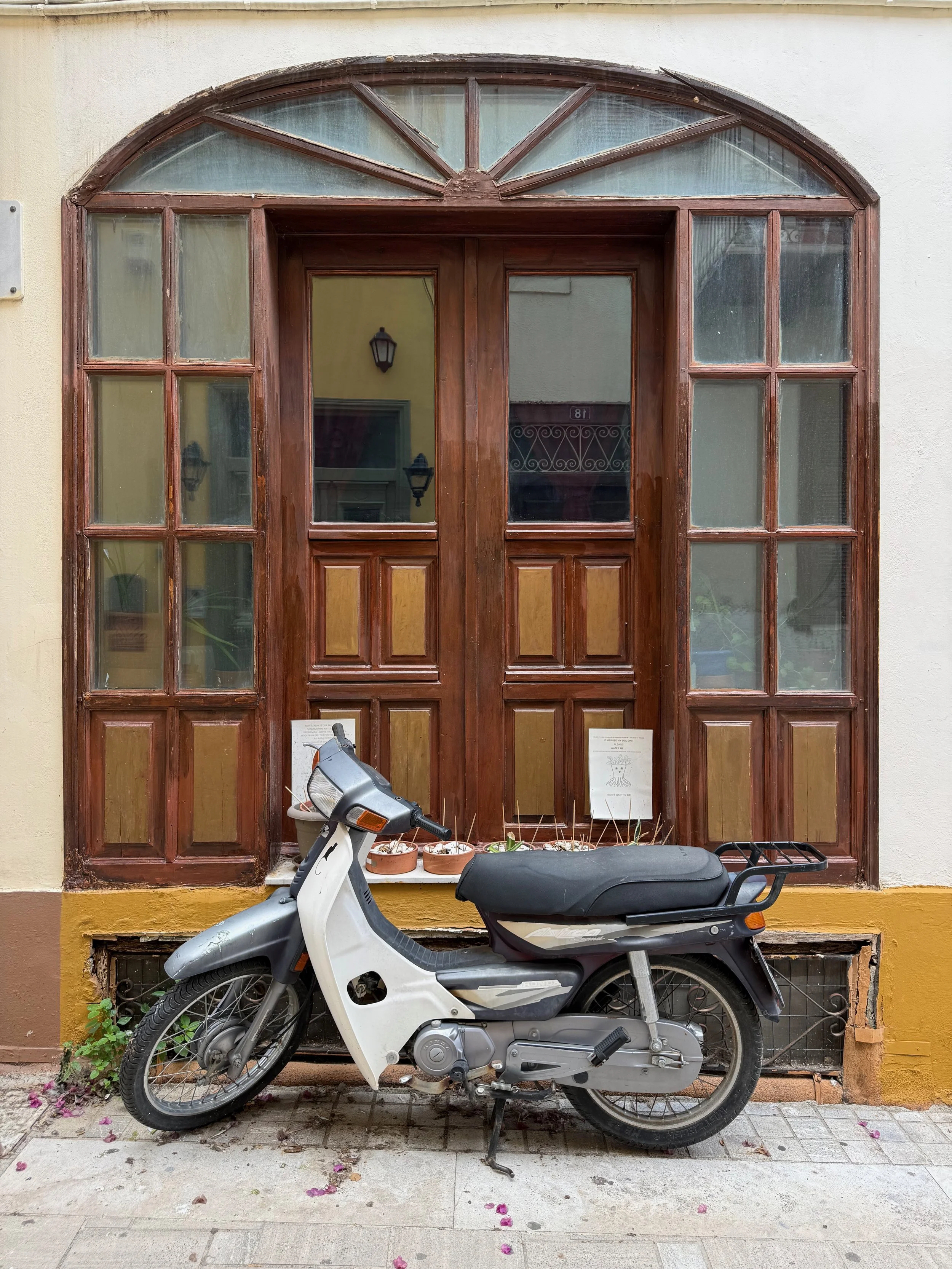
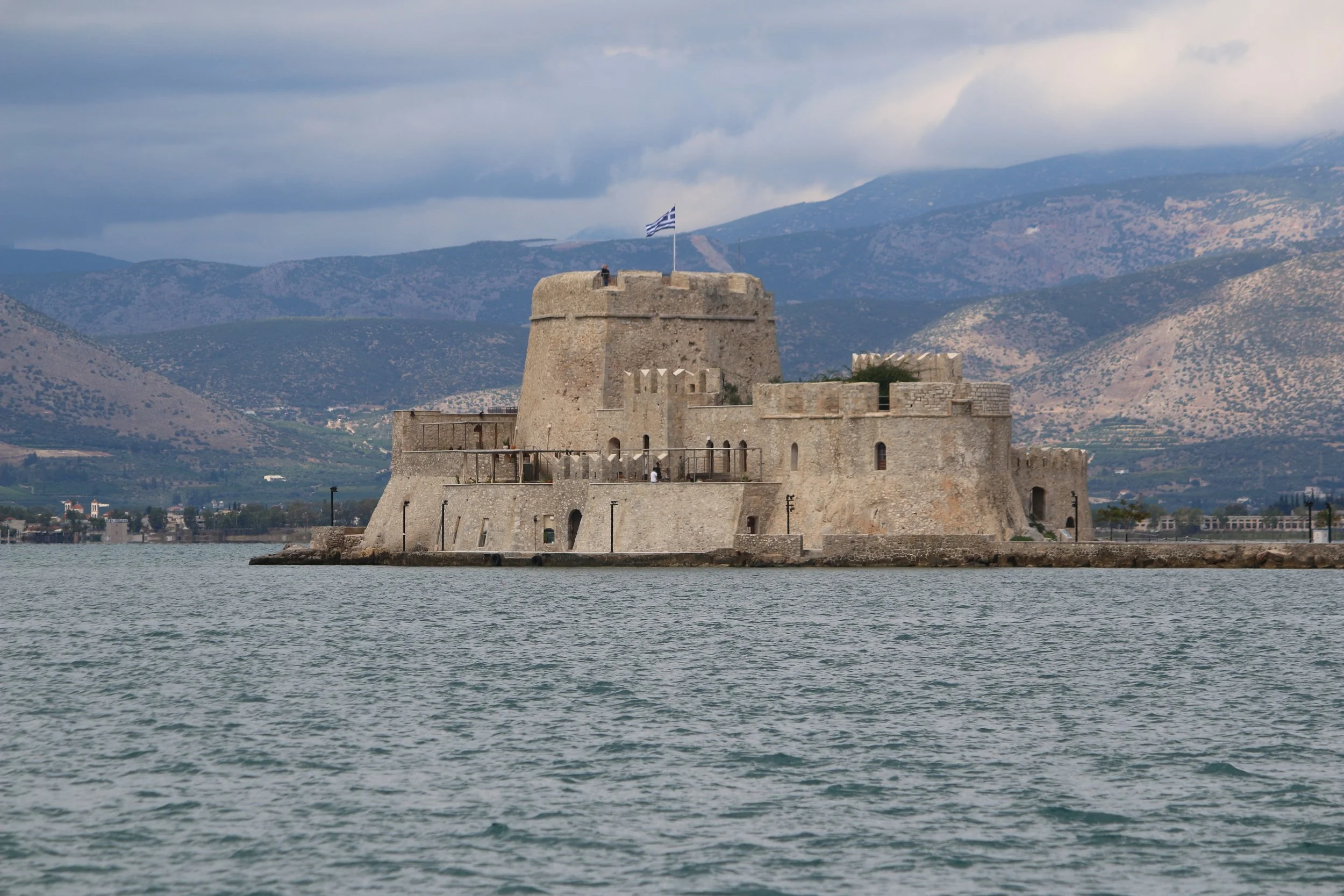
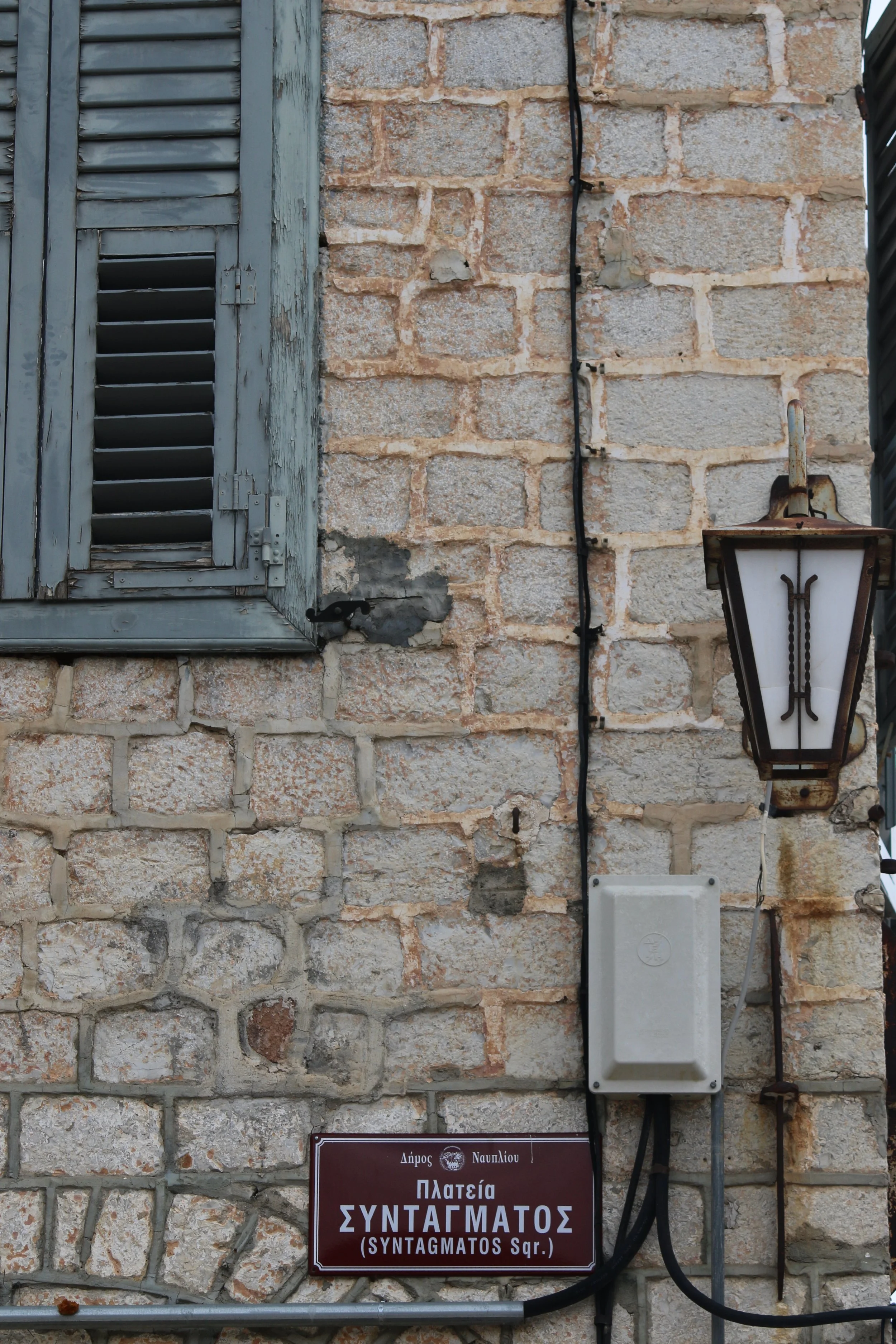
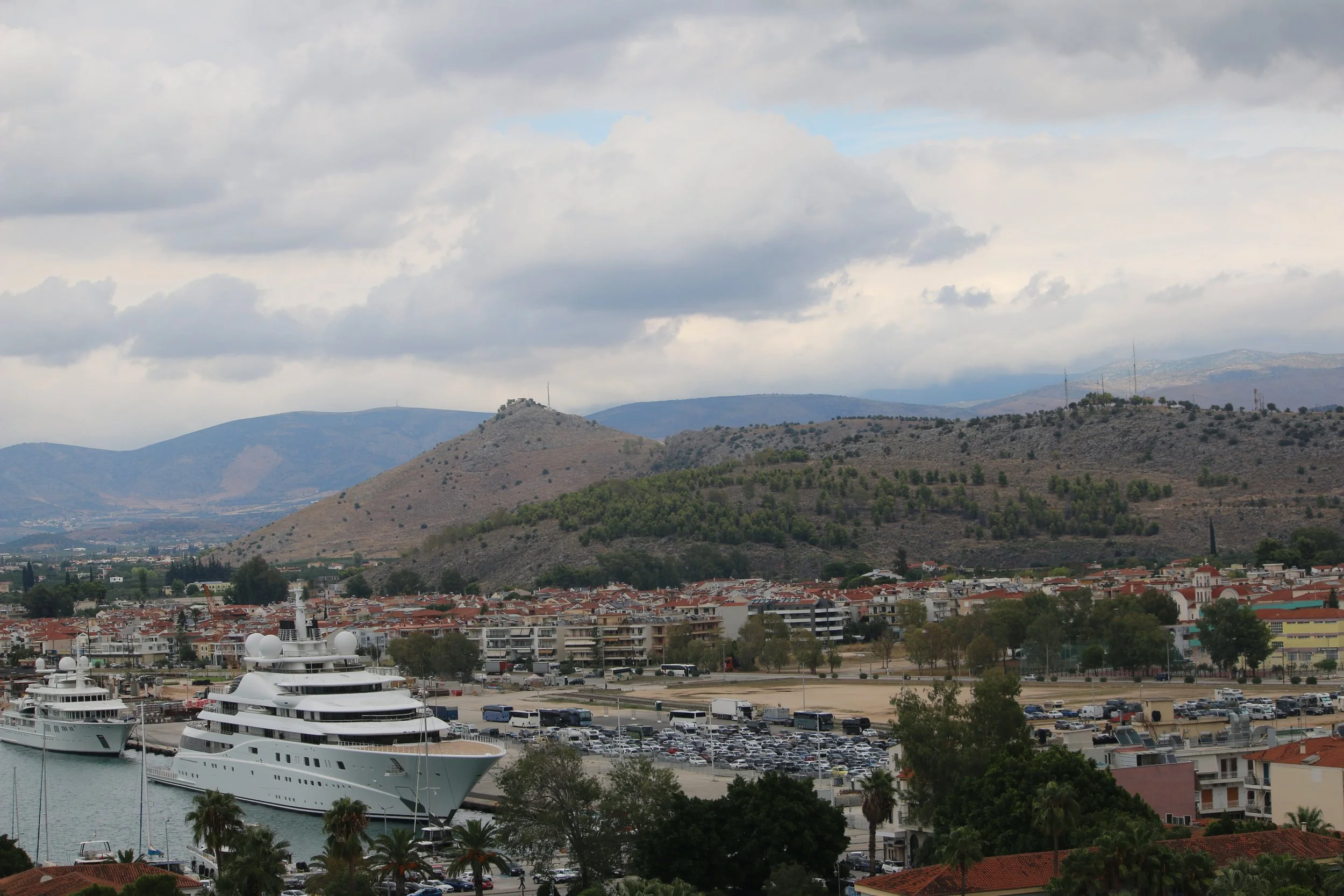
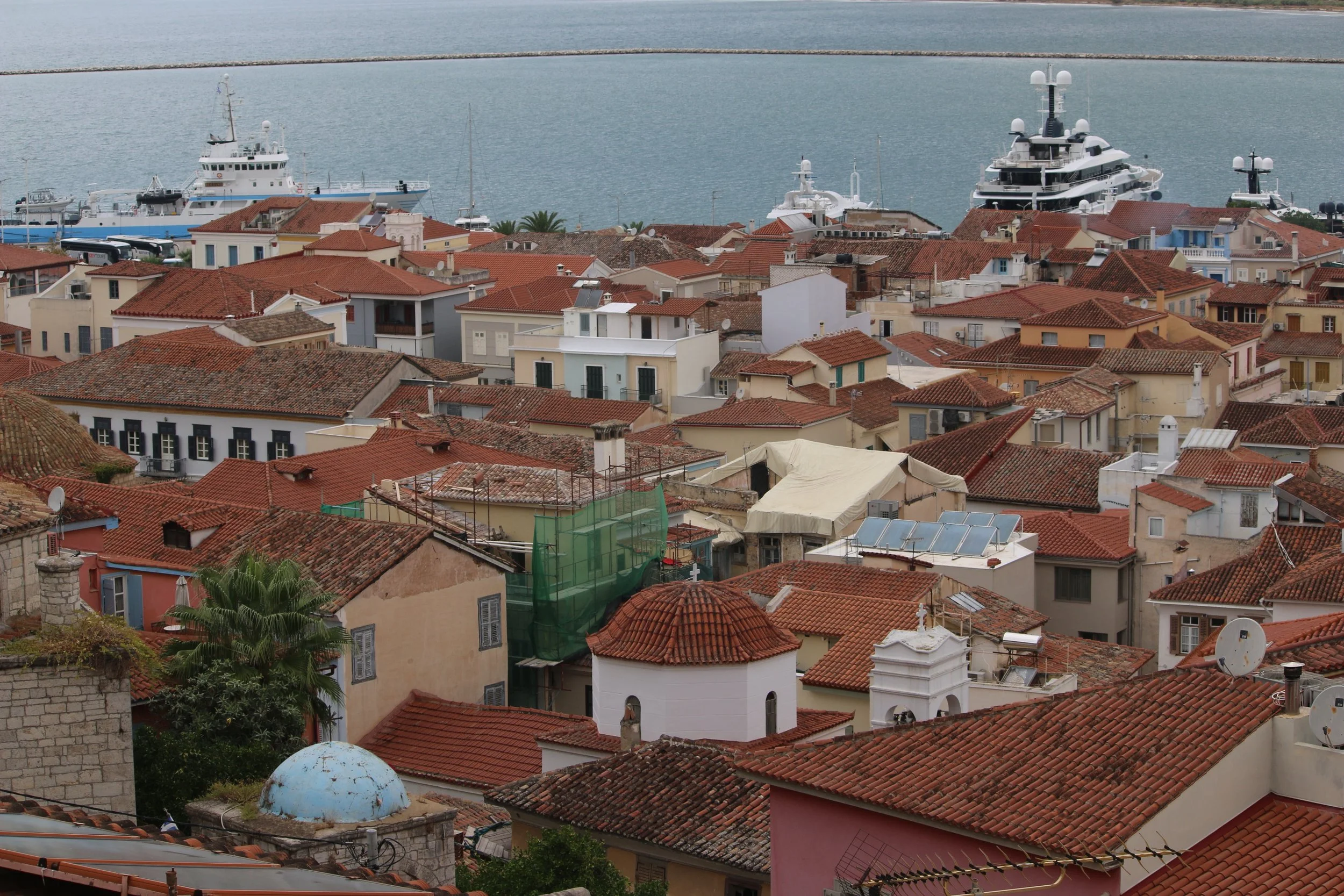
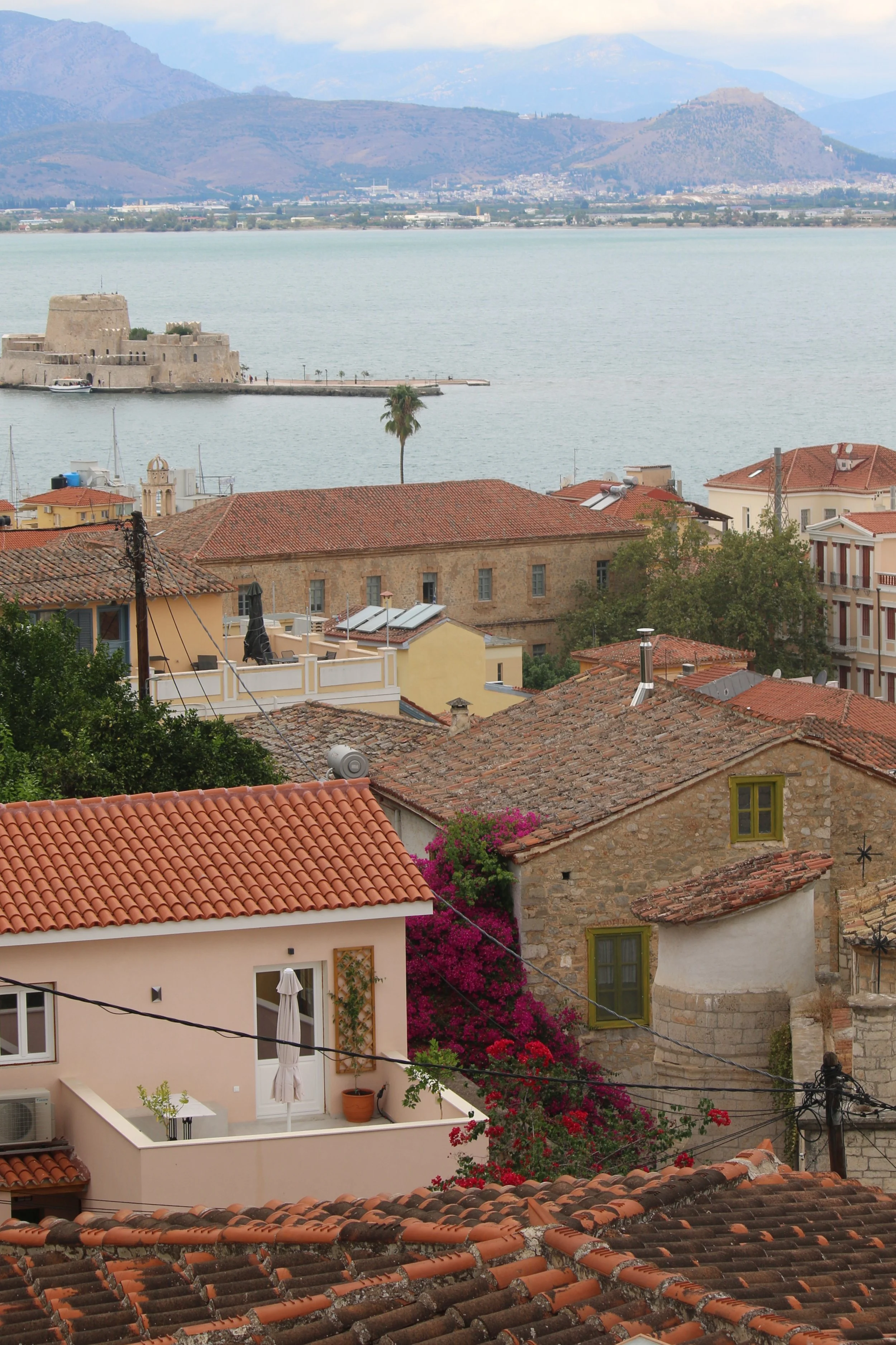
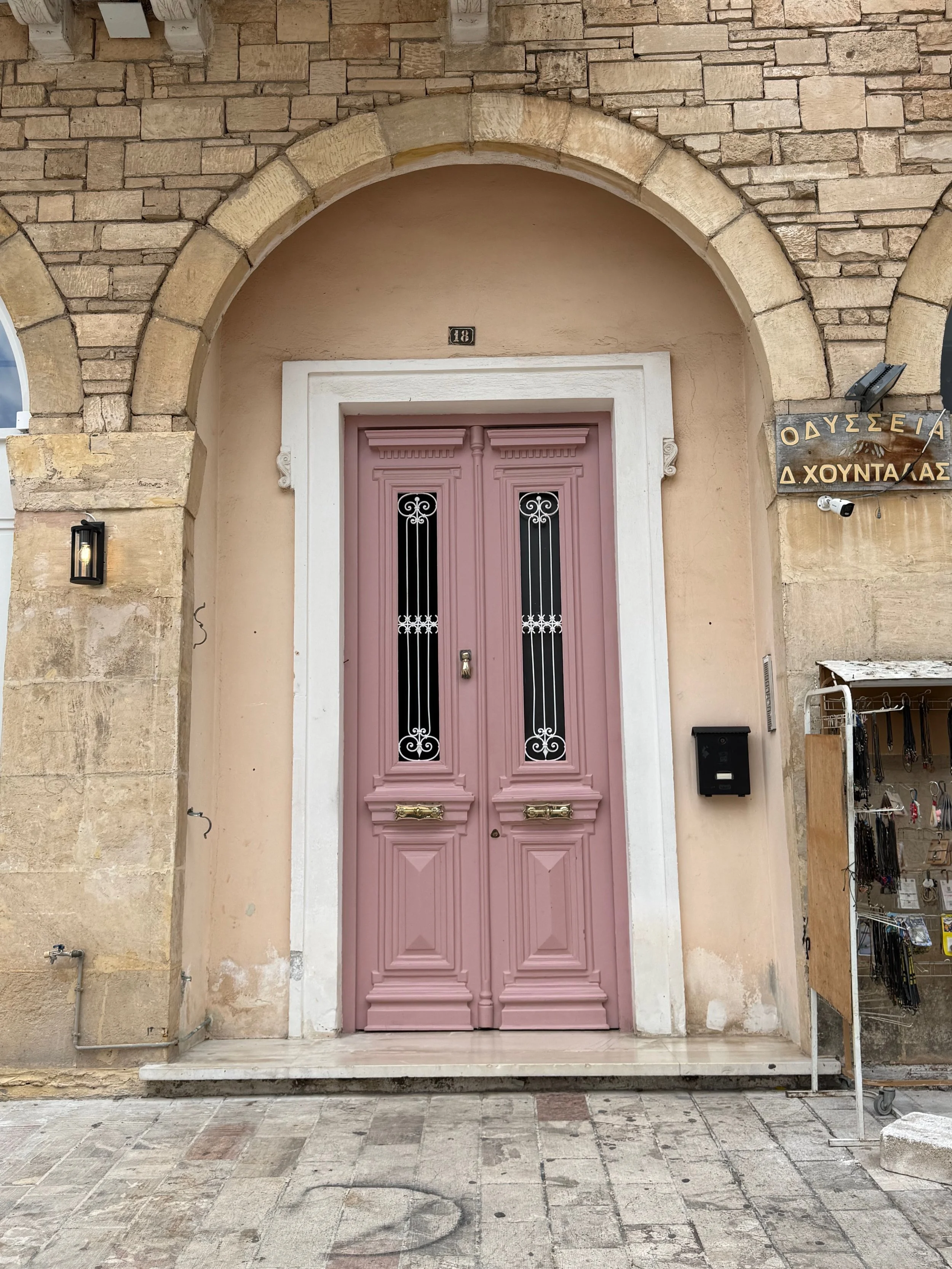
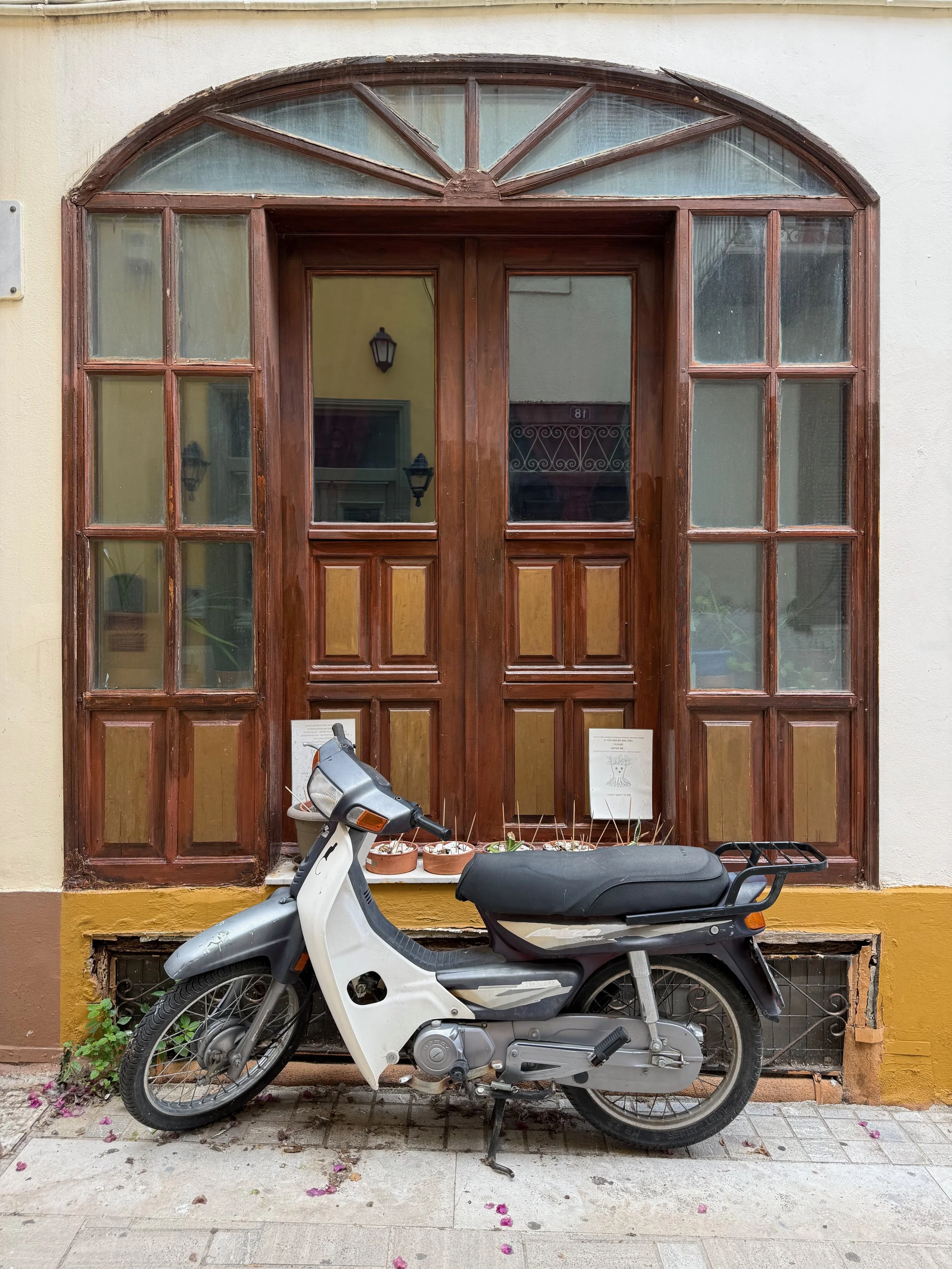
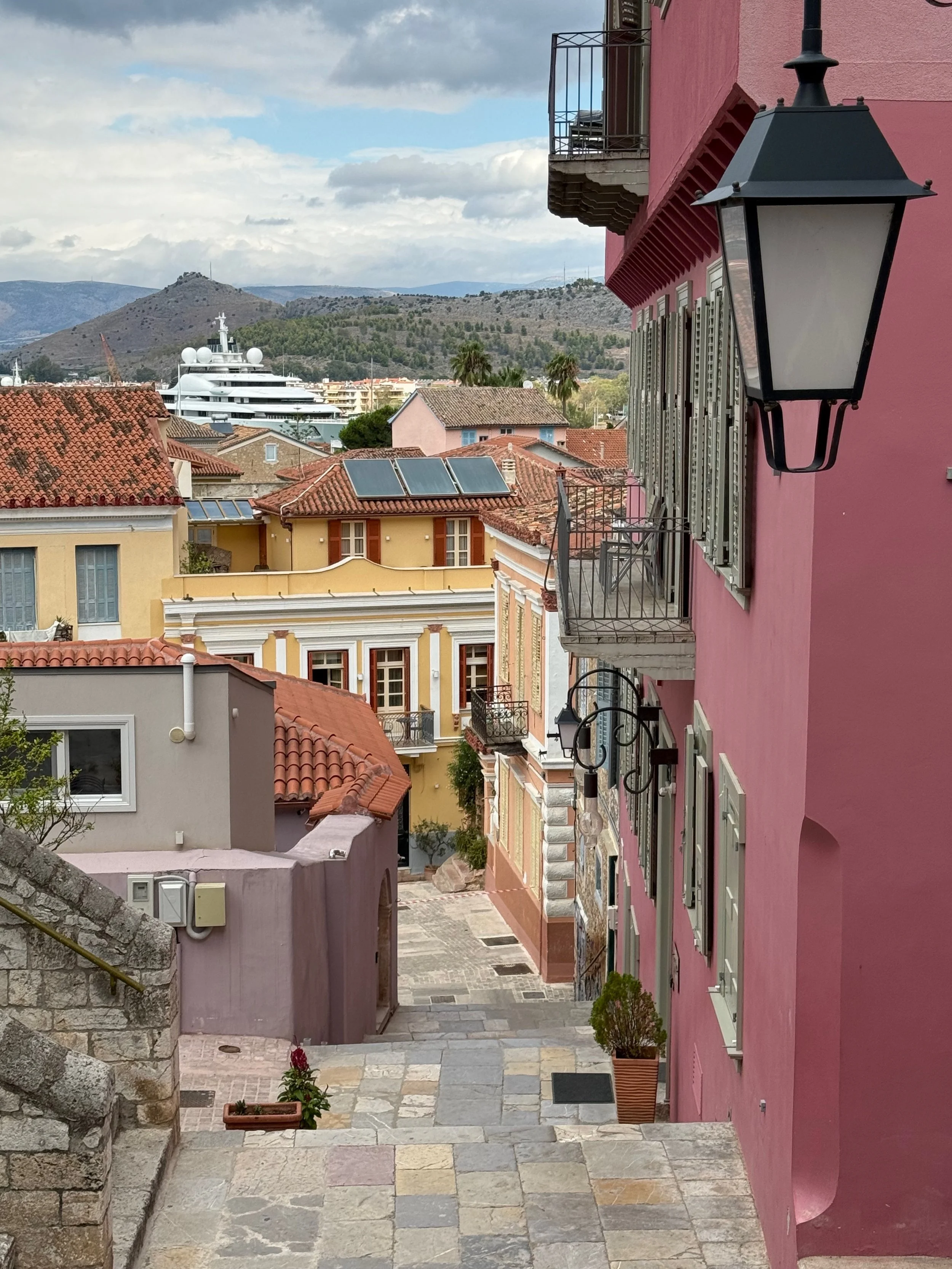
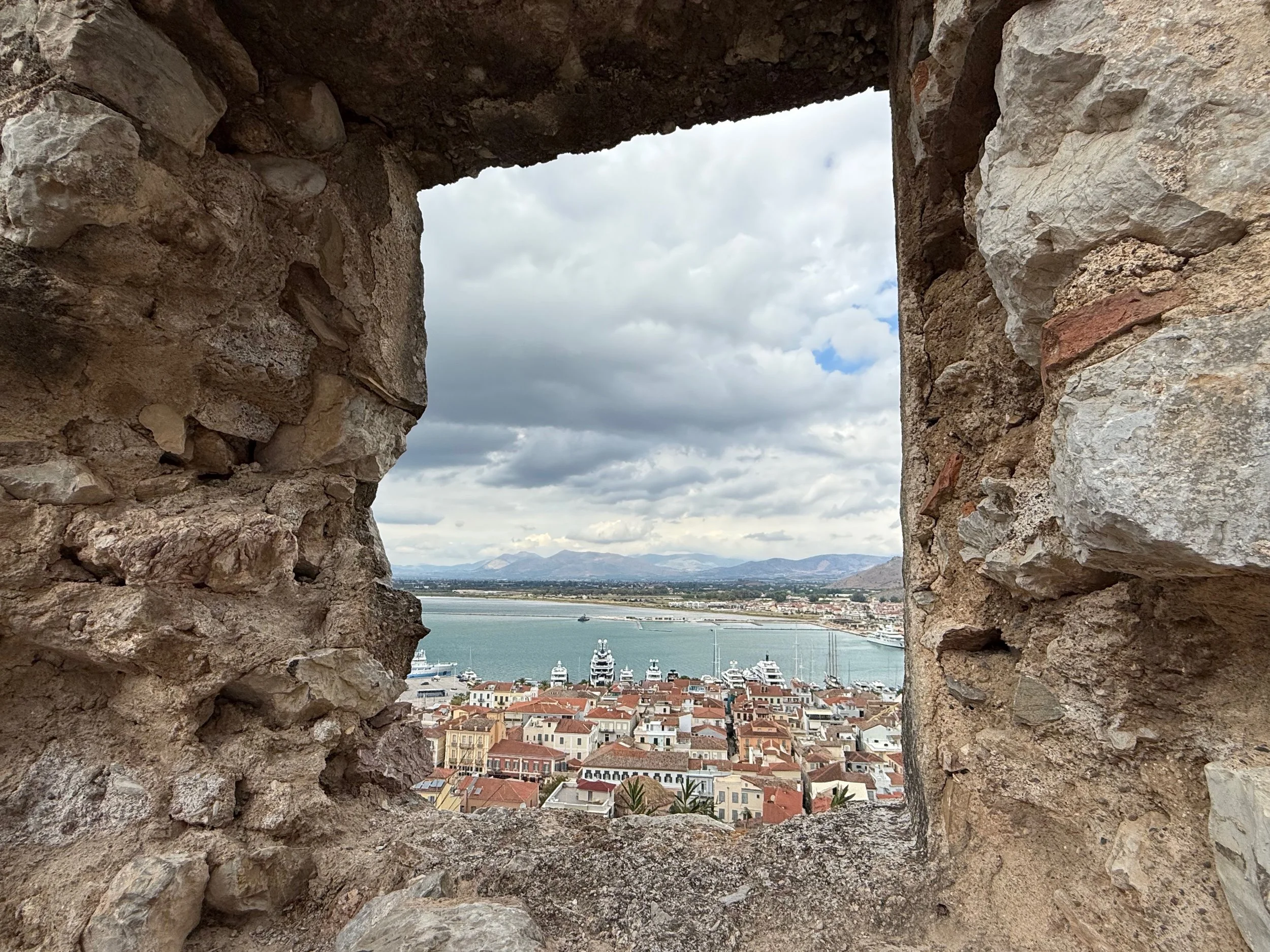
Nafplio’s little harbour not only housed some substantial super yachts, but also had its very own castle in the sea. (A sort of Greek version of Fort Denison). We walked down paved laneways of cute souvenir shops and boutiques into a beautiful big town square, outdoor cafes spilling out, with tourists milling around. Someone was entertaining the crowd by blowing giant bubbles. We gathered together in a shady corner and heard some more from Dean about the history of the apostles and believers that would have walked these very streets.
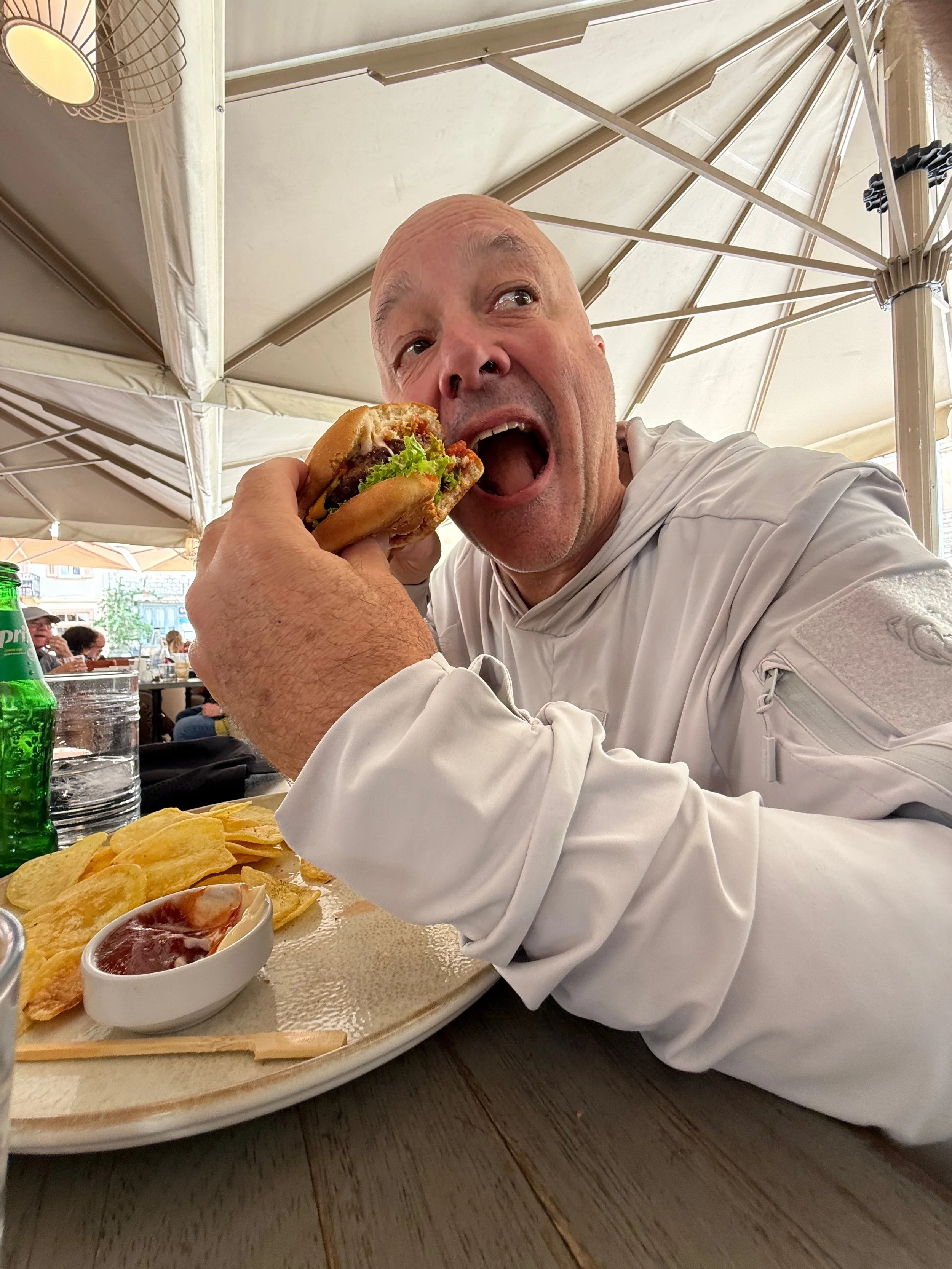
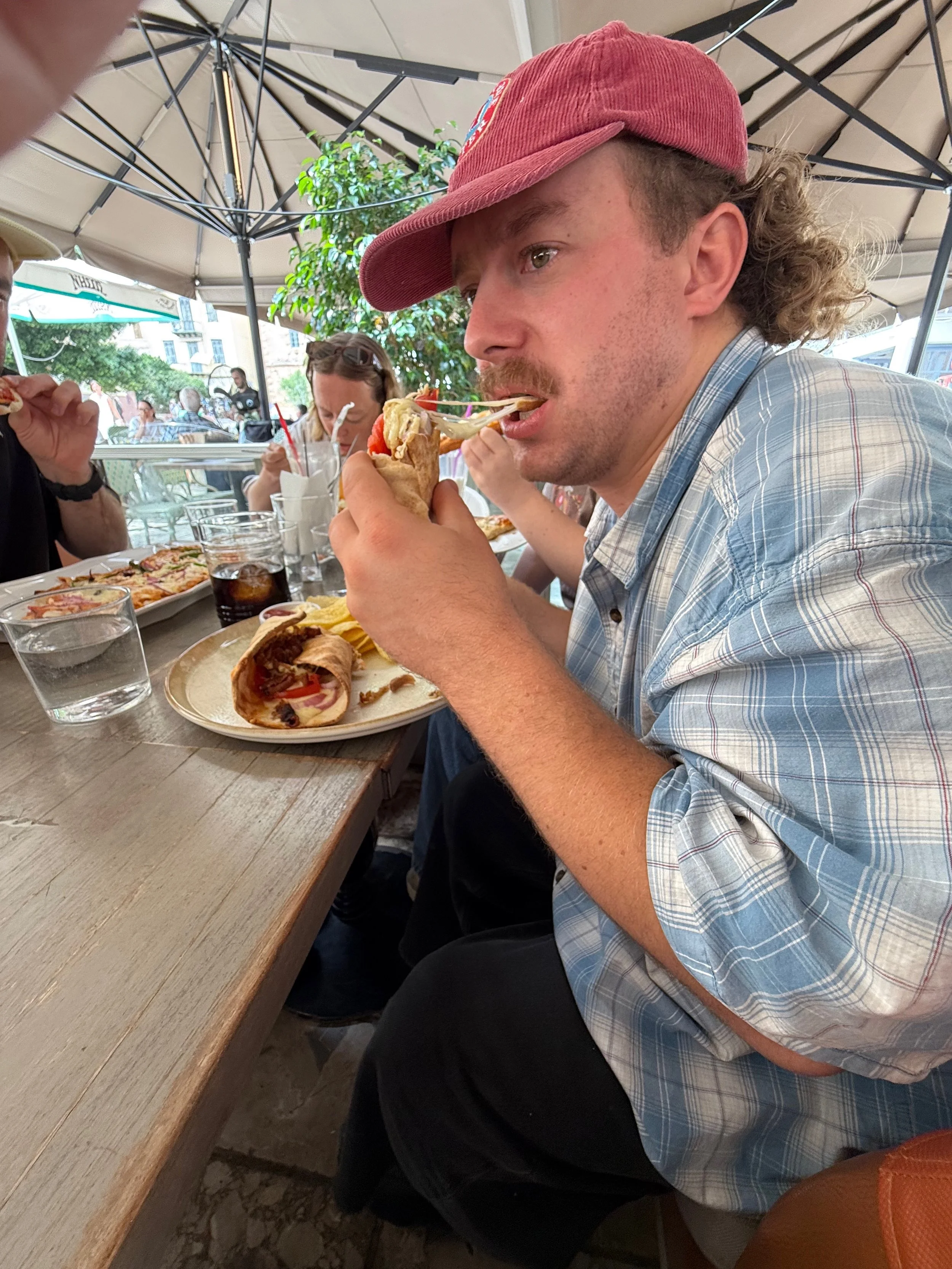
Our family lunched in a cafe on the square and were surprised when the waitress brought our bill to the table before we’d even tasted a morsel. Thinking it might be to stop people doing a runner, we remarked that it was a little unusual to pay before the food. The waitress realised, a little red-faced, she was accidentally at the wrong table.
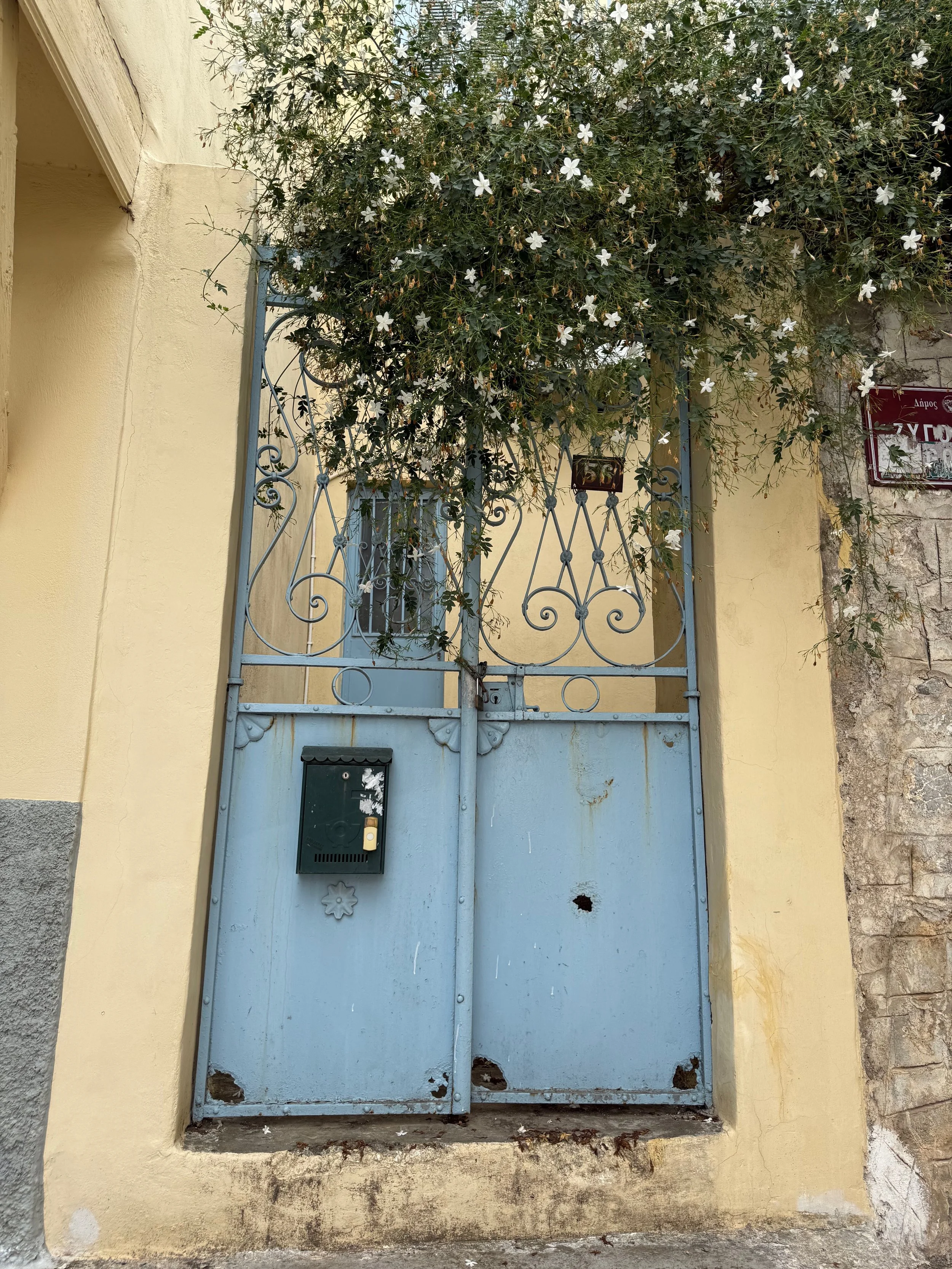
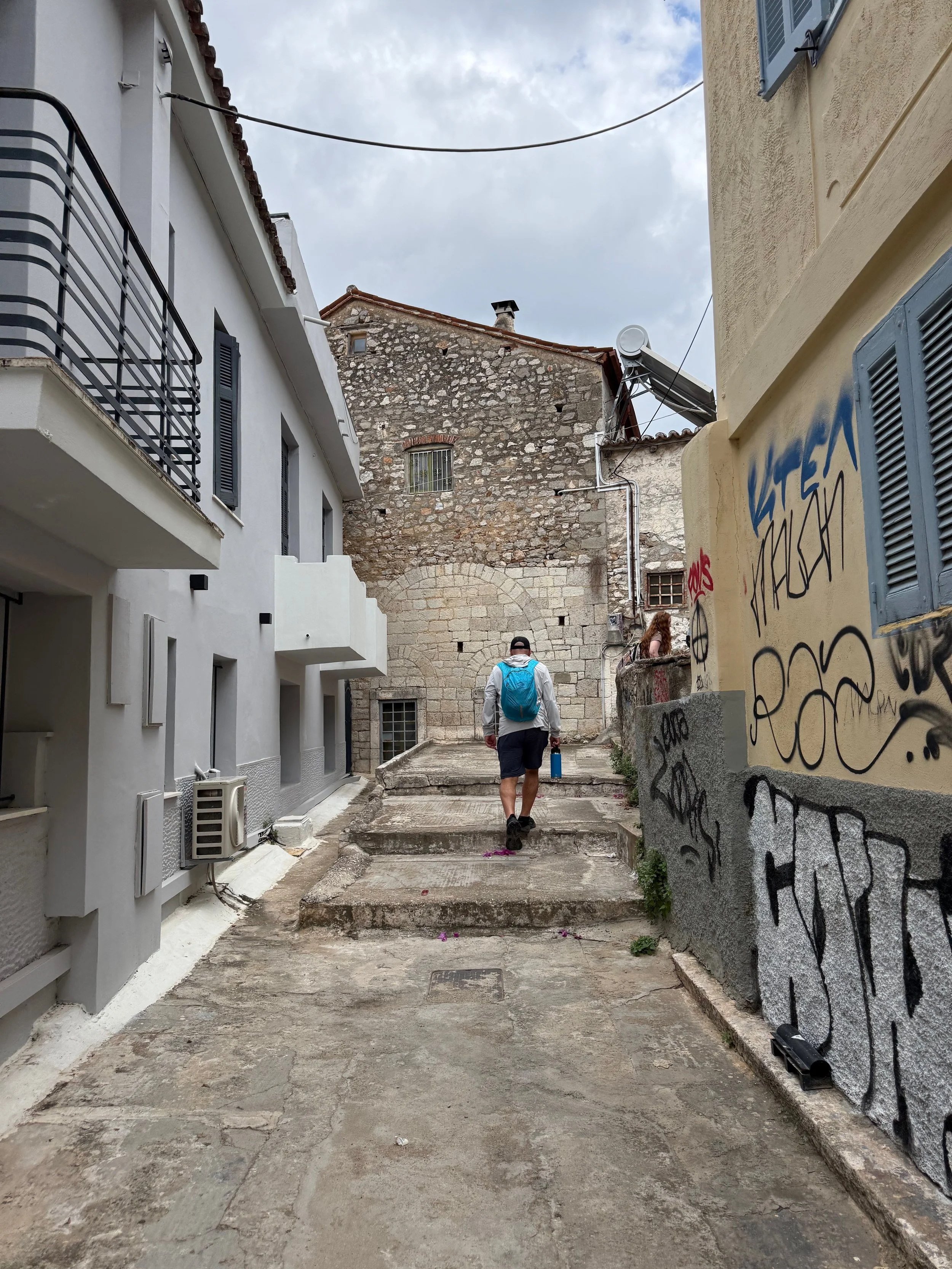
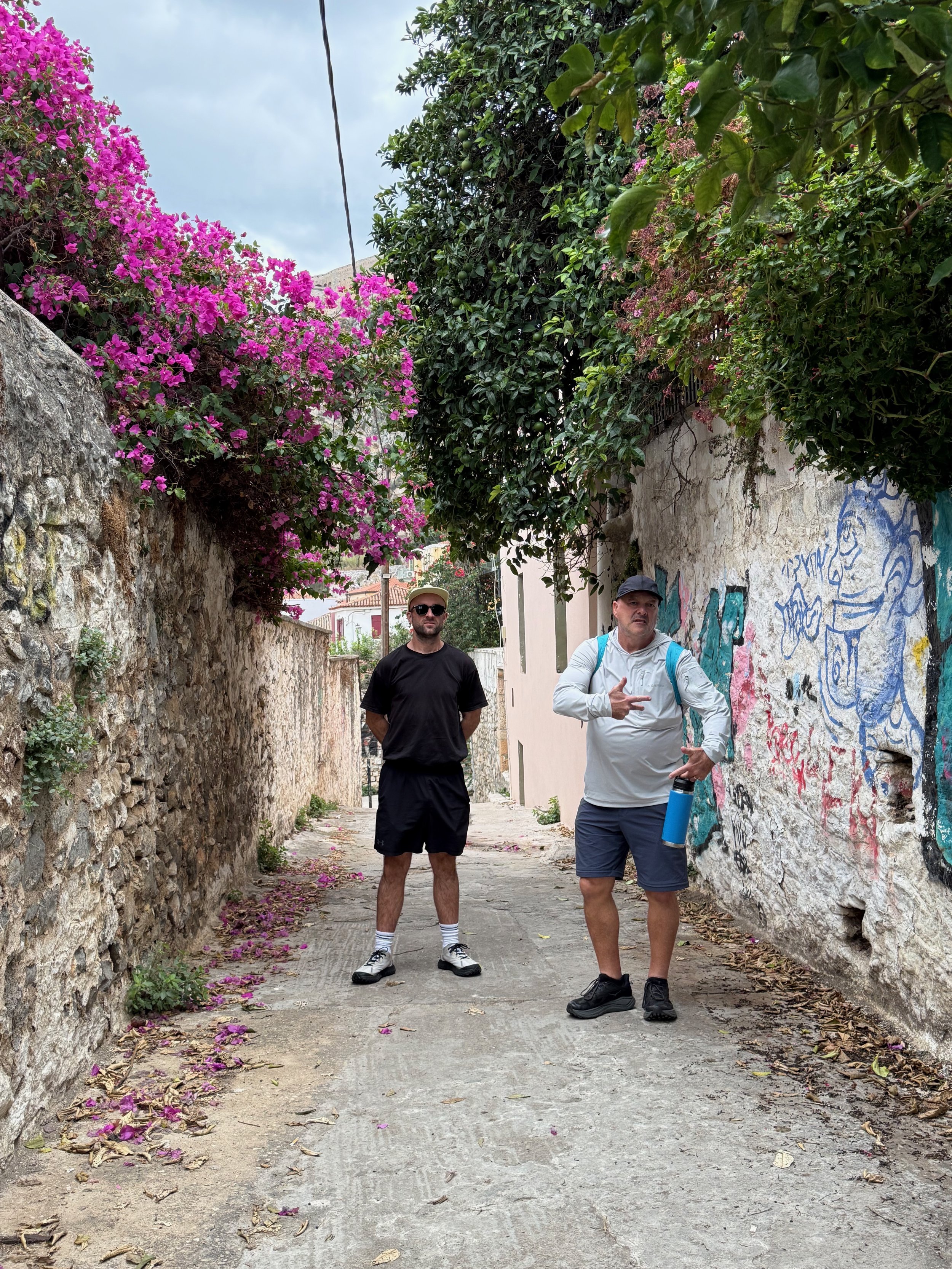
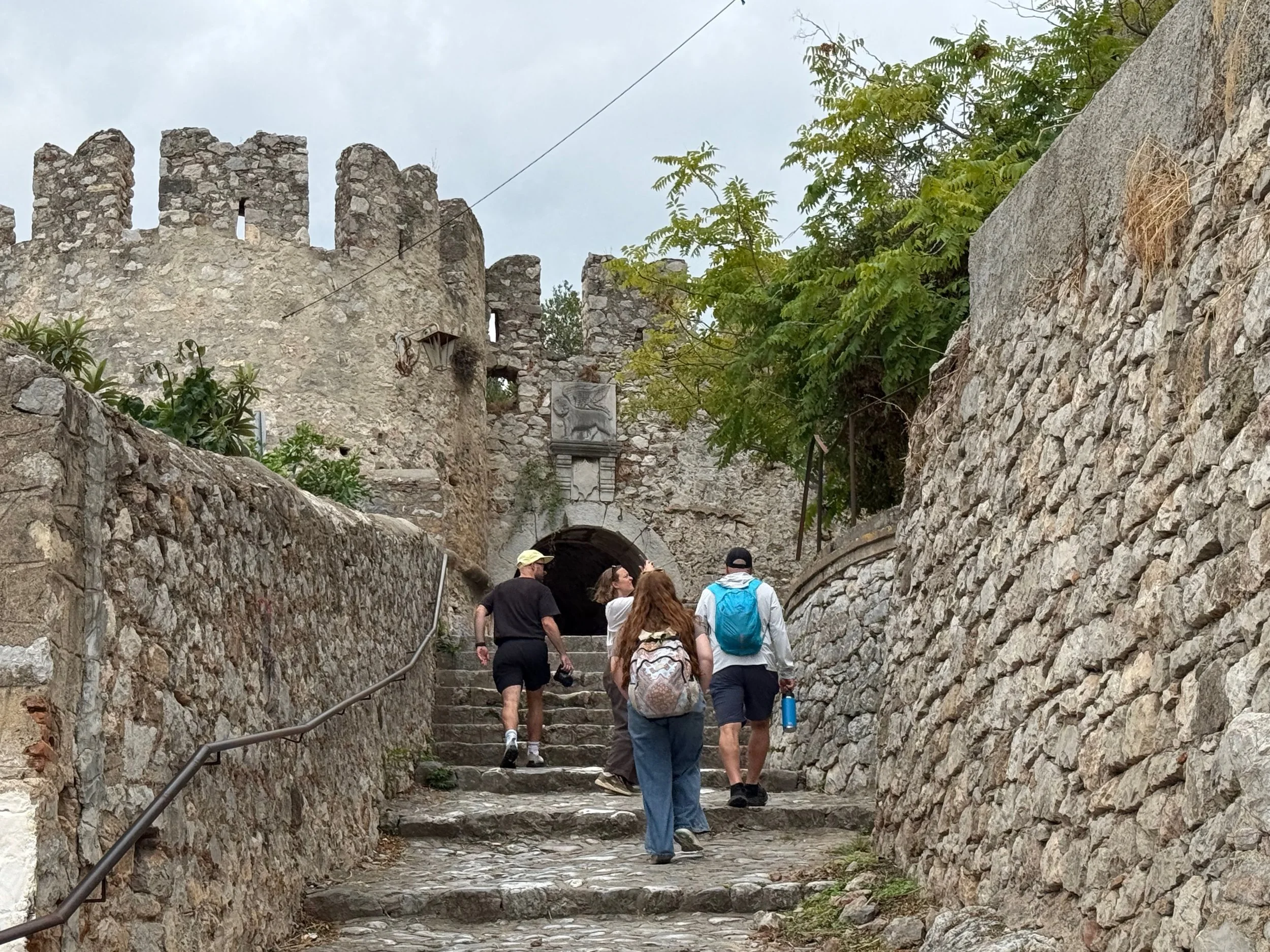
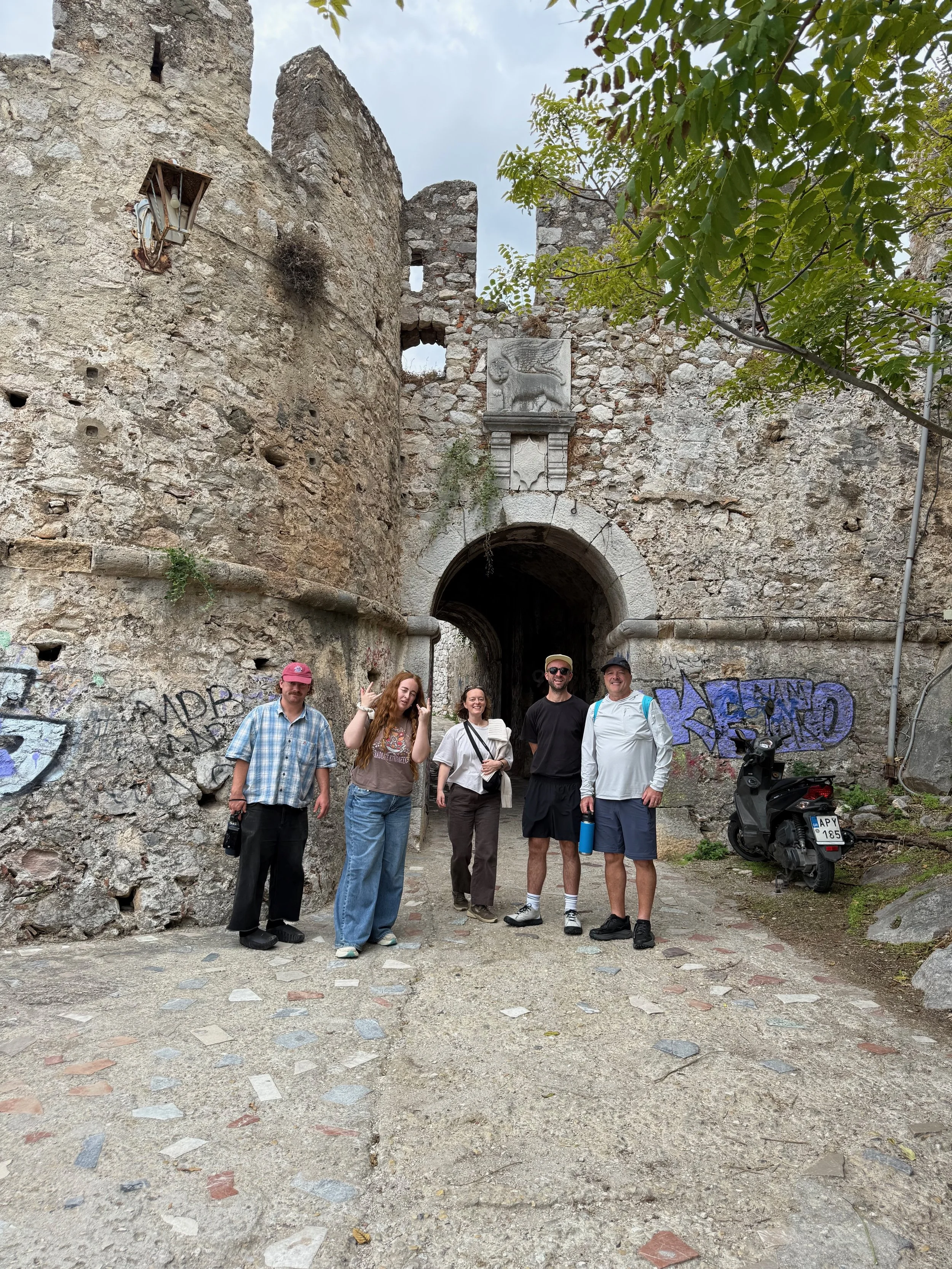
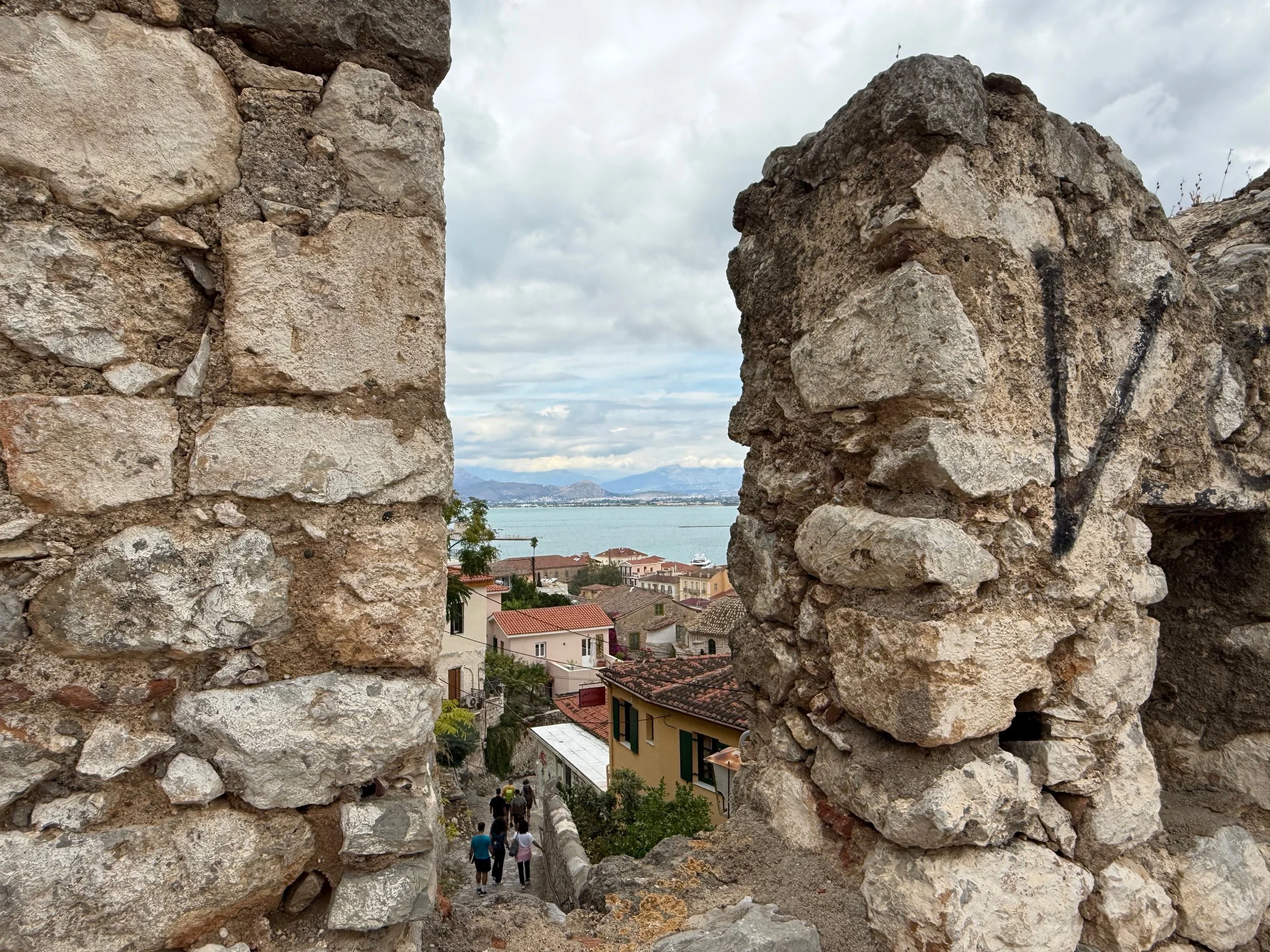
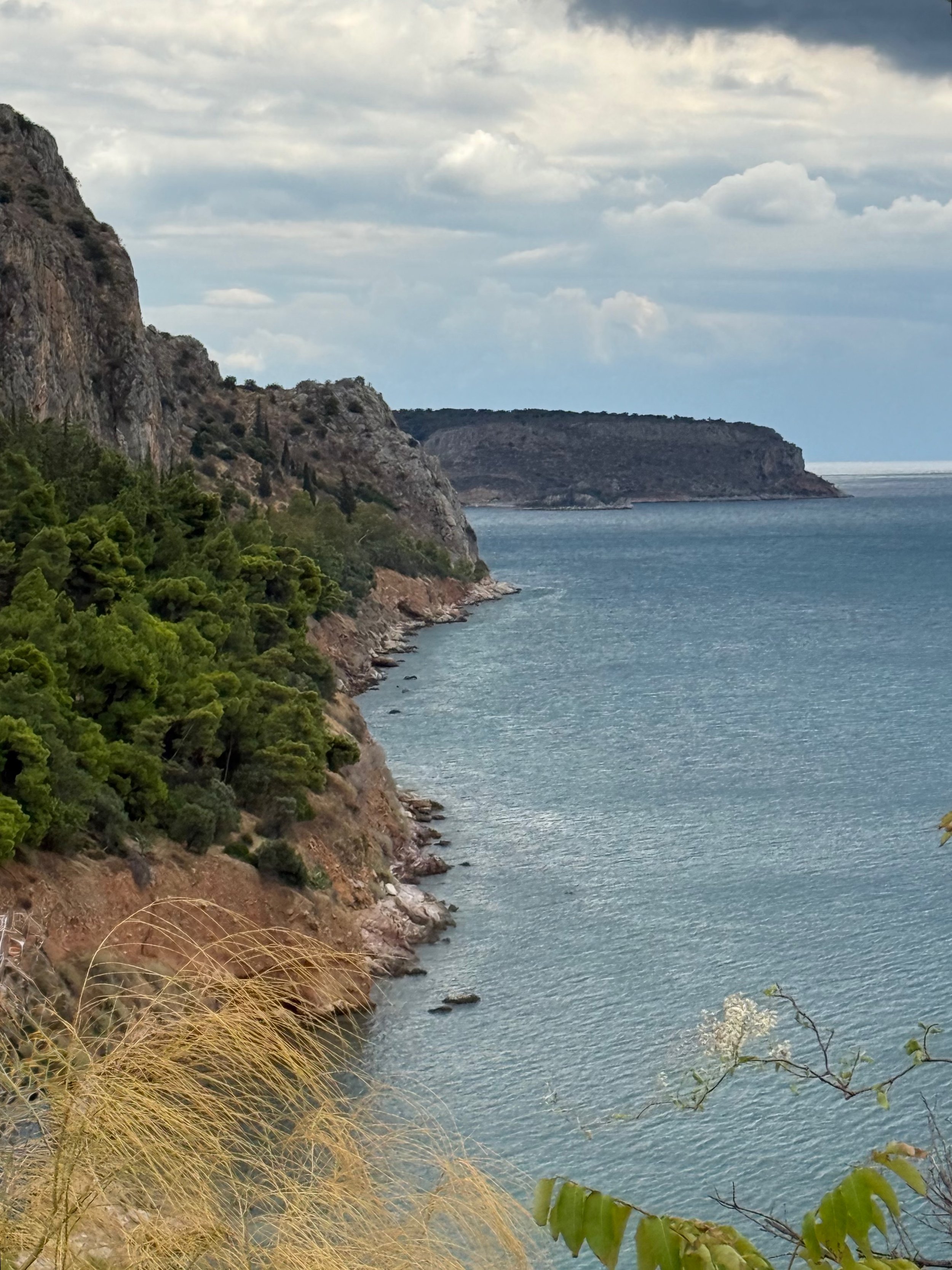
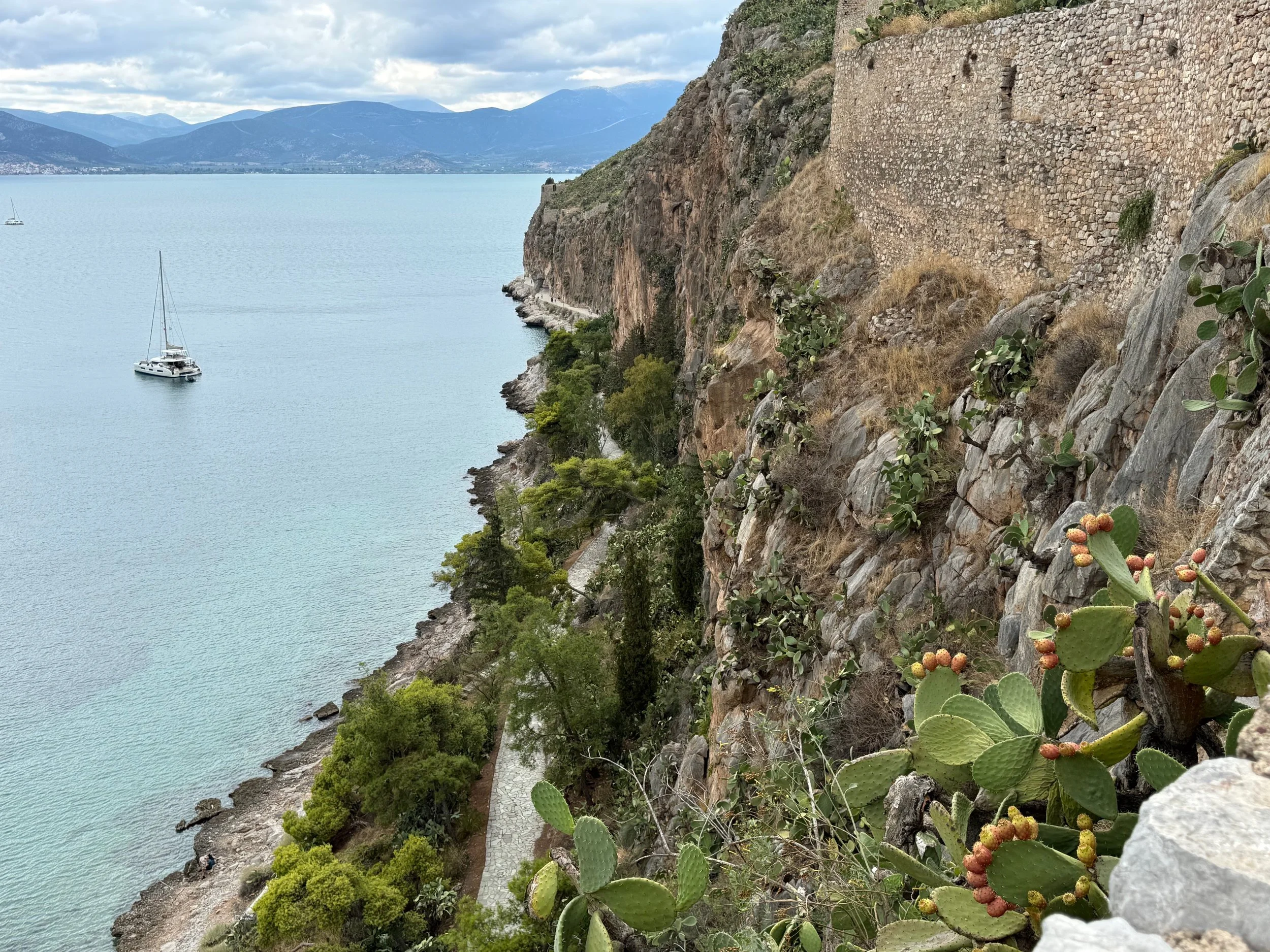
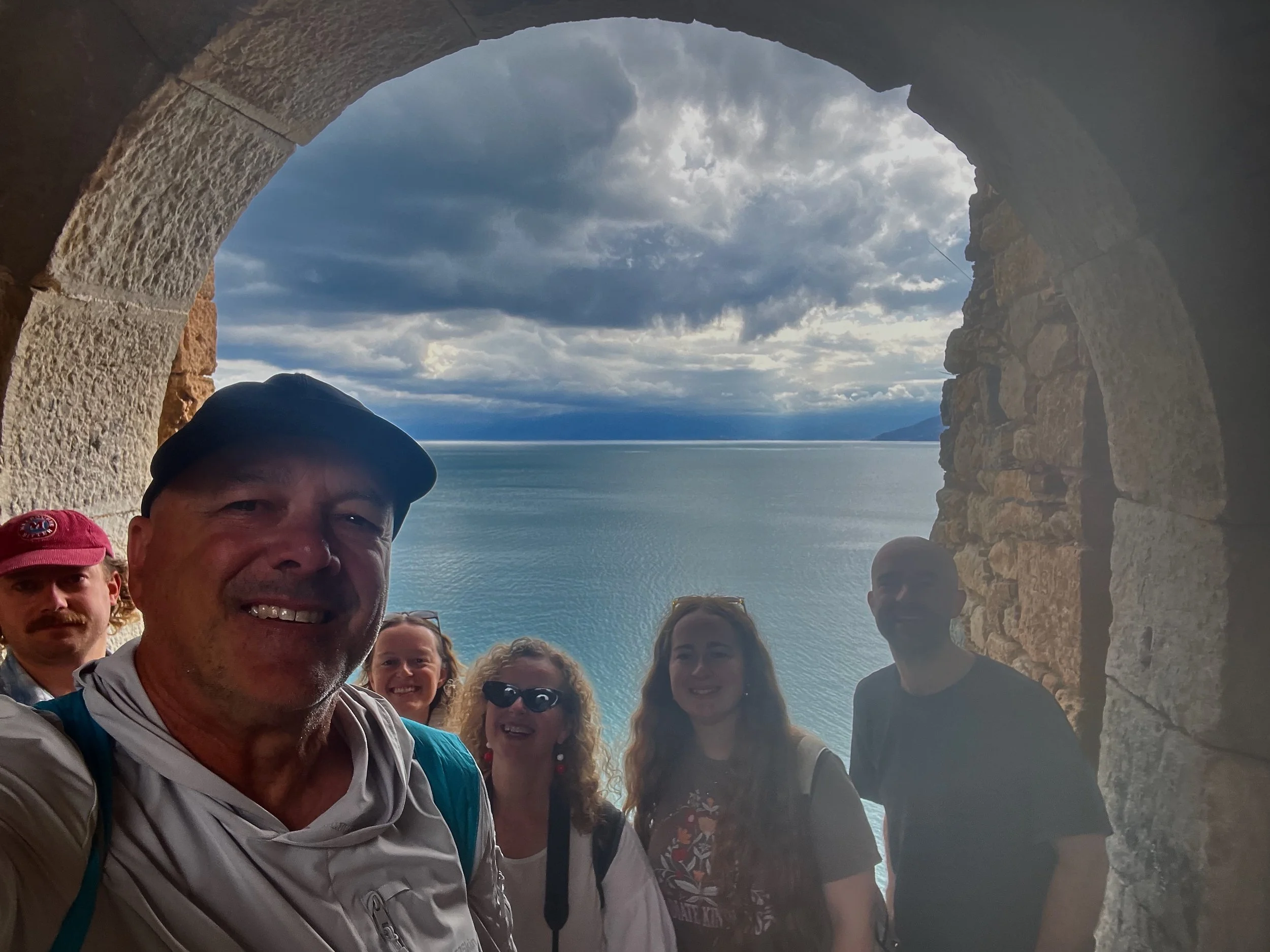
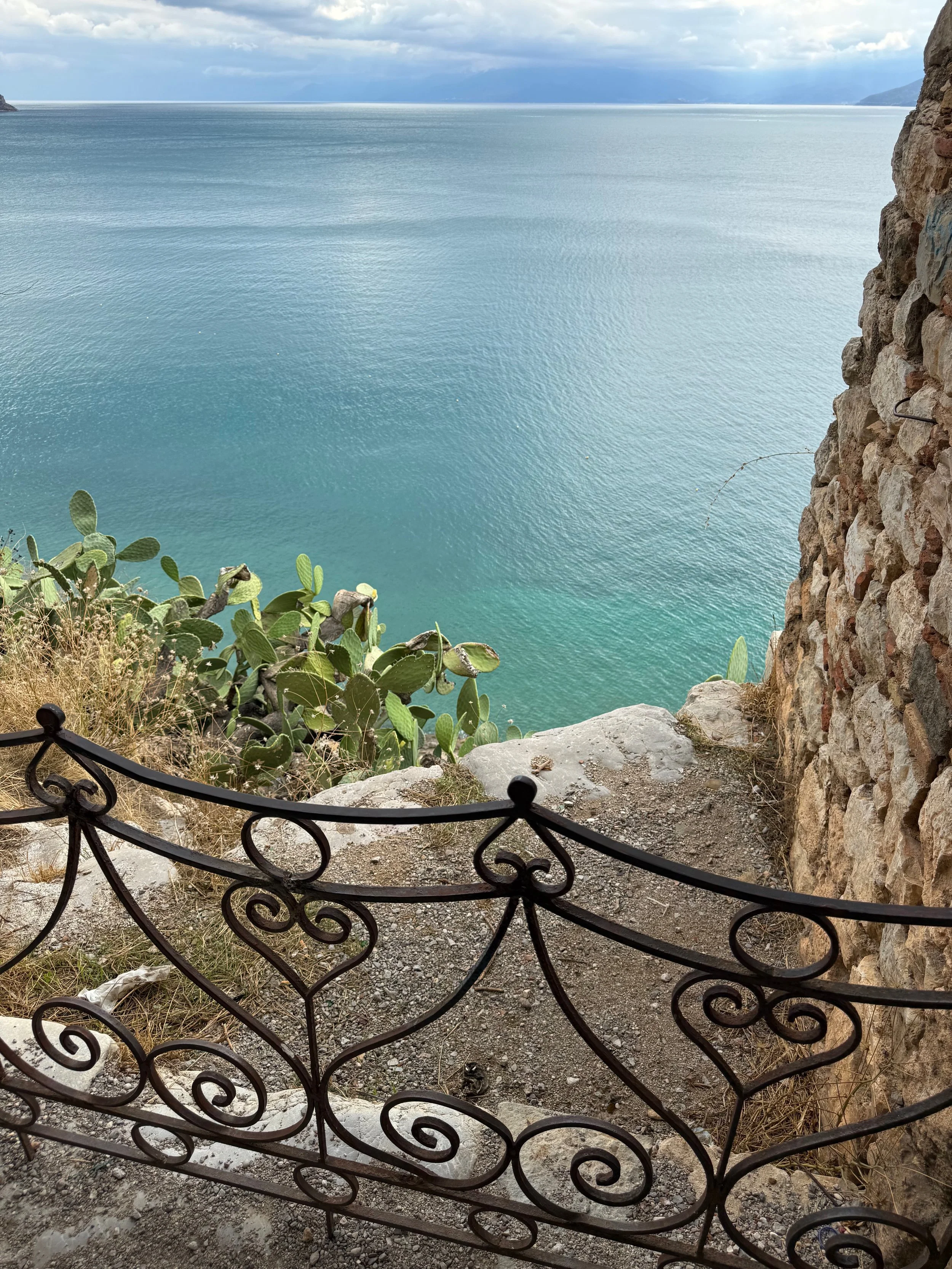
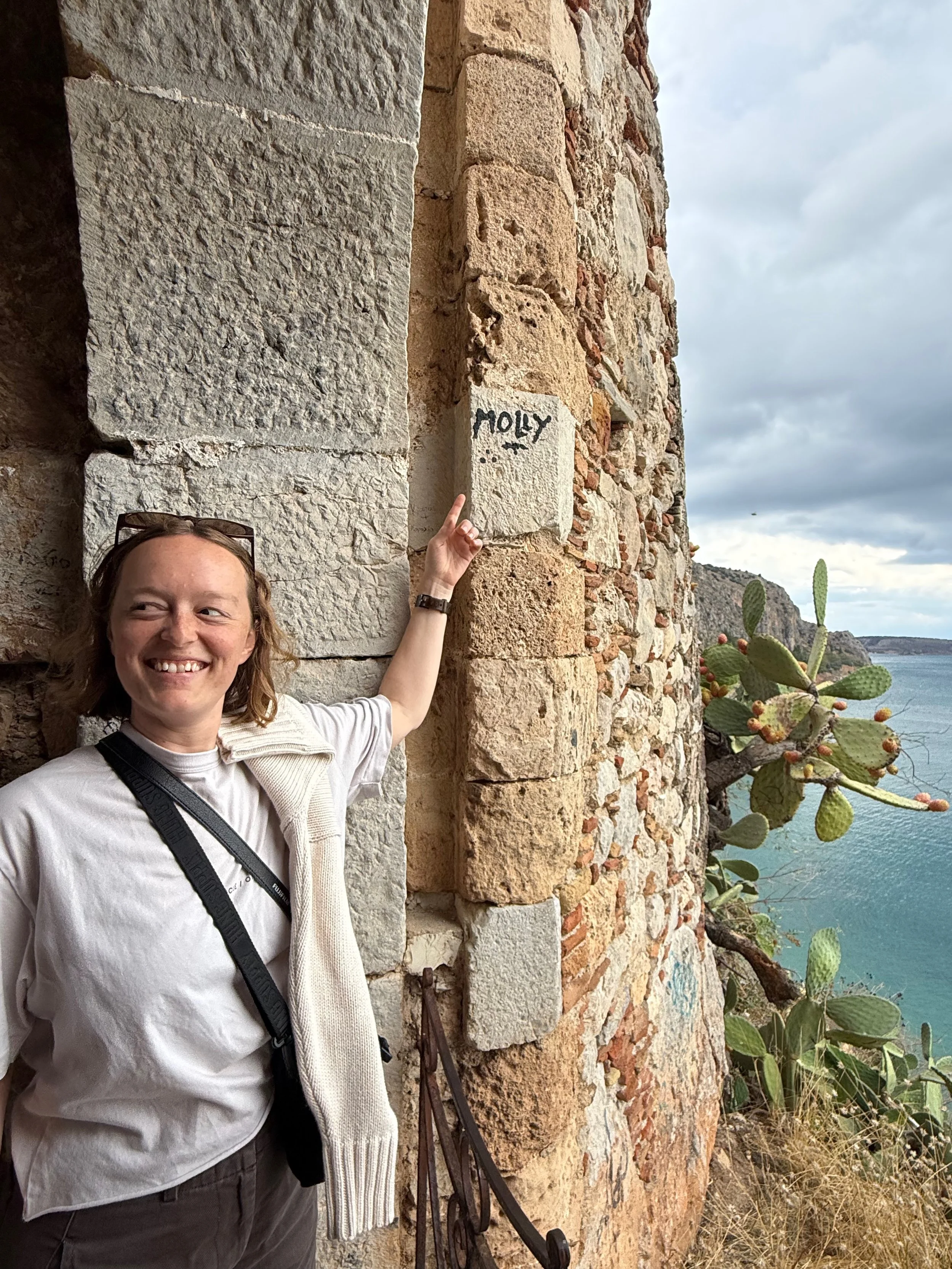
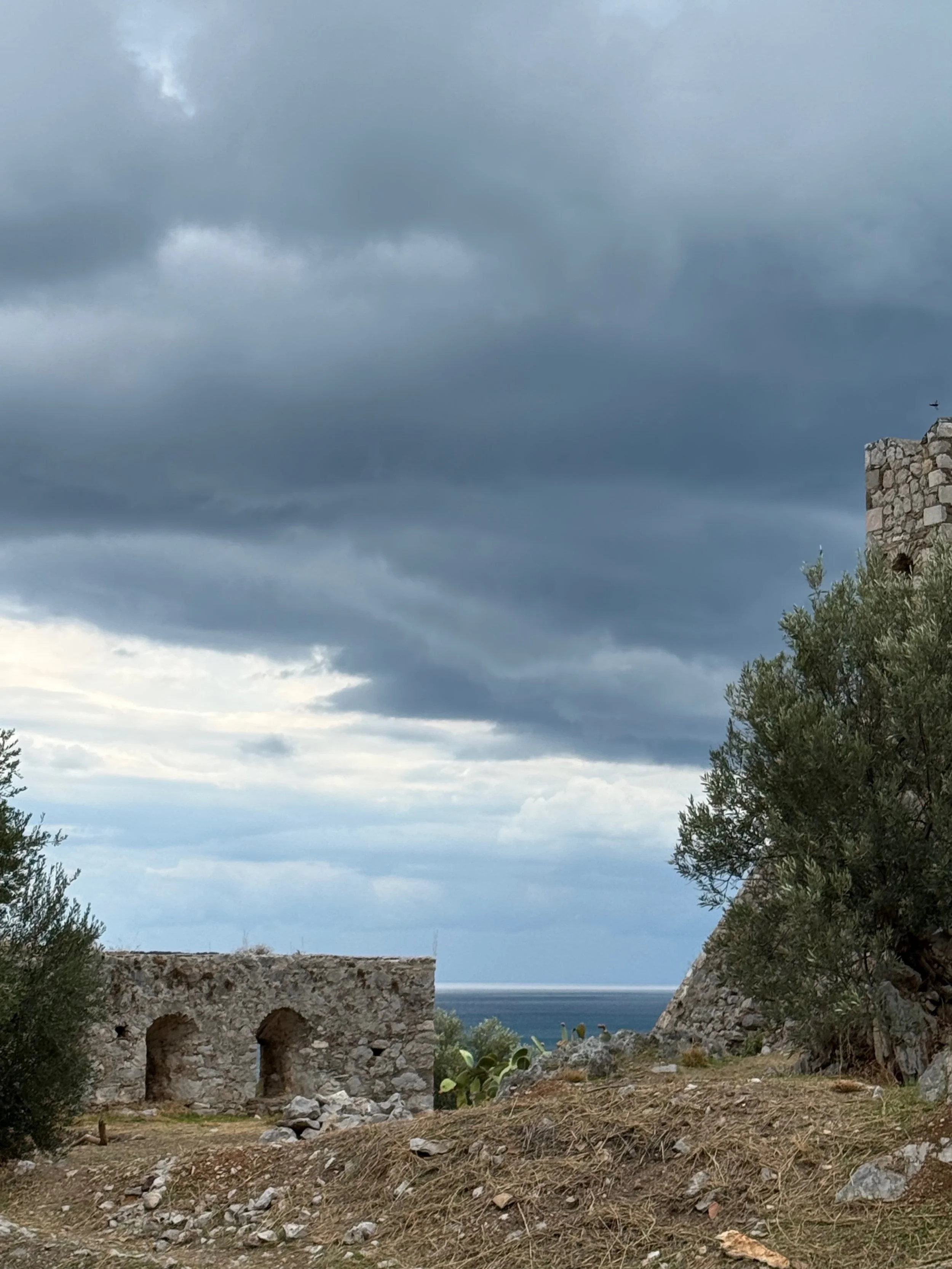
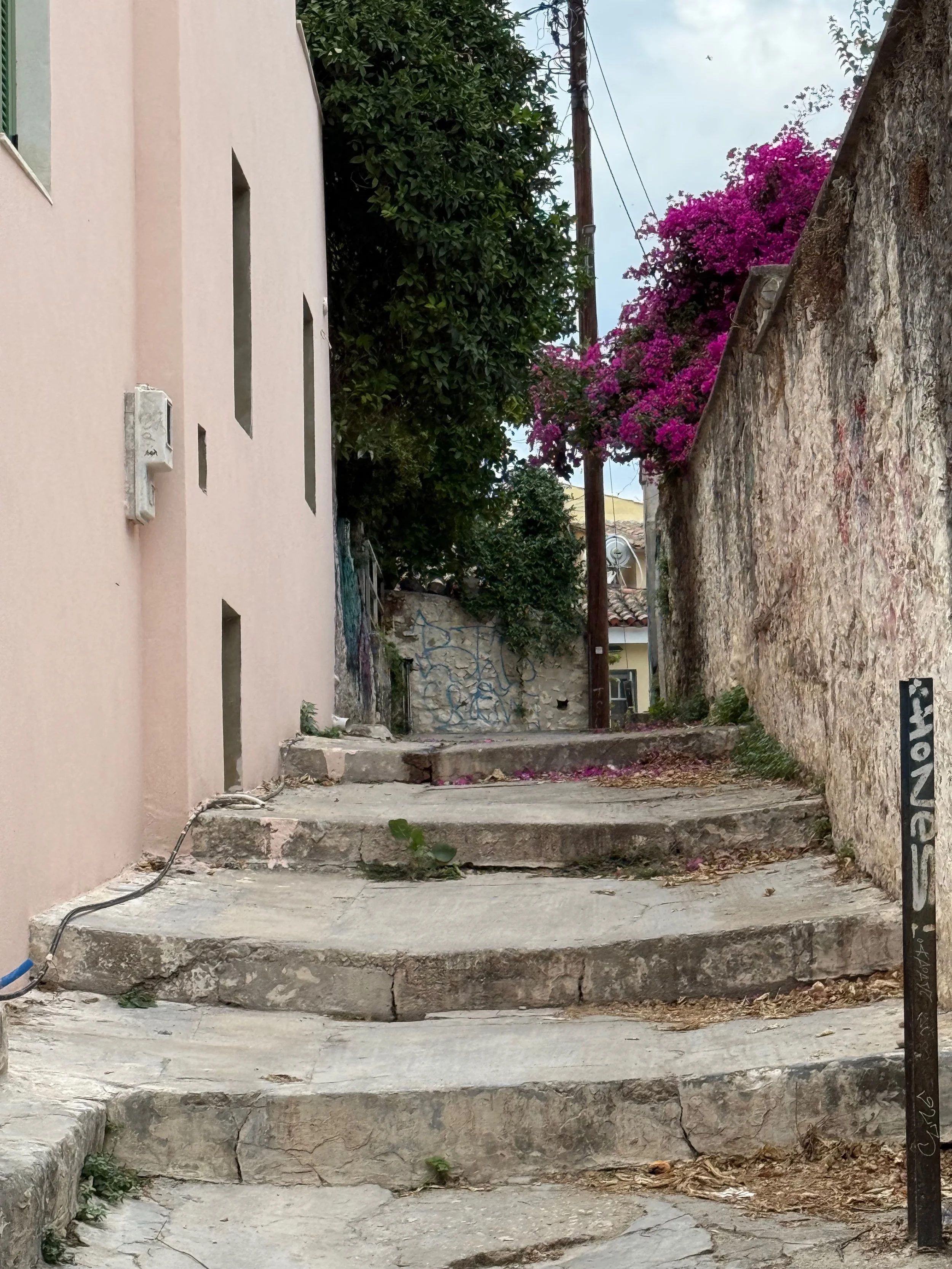
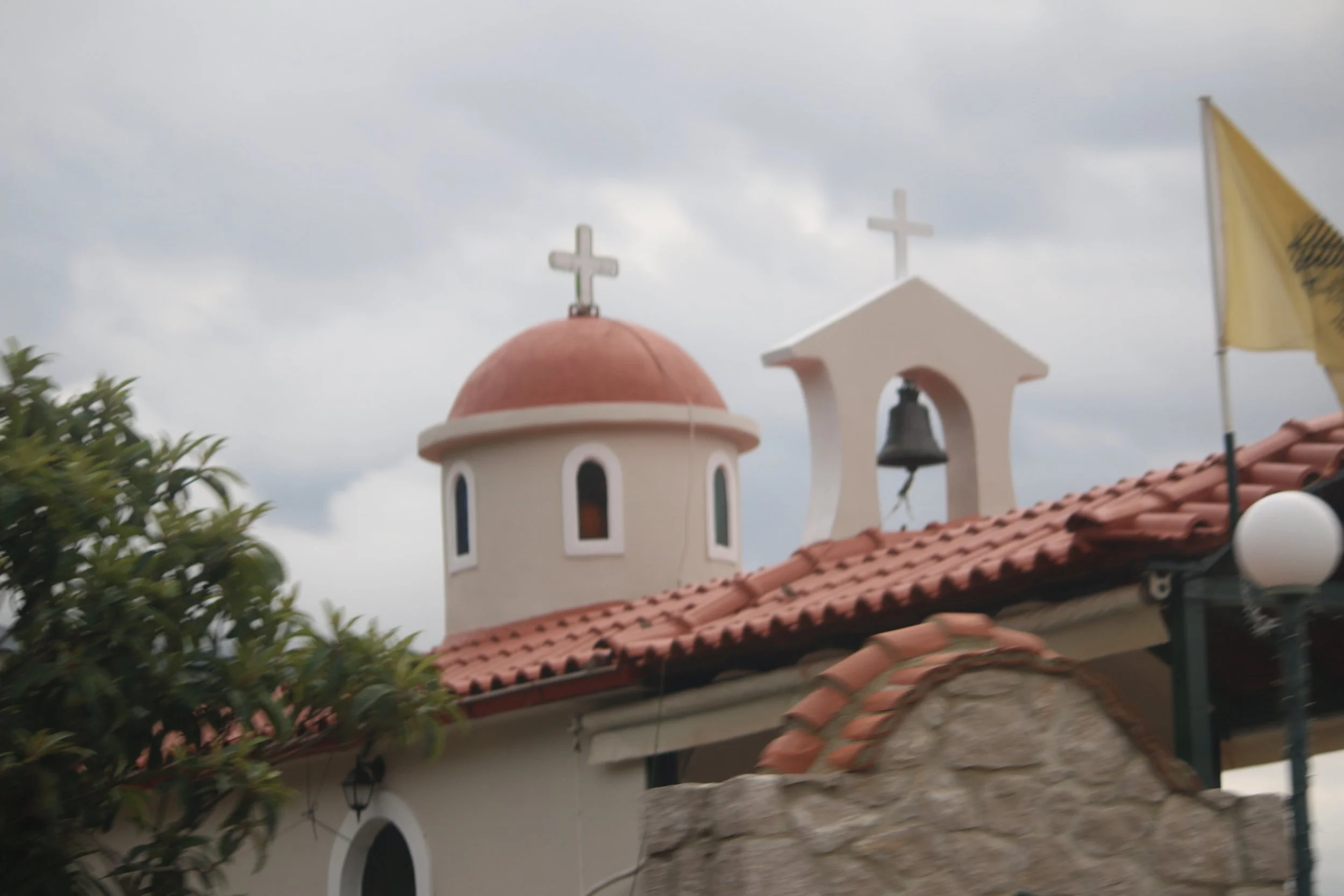
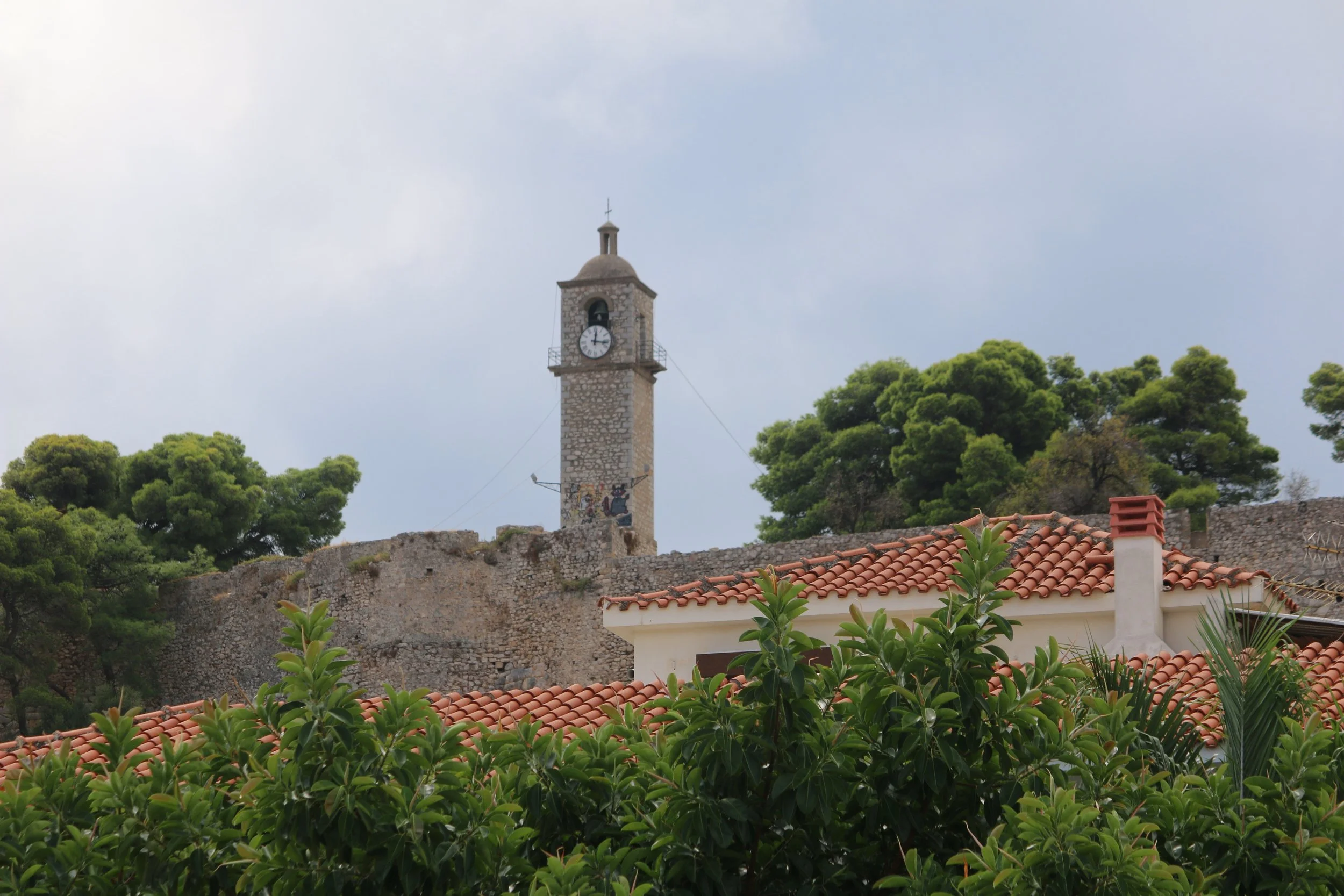
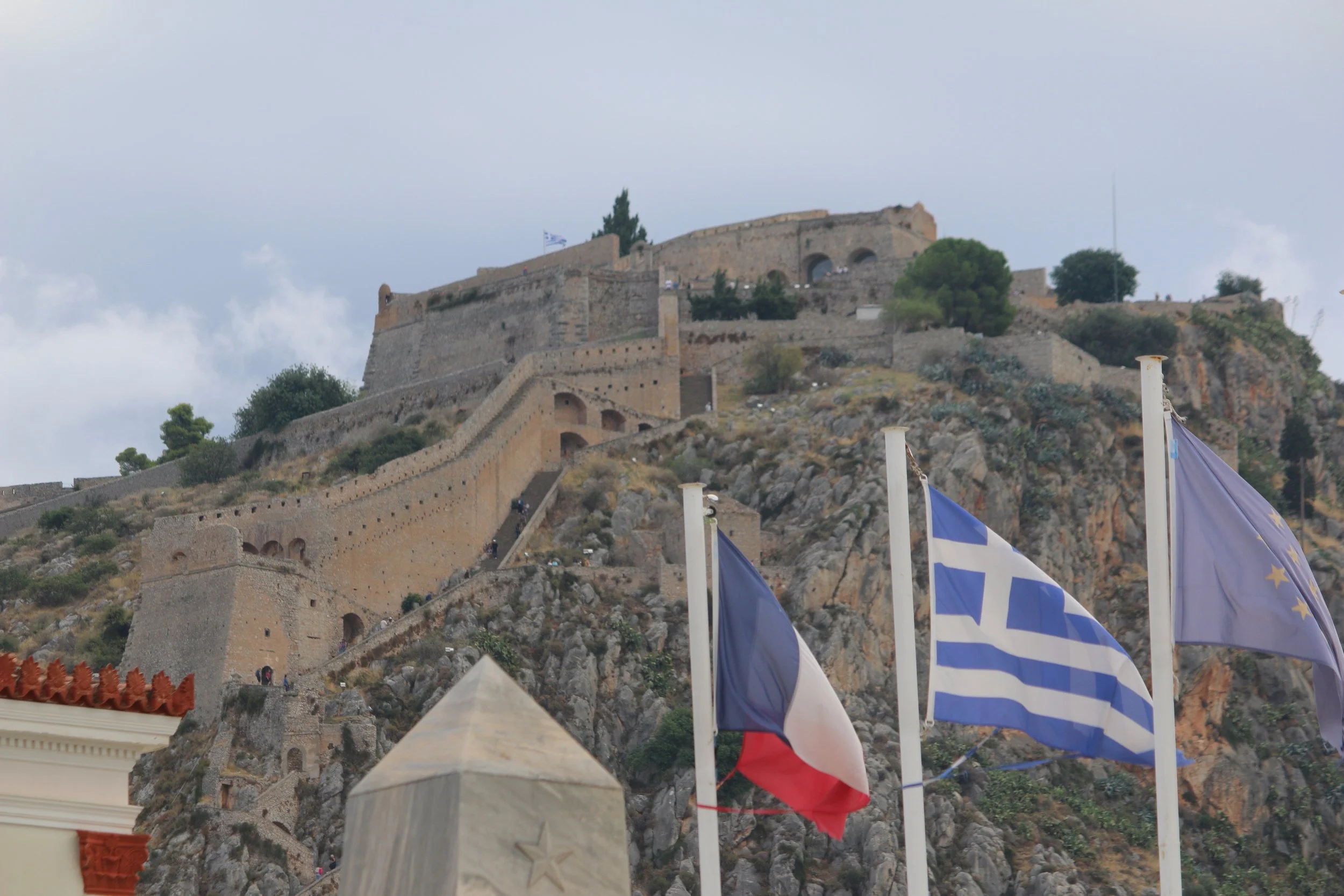
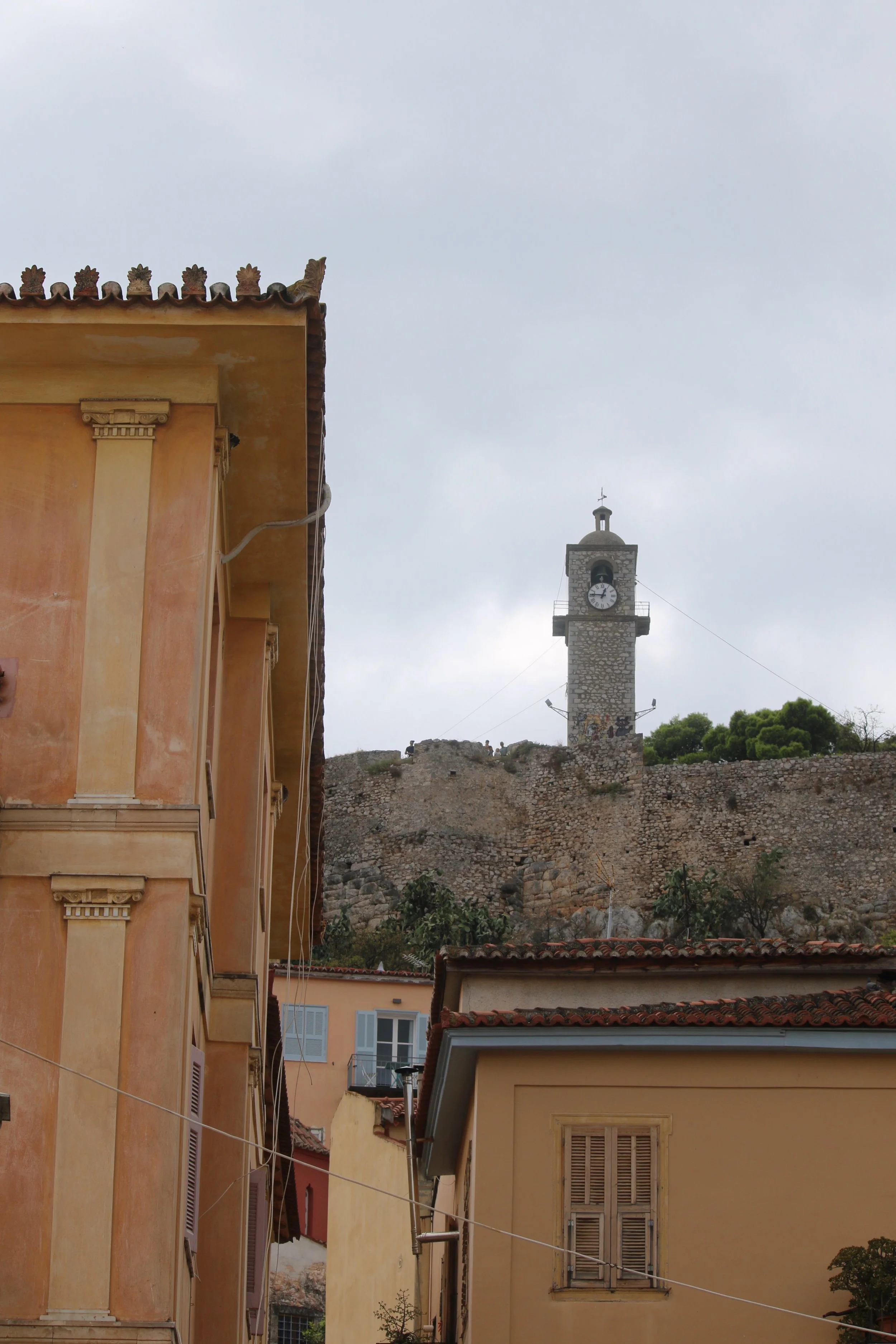
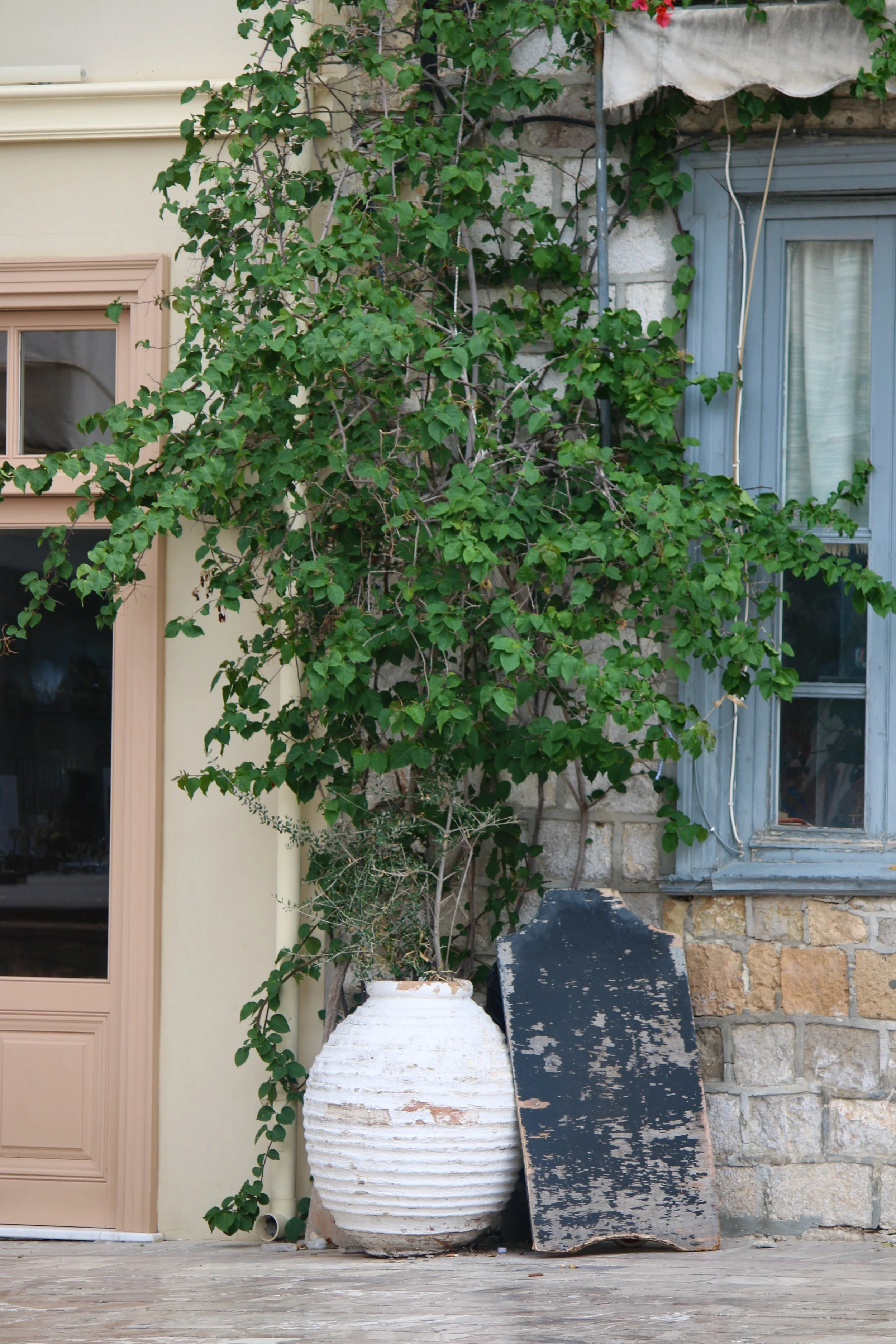
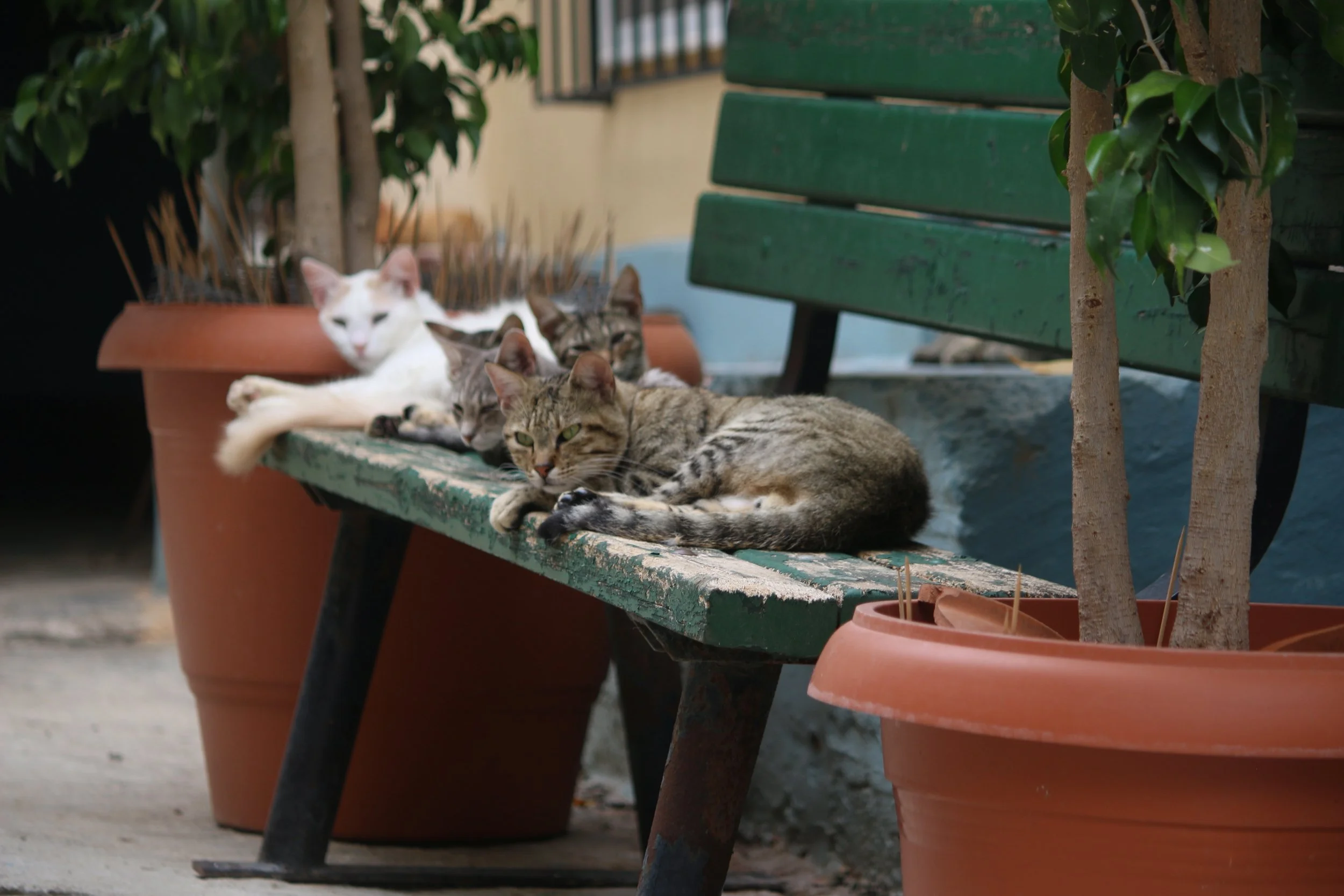
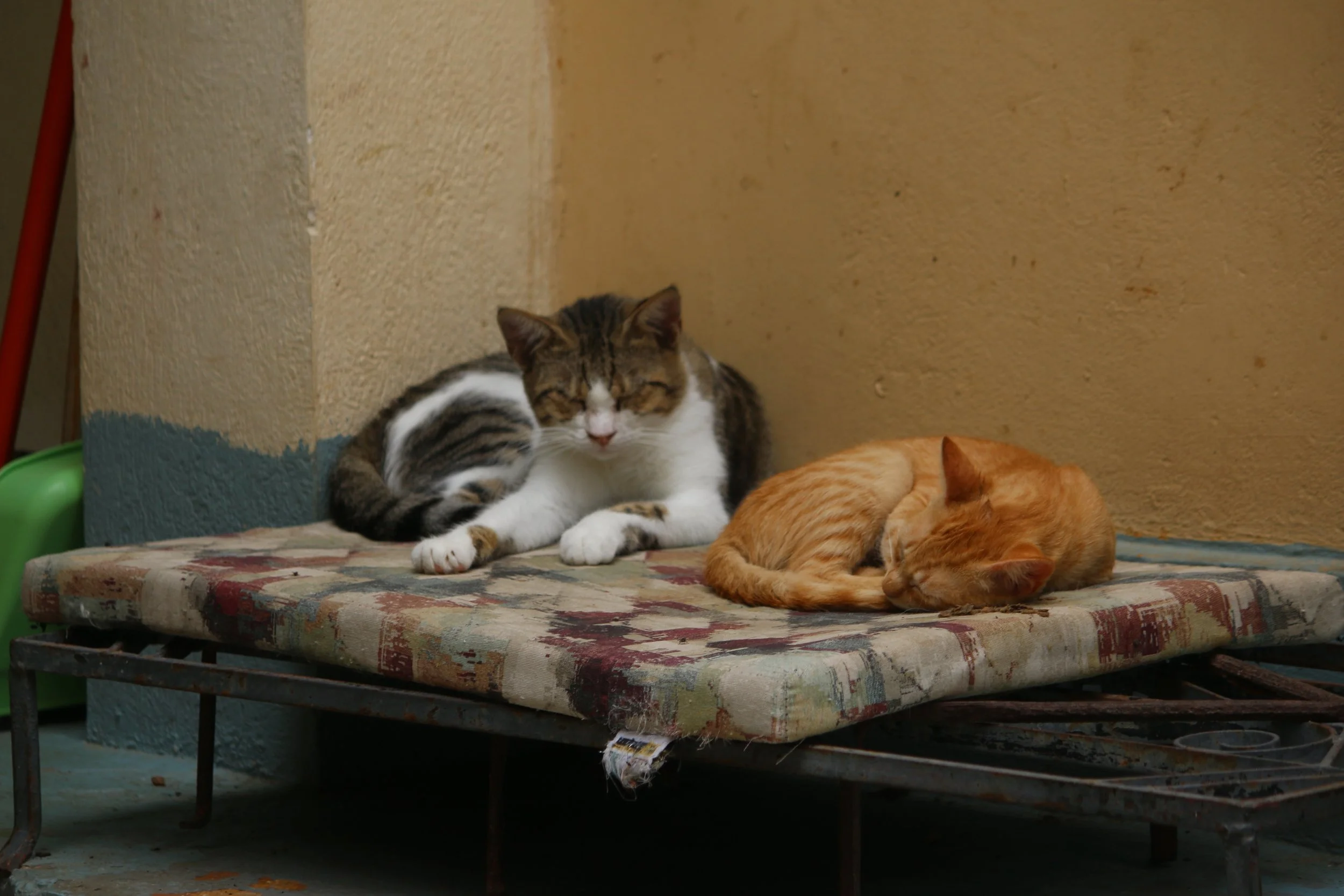
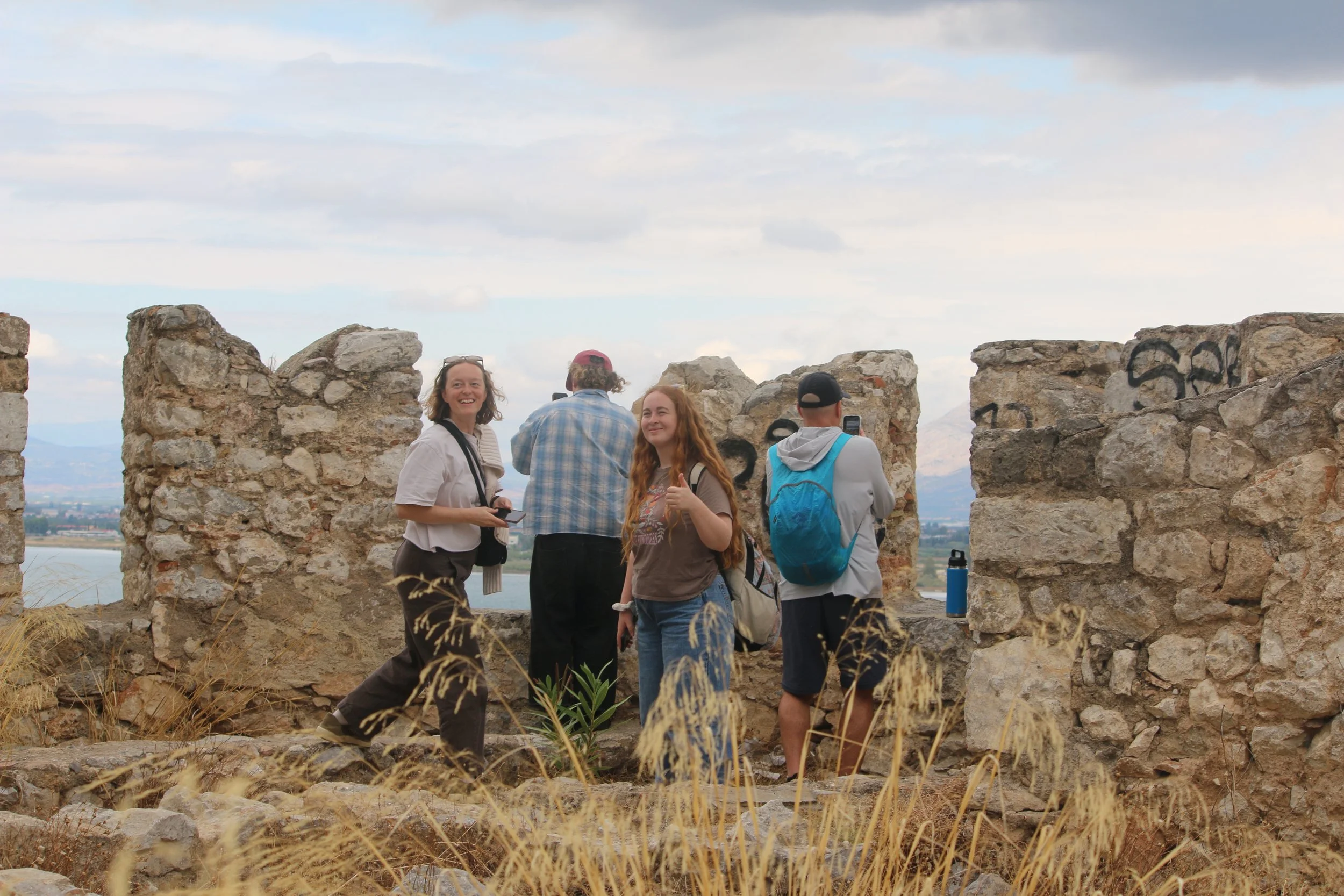
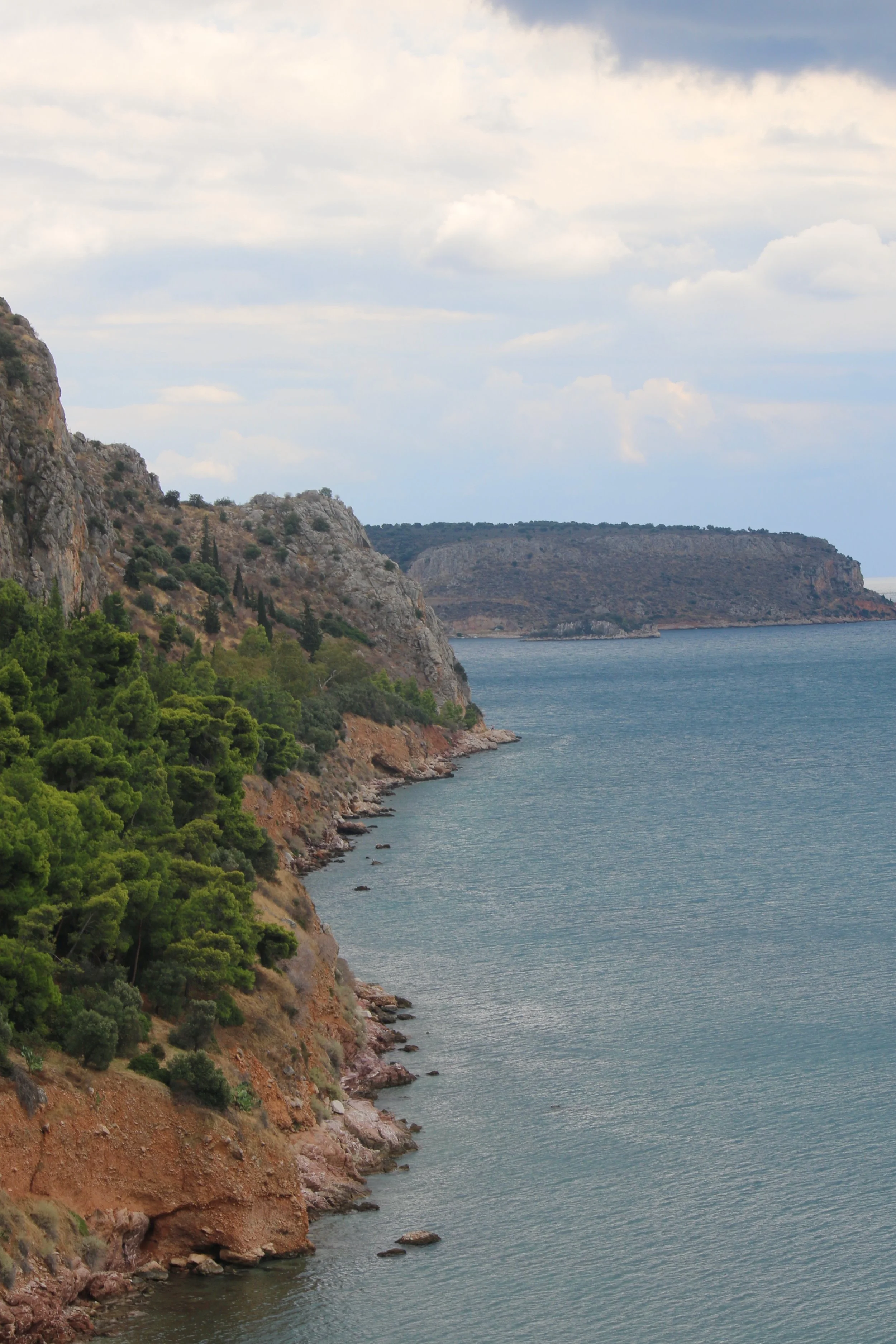
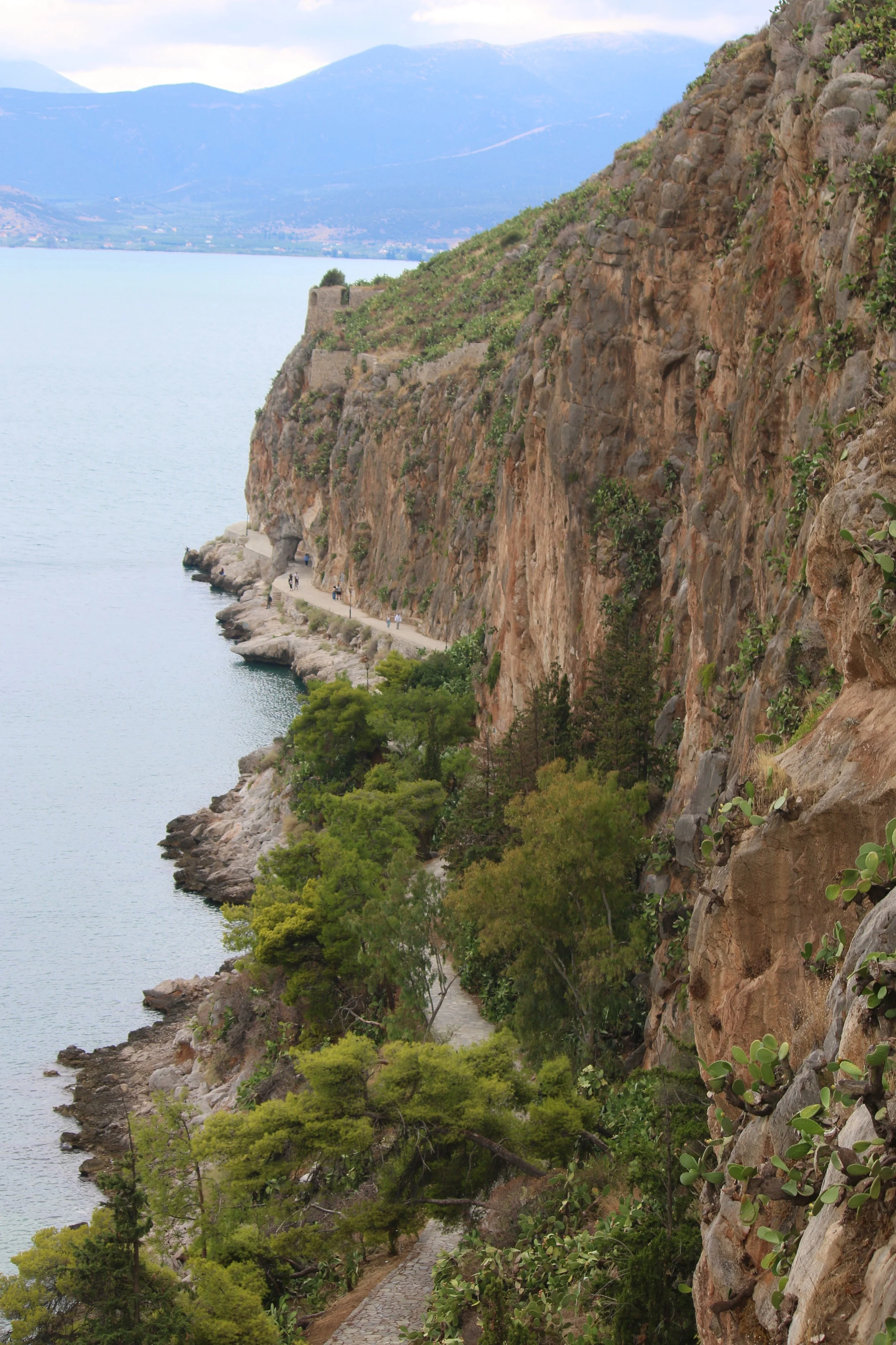
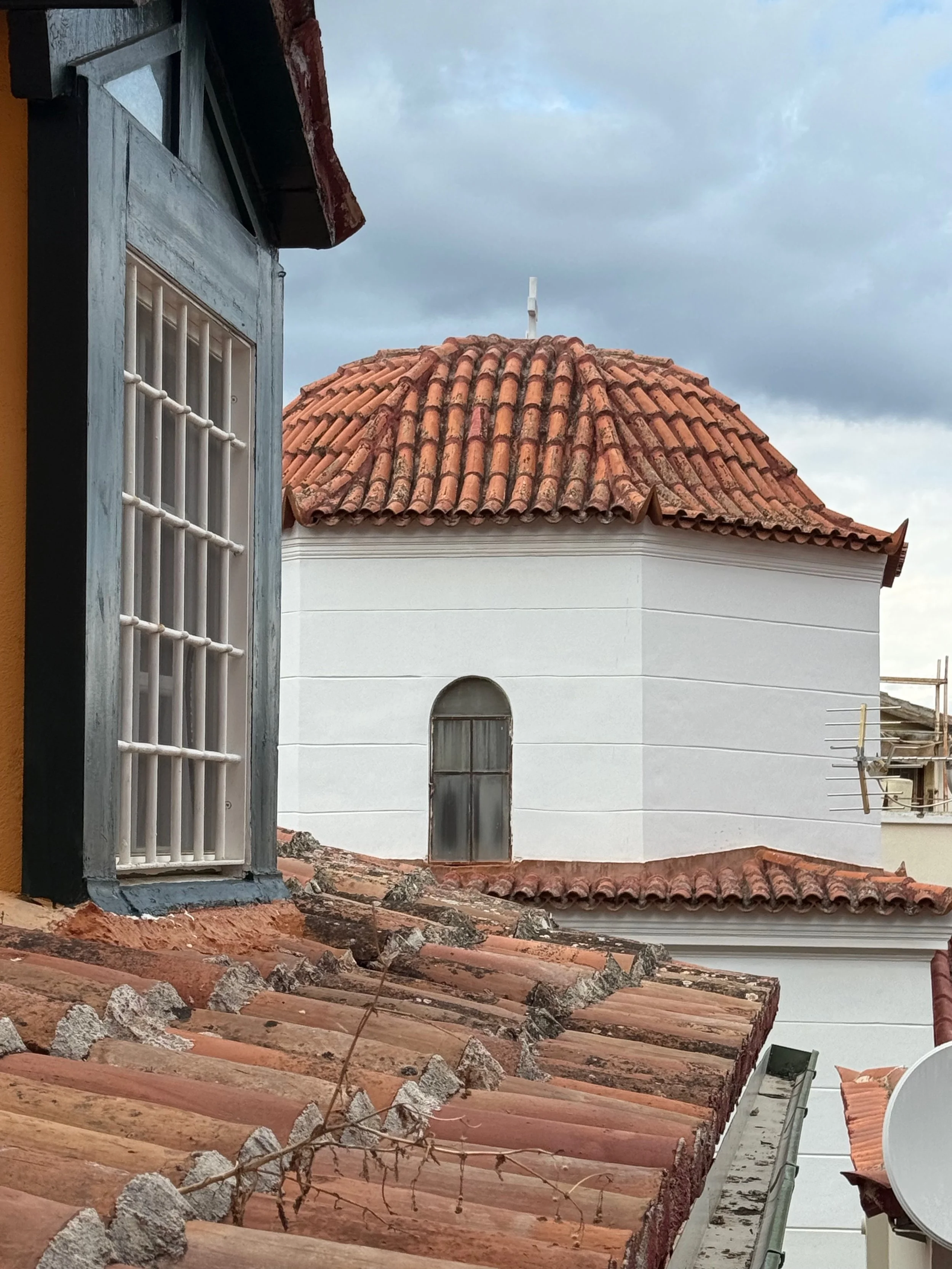
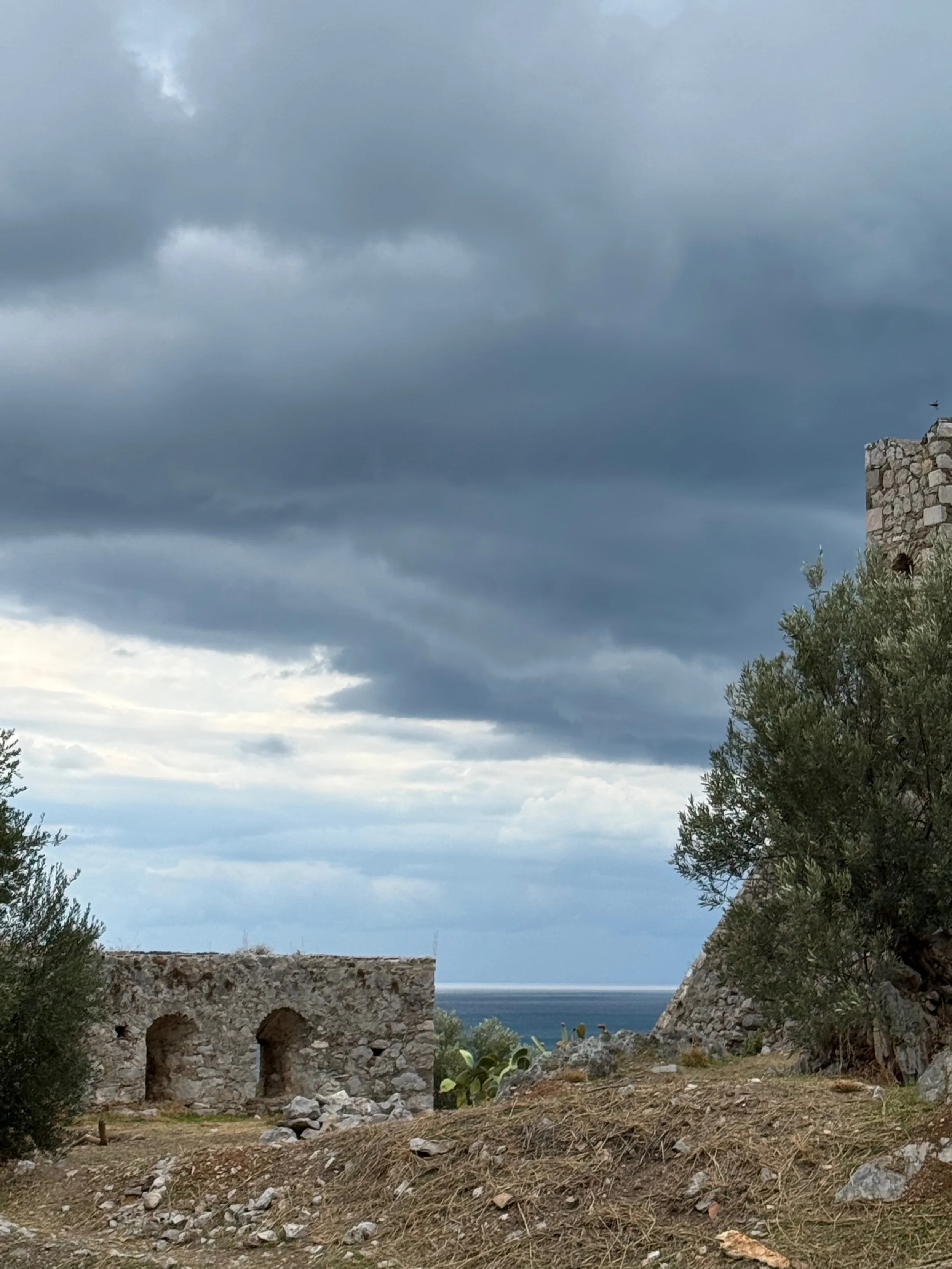
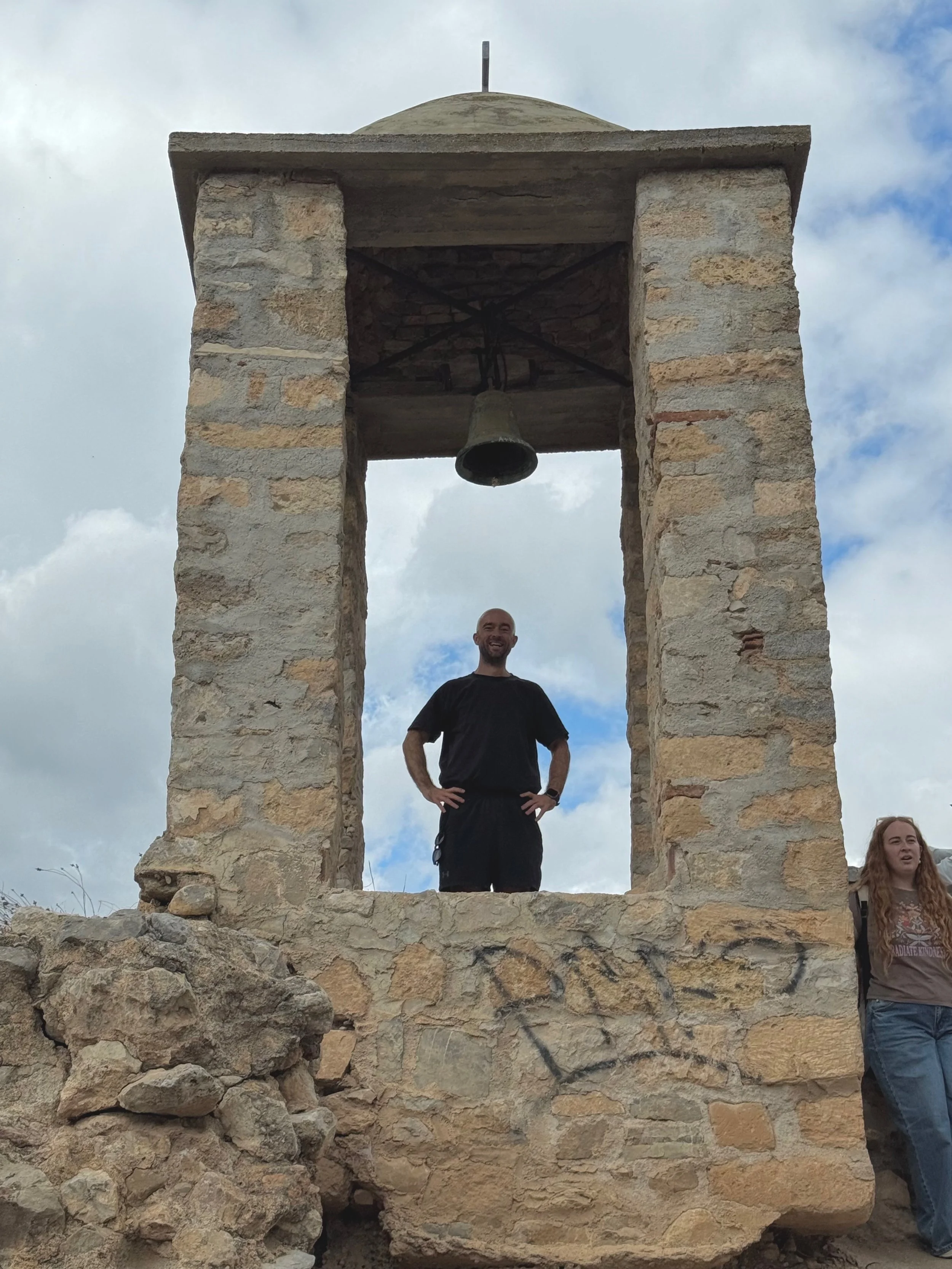
We then ascended the hill behind the town, via time-worn stairs, cobbled paths, walls draped with bougainvilleas and inhabited by sleepy cats, to a magnificent view of the pristine coastline. It was gorgeous! We stood in stony archways with peeps of the view and found a bell tower with a working bell. Sam gave it a ring and we hoped he hadn’t inadvertently sounded some sort of alarm.
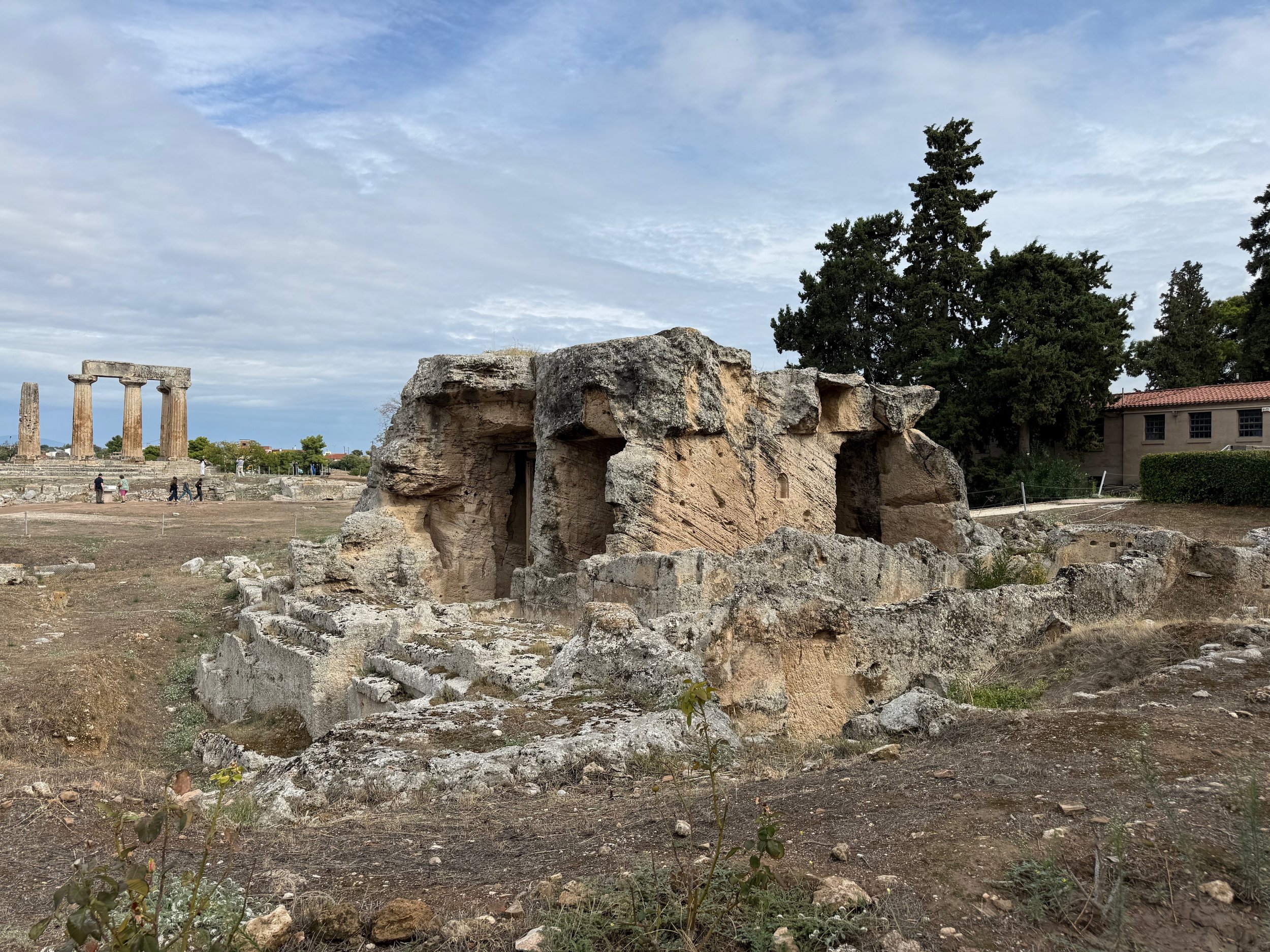
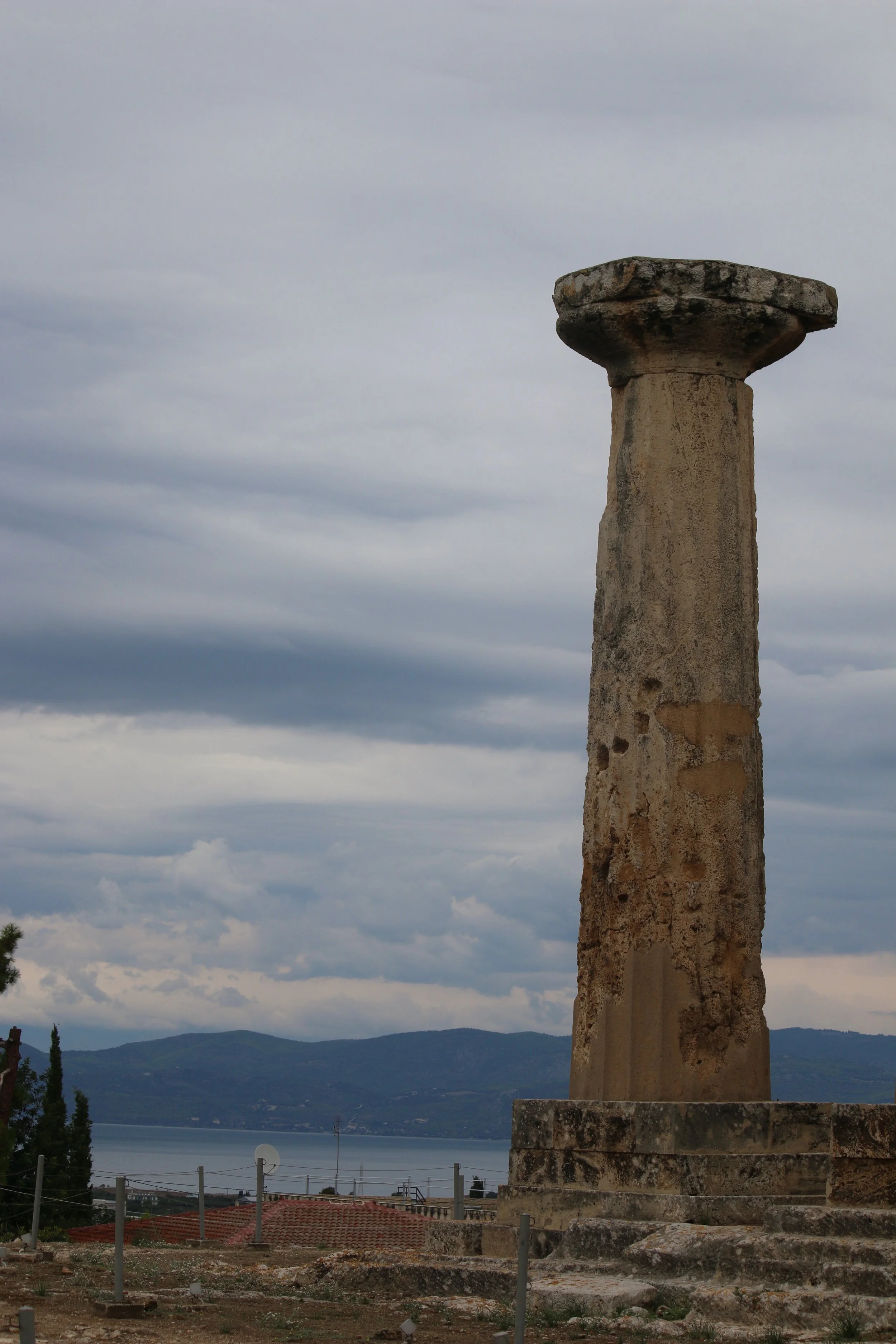
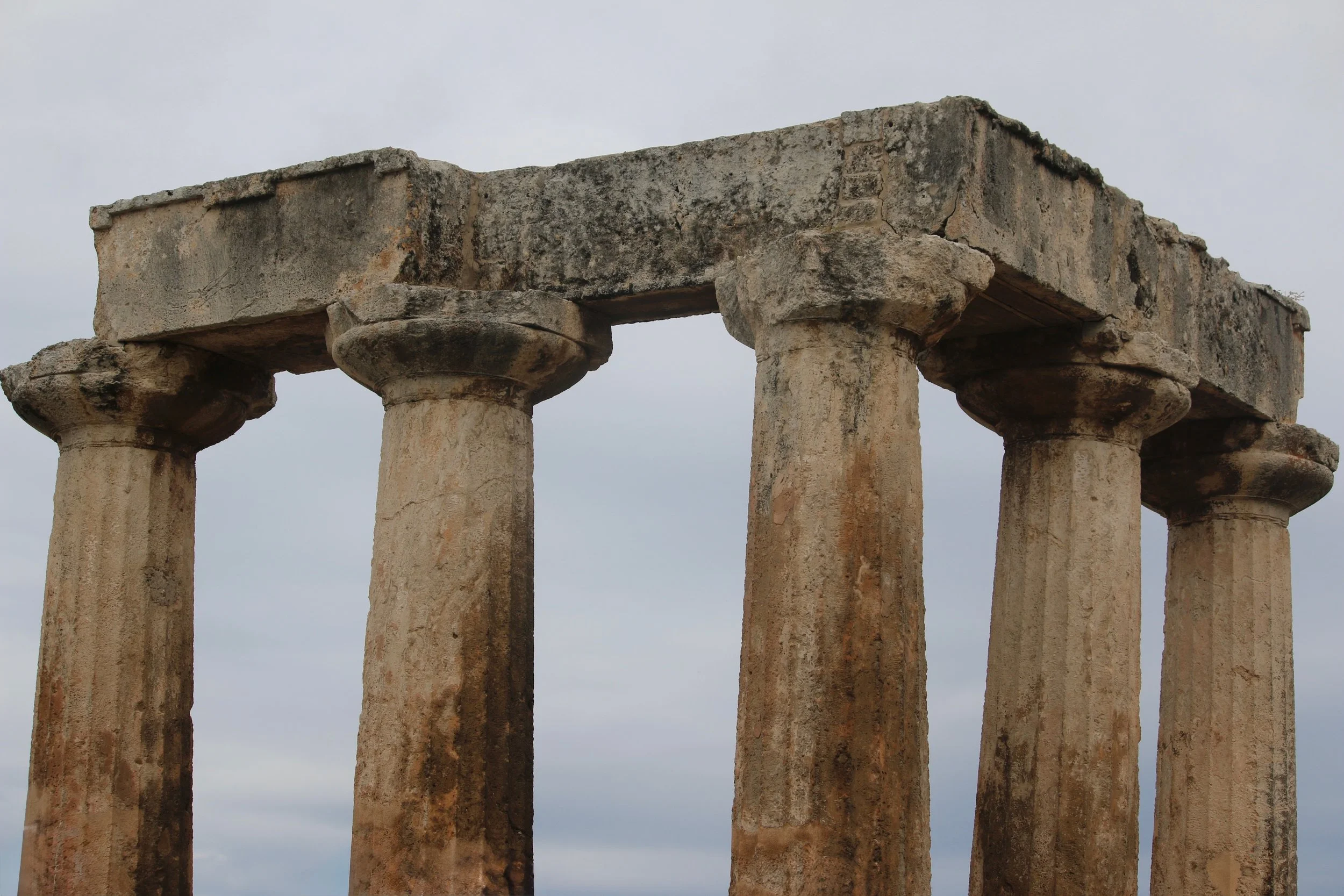
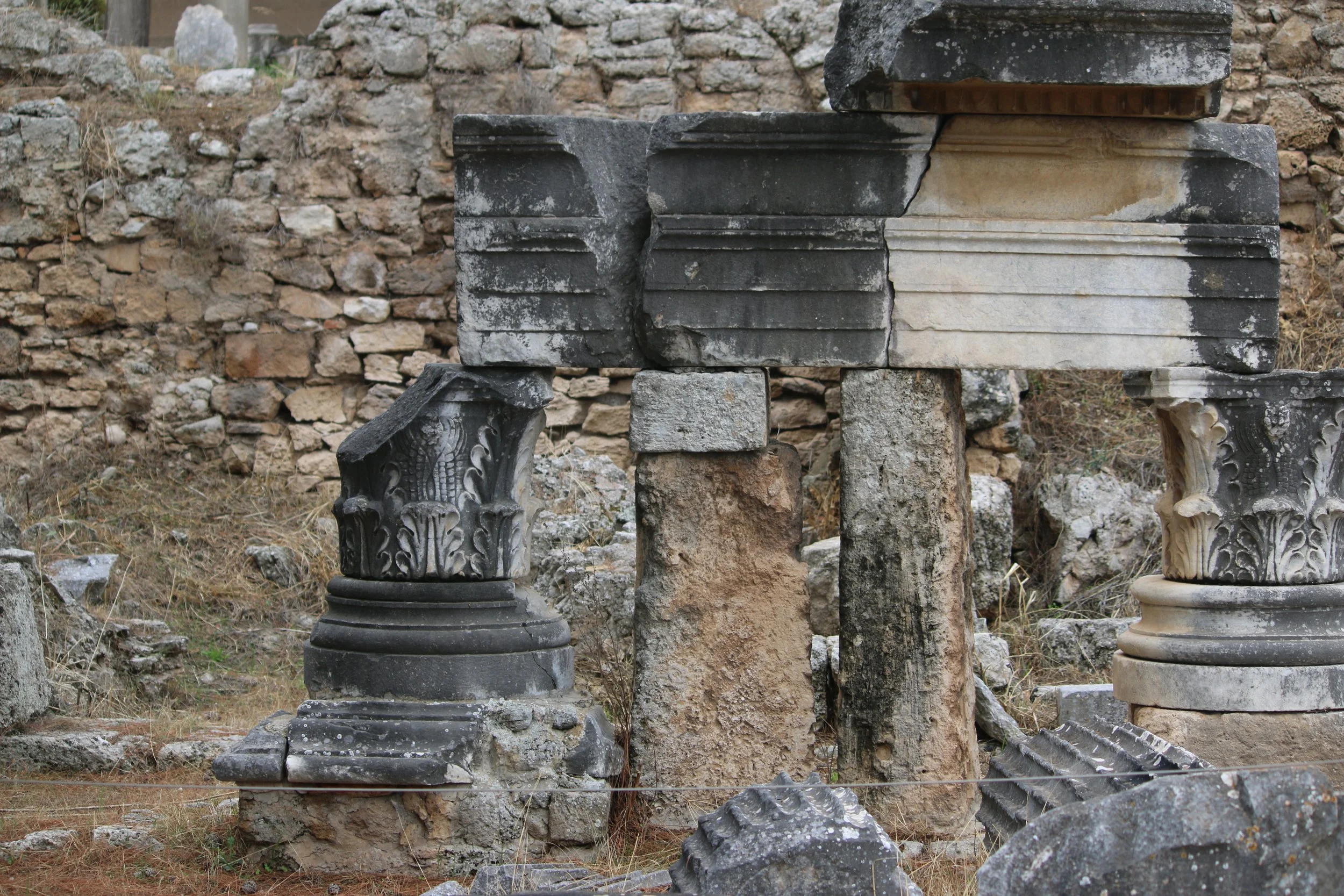
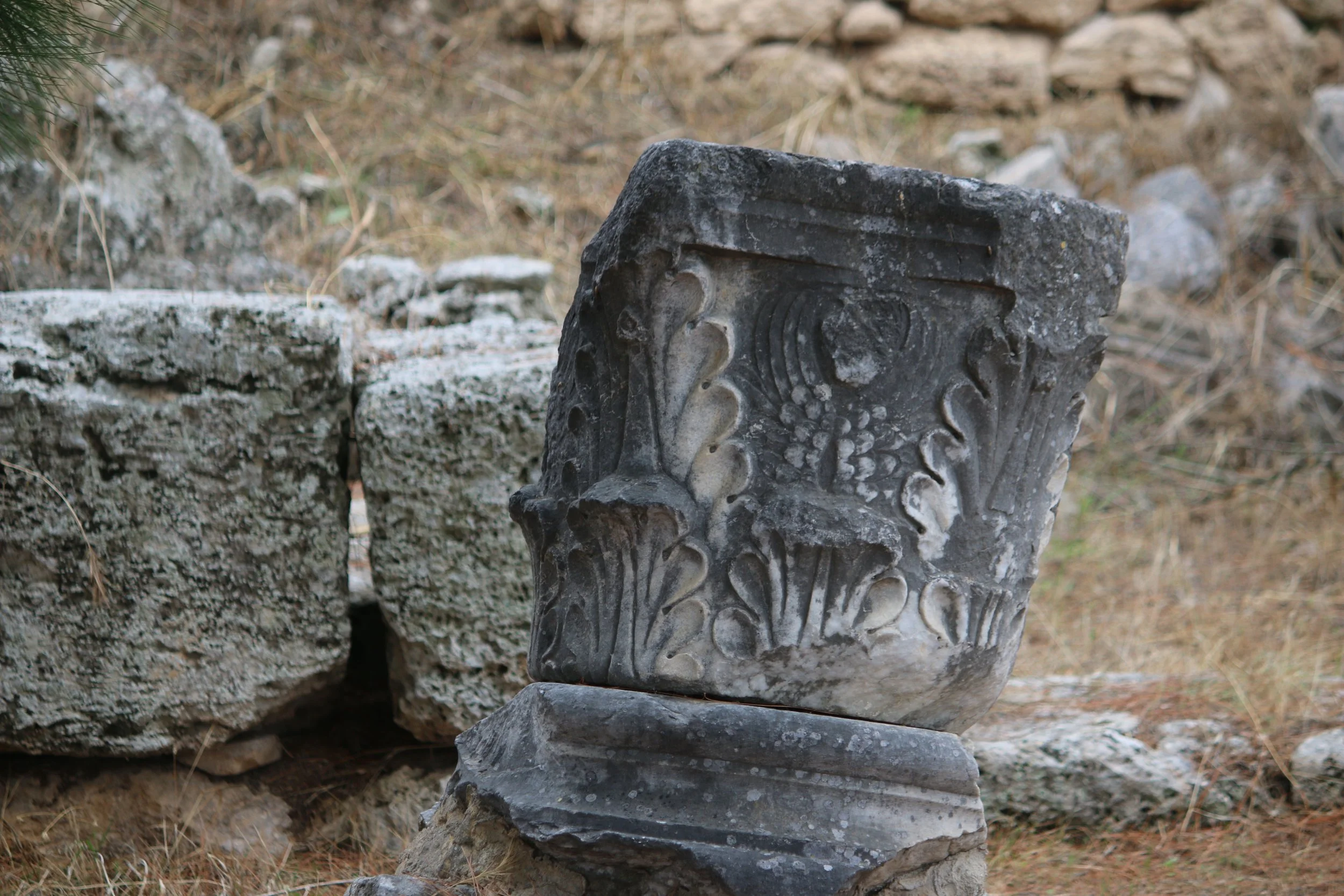
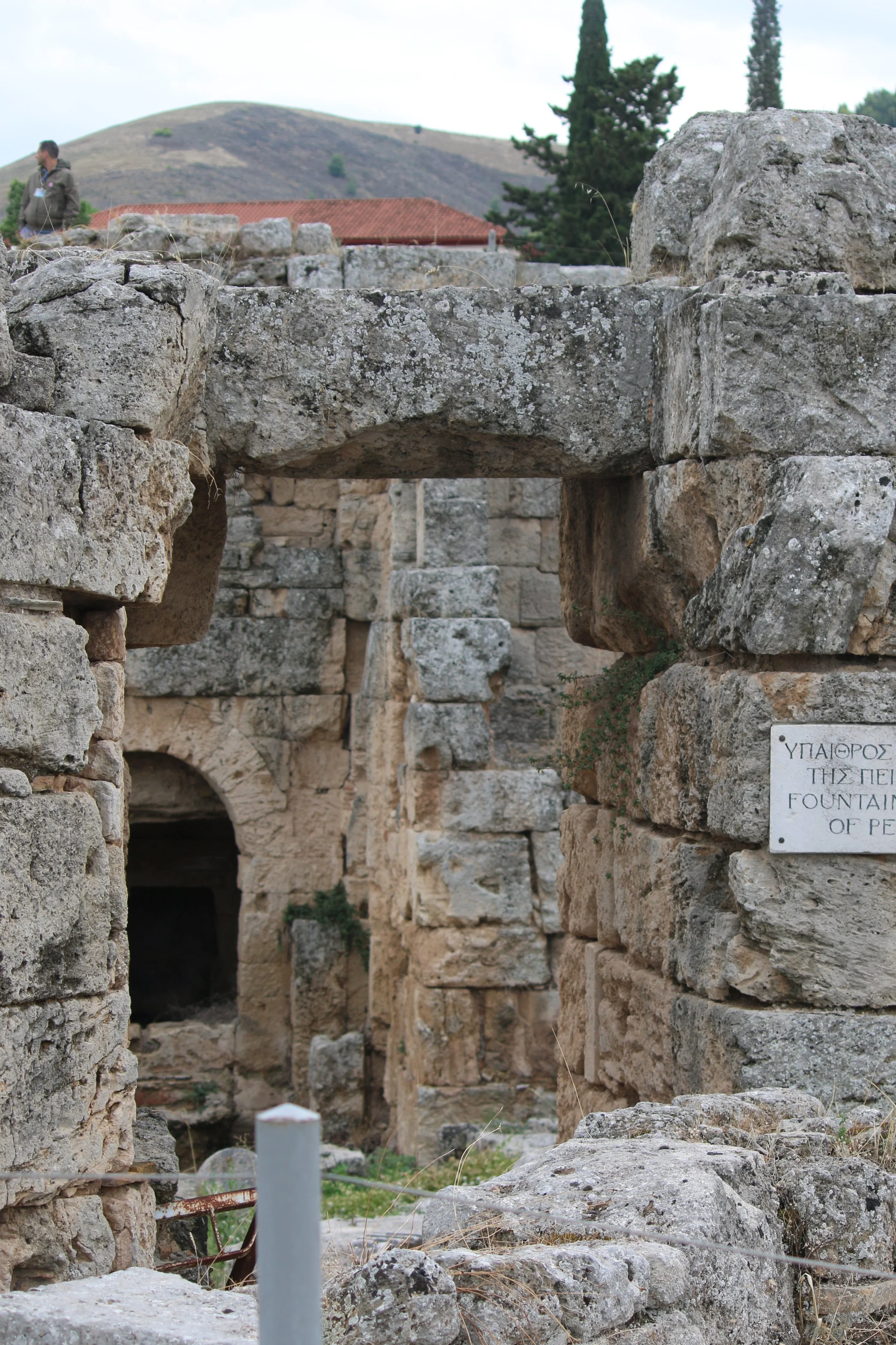
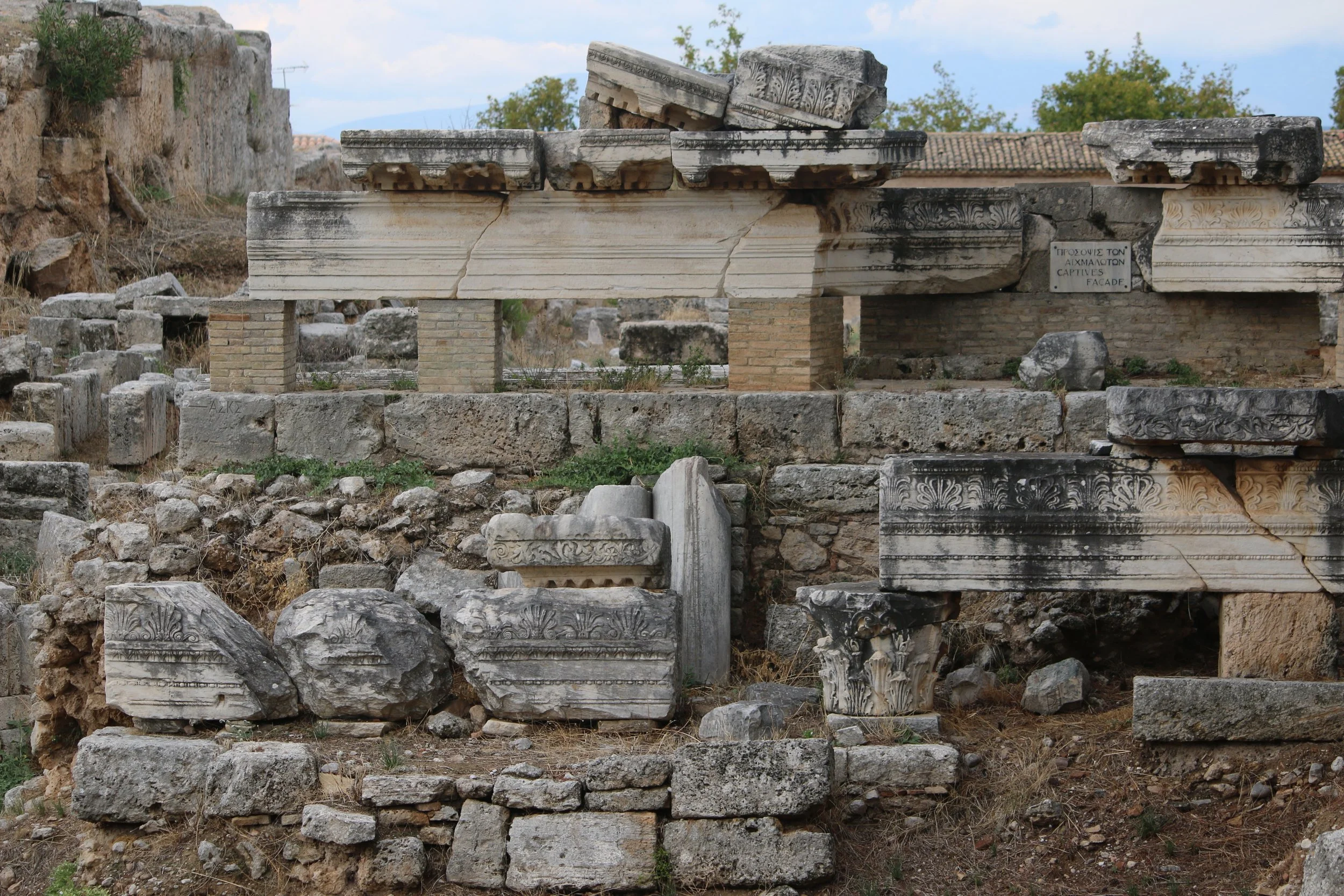
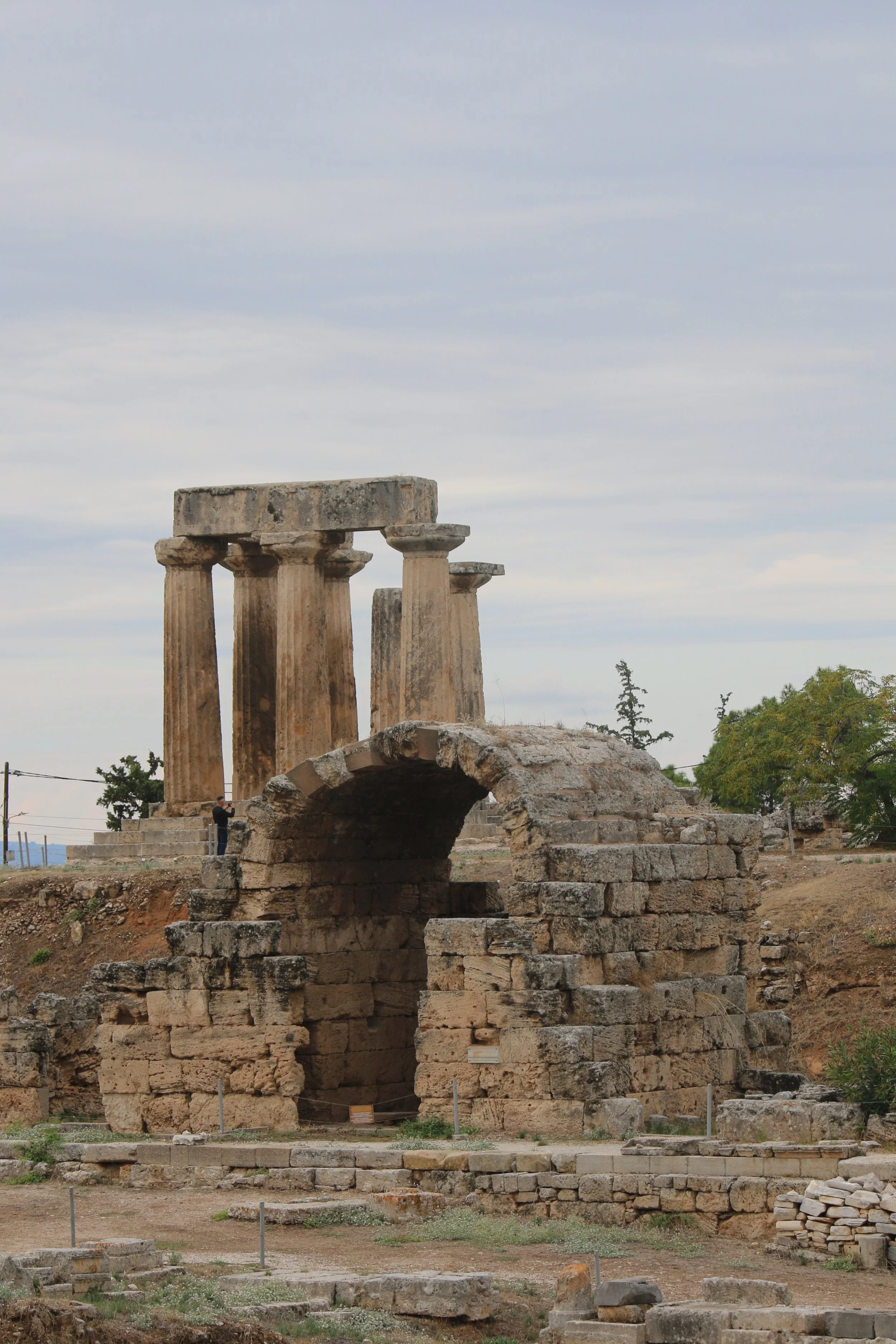
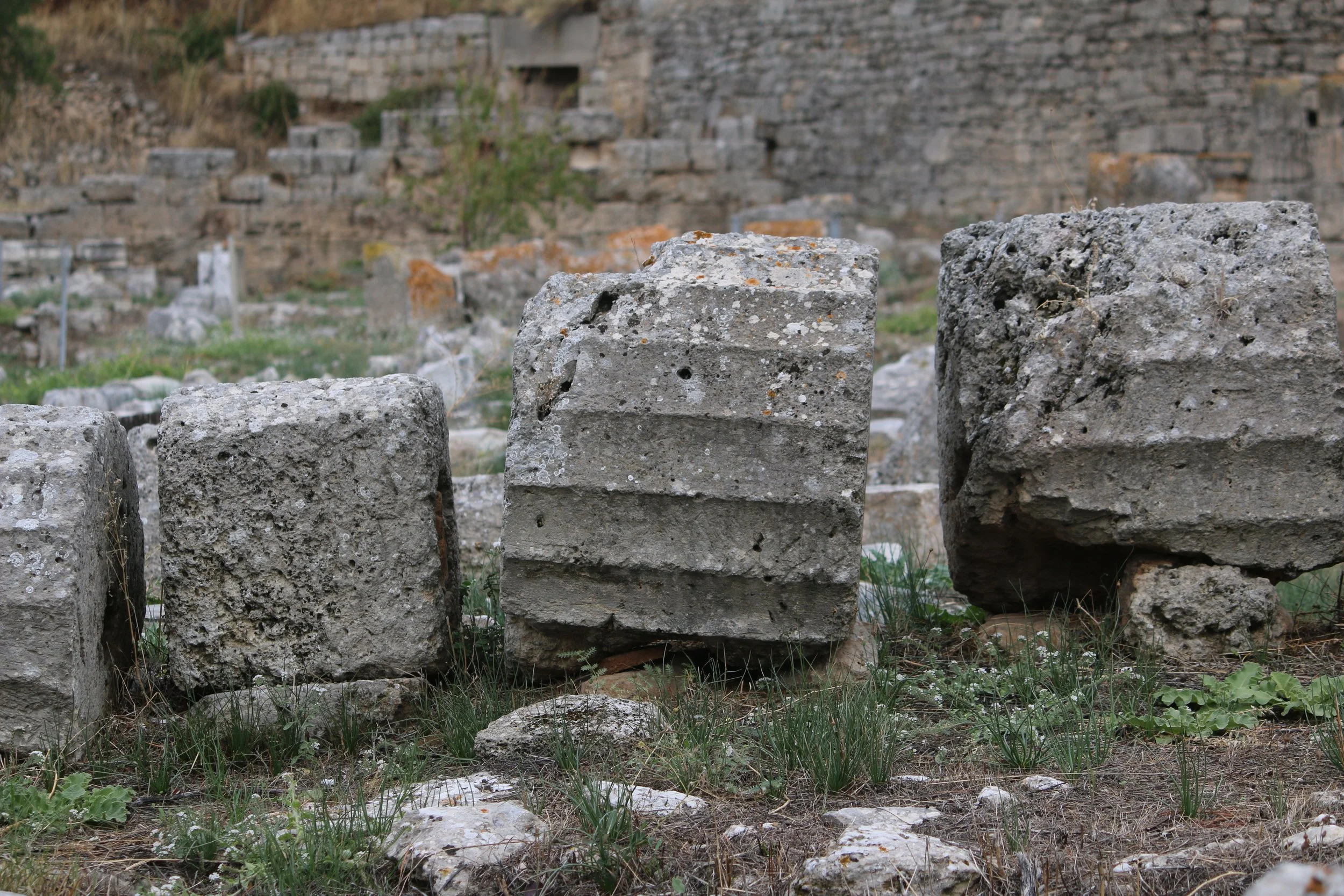
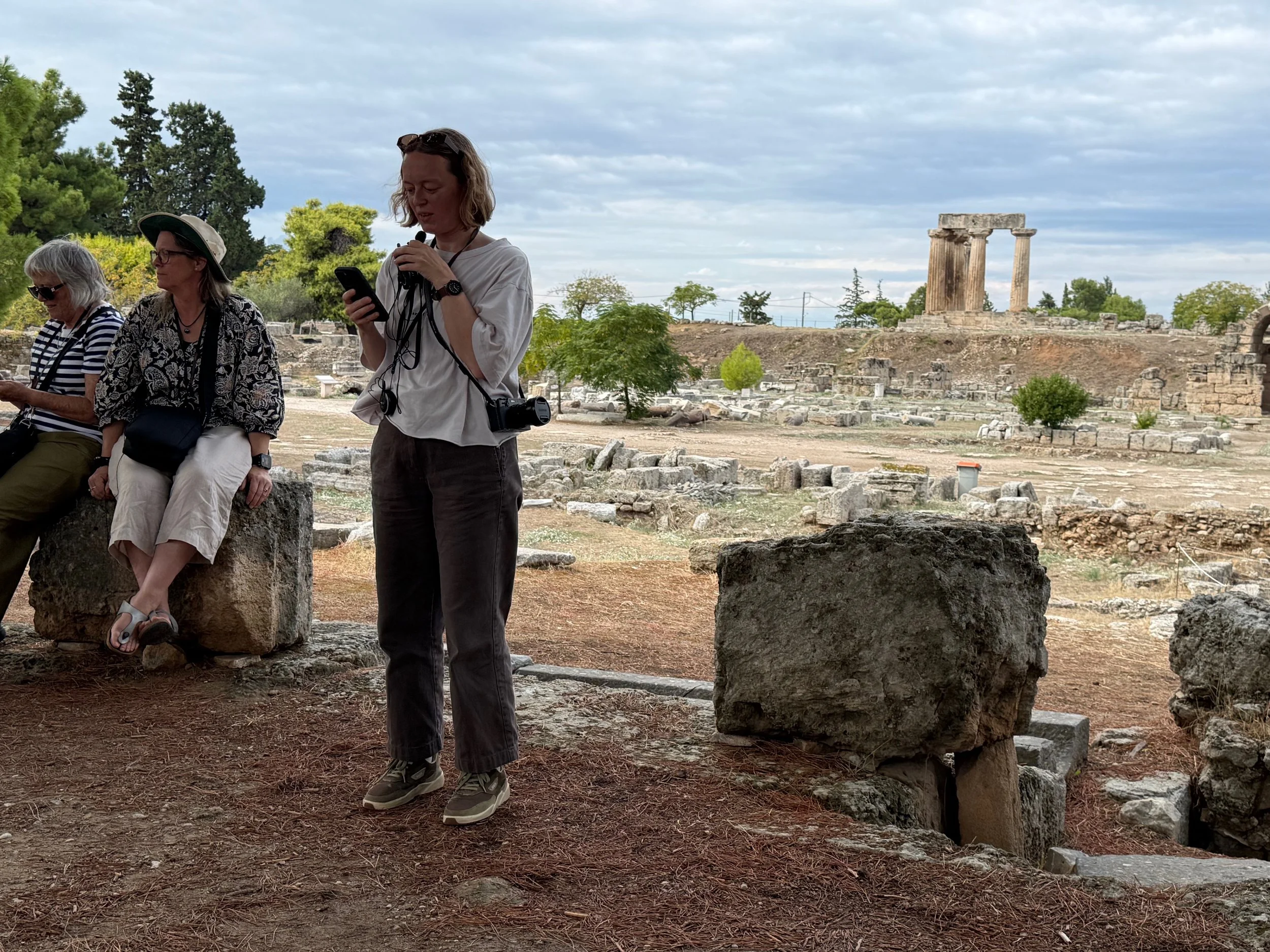
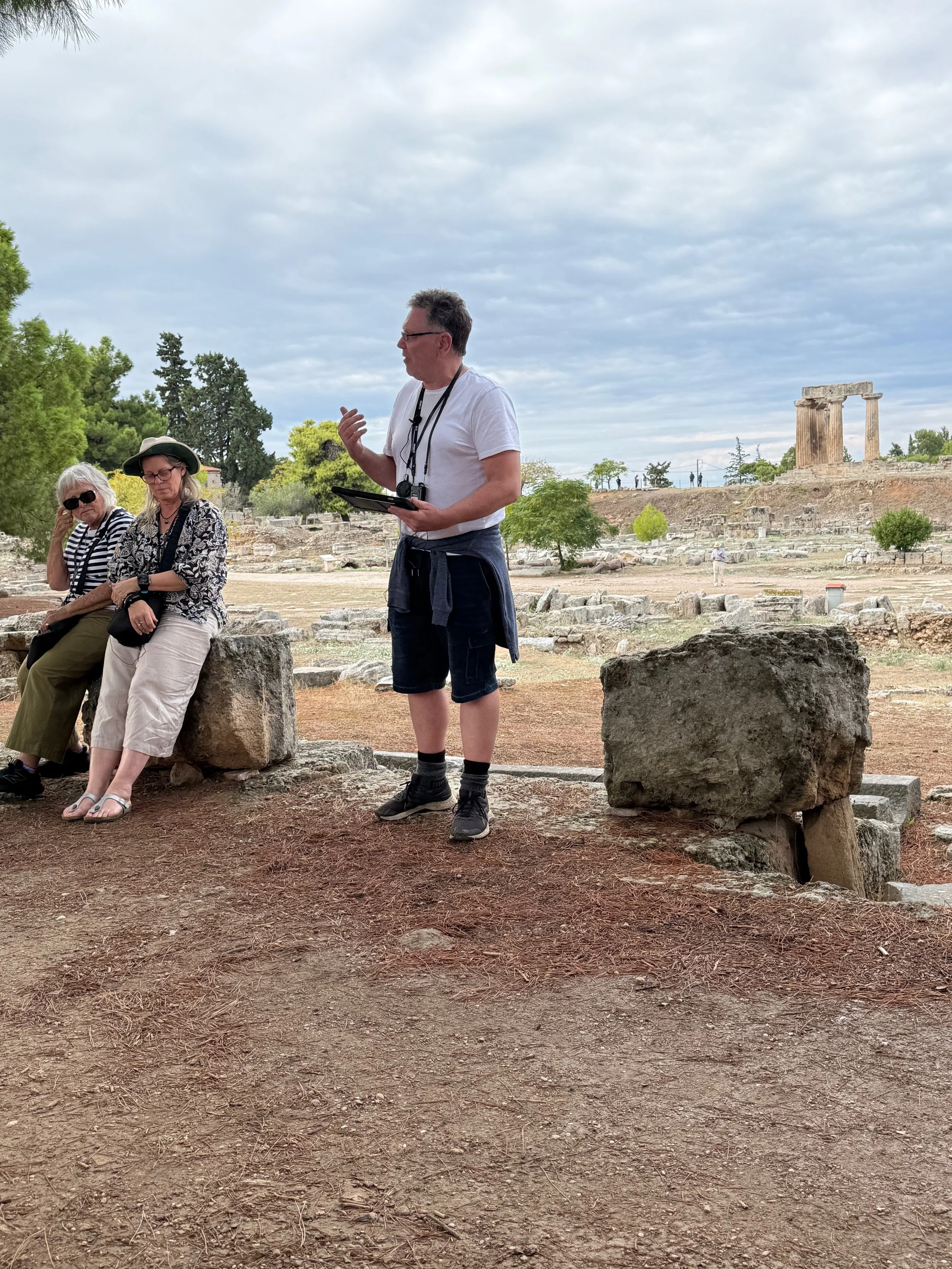
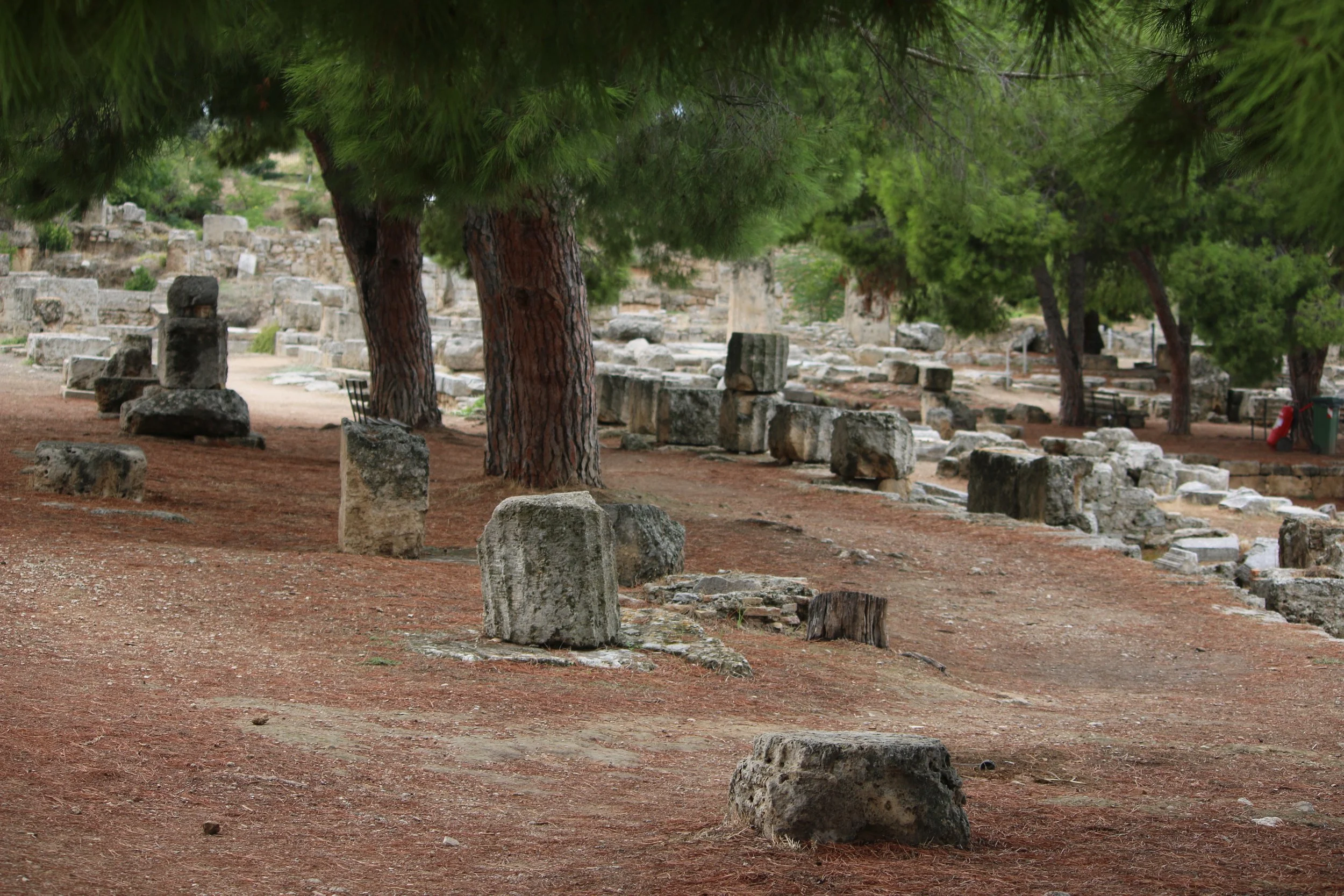
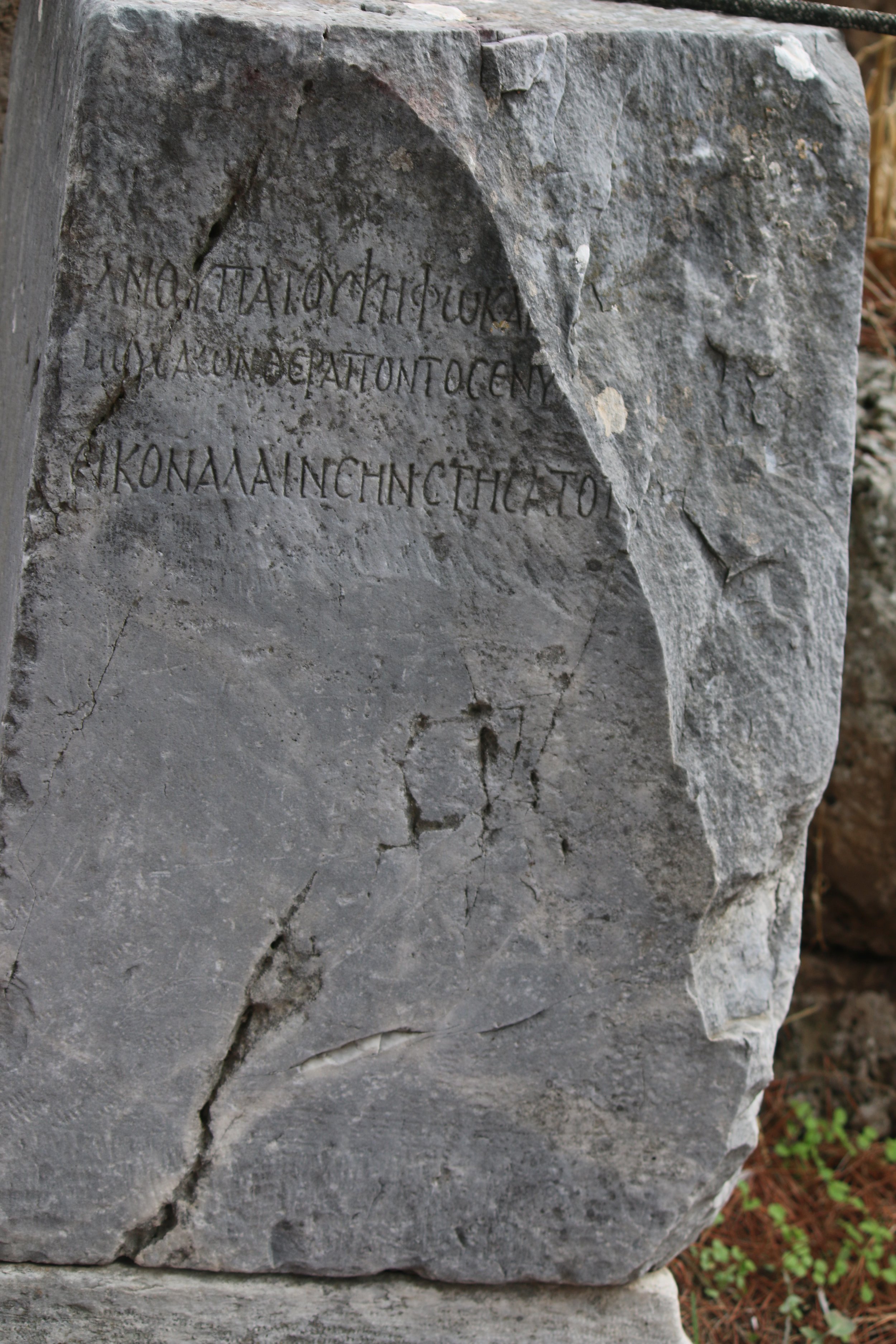
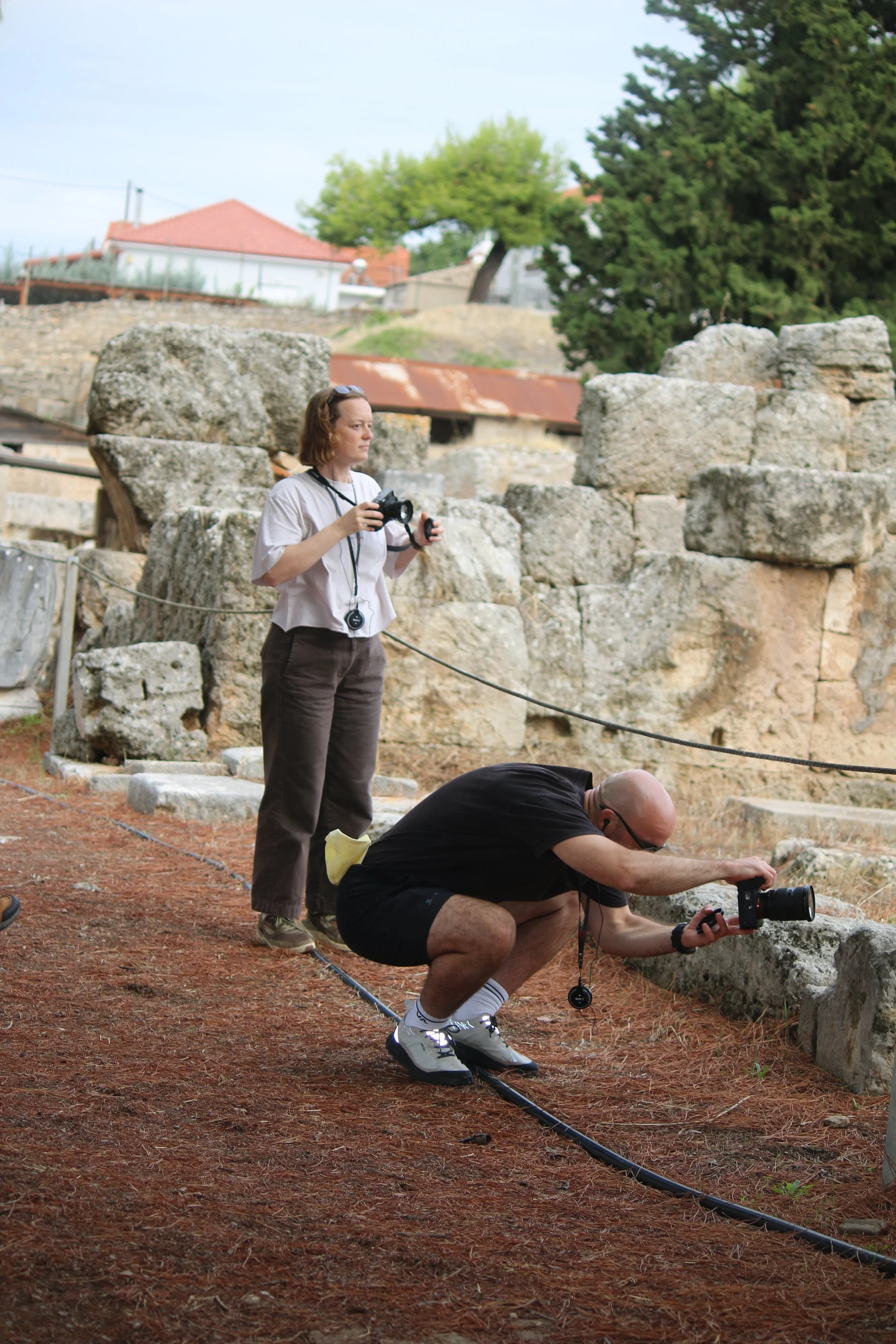
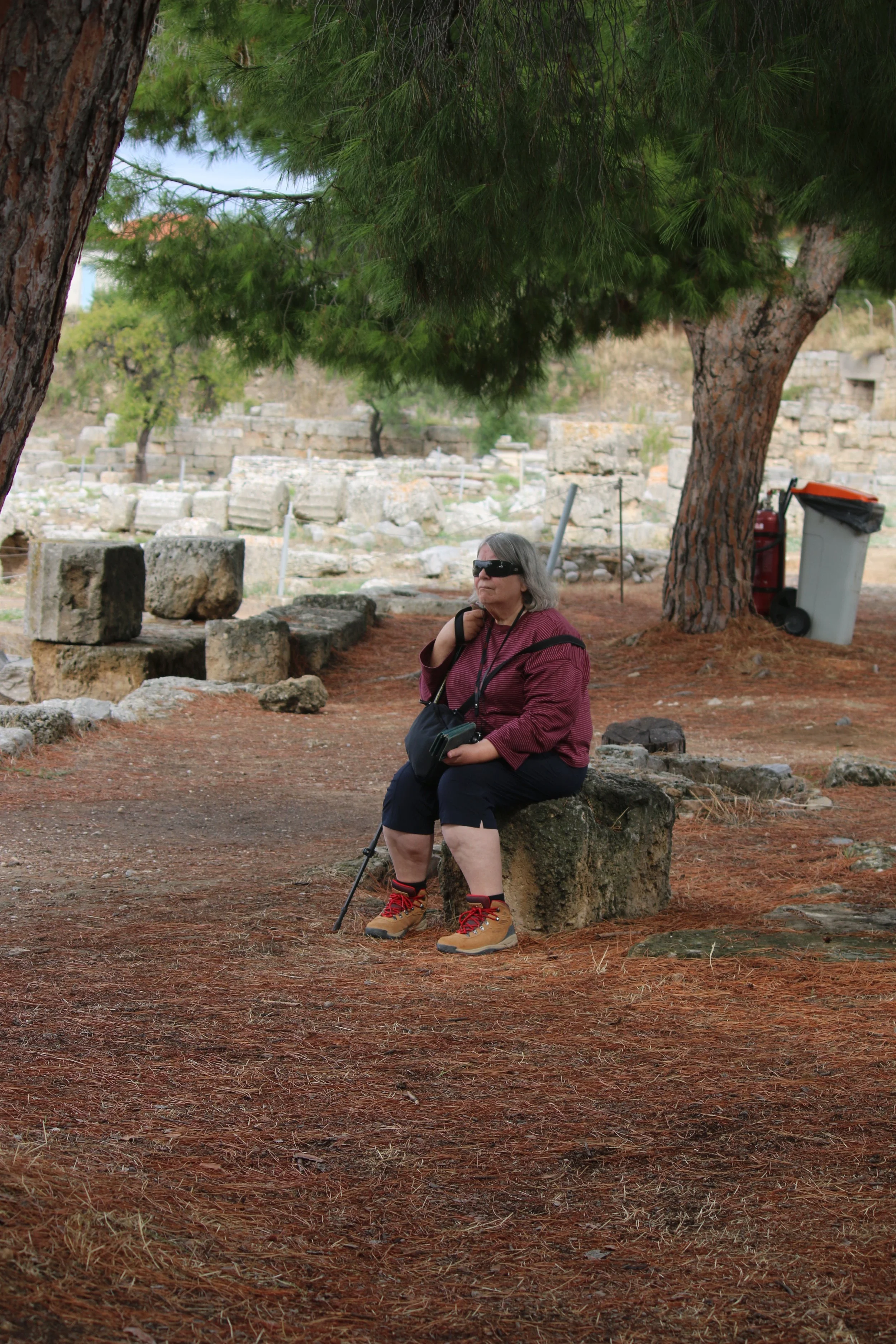
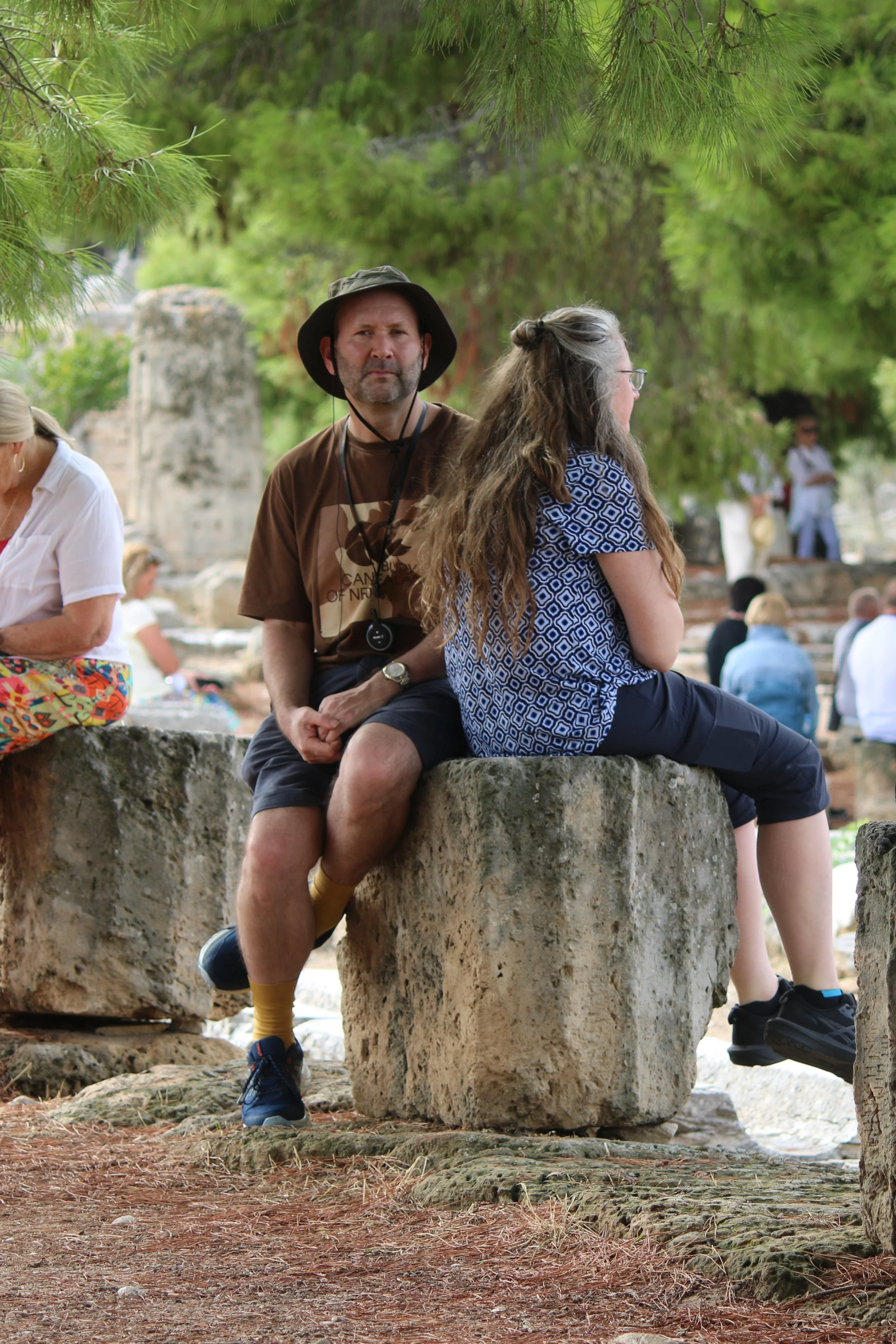
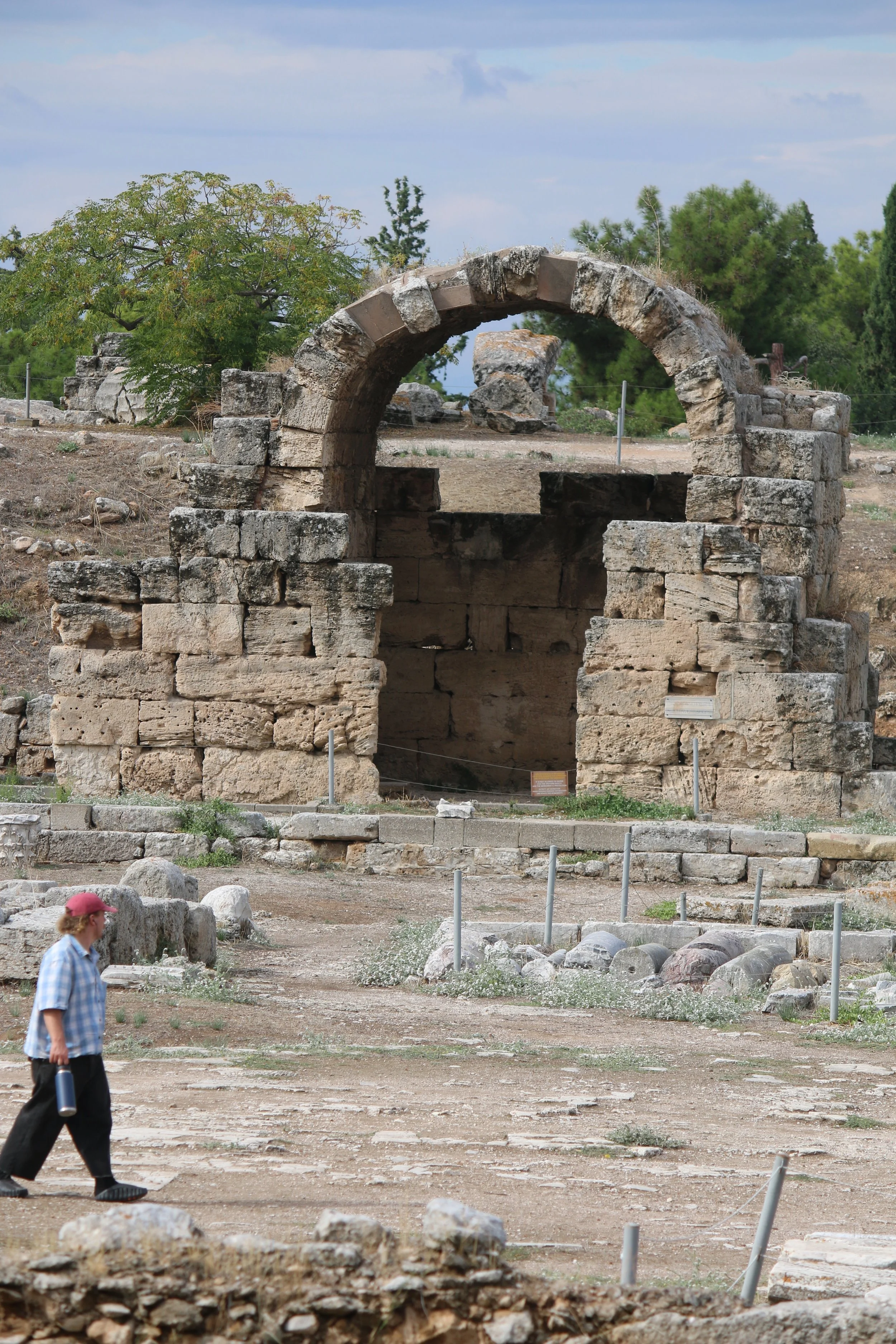
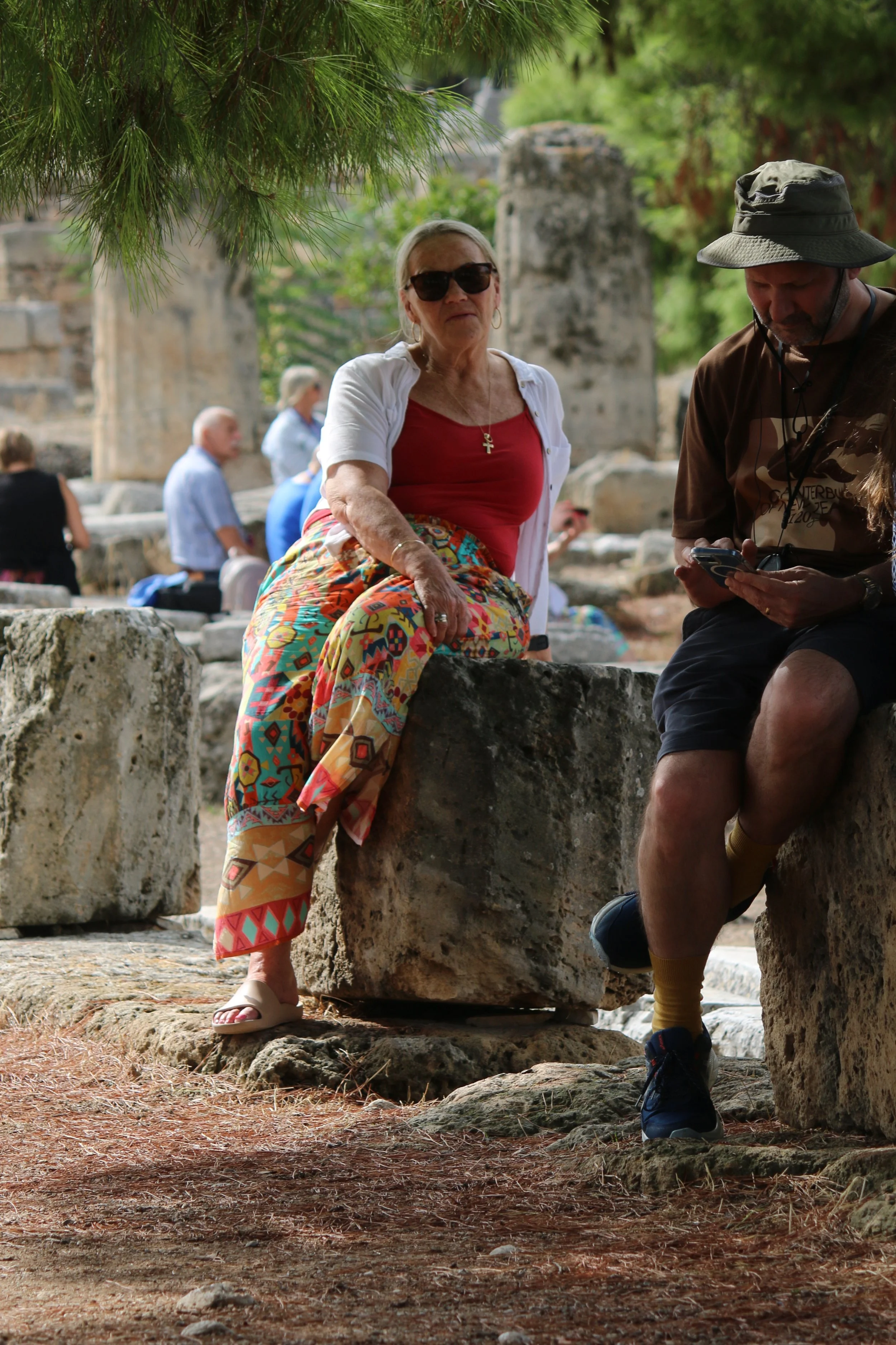
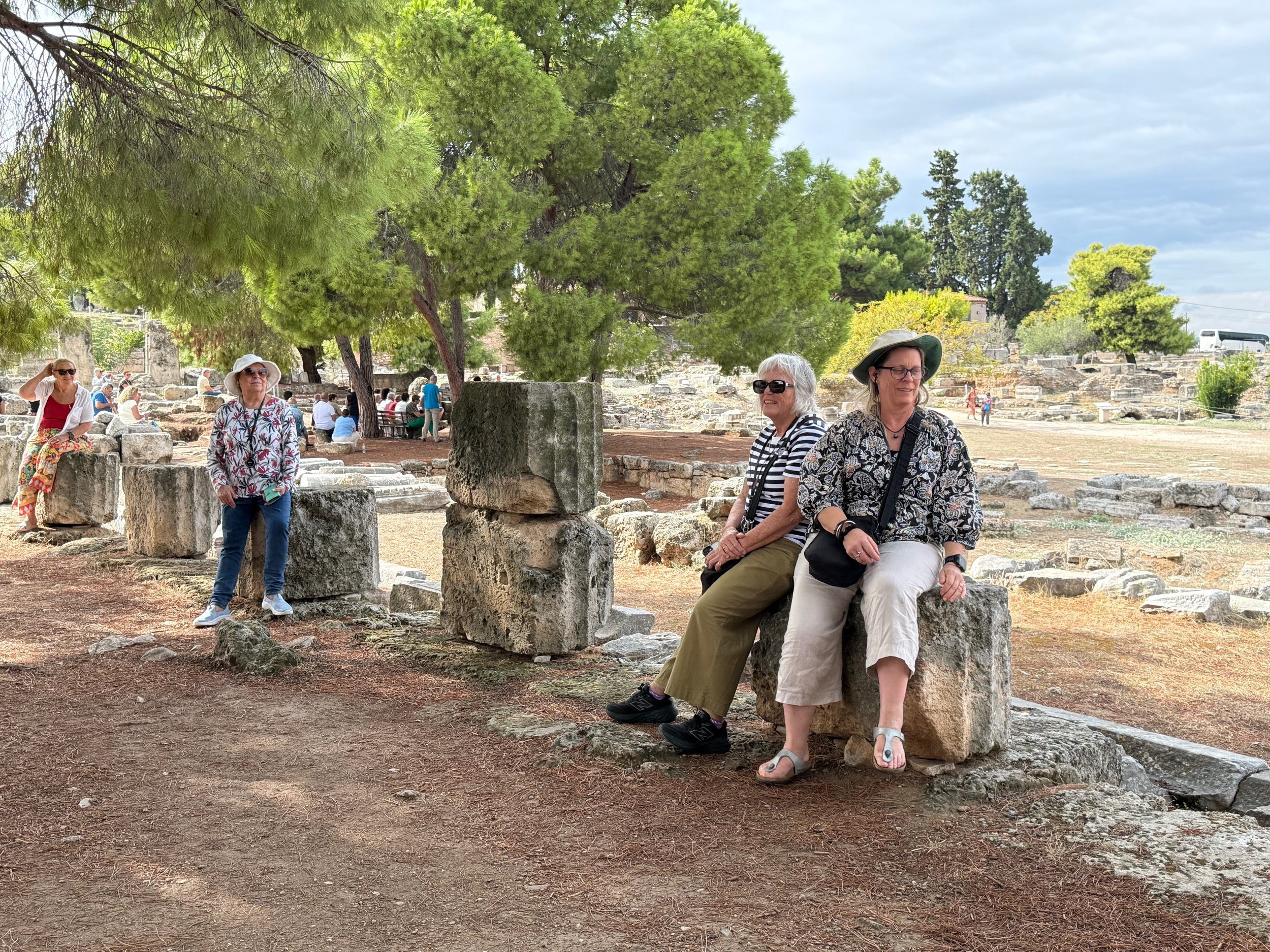
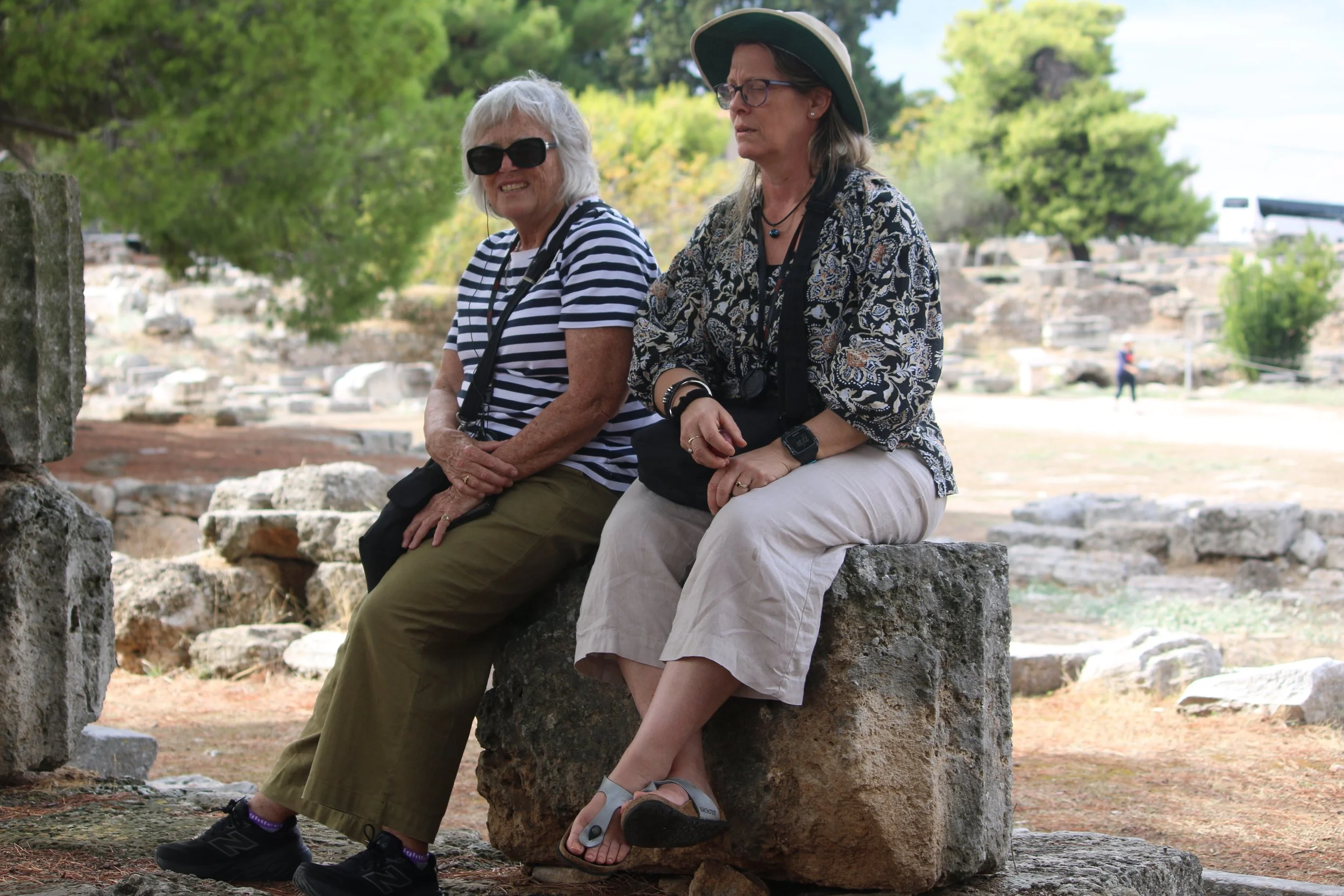
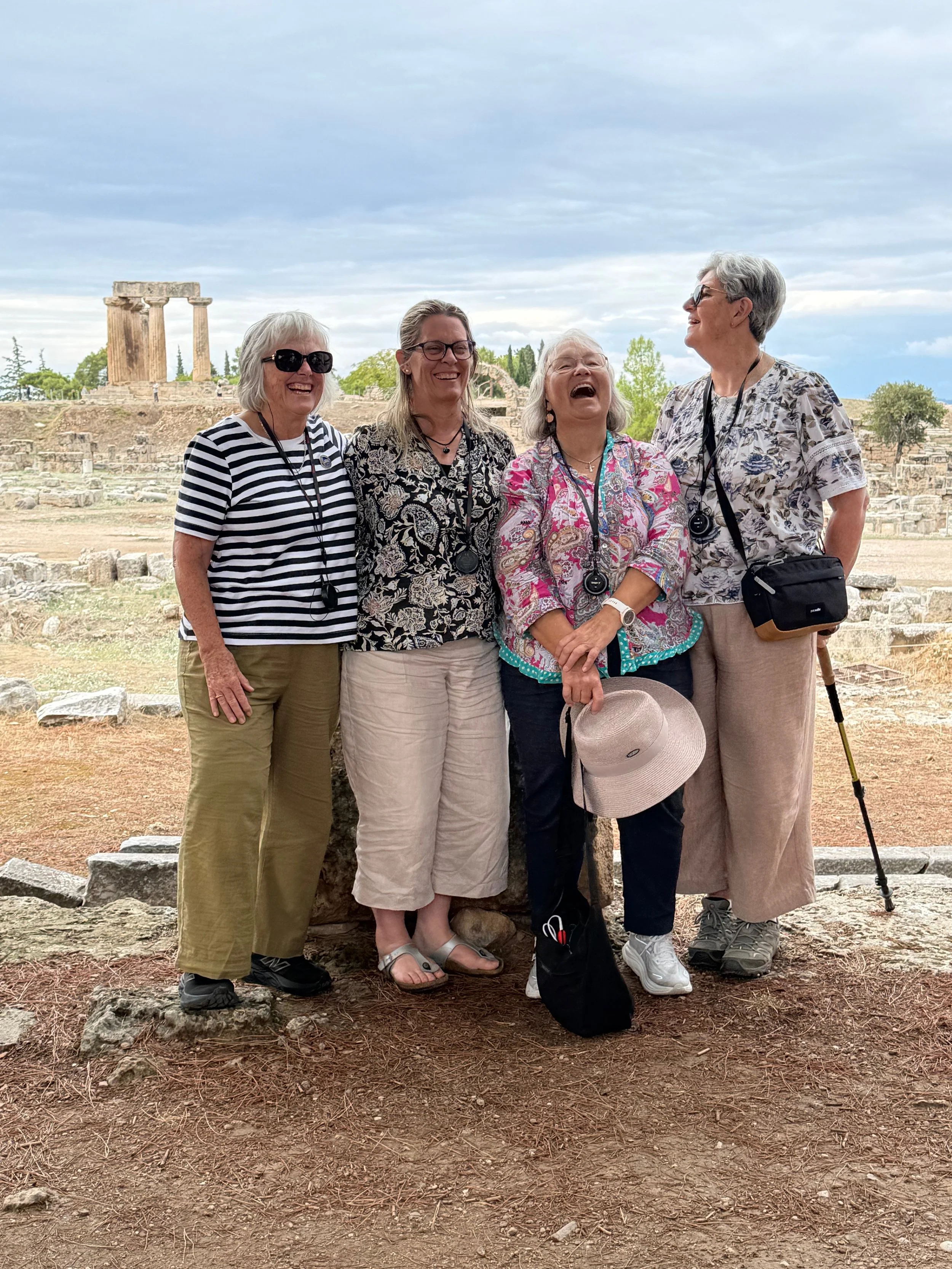
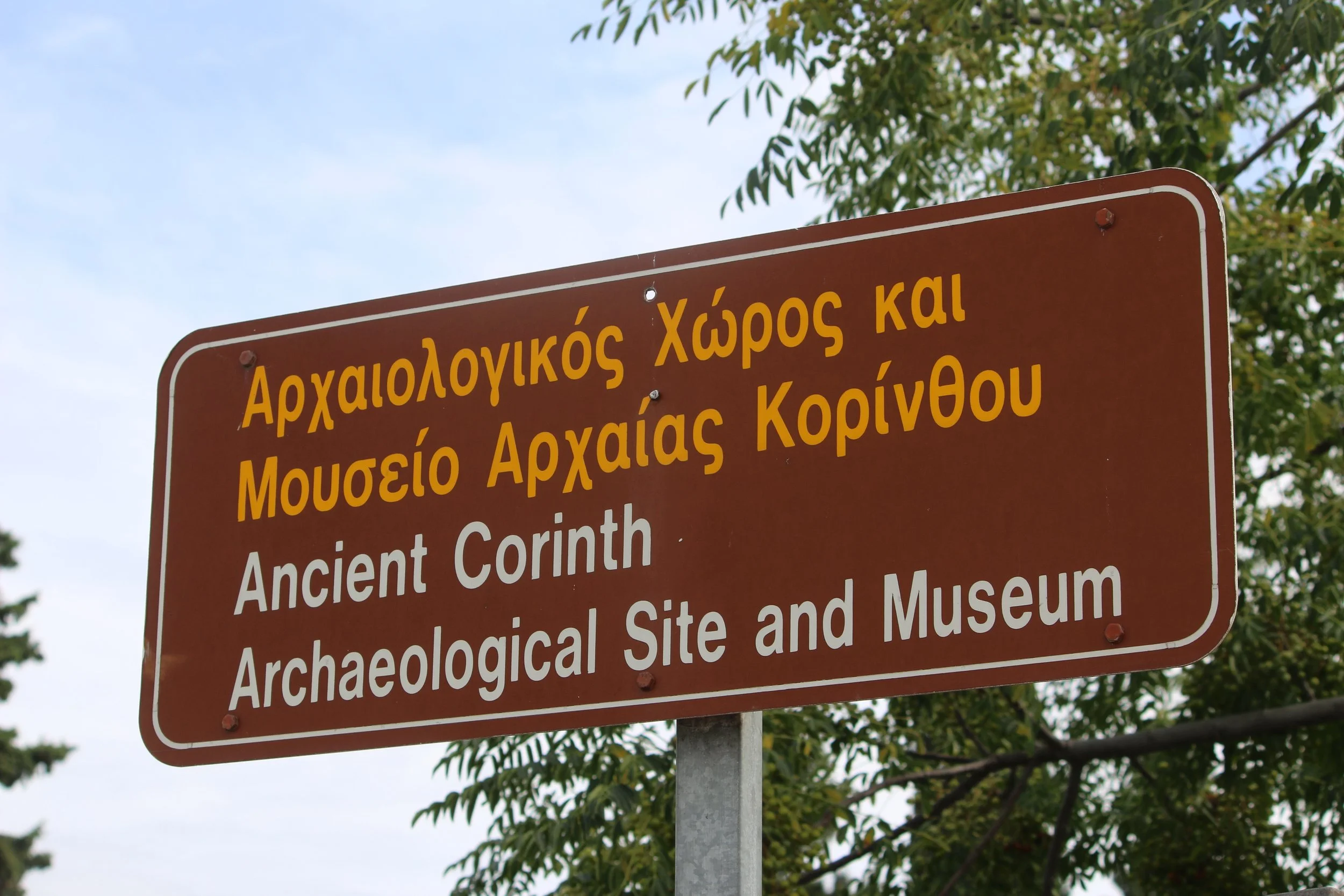
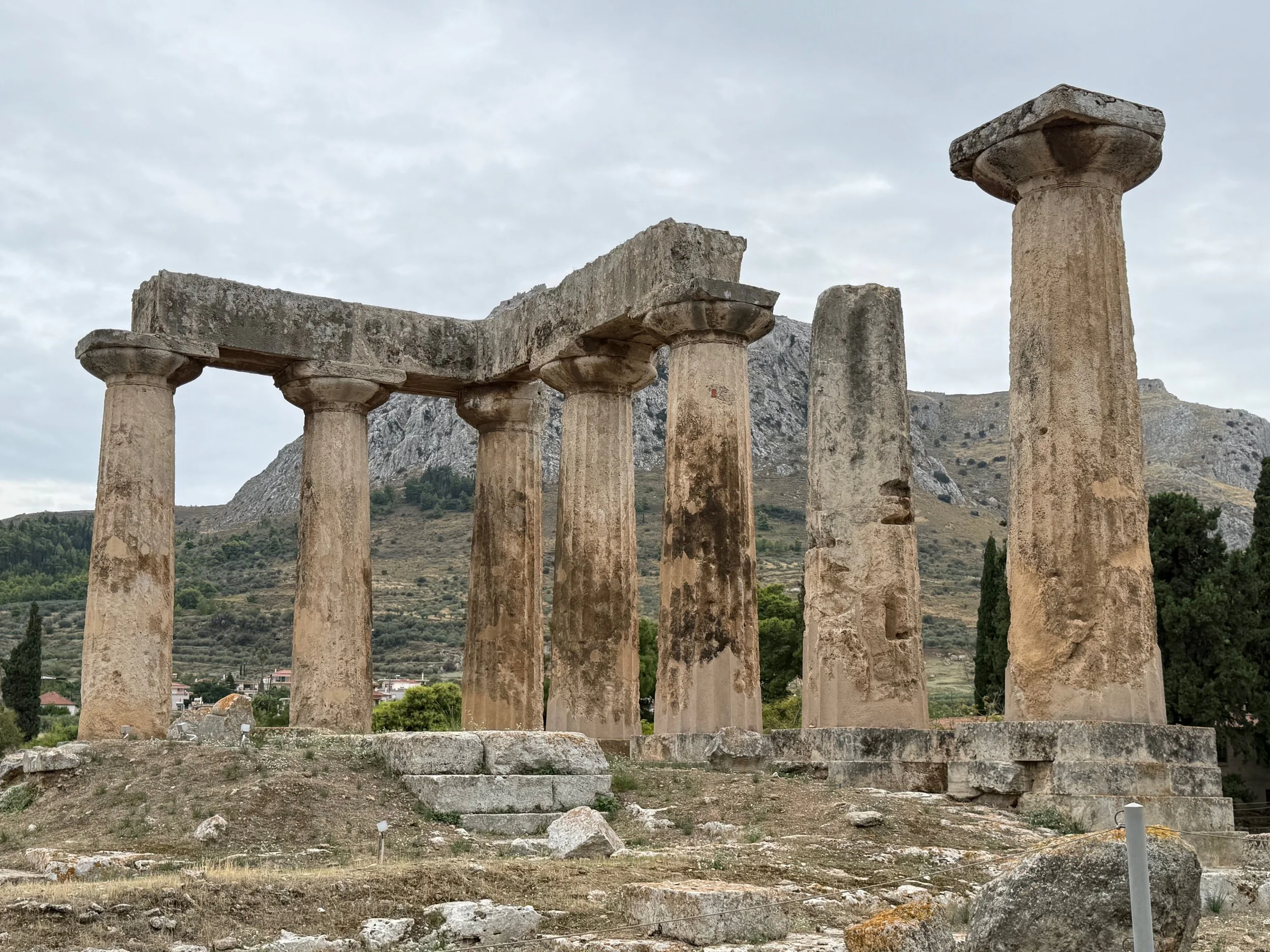
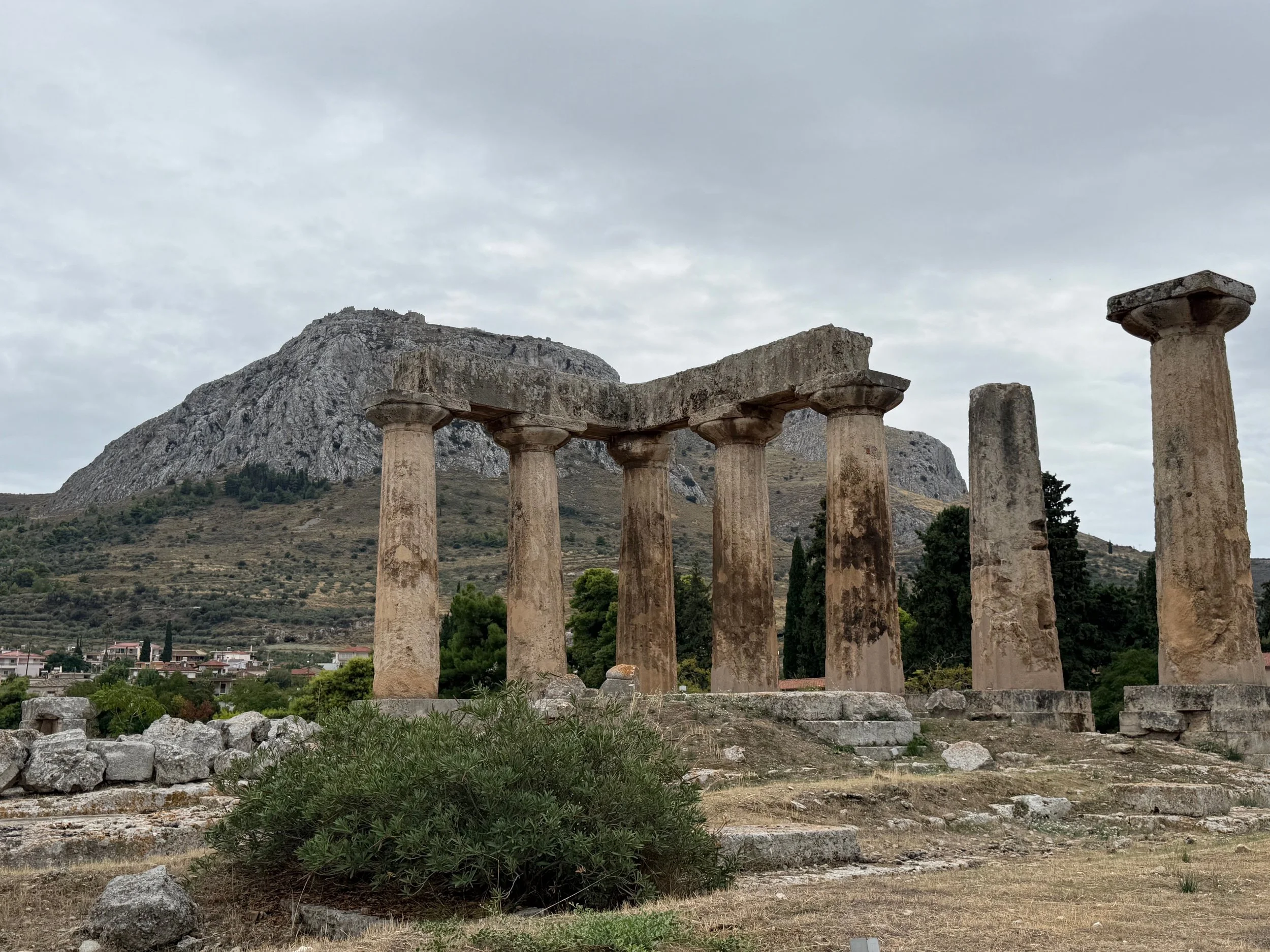
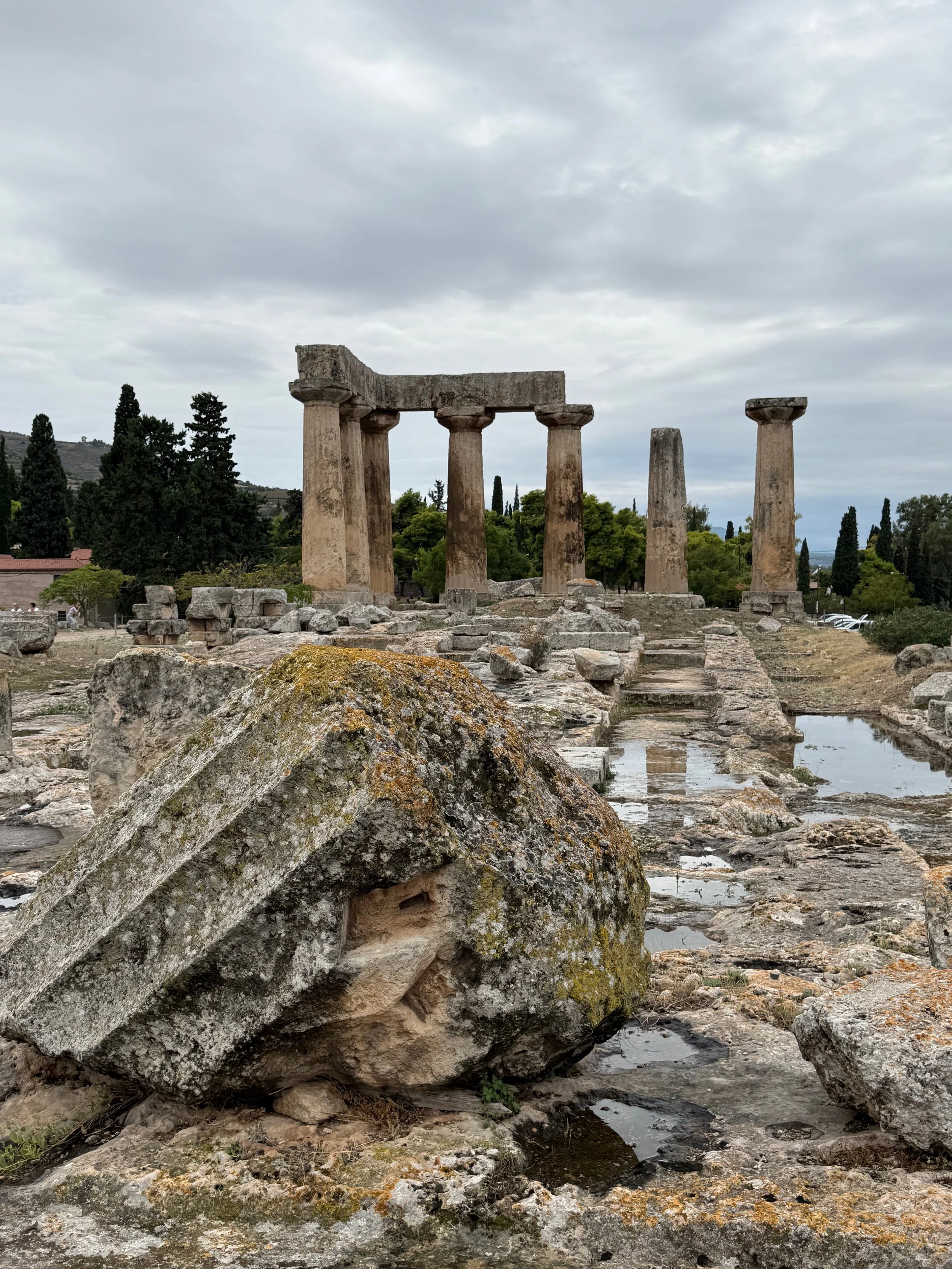
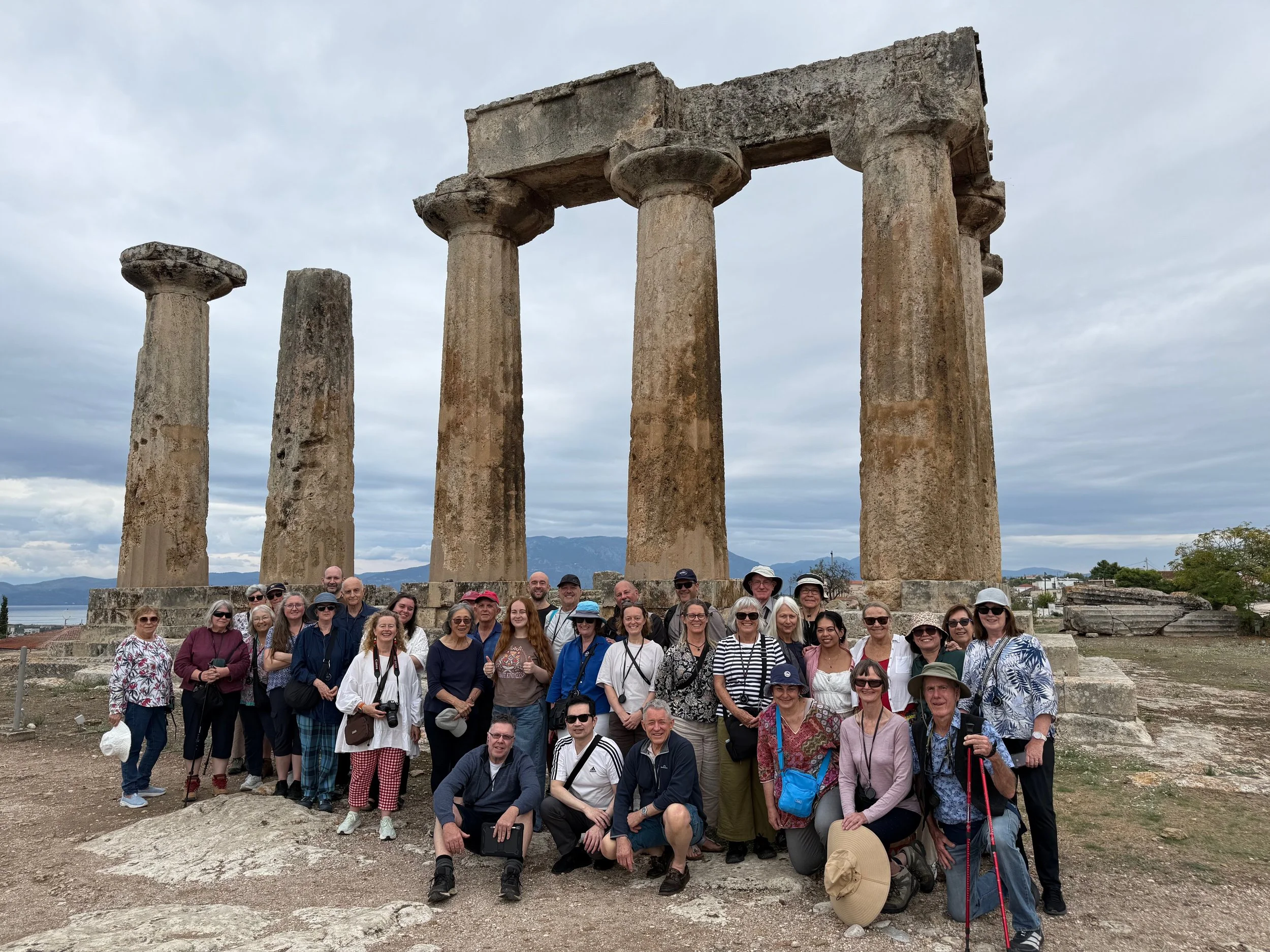
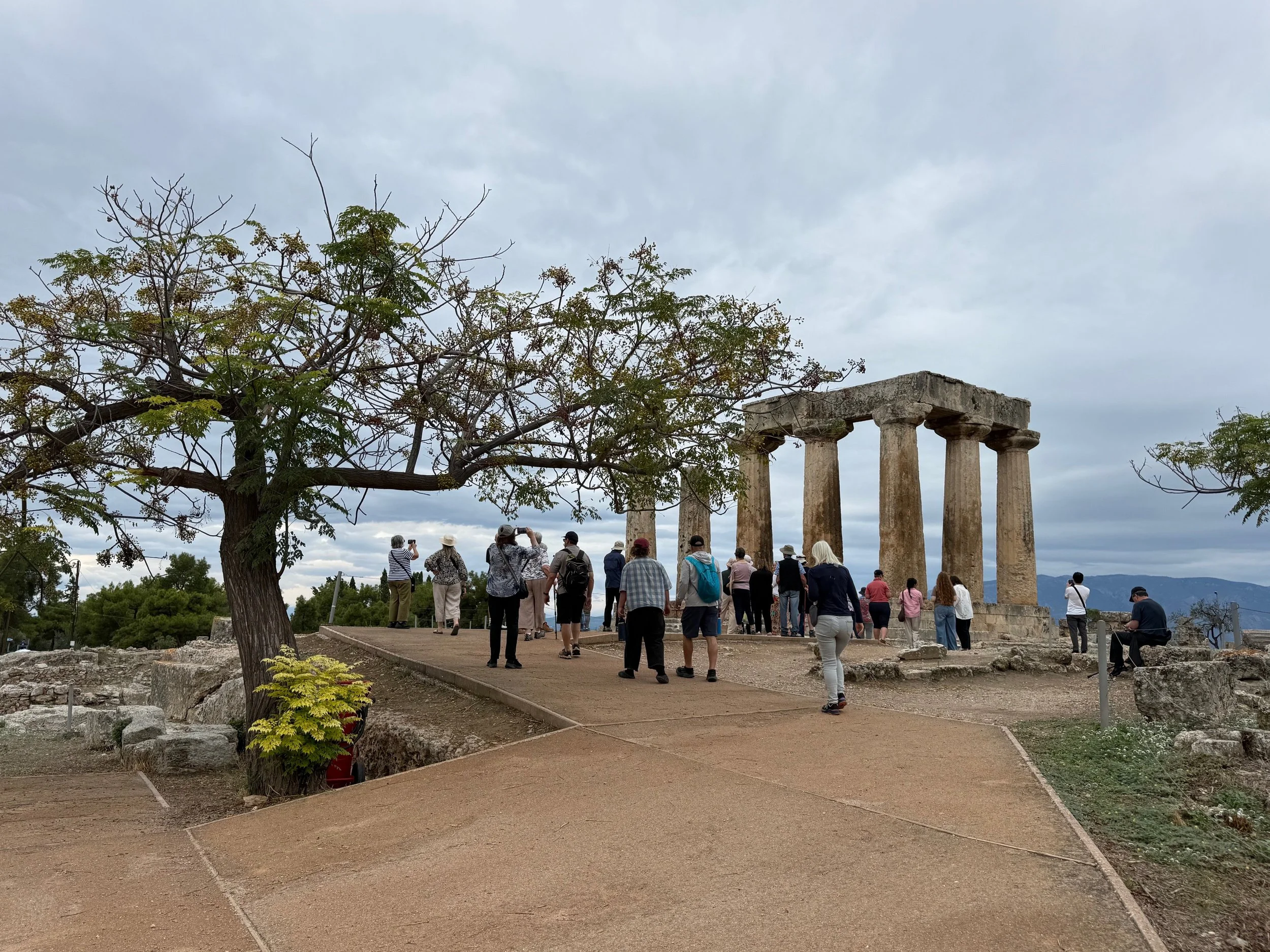
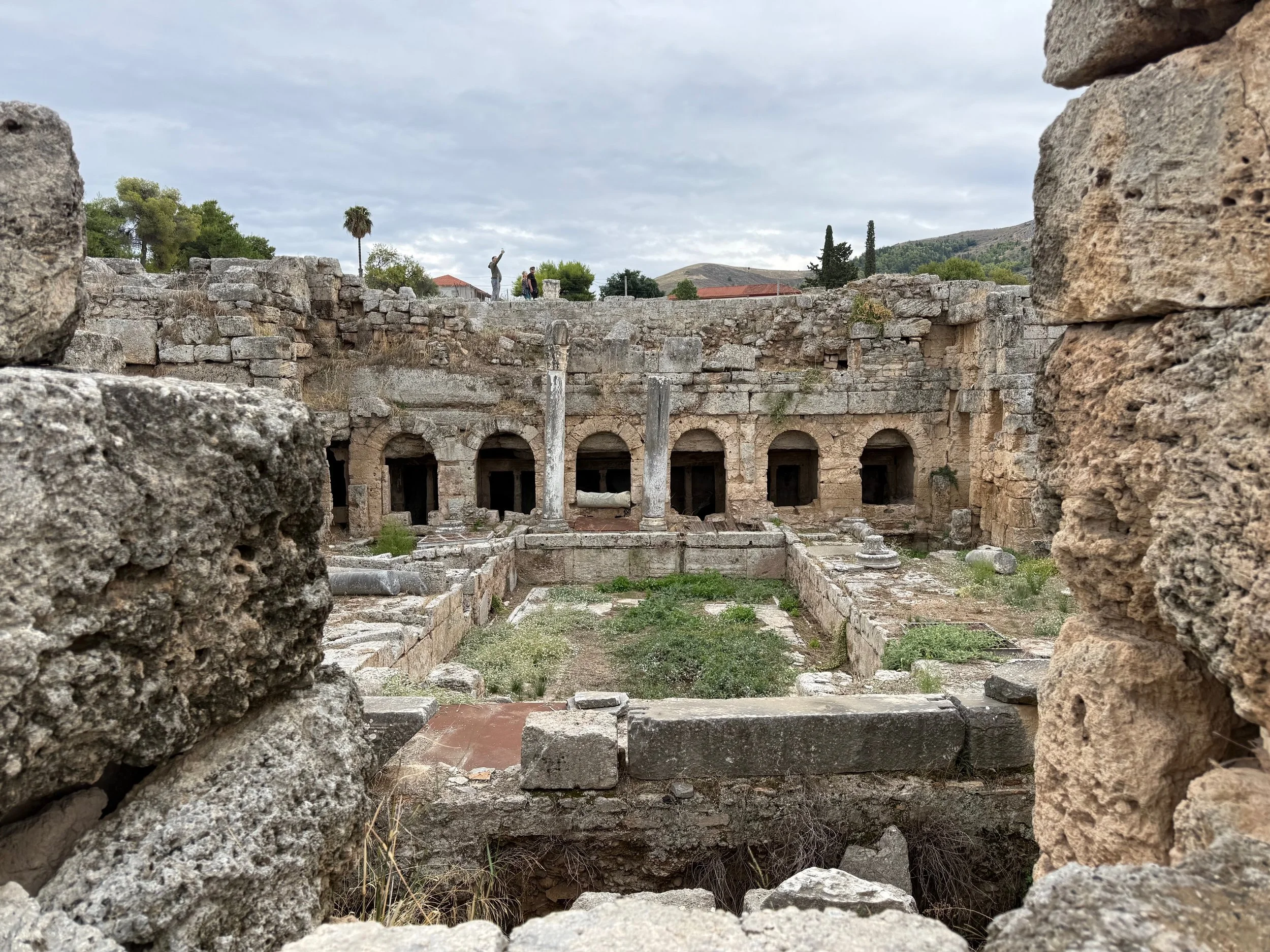
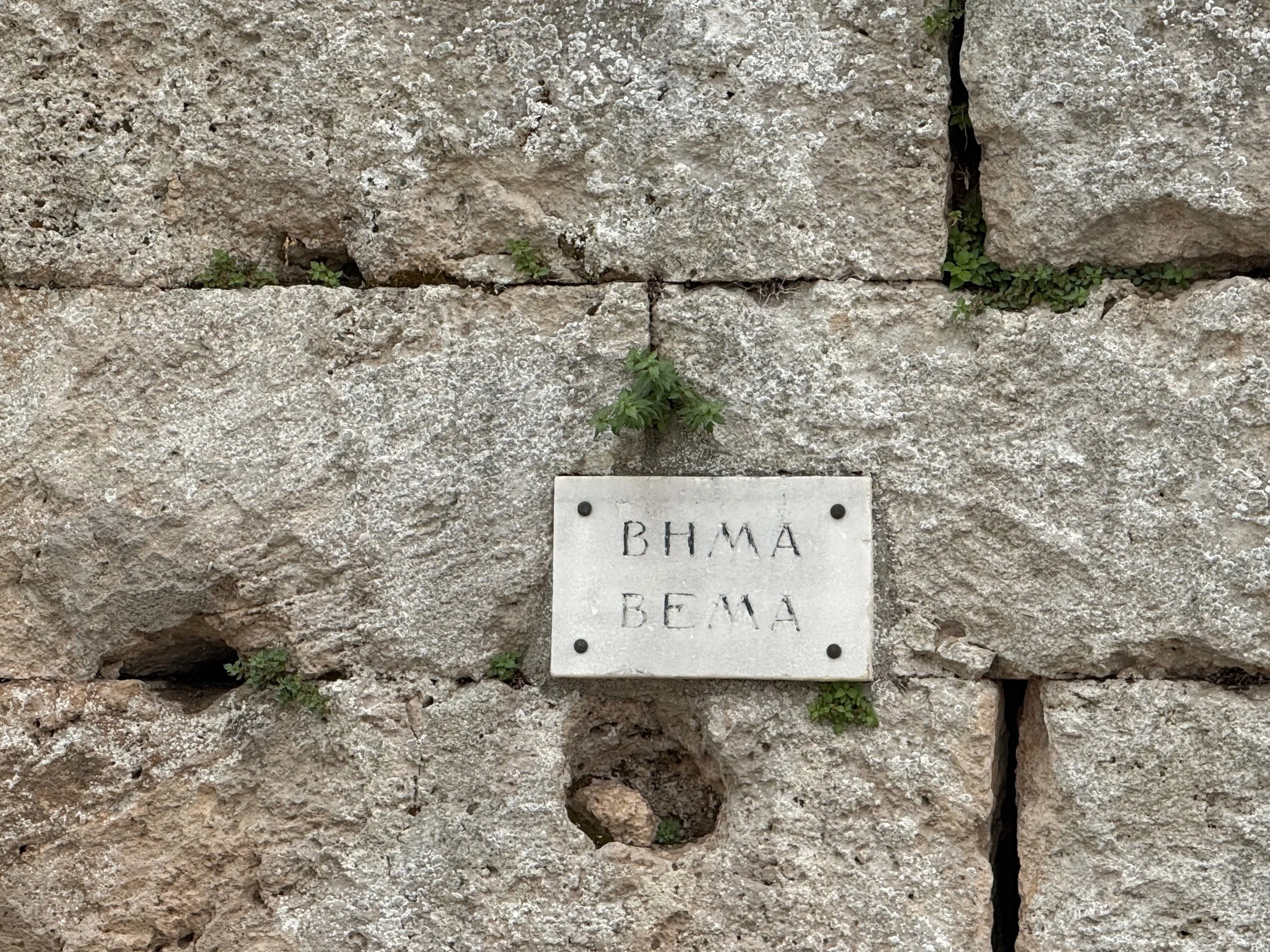
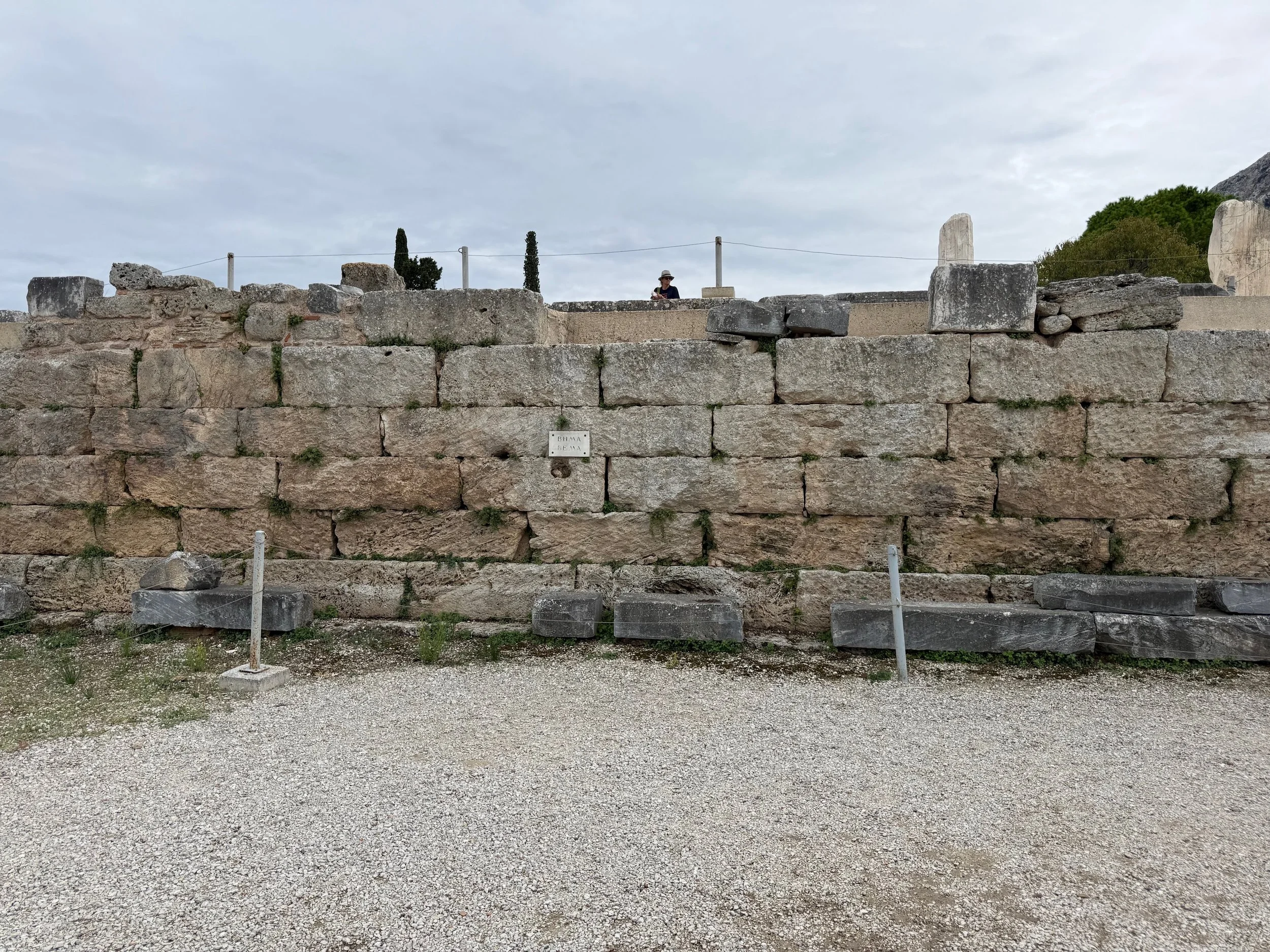
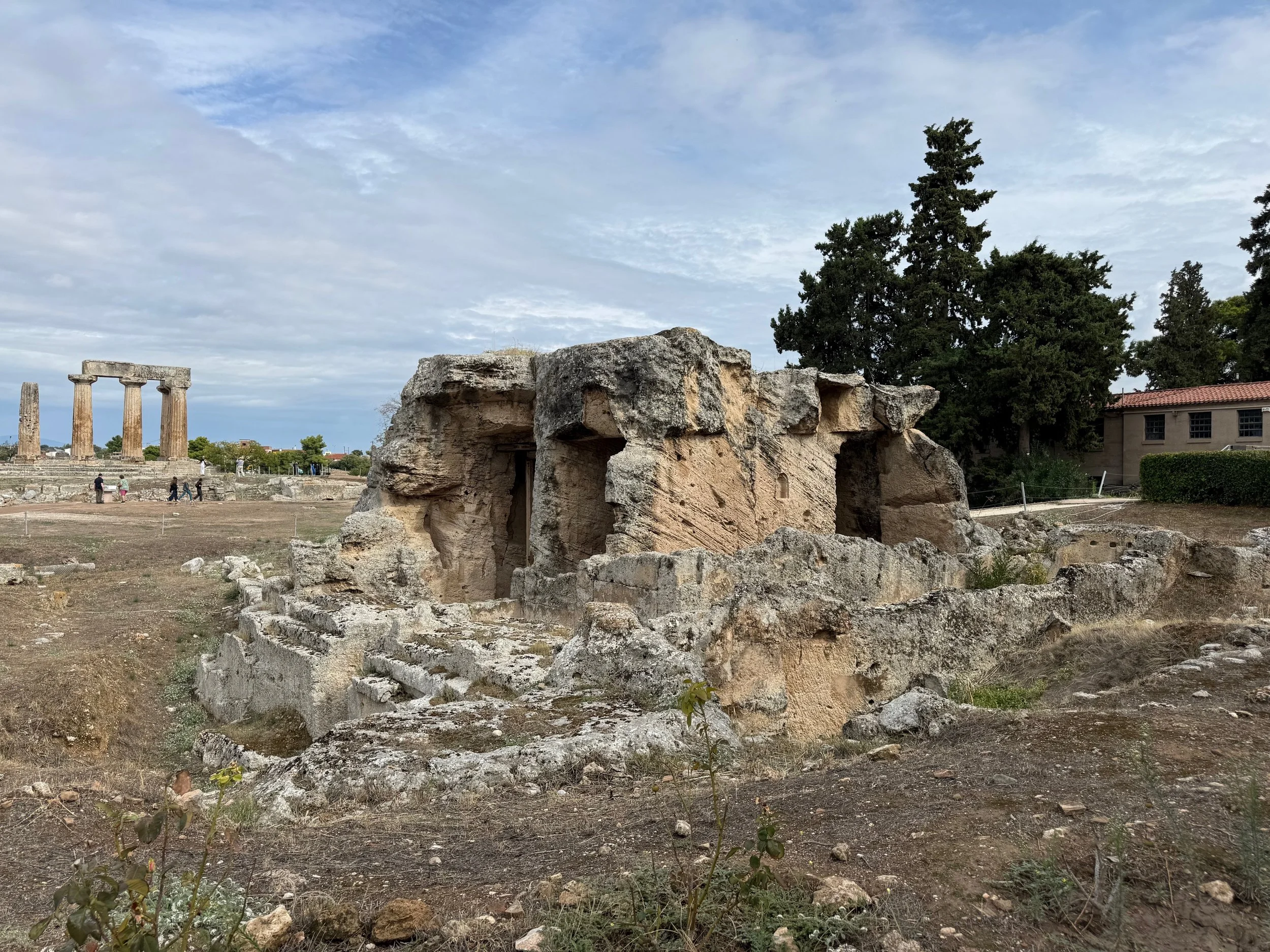
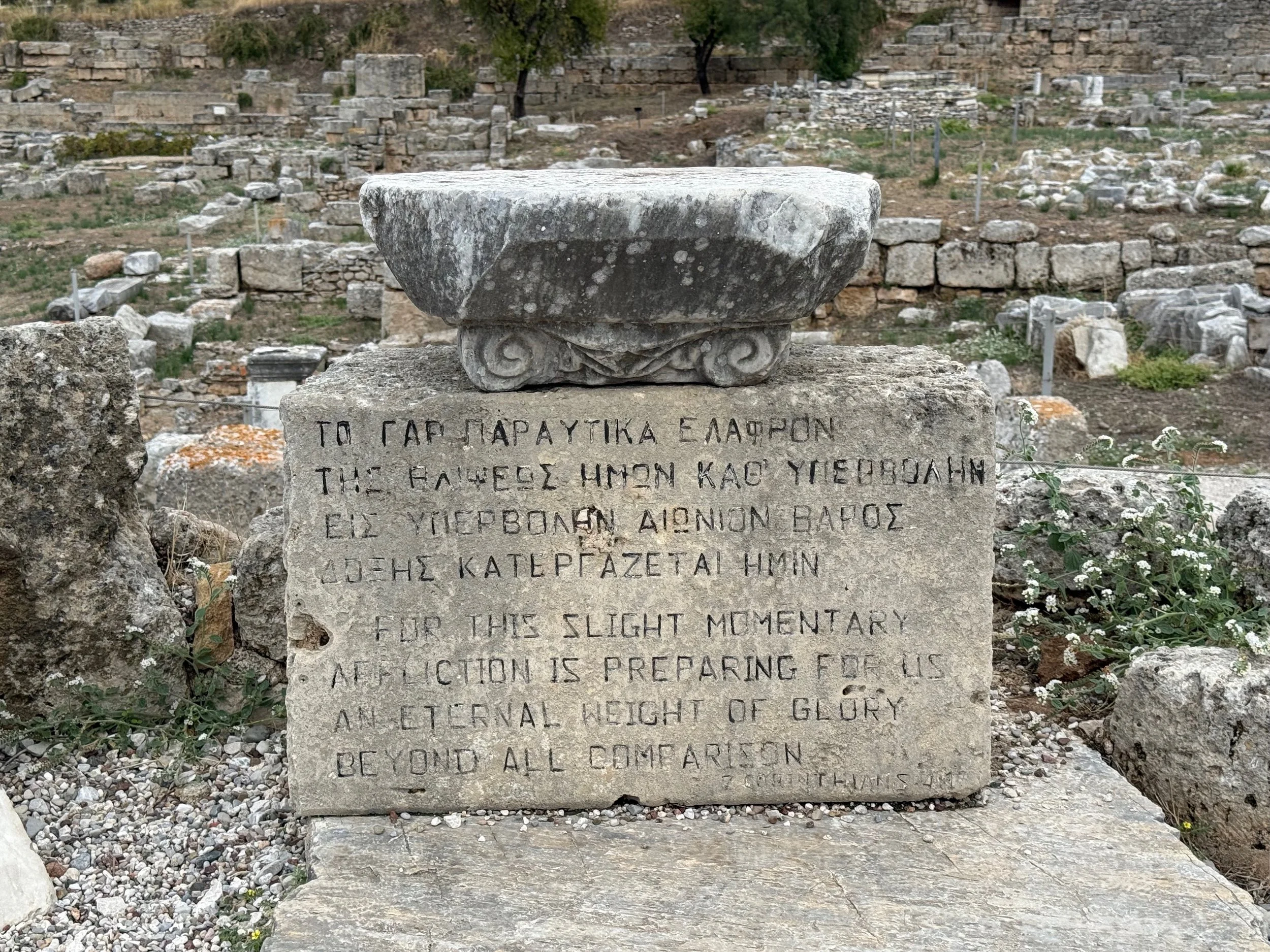
Lastly, but certainly not least, our tour group got to wander around the copious ruins of ancient Corinth. There was so much to learn and so much to see and it was surreal to be standing in the very place where Paul had been dragged by local Jewish leaders before the ‘bema’ (the tribunal) and accused of persuading people to worship God. The Roman proconsul, Gallio, had thrown the case out, refusing to get tangled in the matter. Denise dragged our group before the bema too though the charges against us were a little less serious and all that was required was a quick group photo.
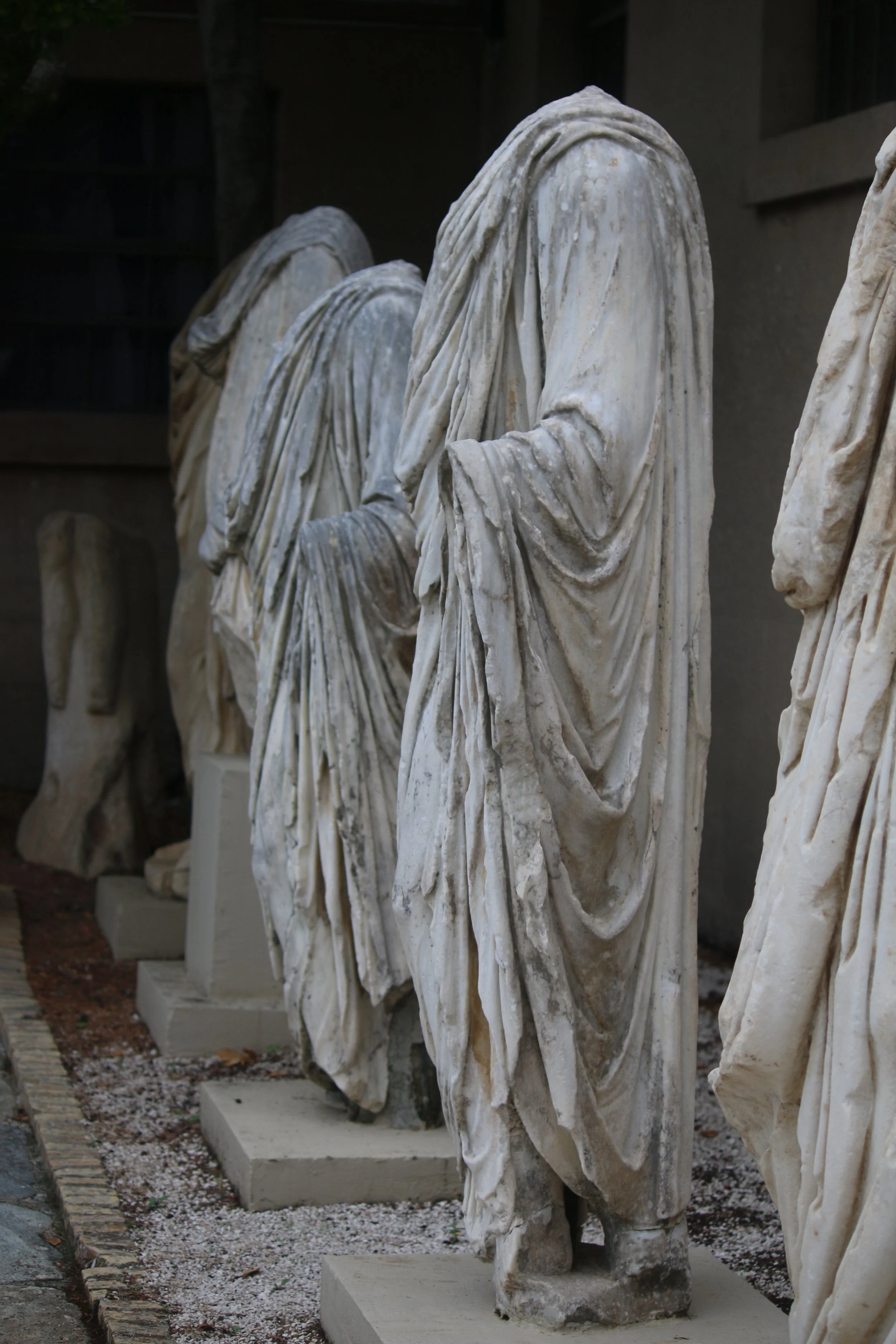
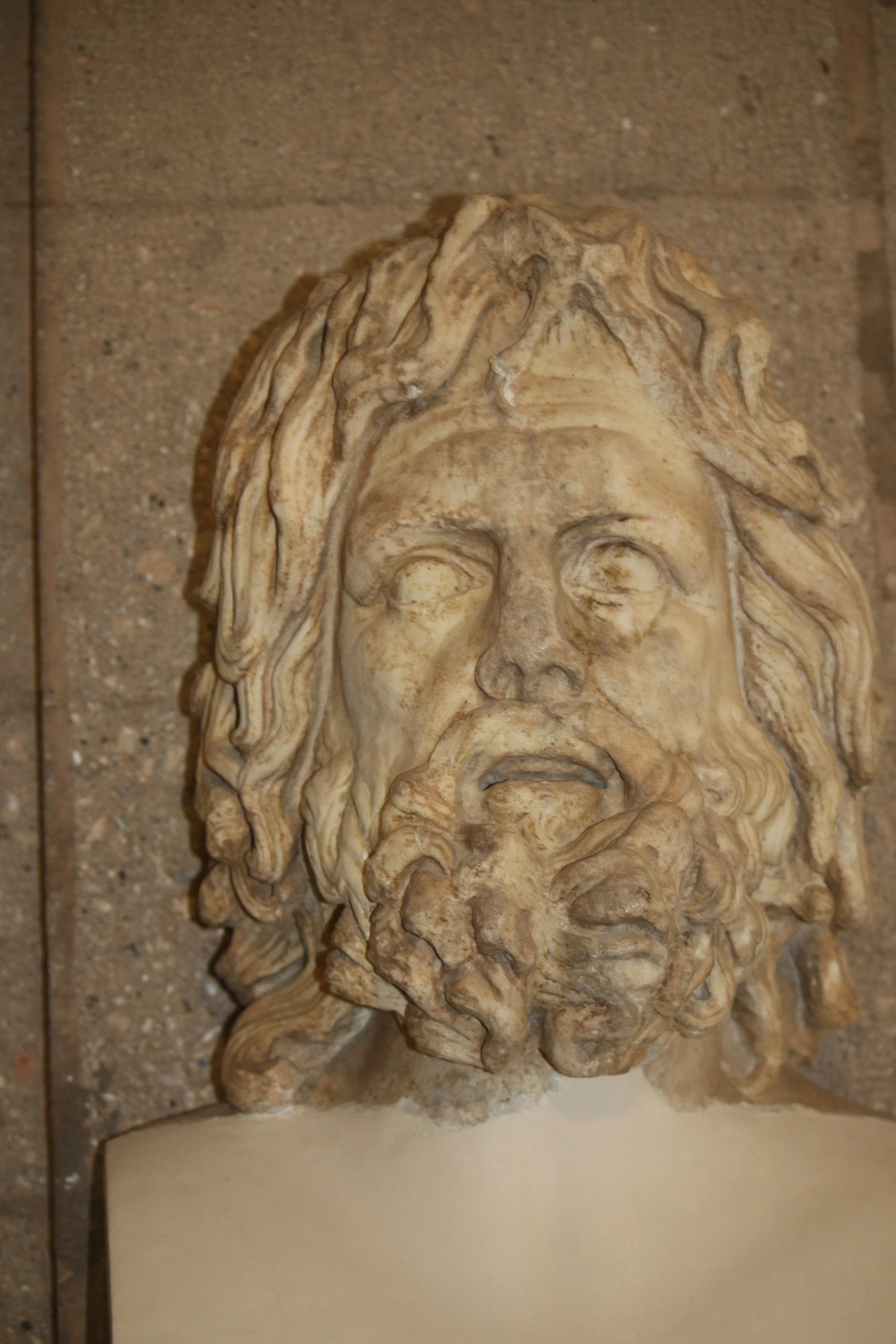
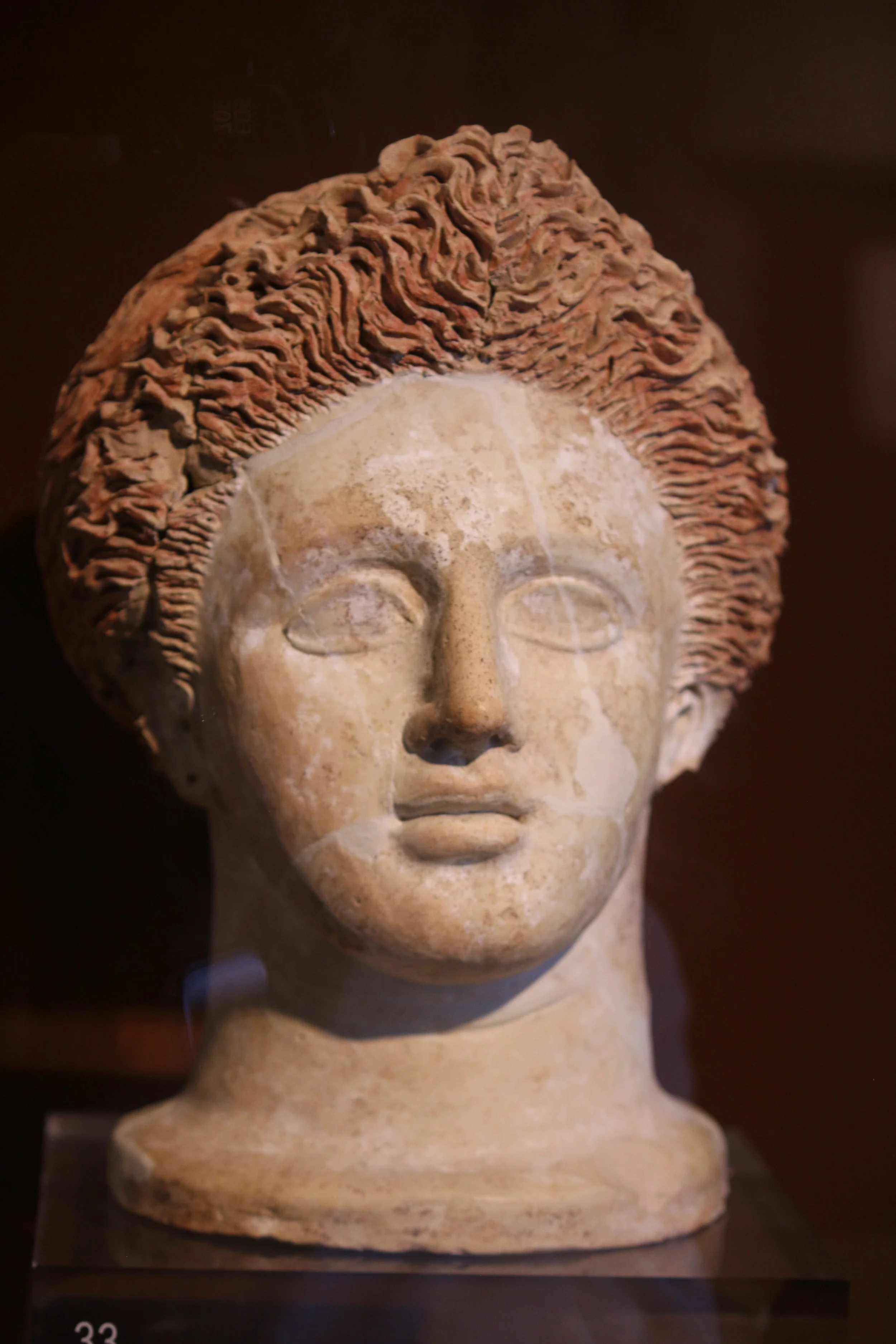
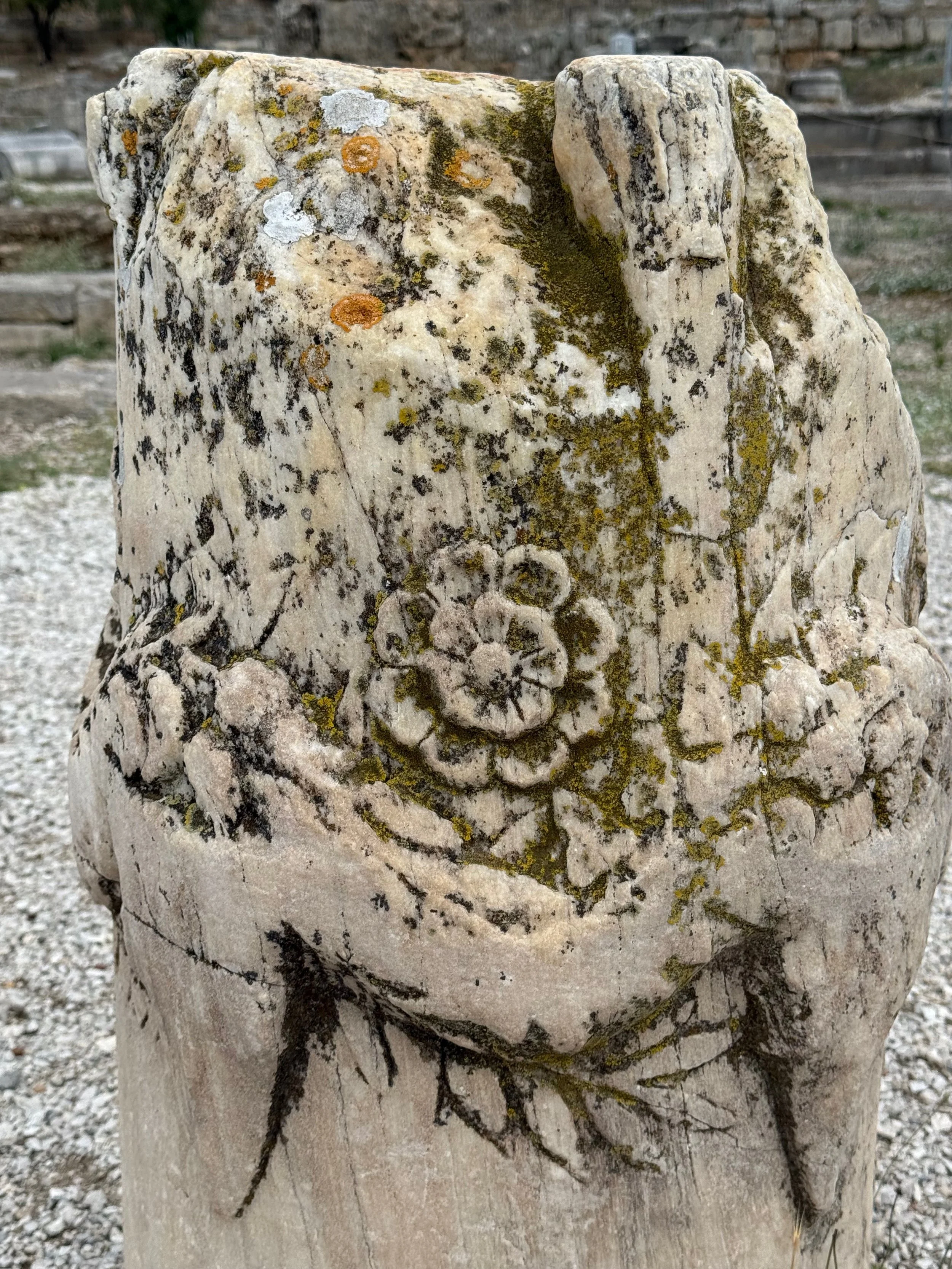
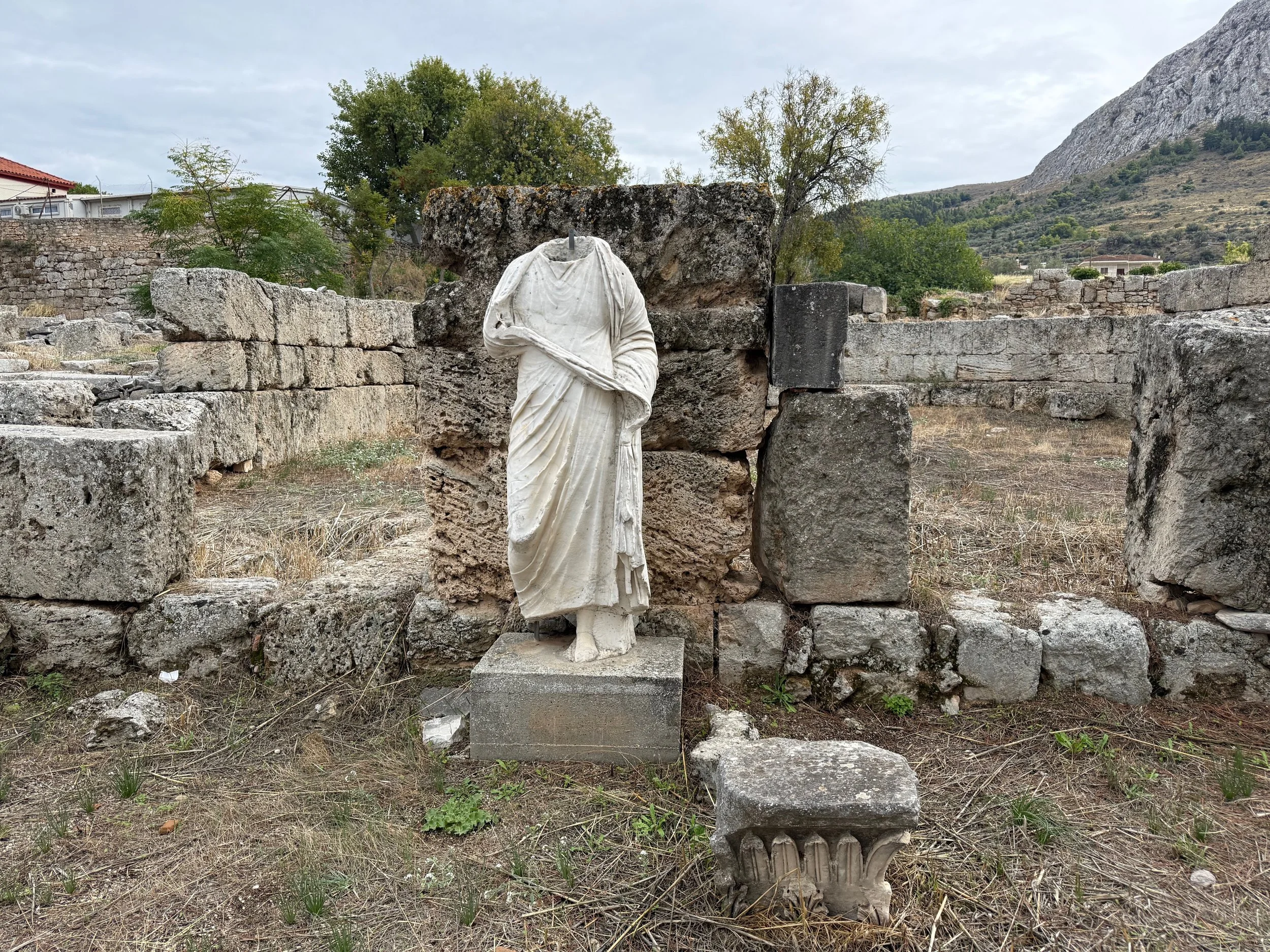
The museum at the site housed a huge array of headless statues and Amy, Maisy and Sandy thought it would be fun to stand behind them and lend their own heads for a photo. The security guard had other ideas, shooing them out and insisting they re-stage their photo, standing awkwardly in between the headless relics.
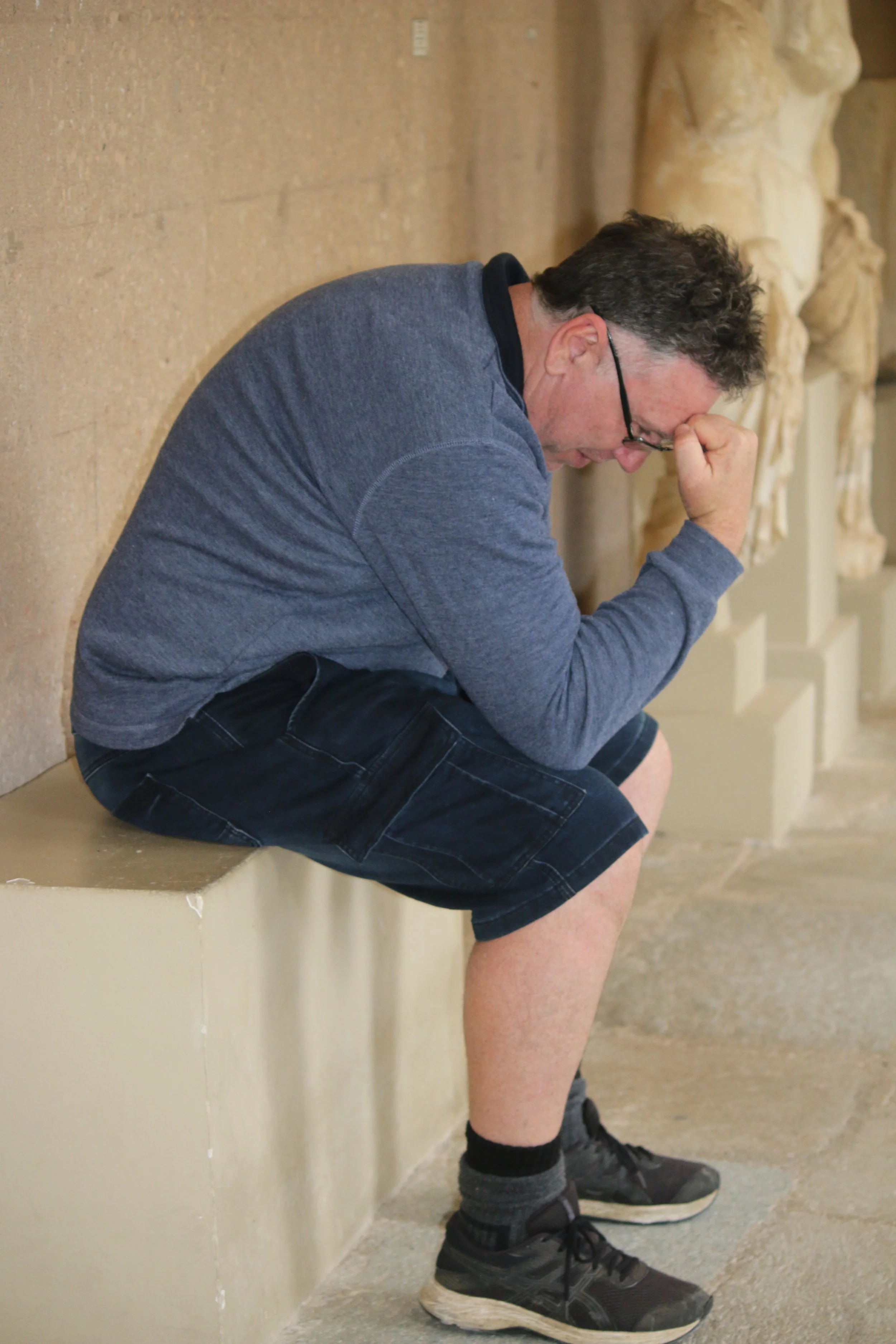
Toby was greatly amused by the room full of plaster appendages that had broken off a plethora of (both male and female) statues and were lined up on the walls . I mistook a set of ancient boobs for a couple of old fashioned light switches.
We returned to our hotel, a little weary but grateful for such a full but fun day!